Canister Filter vs Hang-on-Back Filter: Best Aquarium Filter
Setting up a new tank, or upgrading an old one? Sooner or later every fish keeper hits the same question: canister filter vs hang on back filter — which one is the best aquarium filter for your tank? Both types do the same basic job, but they do it in very different ways, and the wrong pick can mean cloudy water, stressed fish, or a filter you dread cleaning.
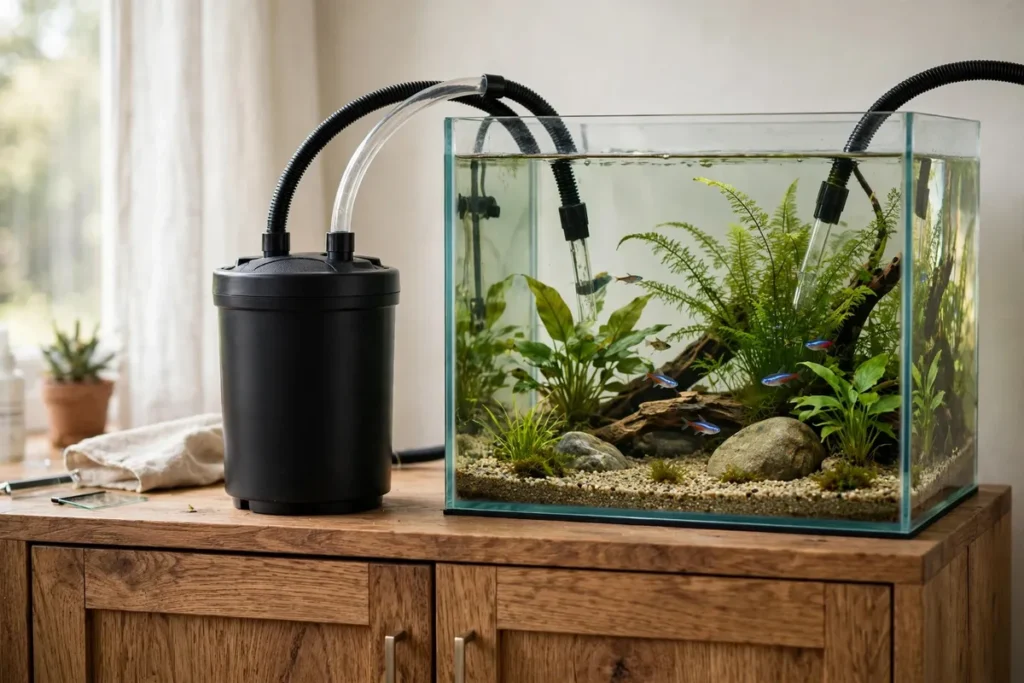
A canister filter is a sealed container that sits under or beside the tank and pumps water through layers of filter media. A hang-on-back filter — usually called a HOB — hangs on the back rim of the tank and pulls water up through a cartridge or media basket. This guide compares them so you can pick the right one for your fish, your tank, and your patience for maintenance.
Prices change, so check the current price before buying.
Canister Filter vs Hang on Back Filter at a Glance
| Feature | Canister Filter | Hang-on-Back Filter |
|---|---|---|
| Where it sits | Under the tank, inside the stand | Hangs on the back rim of the tank |
| Best for | Tanks 40 gallons and up, planted tanks | Tanks 10–55 gallons, community tanks |
| Filtration power | Very strong, large media capacity | Good, smaller media capacity |
| Noise | Near silent, motor is underwater | Audible hum and water trickle |
| Maintenance | Every 4–8 weeks, takes longer | Every 2–4 weeks, takes minutes |
| Setup | More parts, hoses, priming needed | Clip on, fill, plug in |
| Looks | Hidden, clean tank view | Visible box on the back of the tank |
| Flow control | Adjustable, spray bar or nozzle | Usually adjustable, waterfall return |
| Cost | Higher upfront | Lower upfront |
| Power outage risk | Can lose prime, needs re-priming | Mostly self-priming when power returns |
| Best for messy fish | Yes, goldfish, cichlids, large fish | Only smaller or lightly stocked tanks |
| Redundancy | Easy to pair with a second filter | Easy to run two HOBs side by side |
What Is a Canister Filter?
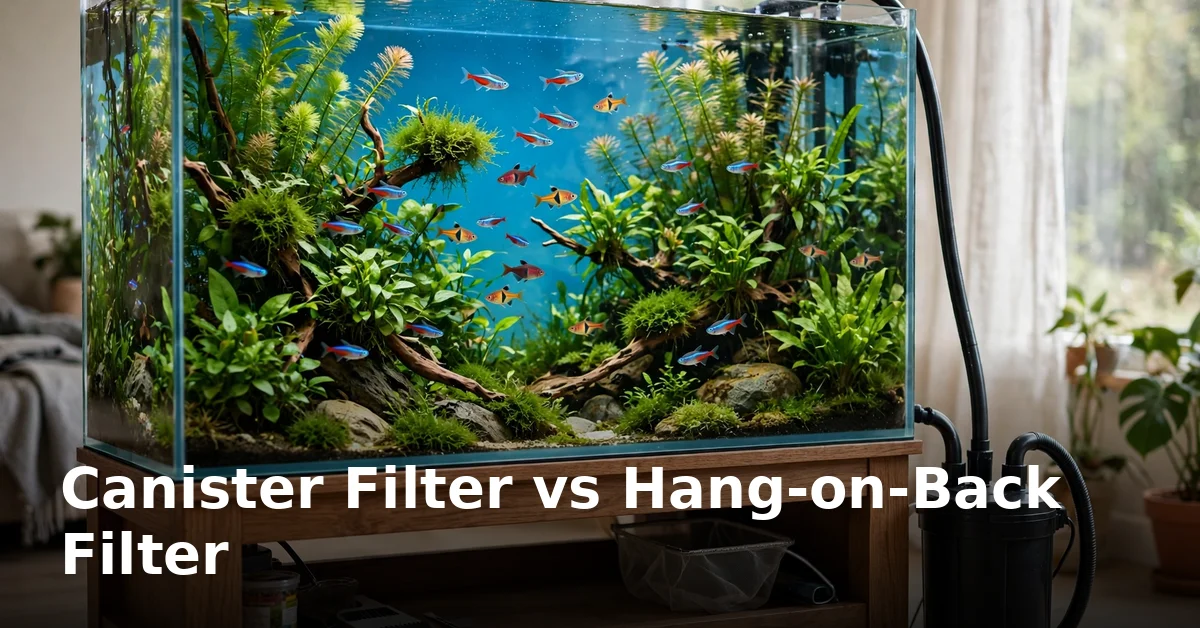
A canister filter is a sealed cylinder or box that sits outside the tank, usually in the cabinet below. Hoses carry water down from the tank into the canister, where it passes through stacked trays of filter media — sponge, ceramic rings, carbon, or whatever you choose — and then a pump sends the clean water back up through a spray bar or a return nozzle.
The big advantage is media capacity. A mid-range canister holds three to five times more biological media than a comparable HOB, which means more good bacteria, a more stable nitrogen cycle, and more room for a heavy fish load. The motor sits underwater inside the sealed canister, so it runs almost silently — a real plus if the tank is in a bedroom.
The trade-off is maintenance. Cleaning a canister means disconnecting hoses, carrying a heavy, water-filled cylinder to the sink, rinsing the media, and putting it all back together — then priming it to get the water flowing again. It is a 20 to 30 minute job, not a 5 minute one.
What Is a Hang-on-Back Filter?
A hang-on-back filter is the boxy filter most beginners start with. It hangs on the back rim of the tank, draws water up through an intake tube, passes it through a media basket or cartridge, and returns it over a small waterfall spillway. Popular models include the Fluval AquaClear, the Marineland Penguin, and the Seachem Tidal.
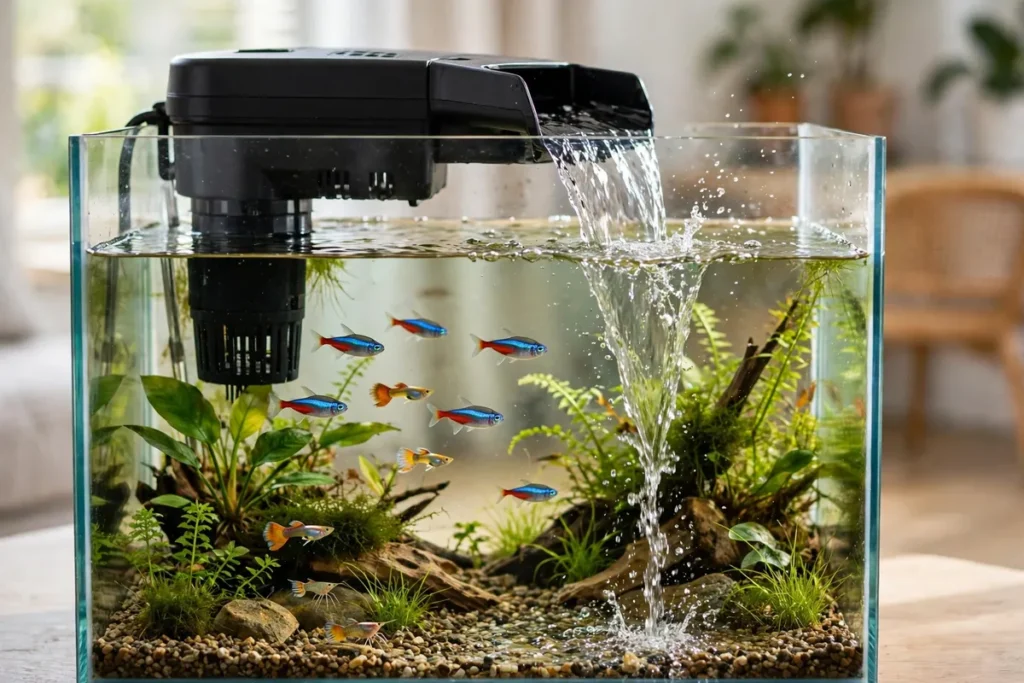
A HOB is easy in every way that matters. It clips on in minutes, it is simple to clean — lift the lid, pull out the media, rinse it in old tank water, drop it back in — and it costs less than a canister. For a standard community tank of 10 to 55 gallons, a good HOB is all the filtration most fish need.
The limits are size and noise. The media chamber is small, so a HOB cannot hold as much biological media as a canister, and on a large or heavily stocked tank it runs out of capacity. The waterfall return also makes a trickling sound, and the impeller hums — fine in a living room, annoying in a quiet bedroom at night.
Filtration Power: Which One Cleans Better?
For raw filtration power, the canister filter wins the canister filter vs hang on back filter comparison. More media means more bacteria breaking down ammonia and nitrite, and the sealed, pressurized design pushes water evenly through every layer of media instead of letting it find the easiest path around.
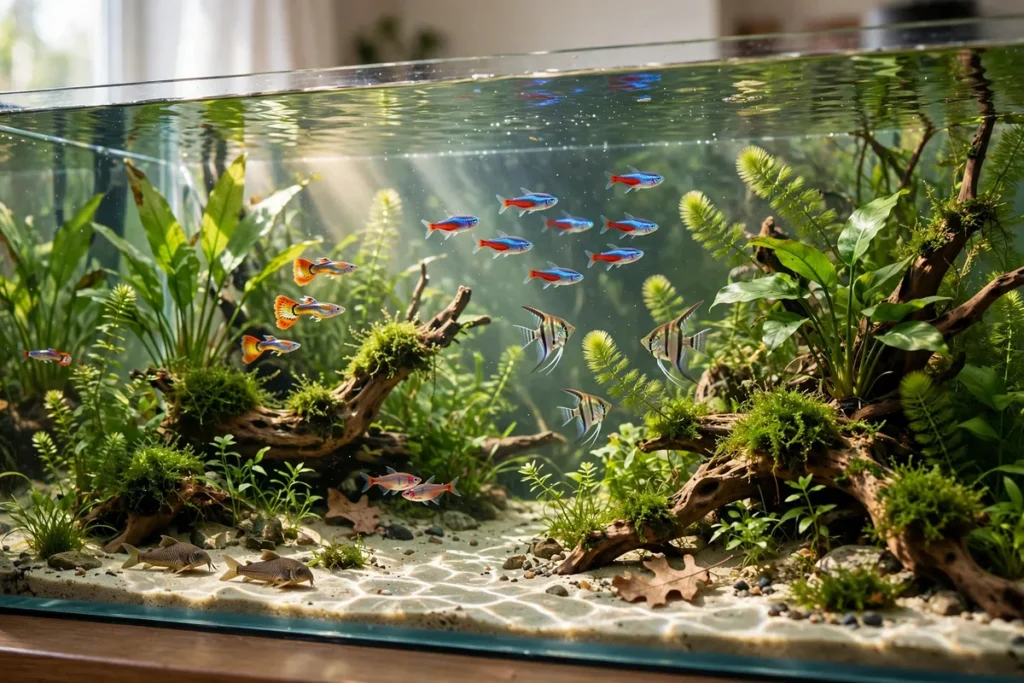
That does not mean a HOB filters badly. On a 20-gallon community tank with tetras and corydoras, a quality HOB rated for the tank size keeps the water clean and stable. The problem only appears when the tank gets big or the fish get messy: a tank full of goldfish or cichlids produces far more waste than a HOB’s small media basket can process, and water quality starts to slide between cleanings.
Match the filter to the bioload, not just the tank size. Light stocking in a small tank? A HOB is plenty. Heavy stocking, big fish, or a tank over 55 gallons? A canister earns its keep.
Noise and Looks
Noise is the canister’s quiet superpower. Because the motor is submerged inside the sealed canister, there is almost nothing to hear — no hum, no trickle, no splashing. If your tank sits in a bedroom or a home office, that silence alone can be worth the extra cost.
A HOB is louder by design: the impeller hums and the waterfall return trickles constantly, and the sound gets worse as the water level drops. Some people find the trickle soothing; others find it maddening at 2 a.m.
Looks are just as clear-cut. A canister hides in the stand, with only two thin hoses and a small intake and outlet visible in the tank. A HOB is a visible box hanging on the back, and it needs clearance behind the tank — a problem if your tank sits close to a wall.
Maintenance: Which One Is Easier to Live With?
Maintenance is where the HOB wins the canister filter vs hang on back filter debate. Cleaning a HOB takes about five minutes: lift the lid, pull the sponge or cartridge, rinse it in a bucket of old tank water, and put it back. You can do it during a water change without getting your hands wet past the wrist.
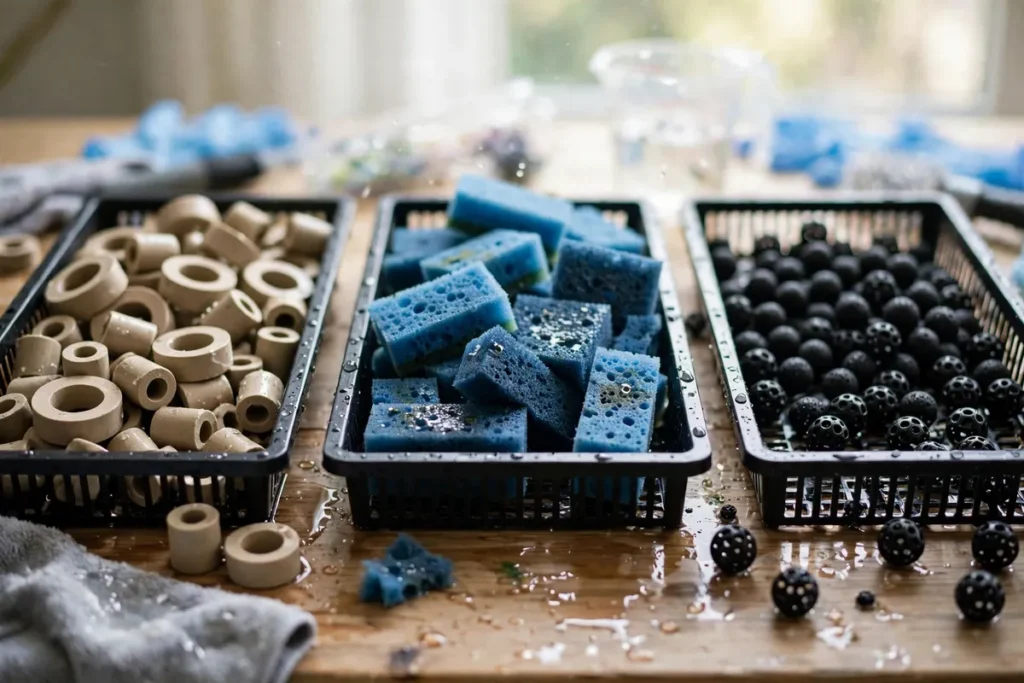
A canister takes longer and makes more mess. You have to shut off the valves, disconnect the hoses, carry the canister to a sink or a bucket, open the latches, and rinse each media tray. Then you reassemble it, reconnect the hoses, and prime it until the water starts flowing again.
The flip side is frequency. Because a canister holds so much more media, it only needs cleaning every 4 to 8 weeks, while a HOB usually needs attention every 2 to 4 weeks. Less often, but more work each time.
Cost: What You Pay Over Time
A HOB costs less upfront — often a third to a half of what a comparable canister costs — and its replacement media is cheap and easy to find. A canister costs more to buy, and its media trays, hoses, and seals add to the long-term cost.
But cost per month is closer than the price tags suggest. A canister lasts for years and its media is reusable. A HOB is cheaper to start with, but on a large tank you may need two of them running side by side, which closes the gap fast.
The real cost to watch is the one you cannot see on a receipt: a filter that is too small for your tank. An under-filtered tank means sick fish, algae blooms, and emergency water changes — and a vet bill or a replacement fish costs far more than the difference between a HOB and a canister.
Which Filter Is Better for Your Tank?
Choose a canister filter if: your tank is 40 gallons or larger, you keep messy fish like goldfish or cichlids, you run a planted tank, or the tank is in a bedroom where silence matters. A canister is also the right pick if you want maximum media capacity and a clean, uncluttered view of the tank.
Choose a hang-on-back filter if: your tank is 10 to 55 gallons, you keep a standard community of tetras, guppies, or corydoras, you want the easiest maintenance, or you are setting up your first tank. A HOB is simple, cheap, and good enough for most beginners.
Choose both if: your tank is large or heavily stocked. Running a canister for biological capacity and a HOB for quick mechanical filtration is a setup many experienced keepers use — if one filter stops, the other keeps the tank safe.
If you are still planning the tank itself, our guide to the best fish tank for beginners covers starter aquariums that work well with either filter type, our roundup of the best fish food for guppies helps you feed a community tank, and our comparison of freshwater vs saltwater aquariums explains which kind of tank suits a first-time keeper.
How to Set Up and Maintain Your Filter
Whichever filter you choose, the setup rules are the same. Size the filter for your tank’s volume and your fish load, not just the number on the box — aim for a flow rate of four to six times the tank volume per hour for most community fish. Aqueon’s guide to choosing the best filter for your tank explains how tank size, bioload, and flow rate fit together.
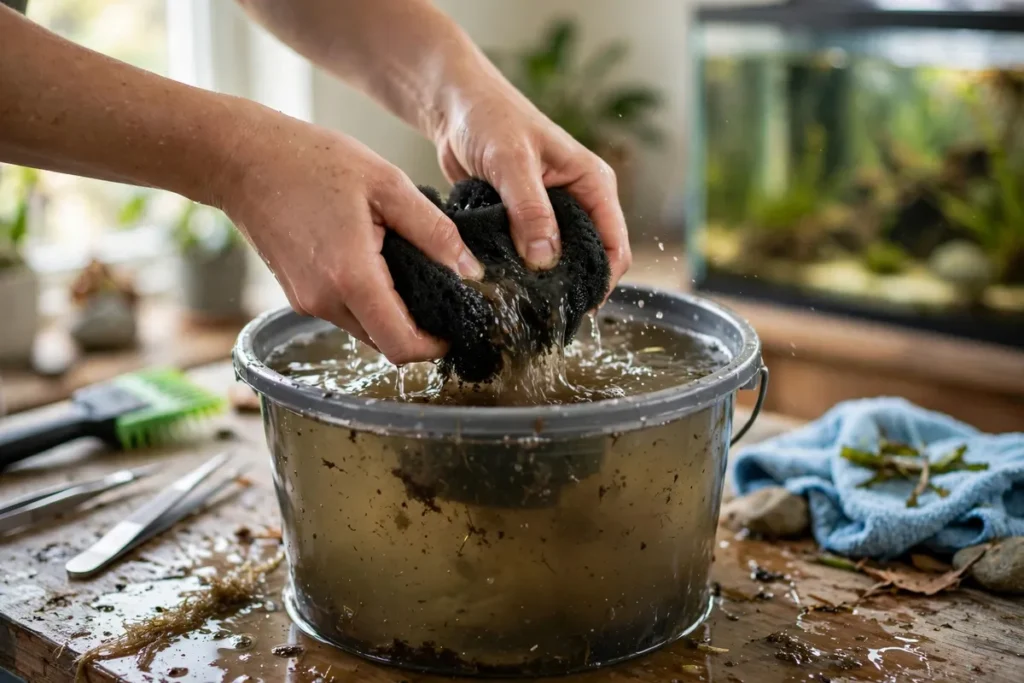
Never clean all your filter media at once, and never rinse it in tap water — chlorine kills the good bacteria that do the real filtering work. Rinse media gently in a bucket of old tank water, and clean only part of it at a time so the bacteria colony survives.
And remember: no filter replaces the nitrogen cycle. A new tank needs to cycle for a few weeks before you add fish, so the bacteria have time to colonize the media. AquariumSetup’s canister vs HOB filter comparison is a useful second opinion on sizing, maintenance, and which type suits which tank.
Frequently Asked Questions
Can I use a canister filter on a small tank?
You can, but it is usually overkill. A canister on a 10-gallon tank takes up stand space, costs more than the tank itself, and its strong flow can stress small fish. A HOB or a sponge filter suits a small tank better.
Do I need a filter if I do regular water changes?
Yes. Water changes dilute waste, but they do not replace the bacteria that convert ammonia and nitrite into less harmful nitrate. A filter is the life-support system of the tank — water changes are the backup, not the replacement.
How often should I clean my filter?
A HOB usually needs a rinse every 2 to 4 weeks, and a canister every 4 to 8 weeks. Clean sooner if the flow slows down noticeably, and never clean all the media at once — rinse it in old tank water, not tap water.
The Bottom Line
Canister filter vs hang on back filter comes down to your tank and your tolerance for maintenance. A canister filter is the stronger, quieter, cleaner-looking choice for large tanks, planted tanks, and messy fish — and it only needs cleaning every month or two. A hang-on-back filter is the simpler, cheaper, easier choice for small and medium community tanks, and it takes five minutes to clean. Match the filter to your tank size and your fish, size it generously, and keep the media clean — and your fish will thank you with clear water and a long, healthy life.