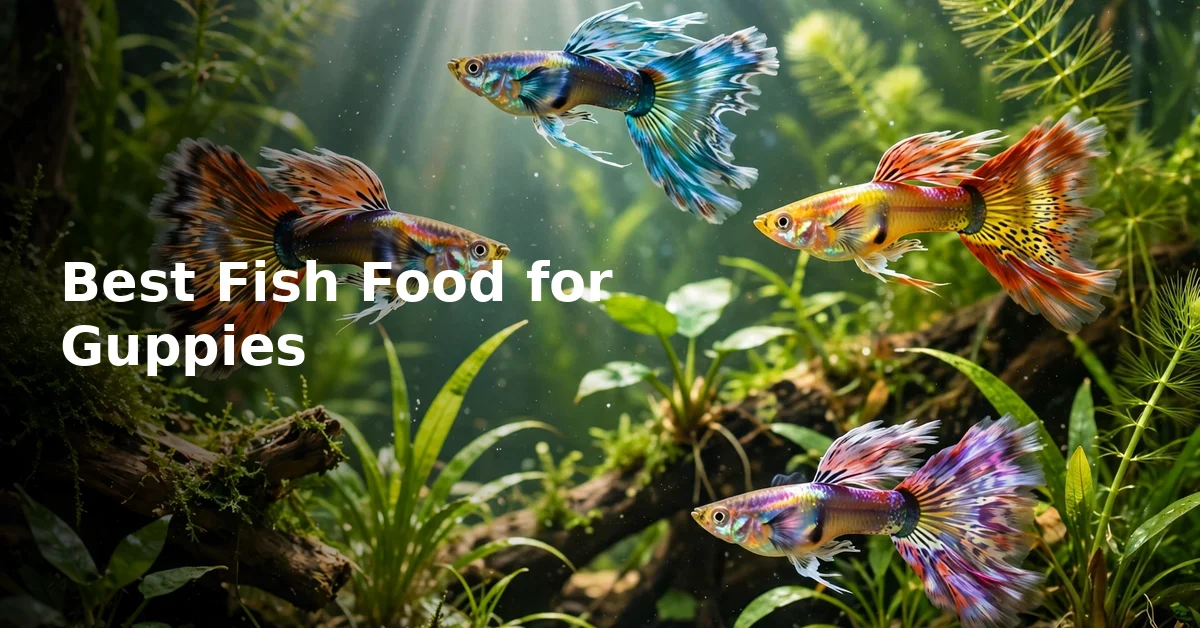
Best Fish Food for Guppies (2026): 7 Picks Your Guppies Will Love
Looking for the best fish food for guppies? Guppies are small, hungry, and always eating — but they have tiny mouths and fast metabolisms, so the right food matters more than it does for bigger fish. A good guppy food is small enough to swallow, high in protein, and varied enough to keep their colors bright.
There are a lot of fish foods on the shelf, and most of them are made for fish much bigger than a guppy. This guide narrows it down to seven solid options from trusted brands — the best all-rounder, the best flakes, a food for fry, and a micro pellet for picky eaters.
Prices change, so check the current price before buying.
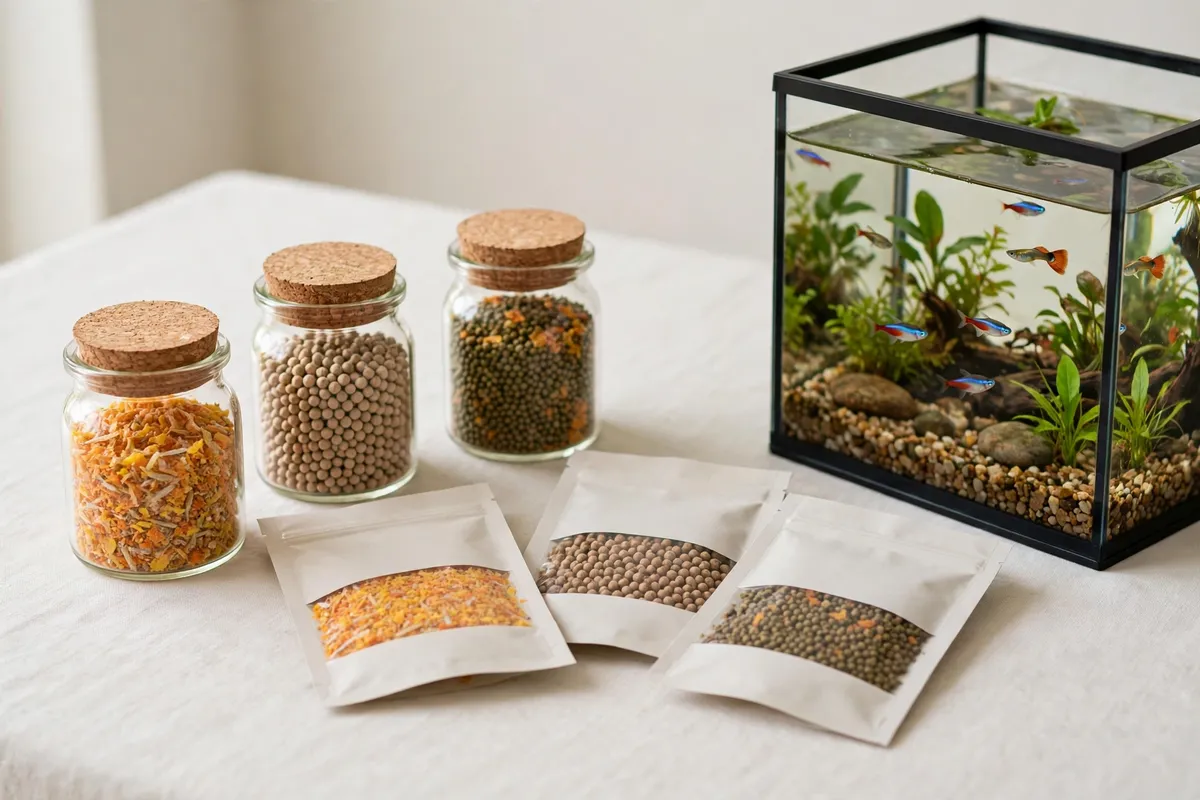
Our Quick Picks
- Best overall: Hikari Fancy Guppy — made for guppies, tiny slow-sinking granules, 50% protein.
- Best flakes: TetraMin Tropical Flakes — the classic balanced flake, easy to find everywhere.
- Best for growth: Fluval Bug Bites Tropical Flakes — insect larvae protein, great for young fish.
- Best for color: Omega One Super Color Flakes — whole salmon and herring, natural color boost.
- Best micro pellet: NorthFin Community 0.5 mm — tiny slow-sinking pellets, easy to measure.
- Best for fry: Hikari First Bites — fine powder for newborn guppies.
- Best budget color food: TetraColor Tropical Flakes — color-boosting flakes at a fair price.
How to Choose Fish Food for Guppies
Before the reviews, here is what actually matters when you are picking a guppy food.
Protein first. Guppies grow fast and breed constantly, so they need a protein-rich diet. Look for a food with at least 40% crude protein on the label — the best guppy foods list 46% or more. Foods that are mostly wheat and fillers will keep a guppy alive but will not keep it colorful or healthy.
Particle size matters more than brand. A guppy’s mouth is tiny. Flakes should crush easily between your fingers, and pellets should be micro-sized — around 0.5 mm — so the fish can swallow them whole. A pellet made for tetras or cichlids is often too big, and uneaten food just rots on the bottom.
Flakes, pellets, or both. Flakes are the easiest staple: they float, guppies grab them at the surface, and you can see how much is eaten. Micro pellets sink slowly, which suits guppies that feed mid-water, and they are easier to measure out. Most keepers use a flake as the daily staple and rotate in a pellet or an insect-based food a few times a week.
Variety beats one bag forever. In the wild, guppies eat insect larvae, algae, and tiny invertebrates. A single food, however good, cannot copy that range. Rotate two or three foods — a staple flake, a protein-rich food like Bug Bites, and a plant-based or spirulina flake — and add frozen brine shrimp or daphnia once or twice a week.
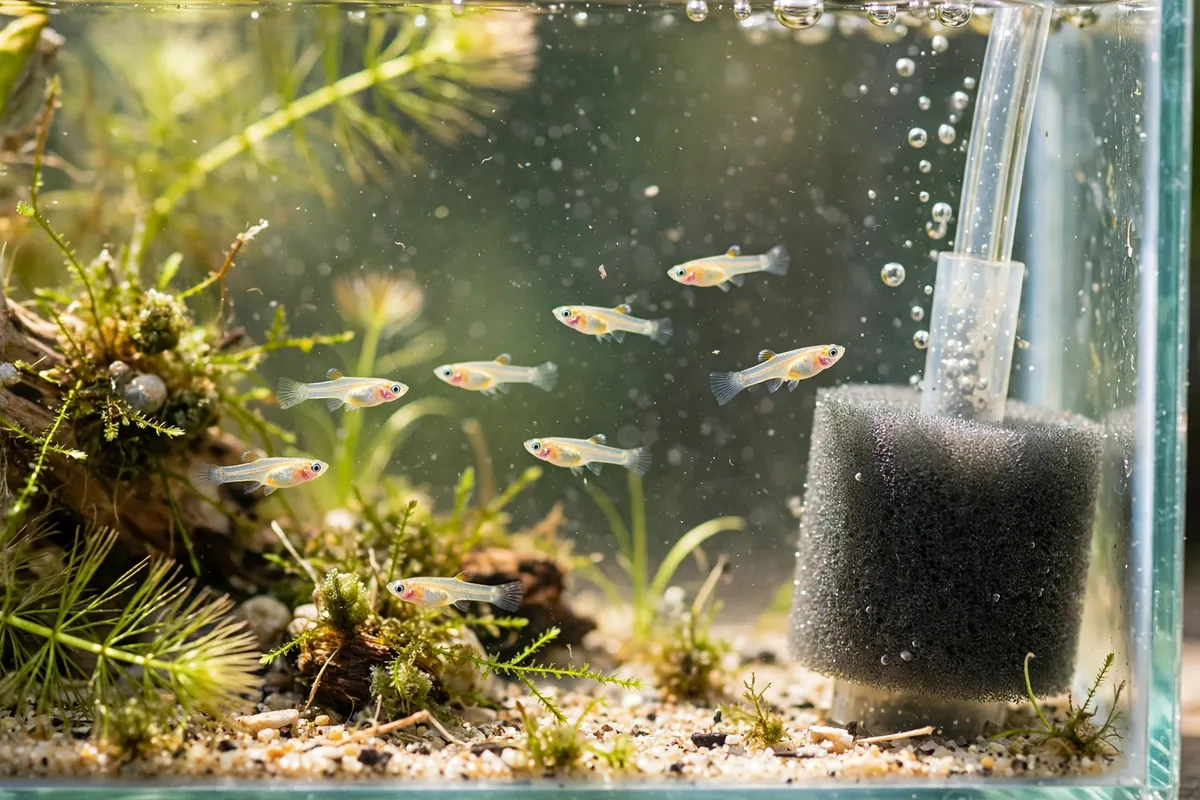
Fry need their own food. Newborn guppies are only a few millimetres long and cannot eat flakes at all. They need a fine powder or baby brine shrimp for the first two weeks, fed several times a day in tiny amounts.
The 7 Best Fish Foods for Guppies
1. Hikari Fancy Guppy — Best Overall
Hikari Fancy Guppy is the best fish food for guppies for most keepers, because it is one of the few foods made specifically for guppies and other livebearers. The tiny, semi-floating granules soften in the water without falling apart, so surface-feeding guppies have time to find them.
The official analysis lists 50% minimum crude protein — the highest in this roundup — with color-enhancing ingredients, seaweed, and stabilized vitamin C. The granules are small enough for even young guppies to swallow, and they suit guppies at every age.
The only drawback is the small bag size. But for a normal guppy tank, it is the safest all-round pick.
Best for: Any guppy tank, as the daily staple.
2. TetraMin Tropical Flakes — Best Flakes
TetraMin Tropical Flakes are the classic tropical flake, and they have been a trusted staple for decades. The flakes float for a long time and then sink slowly, which suits guppies that feed at the top and in mid-water, and the formula is nutritionally balanced with vitamins and minerals for everyday feeding.
This is the easiest food to buy — almost every pet store stocks it — and it works well as the backbone of a guppy diet, especially in a mixed community tank where other small fish eat the same food. Crush the flakes a little smaller for very young guppies.
It is not a specialist guppy food, so it does not match Hikari’s protein level or particle size, but as a reliable everyday flake it is hard to beat.
Best for: Everyday feeding, and mixed community tanks with guppies.
3. Fluval Bug Bites Tropical Flakes — Best for Growth
Fluval Bug Bites Tropical Flakes are made with black soldier fly larvae as the first ingredient, which copies the insect diet guppies eat in the wild. The flakes are rich in protein and include salmon and other high-quality proteins that support fast growth — which is why many breeders use Bug Bites for young, growing guppies.
The flakes contain no artificial fillers, colors, or preservatives, and they are sized for small to medium tropical fish, so guppies handle them easily. Feed them two or three times a day, only as much as the fish finish in two minutes.
Pair it with a plain staple flake for the best results.
Best for: Young, growing guppies and breeders raising fry to adults.
4. Omega One Super Color Flakes — Best for Color
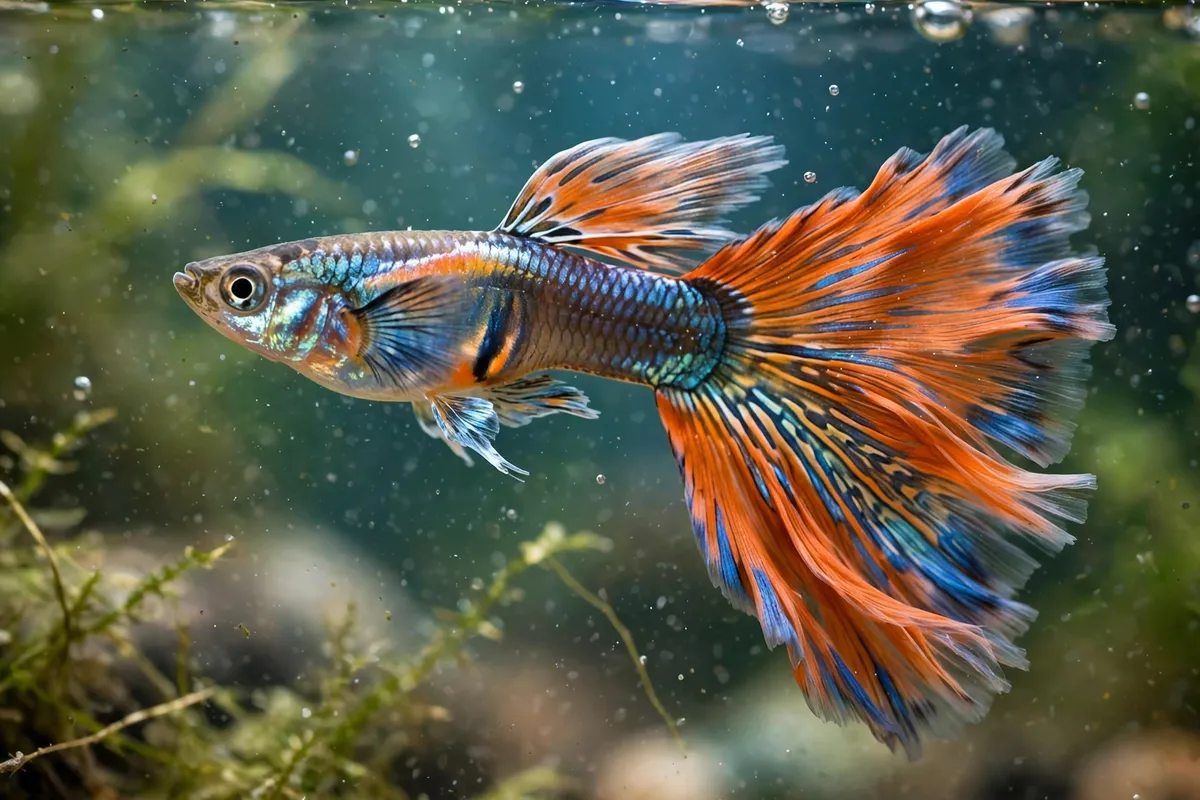
Omega One Super Color Flakes are made with whole salmon and whole herring, and the salmon skins supply natural pigments that bring out a guppy’s reds, oranges, and blues. The flakes list 39% minimum crude protein and are made with fresh seafood rather than fish meal, which is why many keepers say their guppies color up within a few weeks of switching.
The flakes crush easily to guppy size, and they float well, so surface feeders get to them fast. They are a little richer than everyday flakes, so they work best as part of a rotation rather than the only food in the tank.
Best for: Guppies that need brighter color, and keepers who want a seafood-based flake.
5. NorthFin Community 0.5 mm — Best Micro Pellet
NorthFin Community 0.5 mm is the best micro pellet for guppies. The tiny, slow-sinking pellets are exactly guppy-sized, so there is no crushing and no waste, and the formula combines krill, herring, and sardine with kelp, spirulina, and garlic.
Pellets have one big advantage over flakes: you can measure them. A small pinch is a known amount, which makes it much easier to avoid overfeeding — the most common mistake in guppy keeping. The pellets sink slowly, so guppies feeding at the surface and mid-water both get a share.
The only downside is availability: NorthFin is not stocked in every pet store, so you may need to order it. If you can get it, it is an excellent daily staple or a rotation partner for a good flake.
Best for: Keepers who want a measured, low-waste micro pellet.
6. Hikari First Bites — Best for Fry
Hikari First Bites is the food for the smallest guppies in your tank. It is a fine powder designed for newborn fry and other baby fish, small enough for a day-old guppy to eat, with a high protein level to support fast early growth.
Fry need feeding four or five times a day in tiny amounts, and a powder is the only dry food fine enough for them in the first two weeks. After that, they can move on to crushed flakes and baby brine shrimp. If you keep males and females together, you will have fry every month, so a tub of First Bites lasts a long time and earns its place on the shelf.
It is a specialist food, not a staple for adults, so do not use it as the main food for grown guppies — it is too fine and too rich for that.
Best for: Newborn guppy fry in their first two weeks.
7. TetraColor Tropical Flakes — Best Budget Color Food
TetraColor Tropical Flakes are the budget pick for keepers who want a color-boosting flake without paying premium prices. The flakes include natural color enhancers alongside a complete daily nutrition formula, and they are easy to digest and easy to find in almost any pet store.
They work well as a daily flake for a guppy tank, especially if you rotate them with a higher-protein food like Hikari Fancy Guppy or Bug Bites. The color boost is gentler than Omega One’s, but for the price, it is a sensible choice.
Like all flakes, they should be crushed a little for young guppies, and they are best fed in small amounts twice a day rather than one big feeding.
Best for: Tight budgets, and a color-boosting everyday flake.
How Much and How Often Should You Feed Guppies?
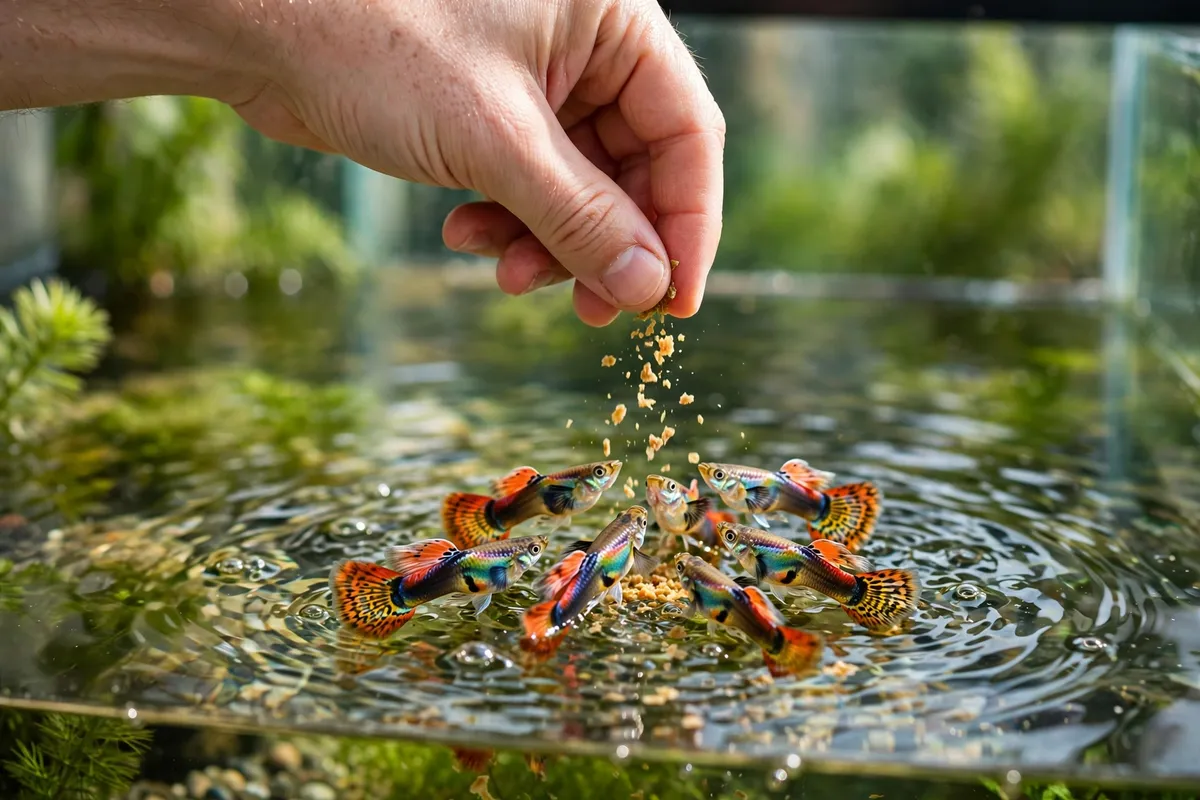
Guppies have small stomachs, so feed little and often. Adults do best on small meals once or twice a day, only as much as they can finish in one to two minutes. If food is still floating after two minutes, you fed too much — scoop it out and feed less next time.
Fry are different: they need four or five tiny meals a day, because they are growing fast and their stomachs hold almost nothing. Baby brine shrimp and fine fry powder are the best foods for them in the first two weeks, then crushed flakes after that.
Overfeeding is the biggest feeding mistake in guppy keeping. Uneaten food rots fast, fouls the water, and causes the cloudy water and algae blooms that kill more guppies than hunger ever does. A slightly underfed tank is safer than an overfed one.
A detailed guppy care and feeding guide covers feeding frequency and the foods guppies eat in the wild, and Everything Fishkeeping’s guppy fish care guide explains how a mixed diet of flakes, live food, and greenery keeps guppies healthy.
What Else Can Guppies Eat?
A good staple food is only part of a guppy’s diet. Guppies are omnivores, and they do best when their diet copies the wide mix they eat in the wild.
Live and frozen foods are the best treats. Baby brine shrimp, daphnia, and bloodworms are all foods guppies love, and they add protein and variety that no dry food fully copies. Frozen is the easy option — thaw a small cube in tank water and feed it once or twice a week.
Vegetables help too. Blanched peas, spinach, lettuce, and zucchini are all good in small amounts, and spirulina flakes give plant matter in an easy form.
What to avoid. Never feed guppies bread, processed human food, or large pellets made for bigger fish. And do not rely on a single food forever — even the best flake cannot cover everything a guppy needs.
If you are setting up a first guppy tank, our guide to the best fish tank for beginners covers tank size and setup, and if you keep bettas too, our roundup of the best fish food for betta fish explains how betta feeding differs from guppy feeding.
Frequently Asked Questions
How many times a day should I feed guppies?
Adults once or twice a day, in amounts they finish in one to two minutes. Fry four or five times a day in tiny amounts.
Can guppies eat betta food?
They can eat it now and then, but betta food is made for bettas, with larger pellets and a different formula. Guppies do better on food made for small tropical fish or for guppies specifically.
Why is my guppy food clouding the water?
Most often overfeeding, or food that is too big for guppies to eat and sinks uneaten. Feed less, crush flakes smaller, and remove leftovers after two minutes.
Do guppies need live food?
Not every day, but they benefit from it. Frozen brine shrimp or daphnia once or twice a week adds protein and variety that dry food alone cannot match.
What is the best food for guppy fry?
A fine fry powder like Hikari First Bites for the first two weeks, plus baby brine shrimp. Feed several tiny meals a day.
The Bottom Line
The best fish food for guppies is a small, protein-rich staple plus variety. Hikari Fancy Guppy is the safest all-round pick, TetraMin flakes are the easiest everyday staple, and Fluval Bug Bites are the best choice for fast-growing young fish. Feed small amounts twice a day, rotate two or three foods, add frozen brine shrimp once a week, and keep a fry powder on hand — your guppies will stay bright, active, and healthy.