

Flight Cage vs Standard Cage: Best Cage Size for Pet Birds
Shopping for a bird cage? You will quickly face the same question every bird owner faces: flight cage vs standard bird cage — which one is right? Both types keep your bird safe, but they offer very different amounts of room, and room matters more for birds than for almost any other pet.
In the flight cage vs standard bird cage debate, a flight cage is long and wide, built so a bird can actually fly from one end to the other. A standard cage is smaller and taller, built for a bird that spends most of its time climbing, perching, and playing outside the cage. The right choice depends on your bird, your space, and how much time your bird spends out of the cage each day.

Flight Cage vs Standard Bird Cage at a Glance
| Feature | Flight Cage | Standard Cage |
|---|---|---|
| Length | 30 to 60 inches or more | Usually 18 to 30 inches |
| Flight space | Room for real short flights | Room to hop and flutter only |
| Best for | Finches, canaries, budgies, cockatiels | Single birds that get daily out-of-cage time |
| Exercise | Built-in daily flying | Needs out-of-cage time for exercise |
| Bar spacing | 1/2 inch for small birds | 1/2 to 5/8 inch for small birds |
| Floor space | Takes up a lot of room | Fits in a corner or on a stand |
| Cost | More expensive | Cheaper |
| Cleaning | More bars and trays to wipe | Quick to clean |
| Multiple birds | Good for pairs and small groups | Usually one bird only |
| Enrichment | Room for many toys and perches | Fewer toys fit inside |
| Portability | Heavy, stays in one place | Easier to move |
| Looks | Big and boxy | Compact and tidy |
What Is a Flight Cage?
A flight cage is a long, wide cage designed so a bird can fly inside it. The key word is long: birds fly forward, not straight up, so a flight cage is always wider than it is tall. A typical flight cage for small birds is at least 30 inches long, and many are 40 to 60 inches long, with enough depth for the bird to turn comfortably.
Flight cages are usually rectangular with a flat top, and they come with several perches spaced far apart so the bird has somewhere to take off from and land on. They are heavy — 40 to 50 pounds once assembled — and they stay in one place.
The point of a flight cage is exercise. A bird that can fly a few feet inside its cage every day stays fitter, calmer, and healthier than a bird that can only hop between two perches. For birds that spend most of their day inside, like finches and canaries, a flight cage is the closest thing to a natural life.
What Is a Standard Bird Cage?
A standard bird cage is the familiar cage most people picture: a compact, often taller-than-wide box with a dome or play top, one or two doors, and a few perches. The usual home cage for a budgie or cockatiel is around 18 to 30 inches wide.
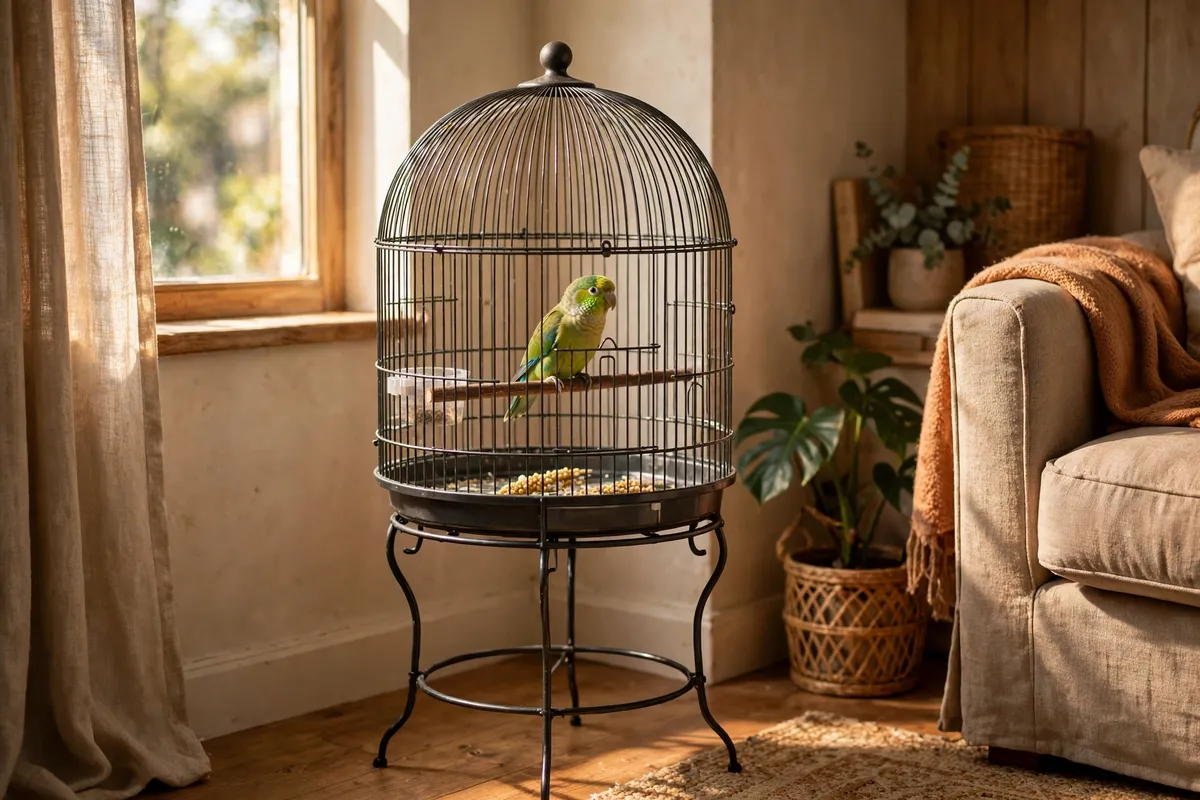
A standard cage is built for a bird that spends much of its day outside the cage — on a play stand, on your shoulder, or flying around a bird-safe room — and uses the cage mainly for sleeping, eating, and resting. It is cheaper, lighter, and easier to fit into a small home than a flight cage.
The trade-off is space. A standard cage gives a bird room to climb, stretch, and flap, but not room to fly. If your bird rarely leaves the cage, a standard cage is too small for a happy life, no matter how nice it looks.
Flight Cage vs Standard Bird Cage: Size and Flight Space
Size is where the two types differ most. In a flight cage vs standard bird cage comparison, the flight cage wins on usable space every time.
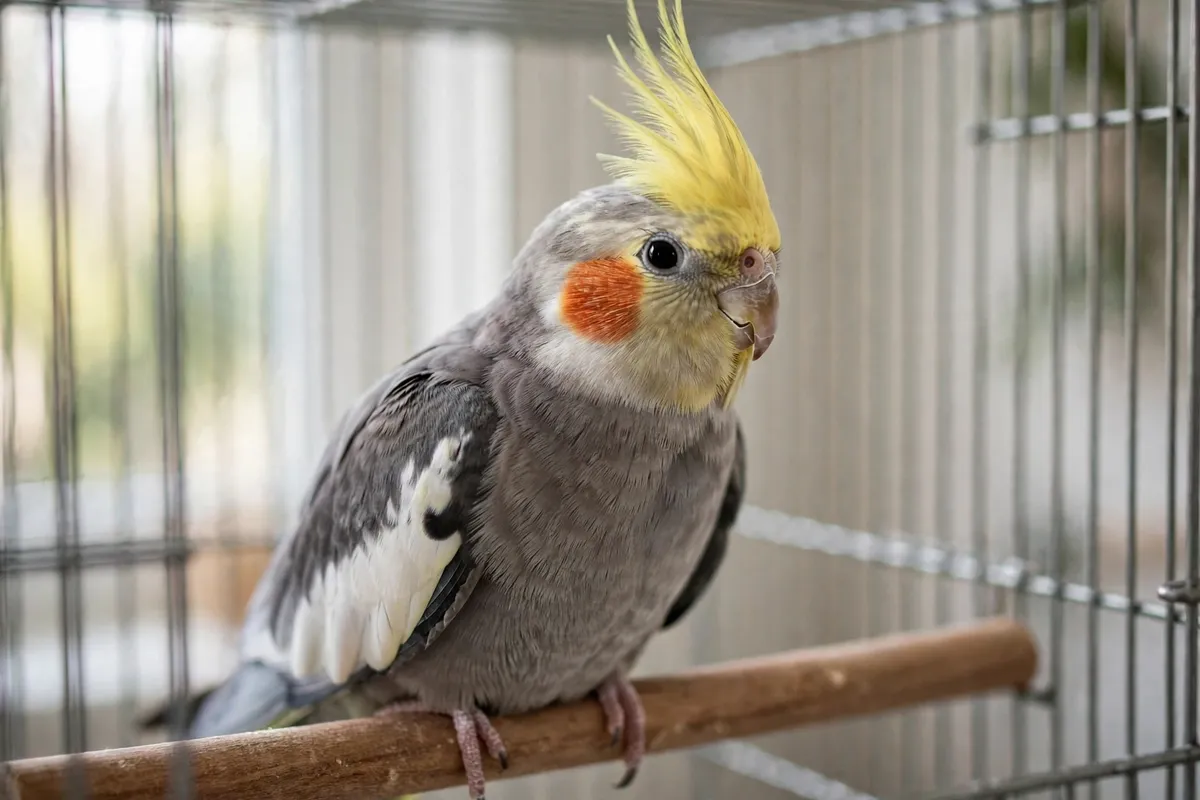
Birds fly forward. A tall, narrow cage may look impressive, but a bird cannot use that height to fly. A wide, shallow cage of the same volume gives a bird far more room to move. That is why experts say to choose a cage that is longer than it is tall for small birds like budgies, canaries, and lovebirds.
Lafeber’s guide to choosing a properly sized birdcage makes the same point: a bird should always have the largest housing possible, and small birds should have a cage at least 36 inches long by 24 inches deep by 24 inches high — with larger being better.
Exercise and Health
Flying is not just fun for a bird — it is how a bird stays healthy. Birds that cannot fly enough tend to gain weight, lose muscle, and develop behavior problems like feather plucking, screaming, and pacing. Vets link undersized housing to obesity, chronic stress, and shorter lives across almost every pet bird species.

A flight cage gives a bird daily exercise built into its home. Even a few short flights back and forth, repeated through the day, keep wings strong and weight in check.
A standard cage can be fine for a bird that flies outside the cage every day. But a bird in a standard cage with no out-of-cage time gets almost no exercise at all. If you work full-time and your bird is alone for eight to ten hours a day, a flight cage is not a luxury — it is the only way your bird gets to move properly while you are away.
Bar Spacing and Safety
Bar spacing matters in both types, and it is one of the easiest things to get wrong. Bars that are too wide let a small bird squeeze its head through and get stuck; bars that are too narrow are fine for safety but can feel cramped and block the view.
For small birds like finches, canaries, and budgies, bar spacing should be 1/2 inch. For cockatiels and lovebirds, 1/2 to 5/8 inch works. Larger parrots need 3/4 inch to 1 inch. Always check the spacing before you buy — some cheap cages list the wrong spacing, and a cage that looks right can still be unsafe.
Both cage types should have a secure latch, because many parrots learn to open simple doors.
Cost and Floor Space
A flight cage costs more and takes up more room — there is no way around that. A decent flight cage for small birds costs more than a standard cage of the same quality, and it needs a clear stretch of floor or a sturdy stand, since it is too big for most cage stands and too heavy to move often.
A standard cage is cheaper and fits almost anywhere: on a table, on a stand, in a corner of a living room.
Cleaning and Setup
A flight cage takes longer to clean because there is simply more of it: more bars, a bigger tray, more perches, and more toys to wipe down. On the other hand, the extra space means droppings and seed husks spread out more, so the cage looks cleaner between washes. A standard cage is quicker to clean, but a small cage gets dirty faster, since everything is concentrated in a small space.
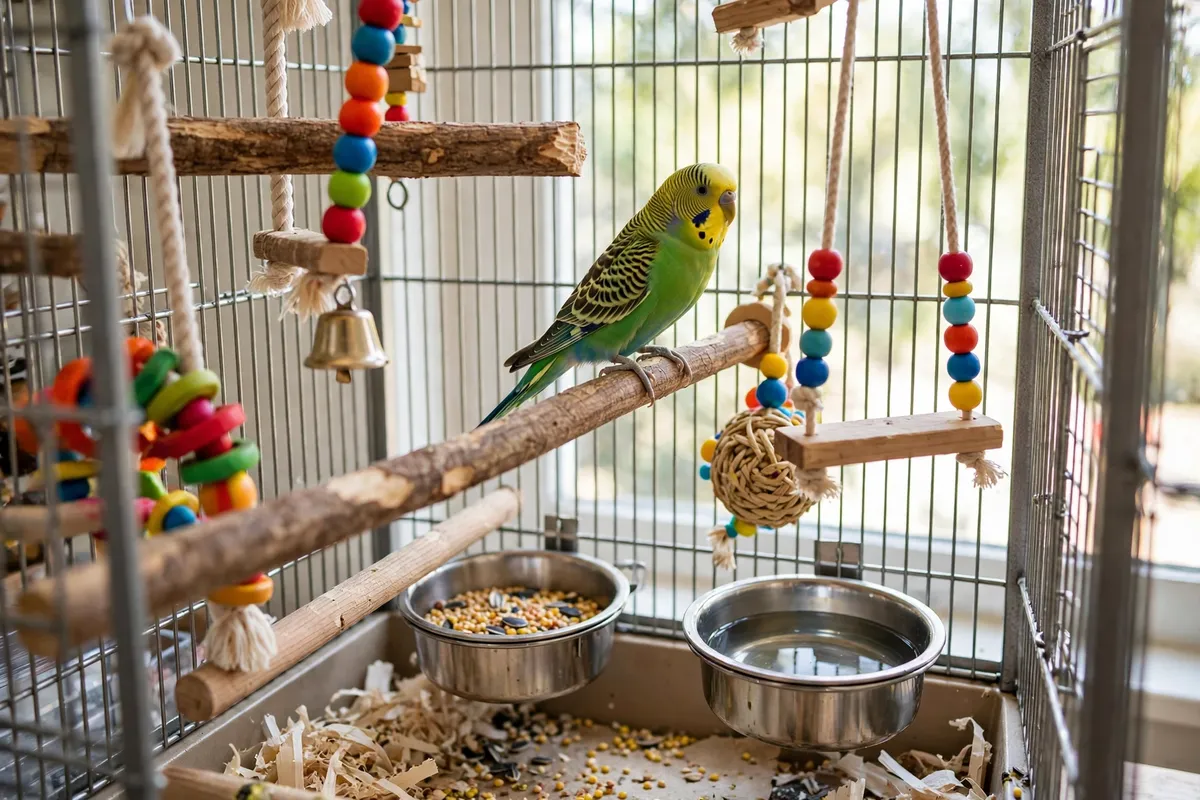
Setup is similar for both: place perches at different heights and at opposite ends so the bird moves between them, put food and water where the bird can reach them without climbing through droppings, and leave the middle open for flight or climbing. In a flight cage, keep the flight path clear — a toy hanging in the middle blocks the very flying the cage is built for. A detailed guide to flight cage setup and sizing covers perch placement and the minimum lengths different species need.
Which Cage Is Better for Your Bird?
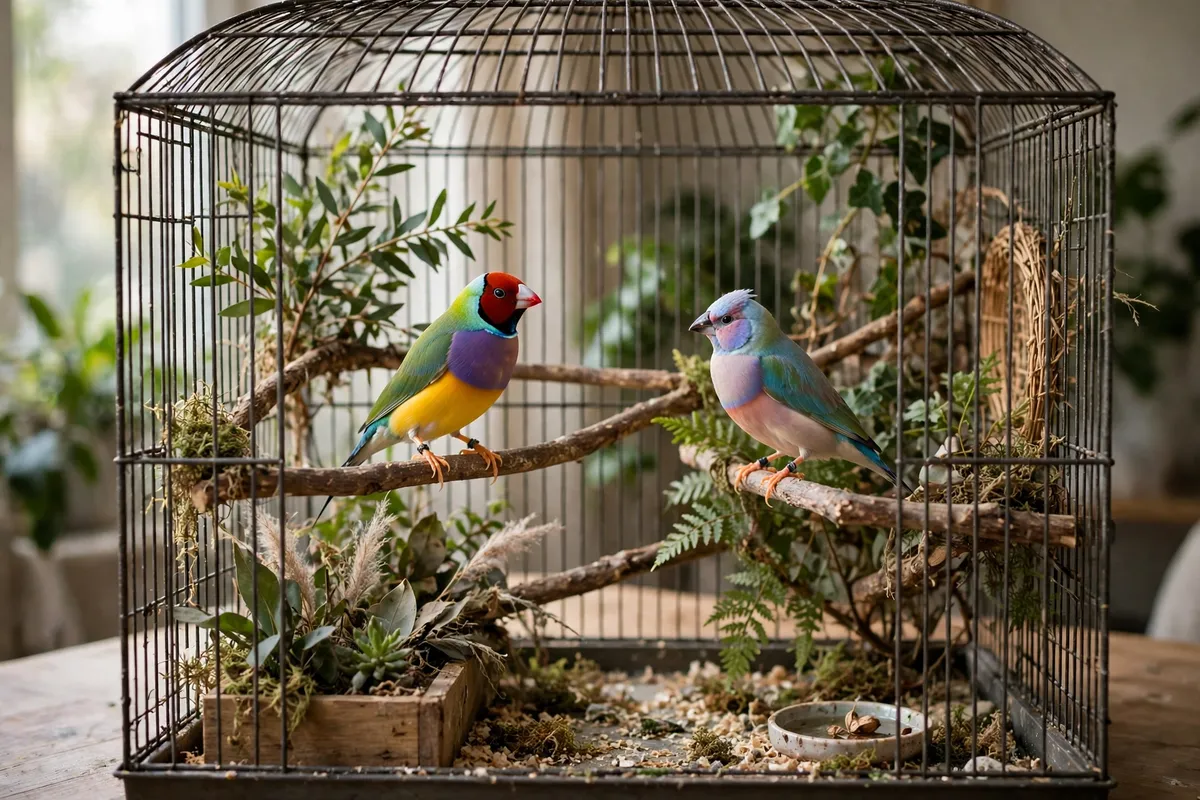
Choose a flight cage if: you keep finches or canaries, your bird spends most of the day inside, you work full-time, or you keep a pair or a small group. Finches and canaries should almost always live in a flight cage — they are flight-dependent birds, and a standard cage cannot meet their needs.
Choose a standard cage if: your bird gets several hours of supervised out-of-cage flight every day, you have very little floor space, you need a cage you can move between rooms, or you keep a single larger parrot that uses the cage mainly for sleeping and eating.
For budgies and cockatiels: either type works, and the deciding factor is out-of-cage time. A budgie that flies around the house for three hours a day is fine in a standard cage at least 30 inches wide. A budgie that stays in its cage while you are at work needs a flight cage. Our guide to the best bird cage for beginners can help you pick a cage that fits your bird and your home.
How to Pick the Right Size
Getting the size right matters more than the cage type. A cage should be wide enough for your bird to stretch both wings fully without touching the bars, and long enough for at least a short flight or several hops between perches.
A good rule for small birds: the cage should be at least 36 inches long for a single budgie or canary, and 40 to 60 inches long for a pair of finches or two budgies. For cockatiels, look for at least 30 to 36 inches of length. Bigger is always better if you have the space and the budget.
Measure your space before you buy, and check the bar spacing for your species before anything else — the wrong spacing makes even the biggest cage unsafe. Once the cage is home, the food matters as much as the housing: our guide to the best bird food for parakeets covers daily feeding, and our comparison of seed vs pellets for parrots explains which diet suits parrots best.
Frequently Asked Questions
Is a flight cage too big for one budgie?
No. A single budgie in a flight cage is a happy budgie — it will use every inch of the space.
Can a flight cage replace out-of-cage time?
Not fully. Even in a flight cage, a bird benefits from time outside — exploring, playing, and spending time with you. But a flight cage comes much closer to replacing it than a standard cage does.
Do flight cages work for large parrots?
Not really. A macaw or an African grey would need a cage the size of a room to fly in.
Is a tall cage better than a wide cage?
No. Birds fly horizontally, so width matters far more than height. A wide, shallow cage gives a bird more usable space than a tall, narrow one of the same volume.
The Bottom Line
Flight cage vs standard bird cage has no single winner, but the answer is clearer than most cage questions. A flight cage wins on space, exercise, and health, and it is the right choice for finches, canaries, and any bird that spends most of the day inside. A standard cage wins on price, floor space, and portability, and it works well for a bird that flies free for hours every day. Pick the biggest cage your home and budget allow, check the bar spacing for your species, and give your bird time outside the cage too — the cage is your bird’s home, not its whole world.