Covered vs Uncovered Litter Box: Which Do Cats Prefer?
Walk down the litter box aisle and you will see two very different boxes: the open tray your cat can step into from any side, and the hooded box with a lid, a door, and walls on every side. Both hold litter and both catch waste, but cats react to them very differently — and picking the wrong one is one of the most common reasons a cat starts going outside the box.
The covered vs uncovered litter box debate has no single winner. Some cats love the privacy of a hood. Others refuse to step inside a covered box at all. The right choice depends on your cat’s personality, your home, and how often you are willing to clean.
Prices change, so check the current price before buying.
Covered vs Uncovered Litter Box at a Glance
| Feature | Covered Litter Box | Uncovered Litter Box |
|---|---|---|
| Privacy | High — enclosed on all sides | None — open on every side |
| Smell control | Traps odors inside the box | Odors spread into the room |
| Litter scatter | Less — walls catch kicked litter | More — litter lands on the floor |
| Cleaning | Slower — lid and door come off first | Fast — scoop straight from the top |
| Size | Bigger footprint, taller | Smaller, fits under furniture |
| Cat’s view | Cannot see out while inside | Can see the room while using it |
| Escape routes | One door only | Can leave from any side |
| Best for | Shy cats, small flats, odor control | Kittens, large cats, anxious cats |
| Cost | Usually more expensive | Usually cheaper |
| Litter tracking | Less on the floor | More on paws and floor |
| Airflow | Poor — smells build up inside | Good — fresh air all around |
| Looks | Tidier, hides the mess | The mess is visible |
What Is a Covered Litter Box?
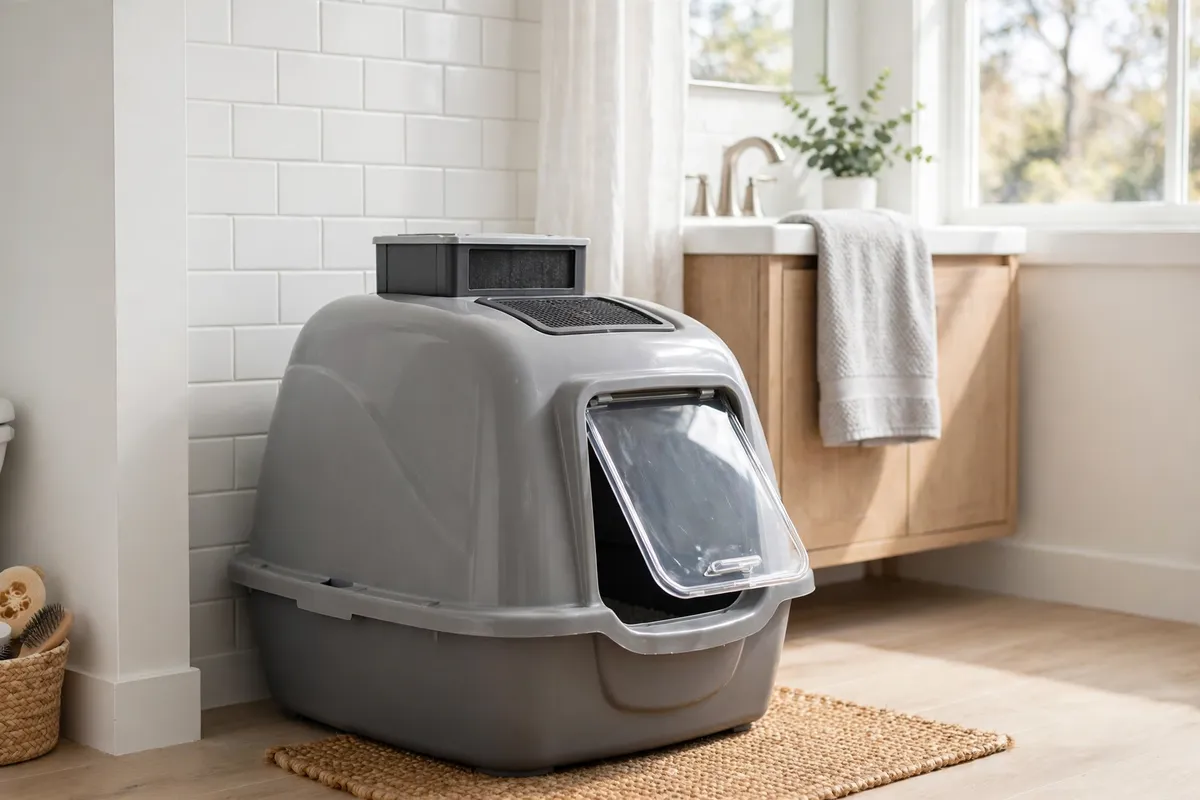
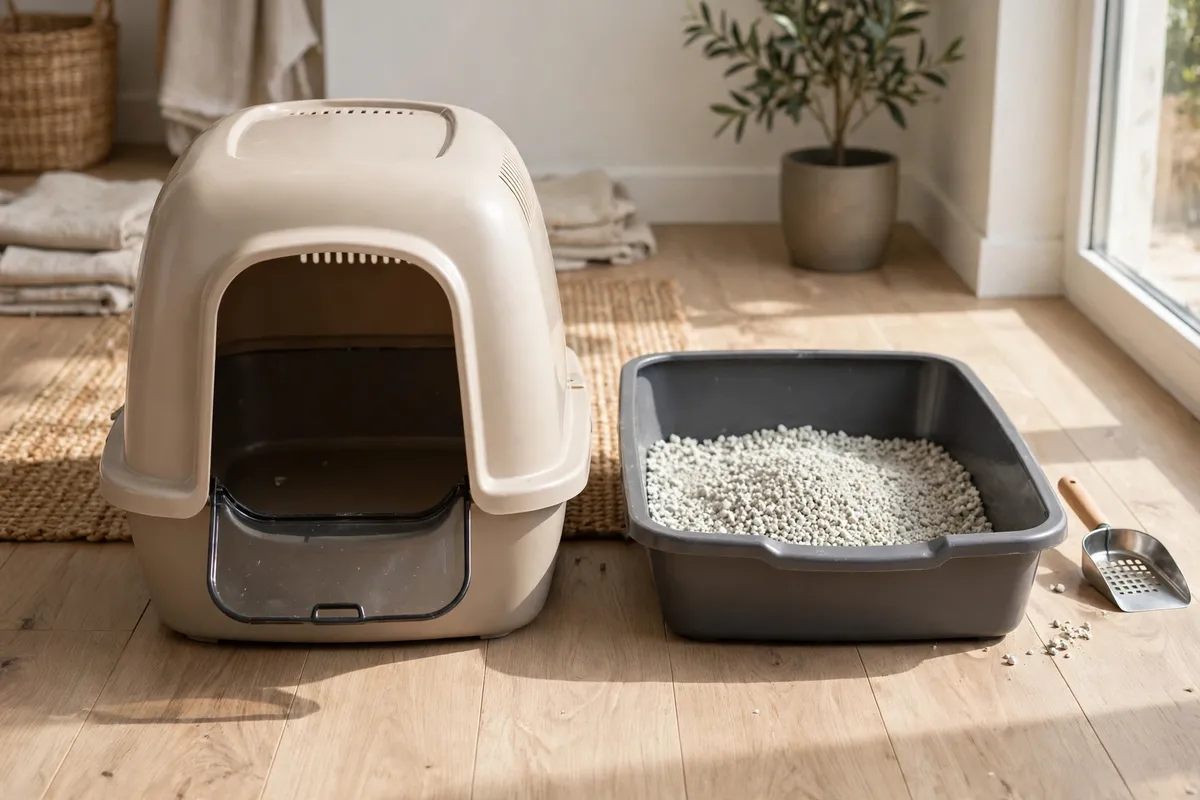
A covered litter box is a litter tray with a hood on top. Most have a swinging door at the front, a removable lid, and sometimes a charcoal filter in the roof to cut down smells. The cat steps through the door, does its business inside a small enclosed space, and steps back out.
Covered boxes were designed for people: they hide the litter, keep smells in, and stop litter being kicked across the floor. For some cats, the privacy is a bonus too.
The trade-off is what the cat experiences inside. A covered box is dark, the air is still, and the smell of the litter is concentrated in a small space. A cat’s sense of smell is far stronger than ours, so a box that smells fine to you can smell overpowering to the cat inside it.
What Is an Uncovered Litter Box?
An uncovered litter box is the classic open tray: a shallow plastic box with low or high sides and nothing on top. The cat steps in from any side, uses it, and steps out. There is no door to push through and nothing overhead.
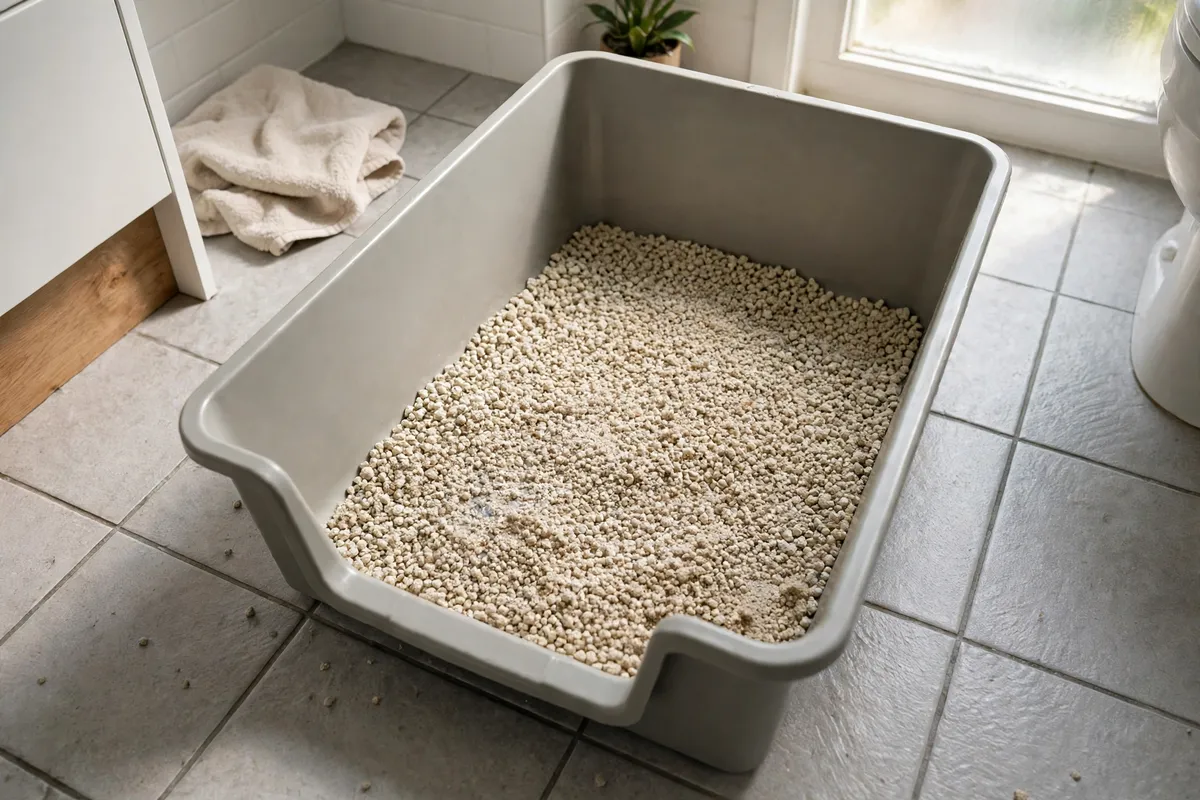
An open tray is the closest thing to what a cat would choose outdoors — a patch of loose ground it can see around while it goes. Most cats accept an open tray immediately, including kittens, older cats, and cats that have never used a litter box before.
The trade-off is for the owner, not the cat. Smells drift into the room, litter gets kicked onto the floor, and the box itself is always on display. If you want a tidy-looking home, an open tray takes more work.
Privacy vs Feeling Trapped
Privacy is the covered box’s best selling point — and its biggest risk. A confident cat may enjoy the shelter of a hood. But many cats feel trapped in a covered box, and a trapped cat is a stressed cat.
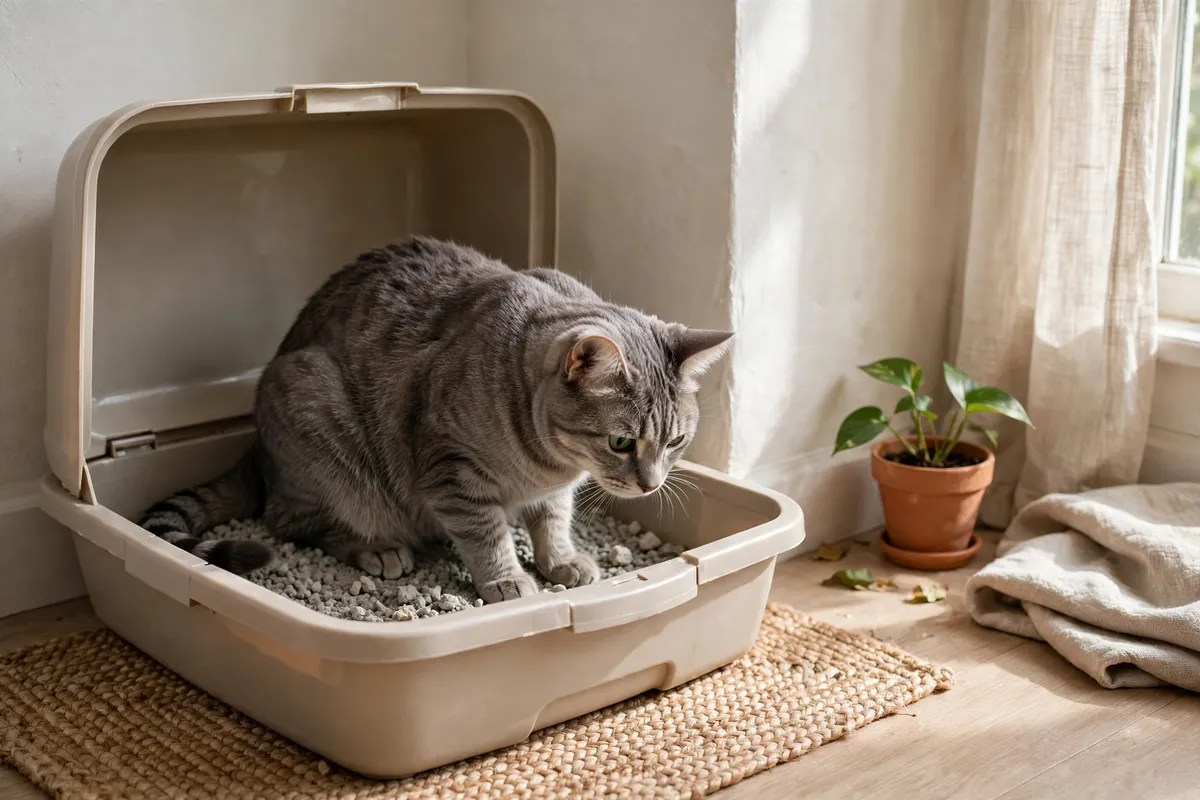
The problem is the single door. In a multi-cat home, one cat can sit outside the door and block the other cat in — or ambush it on the way out. Cats that have been bullied by another cat in the house often refuse covered boxes completely, and owners mistake that for a litter problem when it is really a bully problem.
An open tray has no such trap. The cat can see in every direction while it goes and can leave from any side if another cat approaches. For nervous cats, older cats, and any home with more than one cat, that escape route matters more than privacy.
The ASPCA’s guide to litter box problems makes the same point: many cats that stop using the box are reacting to the box itself, and switching to a large uncovered box is often the first fix vets and behaviorists suggest.
Smell and Cleanliness
A covered box does contain smells — for the room. Inside the box, it concentrates them. Every time your cat steps in, it breathes air thick with ammonia from its own waste, which is unpleasant and can put a cat off using the box at all.
An uncovered box lets smells spread into the room, which is worse for you but better for the cat. The fix is not a lid — it is scooping. Scoop once or twice a day, change the litter fully once a week, and wash the box with warm water and mild soap. A clean open box smells less than a dirty covered one.
Litter scatter is the covered box’s real win. High walls catch the litter a cat kicks up while digging, so less of it ends up on your floor. An open tray with high sides does much of the same job without a lid — look for a tray with sides at least 8 to 10 inches high if scatter is your main complaint.
Size and Comfort
A litter box should be big enough for the cat to turn around in easily. The rule is simple: the box should be at least one and a half times as long as the cat, from nose to tail base. For a large cat, that means a box around 24 inches long.
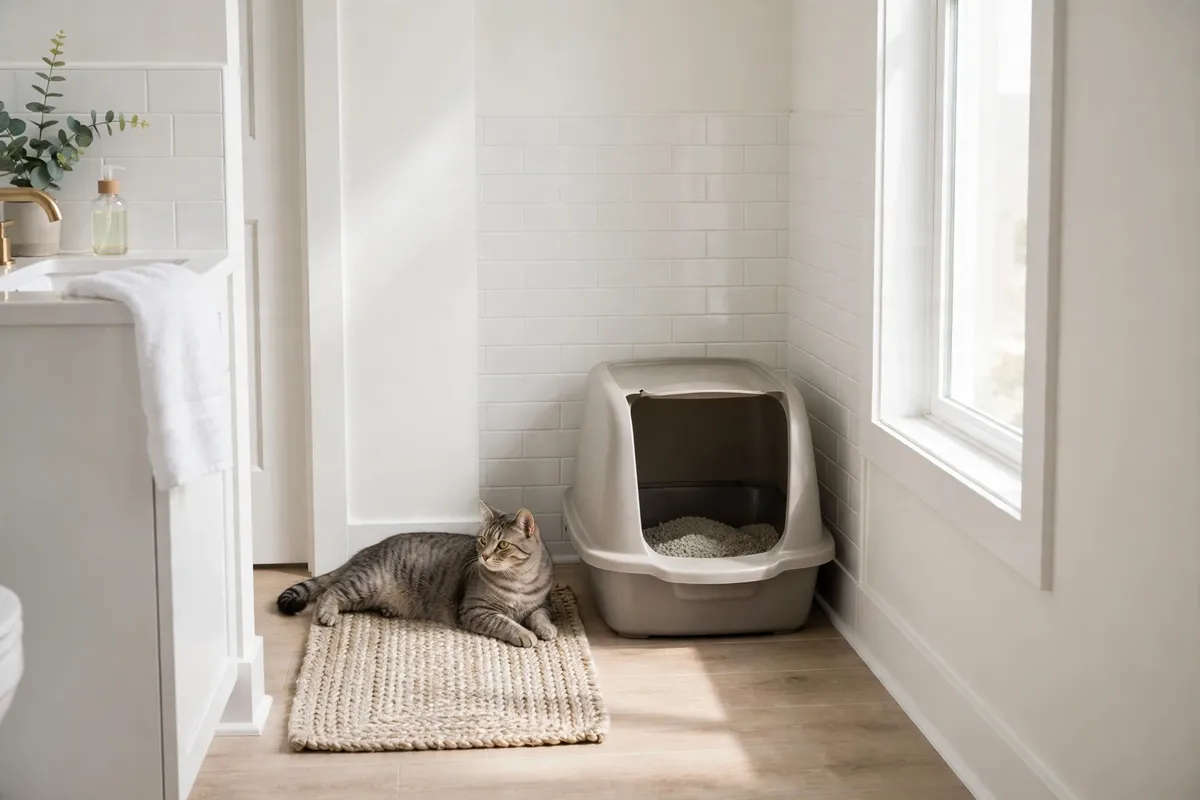
Covered boxes are often smaller inside than they look, because the hood slopes inward and the door opening takes up space. A big cat in a small covered box has to crouch, and a long cat may not fit at all. Kittens and very old cats also struggle with the door flap — a kitten may not be strong enough to push it, and an arthritic cat may find the step over the door lip painful.
An open tray has no such limits. The cat can step in low, turn freely, and choose its own spot. If your cat is large, old, or very young, an open tray is almost always the kinder choice.
Cleaning and Maintenance
Cleaning a covered box takes longer. You have to lift off the lid, remove the door, scoop, then put it all back together. The lid and the door collect litter dust and need washing too, and the charcoal filter — if the box has one — needs replacing every few weeks.
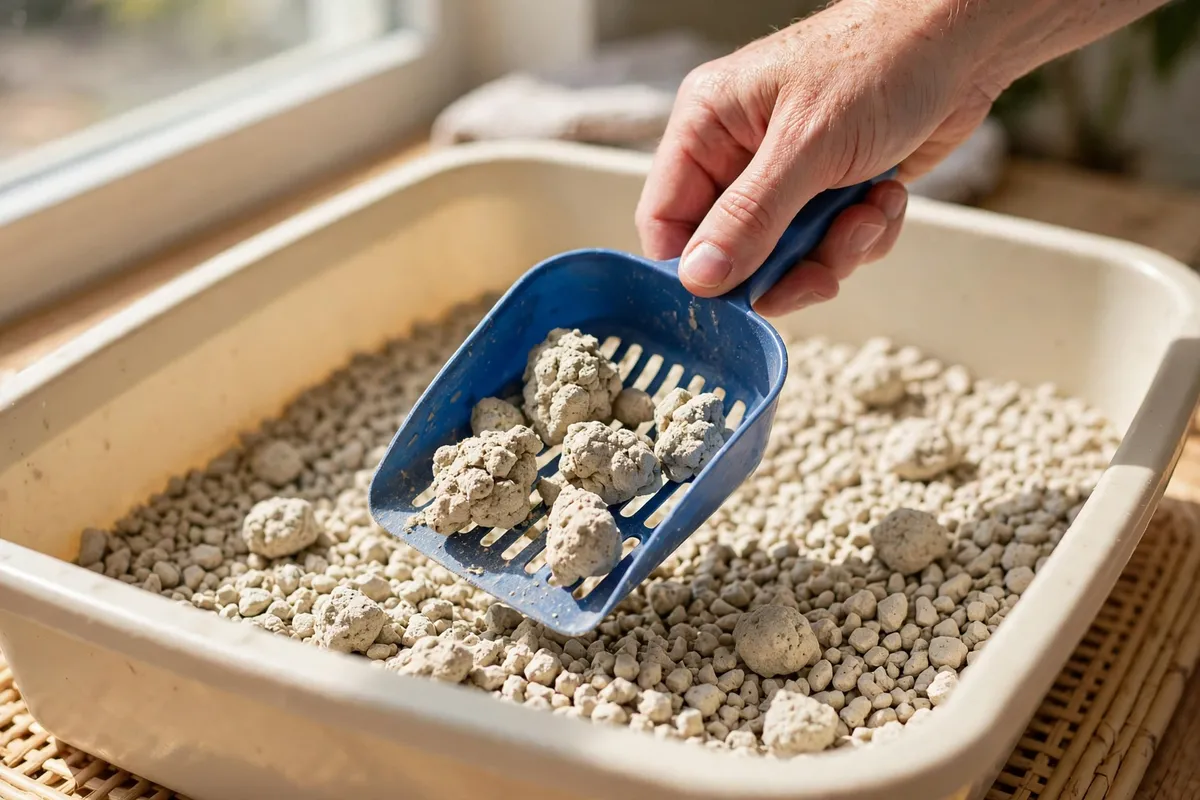
An open tray takes seconds: scoop, done. You can see at a glance whether it needs a full change, and there are no extra parts to wash. The RSPCA’s cat care advice covers the basics — a clean box, fresh litter, and a quiet spot — and those basics matter far more than whether the box has a lid.
Whichever type you choose, keep one simple habit: scoop every day. A cat that finds a dirty box will look for a cleaner place, and the cleanest place in the house is usually your bed or the laundry basket.
Which Box Is Better for Your Cat?
Choose a covered litter box if: your cat already uses one happily, you live in a small flat where smell matters, you have a shy cat that hides a lot, or litter scatter is driving you mad. Even then, pick a large one with a removable door — many cats accept a covered box once the flap is taken off.
Choose an uncovered litter box if: you have a kitten, an older cat, a large cat, more than one cat, or a cat that has ever gone outside the box. An open tray is also the right first box for any new cat, because it removes one more thing the cat has to learn.
If your cat stops using the box: do not assume it is being naughty. First, try an uncovered box in a quiet spot. If the problem continues, see your vet — urinary problems are common in cats and often show up as going outside the box. Our comparison of clumping vs non-clumping cat litter can help you pick a litter your cat likes, and our roundup of the best cat litter for multiple cats covers litter that copes with a busy household.
How to Switch From One Type to the Other
If you want to change types, do it slowly. Put the new box next to the old one and let your cat investigate it for a few days. Put a scoop of used litter from the old box into the new one so it smells familiar.
For a covered box, leave the door off at first. Many cats accept the hood once they are used to stepping in and out without pushing a flap. If your cat uses the new box for a week, you can take the old one away. If it refuses, do not force it — the old type was the right one.
Keep the box in a quiet, low-traffic spot, away from the cat’s food and water. And remember the golden rule: one box per cat, plus one extra. Two cats need three boxes, and they should be in different rooms, not side by side. Whatever box you choose, give your cat somewhere high to sit nearby as well — cats feel safer with a perch to retreat to. Our roundup of the best cat trees for large cats covers tall, sturdy options that suit multi-cat homes.
Frequently Asked Questions
In the covered vs uncovered litter box debate, which do cats prefer?
Most cats prefer uncovered boxes. Studies and vet surveys consistently find that cats choose open trays when given the choice, because they can see around and escape easily. A minority of shy cats like the privacy of a hood.
Does a covered litter box really control smell?
It keeps smell out of the room, but it traps the smell inside the box, which cats dislike. A clean open box with daily scooping smells less to the cat than a dirty covered one.
Can kittens use a covered litter box?
They can, but an open tray is better to start with. Kittens may not be strong enough to push the door flap, and a low-sided open tray is easier for a small kitten to climb into.
How often should I clean the litter box?
Scoop once or twice a day, change the litter fully once a week, and wash the box with warm water and mild soap when you change it. A covered box needs the lid and door washed too.
The Bottom Line
Covered vs uncovered litter box has no single winner, but the cats have voted: most of them prefer an open tray. A covered box wins on smell control, litter scatter, and looks, and it suits a confident, shy cat in a small home. An uncovered box wins on comfort, airflow, and escape routes, and it is the safer choice for kittens, older cats, large cats, and multi-cat homes. Pick the box your cat will actually use, keep it clean every day, and put it somewhere quiet — the lid matters far less than the litter inside it.