Clumping vs Non-Clumping Cat Litter: Which Should You Choose?
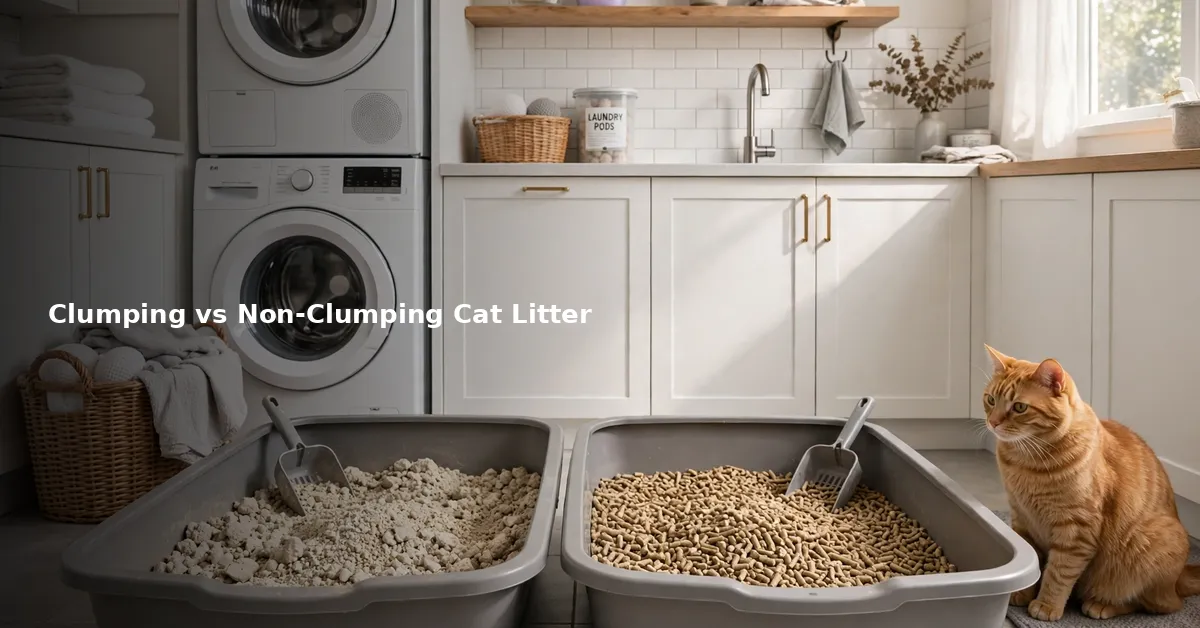
Walk down the cat litter aisle and you will see two big camps: clumping and non-clumping. Both promise a clean box and a fresh-smelling home, but they work very differently — and the wrong pick can mean more mess, more smell, or a cat that refuses the box.
So which is better in the clumping vs non-clumping cat litter debate? It depends on your cat, your home, and how much cleaning you will do. This guide compares the two on odor, dust, tracking, cost, kitten safety, and cleaning.
Table of Contents
- What Is Clumping Cat Litter?
- What Is Non-Clumping Cat Litter?
- Clumping vs Non-Clumping Cat Litter: Side-by-Side Comparison
- Odor Control
- Ease of Cleaning
- Dust and Allergies
- Tracking Around the House
- Cost Over a Month
- Kitten Safety
- Multi-Cat Homes and Automatic Litter Boxes
- How to Switch Your Cat to a New Litter
- FAQ: Clumping vs Non-Clumping Cat Litter
- The Bottom Line
What Is Clumping Cat Litter?
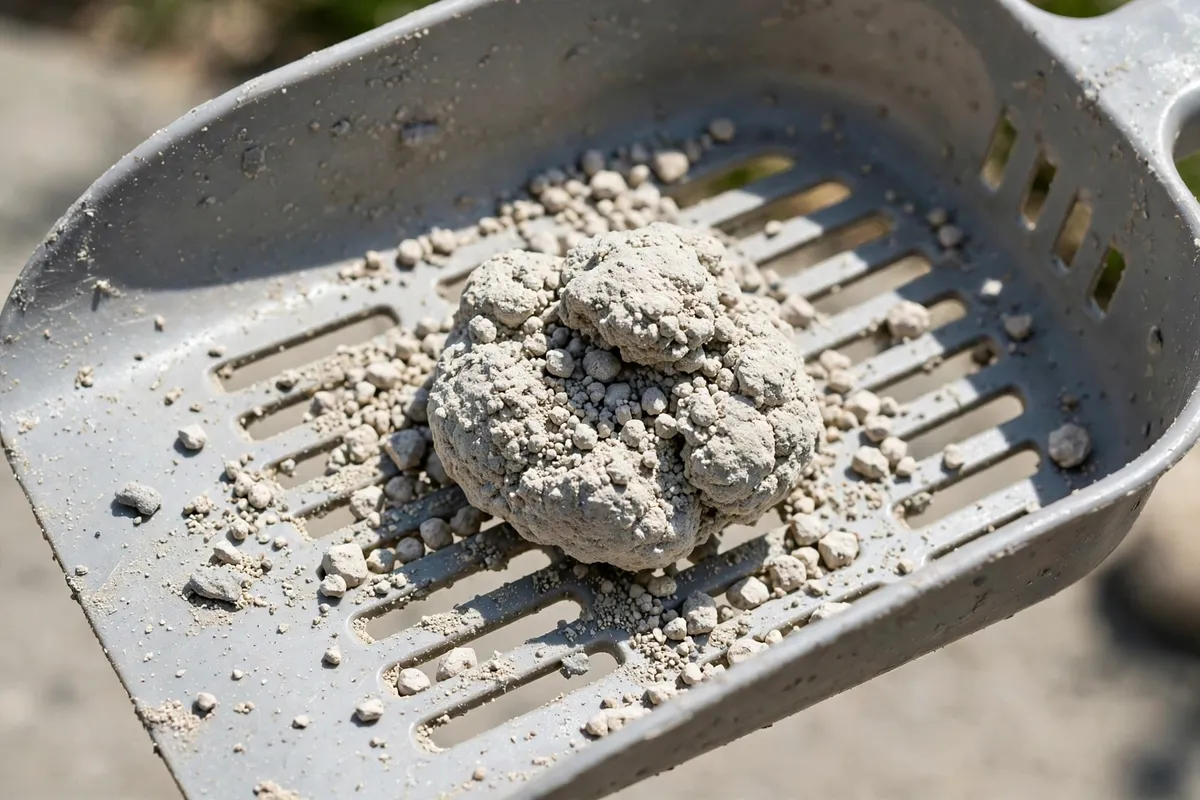
Clumping litter is usually made from sodium bentonite clay. When wet, the clay swells and binds into a firm, scoopable lump. You scoop out the clump and the rest stays clean. Most clumping litters are fine-grained, which cats like because it feels soft under their paws.
Because you only remove the soiled parts, a bag lasts longer — the main reason it is the most popular type in the US and UK. For more on odor, see our guide to the best cat litter for odor control. Never flush clumping litter: the clumps can swell and block pipes, so always bag it and bin it.
What Is Non-Clumping Cat Litter?
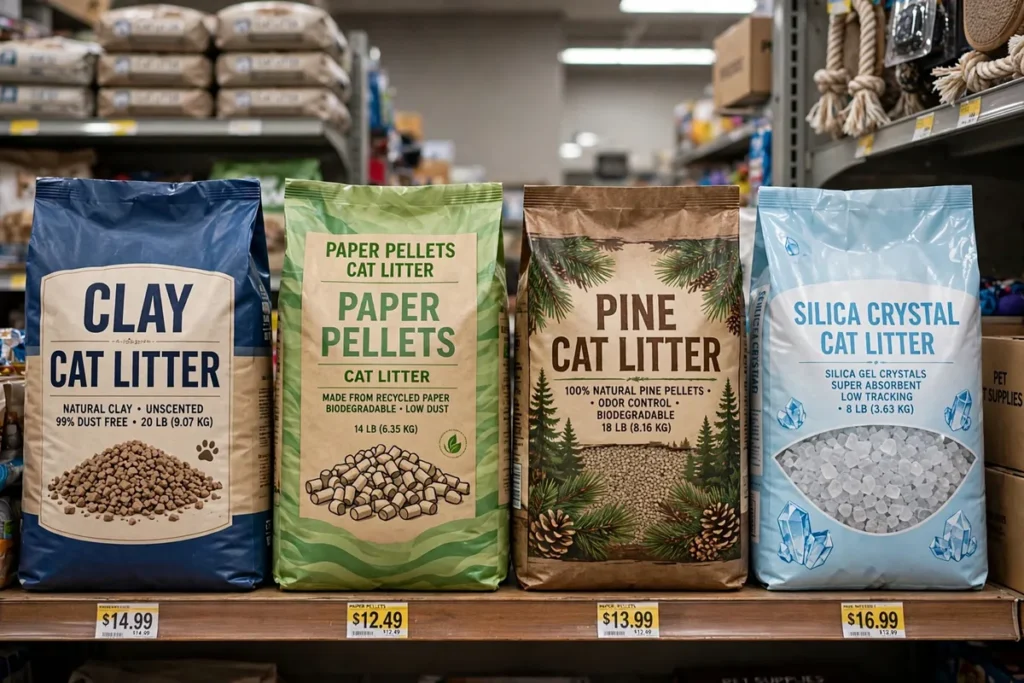
Non-clumping litter absorbs moisture but does not form lumps: urine spreads and is soaked up, while solids are scooped out as usual. It comes in a wider range: regular clay, recycled paper pellets, pine or wood pellets, and silica gel crystals.
Because there are no clumps to remove, the whole box needs emptying more often — usually once or twice a week. The upside is that many non-clumping litters are lighter, produce less dust, and are made from natural or recycled materials. Silica crystals are the exception: they can last several weeks before a full change, though they cost more. Paper litter is also the type vets most often recommend for kittens and for cats recovering from surgery.
Clumping vs Non-Clumping Cat Litter: Side-by-Side Comparison
| Feature | Clumping Litter | Non-Clumping Litter |
|---|---|---|
| How it works | Forms firm lumps when wet | Absorbs moisture without lumps |
| Main materials | Sodium bentonite clay | Clay, paper, pine, wood, silica crystals |
| Odor control | Excellent — waste removed daily | Good, but fades as litter saturates |
| Ease of cleaning | Scoop daily; full change every 2–4 weeks | Scoop solids daily; full change 1–2× a week |
| Dust | Often dusty; low-dust formulas cost more | Usually lower dust, especially paper and pine |
| Tracking | Fine grains stick to paws and spread | Pellets track less; crystals scatter a little |
| Cost per month | Usually lower — you use less | Usually higher — full changes use more |
| Kitten safety | Not for kittens under 4 months | The safer choice for young kittens |
| Multi-cat homes | Best — easy to keep up with scooping | Workable, but needs frequent full changes |
| Automatic boxes | Works with most self-cleaning boxes | Many automatic boxes need clumping litter |
| Eco-friendliness | Clay is mined, not biodegradable | Paper, pine, and wood are biodegradable |
| Flushable | No — never flush clumping litter | Some wood/paper types claim to be — check local rules |
Odor Control
Odor control is where clumping litter usually wins: you scoop out the urine in a sealed clump every day, so the smell never builds up. A well-kept clumping box can smell like almost nothing.
Non-clumping litter controls odor differently: it absorbs the urine, and the smell stays trapped until you change it. Silica crystals do this job well — they trap moisture in tiny pores and hold odor for weeks. Paper and pine are decent for a few days, but once the whole bed is saturated, the smell comes back fast. Whichever type you choose, the biggest factor in odor control is you: a box scooped daily smells better than any “odor control” formula scooped once a week. PetMD’s guide to the best cat litter makes the same point — cats prefer unscented, medium-fine litter.
Ease of Cleaning
Clumping litter is the low-effort winner for daily cleaning. Scooping takes about a minute: lift out the clumps and solids, top up if it is running low, and you are done. A full dump and wash is only needed every two to four weeks.
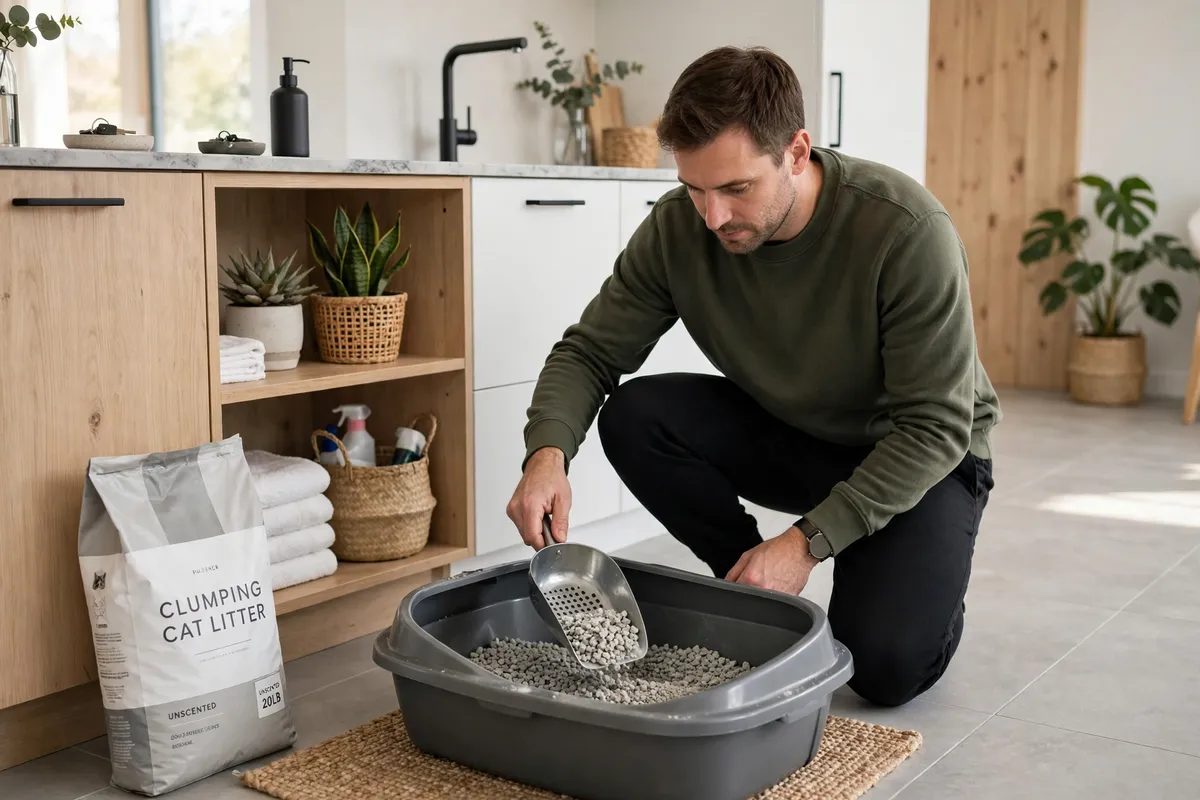
Non-clumping litter asks more of you. You still scoop solids daily, but the urine stays in the box, so you need to tip out the whole bed once or twice a week. Silica crystals are the exception — many owners go three to four weeks between full changes — but they cost more, and some cats dislike the crunchy feel. If you use a self-cleaning box, check the manual first: most automatic boxes are designed for clumping litter, as our PetSafe ScoopFree review explains.
Dust and Allergies
Clumping clay litter is the dustier of the two: pouring it sends up a visible cloud, and scooping stirs up more. For most healthy cats and owners, that is just an annoyance. But if your cat has asthma — or if you do — that dust matters: fine clay dust can irritate airways and trigger coughing or sneezing.
Low-dust clumping formulas help, and they are worth the small extra cost if anyone in the house has breathing trouble. But even “99% dust-free” clay is rarely completely dust-free. Non-clumping litters are usually the better pick: paper pellets and pine are nearly dust-free, and silica crystals produce very little dust too. If your cat has feline asthma, a paper or pine litter is often the first thing a vet will suggest — along with unscented formulas.
Tracking Around the House
Tracking — the granules your cat carries out of the box on their paws — adds up fast. Fine-grained clumping litter tracks the most, because the small grains stick to paws and fur. Larger-grain formulas track less, but they are still clay.
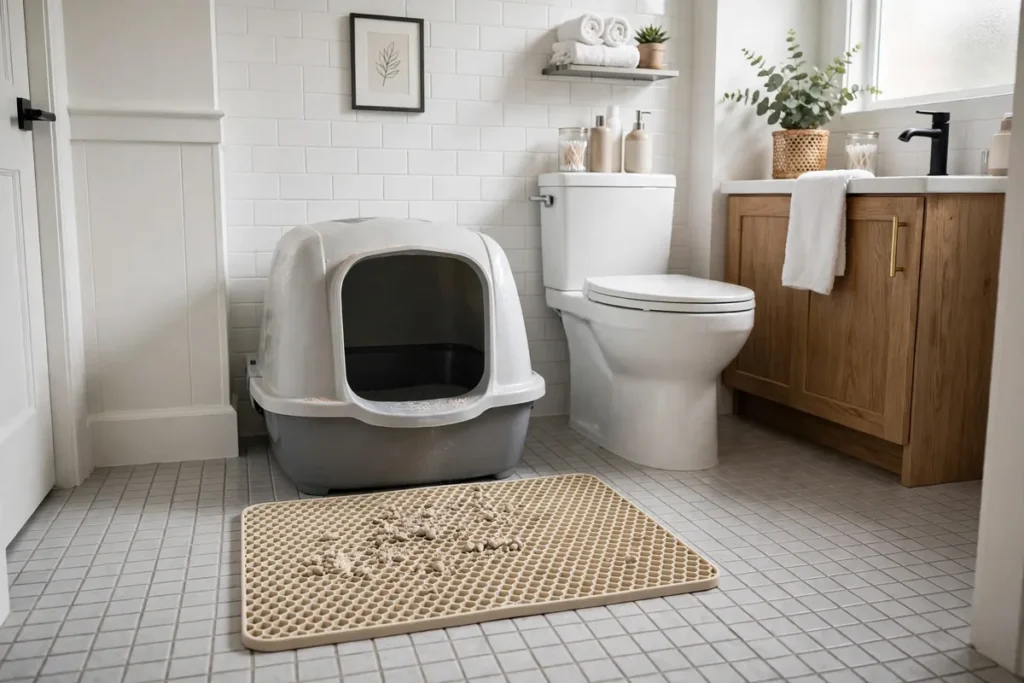
Non-clumping pellets, especially paper and pine, track the least. The pellets are big and smooth, so they fall off paws right outside the box. Silica crystals are small and scatter, though a litter mat catches most. Whatever litter you use, a litter mat outside the box catches a surprising amount, and a hard floor beats carpet for cleanup.
Cost Over a Month
Clumping litter usually works out cheaper over a month, even though a bag can cost more upfront: you only throw away the soiled clumps, so a single bag stretches further — most single-cat homes go through one bag every three to four weeks.
Non-clumping litter looks cheaper on the shelf, but you use much more of it because the whole box gets replaced every few days. Paper and pine are the most affordable non-clumping options, while silica crystals cost the most per bag — though they last the longest.
Kitten Safety
This is the one area with a clear winner — non-clumping litter. Kittens under four months old explore with their mouths and sometimes eat litter. If a kitten swallows clumping litter, the clay can swell inside their tiny intestines and cause a dangerous blockage — which is why vets recommend non-clumping litter for young kittens.
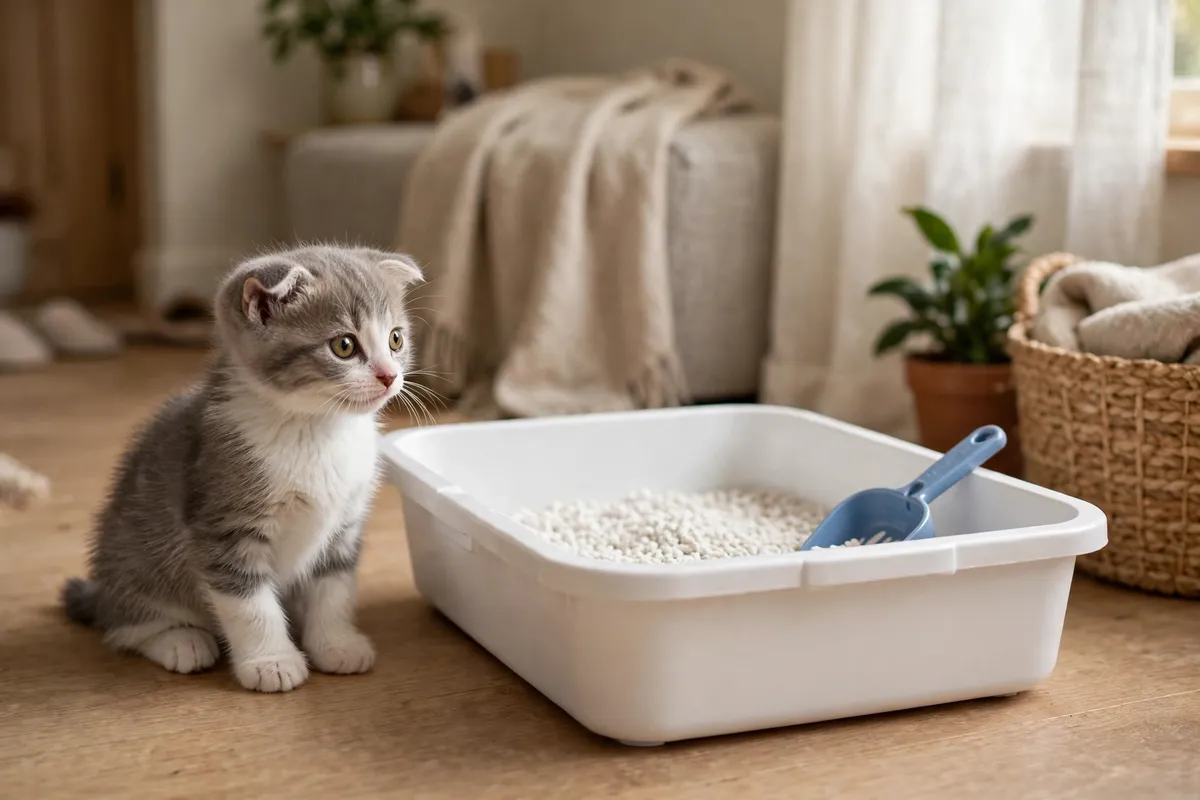
Once your kitten is past four months and has stopped tasting everything, you can switch to clumping litter — gradually, over a week, mixing a little more of the new litter into the old each day. The same caution applies to adult cats that eat litter: it can be a sign of a health problem, so talk to your vet — and switch to a non-clumping type in the meantime.
Multi-Cat Homes and Automatic Litter Boxes
In a multi-cat home, clumping litter is almost always the practical choice: with two or three cats using the same boxes, the litter gets dirty fast, and scooping out just the soiled parts keeps the boxes usable between full changes. The standard rule is one box per cat, plus one extra — so three cats need four boxes — and that rule matters even more with non-clumping litter, where the whole bed saturates quickly. Our guide to the best cat litter for multiple cats covers what works best when several cats share the house.
Automatic litter boxes are a different story. Most self-cleaning boxes are built around clumping litter: they rake clumps into a waste compartment minutes after your cat leaves. Non-clumping litter does not form clumps for the rake to catch, so it can clog the mechanism.
How to Switch Your Cat to a New Litter
Cats are creatures of habit, and some will refuse a new litter outright — which means accidents on the carpet. Never switch cold turkey. Start with a second box: put the new litter in a spare box next to the old one and let your cat choose.
Then mix gradually: over seven to ten days, add a little more of the new litter each day — about a quarter more each time. If your cat starts going outside the box, go back a step: you moved too fast. If your cat still refuses after two weeks, they are telling you something. Some cats have a genuine texture preference — often for the fine, sandy feel of clumping clay — and it is not worth a litter box boycott to force the issue. The ASPCA’s guide to litter box problems explains how litter preference works and why offering two types side by side is the best way to let your cat decide.
FAQ: Clumping vs Non-Clumping Cat Litter
Is clumping cat litter safe for cats?
Yes, for healthy adult cats. The concern applies to young kittens under about four months old, who may eat litter and risk a blockage from the swelling clay. Adult cats that eat litter should see a vet, whatever type they use.
Does non-clumping litter control odor as well as clumping litter?
It can, but it takes more work: silica crystals control odor very well for weeks, while paper and pine last a few days, then need a full change. Clumping litter controls odor best with the least effort, because you remove the soiled litter every day.
How often should I change non-clumping litter completely?
For clay, paper, or pine, plan a full change once or twice a week for one cat, more often with multiple cats. Silica crystals can last three to four weeks. Scoop solids out daily, whatever type you use.
The Bottom Line
In the clumping vs non-clumping cat litter debate, there is no single winner — there is a winner for your household. For most adult cats, clumping litter is the practical choice: better odor control, easier cleaning, and lower monthly cost. For kittens under four months, cats with asthma, and owners who want a biodegradable option, non-clumping litter is the smarter pick. The best test: put two boxes side by side and let your cat vote. The litter your cat actually uses is always the right one.
Prices change — check the current price before buying.
Disclaimer: This article is for general information only and is not a substitute for professional veterinary advice. If your cat is eating litter, avoiding the litter box, straining to urinate, or showing any sign of illness, contact your veterinarian promptly.