Best Cat Litter for Odor Control (2026): 5 Picks That Actually Work
Finding the best cat litter for odor control is the fastest way to make a smelly litter box livable again.
A smelly litter box is the number one complaint of cat owners — and the wrong litter makes it worse. The best odor-control litters trap smells with activated charcoal, baking soda, or natural clay, form tight clumps so waste is easy to scoop, and stay low-dust so they are safer for you and your cat. This guide picks five litters that are widely recommended for odor control, explains clumping versus non-clumping, and covers multi-cat homes, small apartments, and dust and allergy concerns. The litter also works best in the right box — see our IRIS Top Entry Cat Litter Box review.
Table of Contents
Prices change — check the current price before buying.
Quick picks
| Best for | Pick | Why it stands out |
|---|---|---|
| Best overall | Dr. Elsey’s Ultra | Hard clumps, low dust, strong odor control, widely recommended by vets |
| Best for multi-cat homes | Arm & Hammer Clumping Litter | Baking soda odor control, designed for multiple cats |
| Best natural option | World’s Best Cat Litter | Corn-based, flushable, good odor control without clay |
| Best for small apartments | Fresh Step with Febreze / Fresh Step Outstretch | Strong odor control, long-lasting, good for tight spaces |
| Best low-dust | Dr. Elsey’s Ultra / ökocat Dust Free | Very low dust, good for cats and owners with allergies |
1. Dr. Elsey’s Ultra — Best Overall
Dr. Elsey’s Ultra is a clay clumping litter that is frequently recommended by veterinarians and cat owners for odor control. It forms hard, tight clumps that are easy to scoop, which keeps the box cleaner between full changes. It is also low-dust, which is better for cats with respiratory sensitivity and for owners with allergies.
Good for: Most households — a reliable, low-dust, strong odor-control default.
Watch out for: Clay litter is heavy to carry, and it is not flushable.
2. Arm & Hammer Clumping Litter — Best for Multi-Cat Homes
Arm & Hammer’s clumping litter uses baking soda, which is a natural odor absorber, and it is specifically formulated for homes with more than one cat. In a multi-cat home, the litter box gets used far more often, so odor control and strong clumping matter even more. This litter is widely available and usually affordable.
Good for: Homes with two or more cats, and owners who want baking soda odor control.
Watch out for: Some scented versions can be strong — if your cat avoids the box, try the unscented version.
3. World’s Best Cat Litter — Best Natural Option
World’s Best Cat Litter is made from whole-kernel corn instead of clay, so it is lighter, biodegradable, and flushable (check your local plumbing rules first). It clumps well, controls odor naturally, and produces very little dust. It is a good choice if you want to avoid clay-based litter.
Good for: Owners who want a natural, lighter, flushable litter.
Watch out for: It can track more than clay litter, so a litter mat helps. It also costs more per bag than basic clay litter.
4. Fresh Step Outstretch — Best for Small Apartments
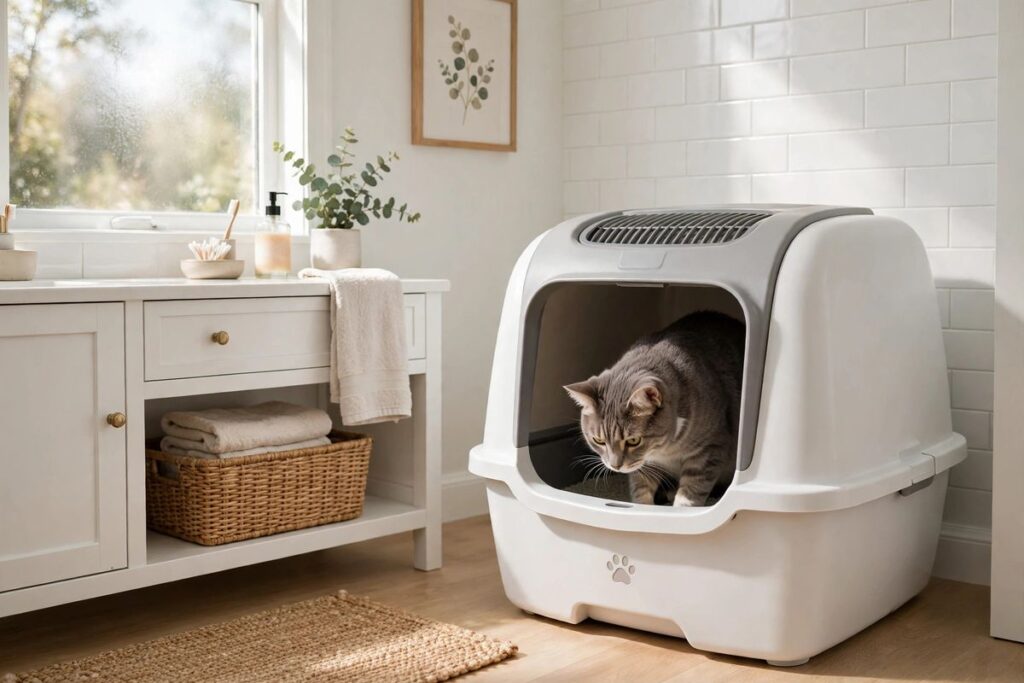
In a small apartment, there is nowhere for litter box smell to hide. Fresh Step Outstretch is designed to last longer between changes, with strong odor control and a formula that stretches further than standard litter. The Febreze versions add extra odor fighting, which helps in tight spaces — but if your cat is sensitive to scent, choose the unscented version.
Good for: Small apartments and homes where the litter box is close to living areas.
Watch out for: Scented litter can put some cats off. If your cat stops using the box after a litter change, switch back to an unscented litter.
5. ökocat Dust Free — Best Low-Dust
ökocat is made from natural wood fiber and is designed to be virtually dust-free, which is good for cats with asthma or respiratory problems and for owners with allergies. It clumps, controls odor, and is biodegradable. It is lighter than clay litter, which makes it easier to carry and pour.
Good for: Cats or owners with allergies, asthma, or dust sensitivity.
Watch out for: Wood-based litter feels different from clay, so some cats need a gradual transition — mix it with the old litter for a week.
Clumping vs. non-clumping litter
- Clumping litter forms solid clumps around urine, so you can scoop waste out daily and the rest of the litter stays clean. This is usually the best choice for odor control, because waste does not sit in the box.
- Non-clumping litter absorbs moisture but does not form clumps, so the whole box needs changing more often. It is usually cheaper per bag, but it controls odor less well over time.
- For odor control, clumping litter wins in most homes — scoop daily, top up the litter, and do a full change every two to four weeks.
Odor control tips that matter more than the brand
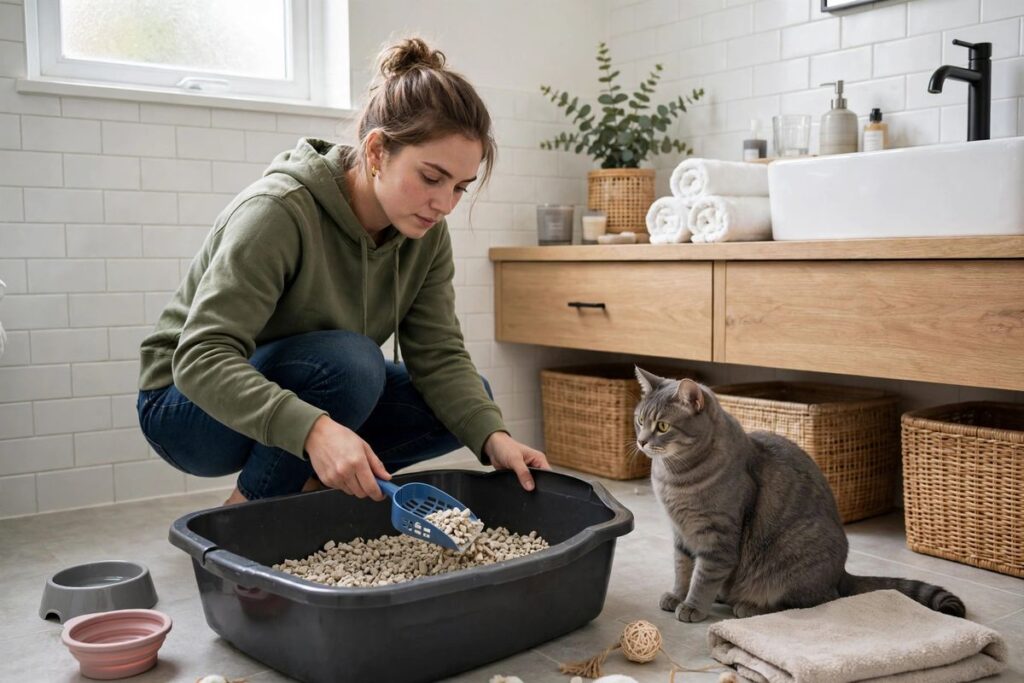
- Scoop every day. No litter can control odor if waste sits in the box for days.
- One box per cat, plus one extra. The rule of thumb is one litter box per cat, plus one spare. This is the single best thing you can do for odor in a multi-cat home.
- Keep 3–4 inches of litter in the box. Too little litter means urine pools at the bottom and smells worse.
- Clean the box itself. Wash the empty box with mild soap and water every time you do a full litter change.
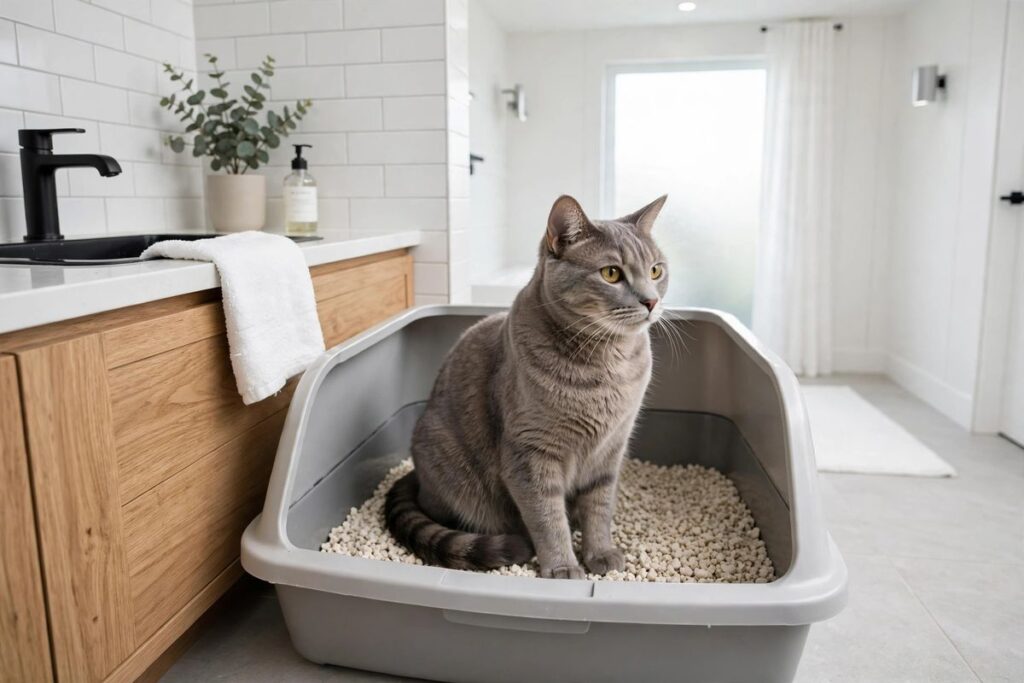
- Place the box well. A ventilated spot away from food and sleeping areas helps, but do not put it somewhere your cat feels trapped.
Small apartments and multi-cat homes
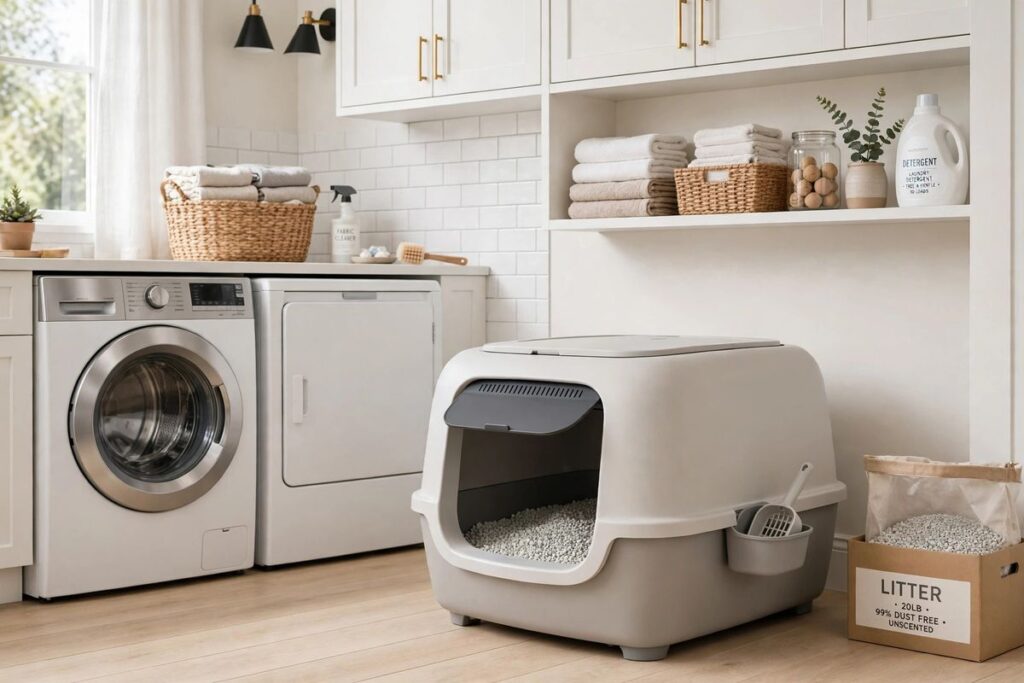
- Small apartments: Choose a litter with strong odor control, scoop daily, and consider a covered box or a litter cabinet — but only if your cat is comfortable with it. Some cats refuse covered boxes.
- Multi-cat homes: Use the one-box-per-cat-plus-one rule, and consider a litter designed for multiple cats, such as Arm & Hammer multi-cat or Dr. Elsey’s Ultra. Scoop twice a day if you can.
Dust and allergy notes
- Low-dust litter is worth it if anyone in the home — cat or human — has allergies or asthma. Dr. Elsey’s Ultra and ökocat are both known for low dust.
- Avoid heavily scented litter if your cat has respiratory problems. Fragrance can irritate sensitive cats, and some cats will stop using a strongly scented box.
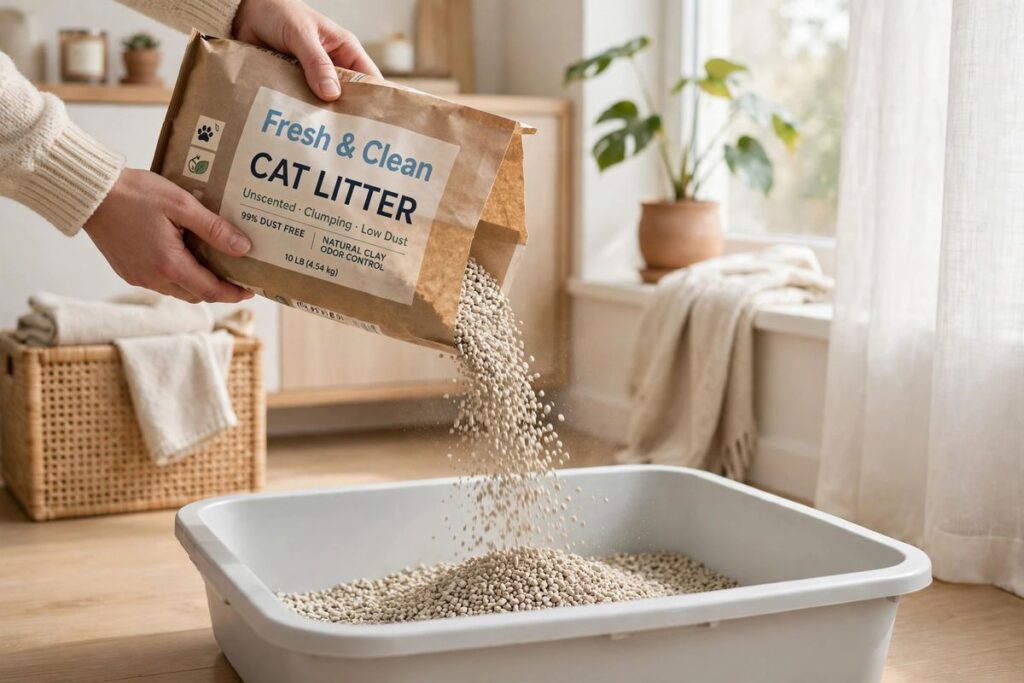
- Pour slowly and from a low height to reduce dust clouds, whatever litter you use.
FAQ
What is the best cat litter for odor control?
For most homes, a low-dust clumping clay litter such as Dr. Elsey’s Ultra is the best starting point. For multi-cat homes, Arm & Hammer multi-cat works well; for a natural option, World’s Best Cat Litter; for low dust, ökocat.
How often should I scoop the litter box?
At least once a day, and twice a day in a multi-cat home. Scooping daily matters more for odor than the brand of litter. If scooping daily feels like a chore, a self-cleaning box can help — see our PetSafe ScoopFree self-cleaning litter box review.
Why does my cat’s litter box still smell after I change the litter?
Check three things: are you scooping daily, is there enough litter in the box (3–4 inches), and have you washed the box itself? Old plastic boxes can absorb odor over time and may need replacing. For general cat care guidance, the ASPCA’s pet care guides are a useful reference.
Can I flush cat litter?
Only if the litter is labeled flushable (such as World’s Best Cat Litter) and your local plumbing allows it. Never flush clay litter — it can block pipes and harm waterways.
The bottom line
If you want one safe choice, start with Dr. Elsey’s Ultra. For multiple cats, Arm & Hammer multi-cat; for a natural litter, World’s Best; for a small apartment, Fresh Step Outstretch; and for low dust, ökocat. Whichever you choose, scoop daily, keep enough litter in the box, and use one box per cat plus one extra. Litter is only one part of cat care — for young cats, start with the best cat food for kittens.
Disclaimer: This article is for general information only and does not replace professional veterinary advice. If your cat suddenly stops using the litter box, or if urine smells unusually strong, consult your veterinarian — it can be a sign of a health problem.