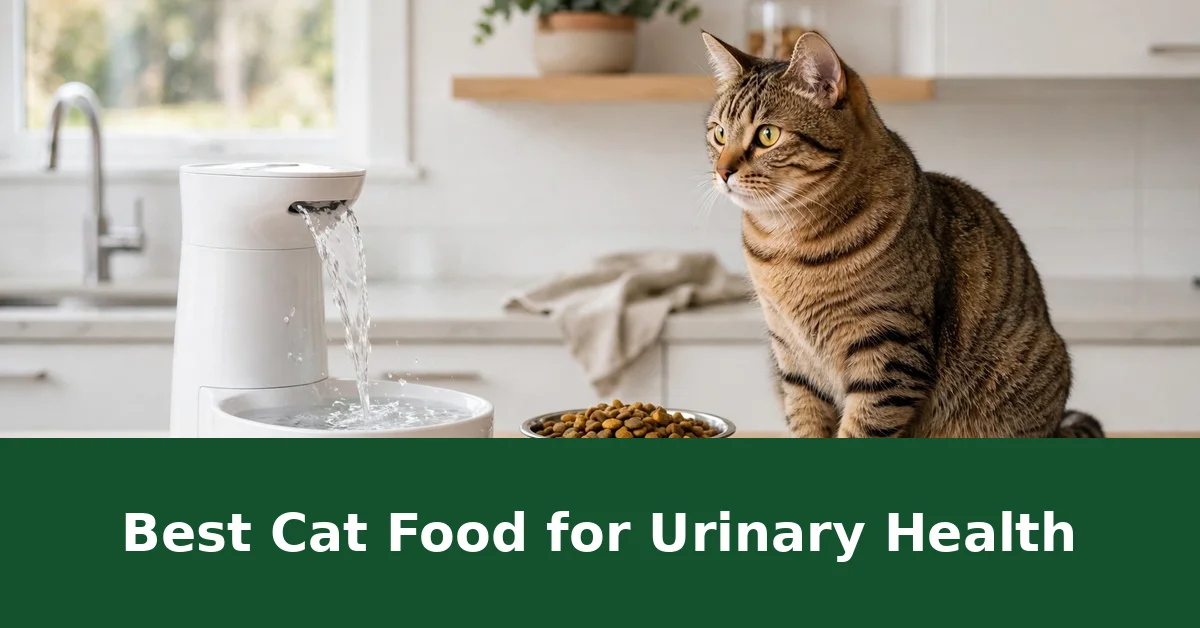
Best Cat Food for Urinary Health (2026): 8 Vet-Recommended Picks
Urinary problems are one of the most common reasons cats visit the vet. Crystals, bladder stones, and a blocked urinary tract can turn a healthy cat into an emergency in a single afternoon — and for male cats, a blockage can become life-threatening in hours. Food cannot fix an emergency, but the right diet makes one much less likely.
The best cat food for urinary health controls the minerals that form crystals, keeps the urine at the right acidity, and adds water to the diet, because a well-hydrated cat flushes its bladder more often. This guide covers eight real foods — prescription and over-the-counter — plus how to tell which one your cat needs.
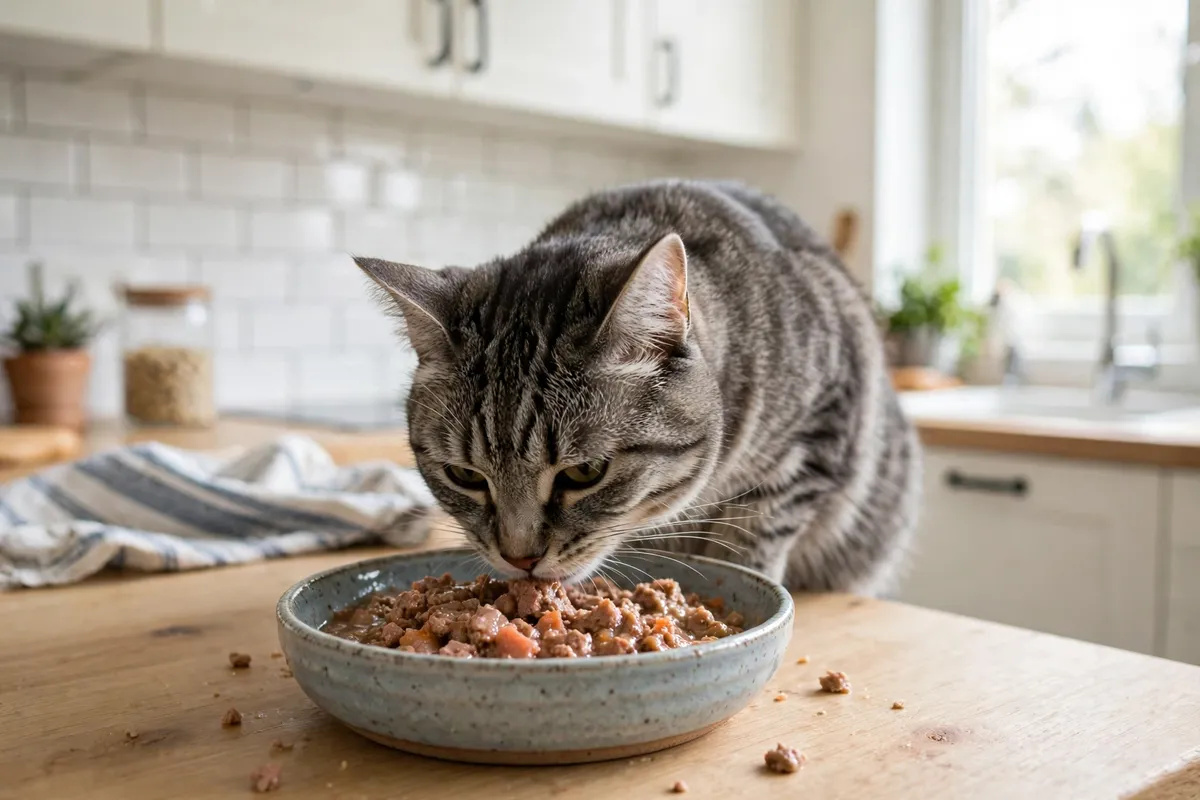
One note first: if your cat is straining to pee, crying in the litter box, passing blood, or not peeing at all, that is an emergency — see a vet now, do not try a new food first. Food is prevention and long-term management, not emergency treatment.
Prices change, so check the current price before buying.
Our Quick Picks
- Best overall: Hill’s Prescription Diet c/d Multicare — the most researched urinary diet.
- Best prescription: Royal Canin Urinary SO — dissolves struvite stones, proven in trials.
- Best non-prescription: Hill’s Science Diet Adult Urinary & Hairball Control — no prescription needed, dual benefit.
- Best wet food: Purina Pro Plan Urinary Tract Health — high moisture.
- Best for weight + urinary: Blue Buffalo Natural Veterinary Diet W+U — weight control and urinary care in one.
- Best budget: Iams ProActive Health Urinary Tract Health — affordable, no prescription.
- Best value: Purina Cat Chow Urinary Tract Health — the cheapest urinary-support food.
- Best natural: Wellness CORE Grain-Free Indoor — high protein, cranberries, no prescription needed.
How to Choose the Best Cat Food for Urinary Health
Before the reviews, here is what actually matters when picking the best cat food for urinary health.
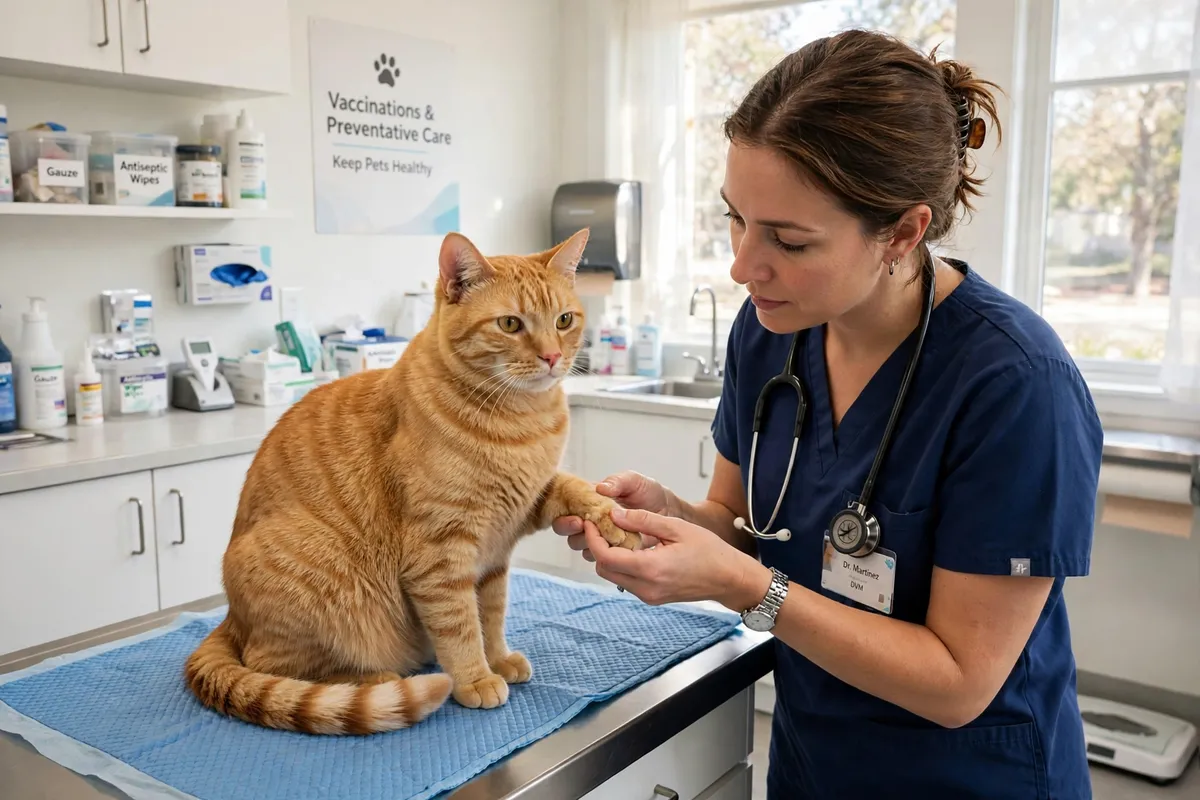
Know whether your cat needs a prescription diet. Prescription urinary foods — Hill’s c/d, Royal Canin Urinary SO, and Blue Buffalo W+U — are therapeutic diets designed to dissolve struvite stones and prevent them coming back. They are the right choice for a cat that has already had crystals, stones, or a blockage, and you need your vet’s approval to buy them. Over-the-counter foods support a healthy cat but cannot dissolve stones or treat an active problem.
Minerals matter more than brand. Struvite crystals form when urine is too alkaline and too rich in magnesium and phosphorus. A good urinary food controls those minerals and keeps the urine slightly acidic.
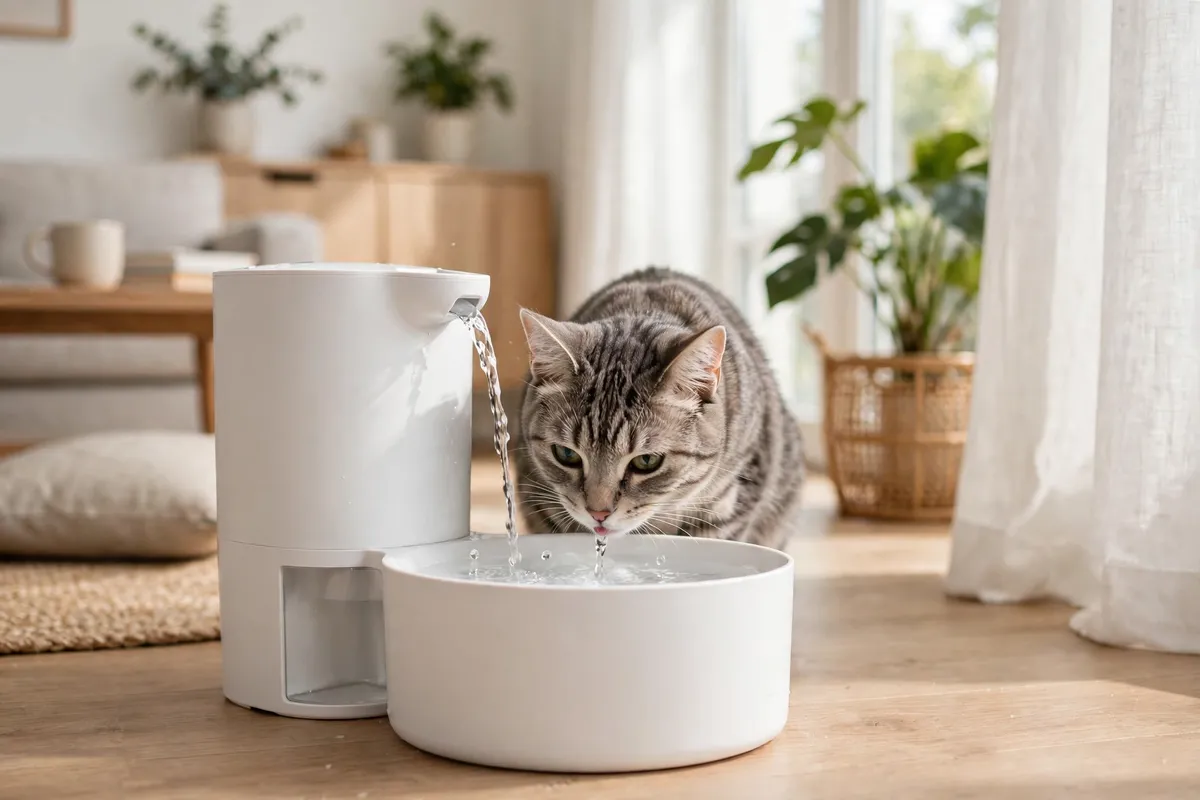
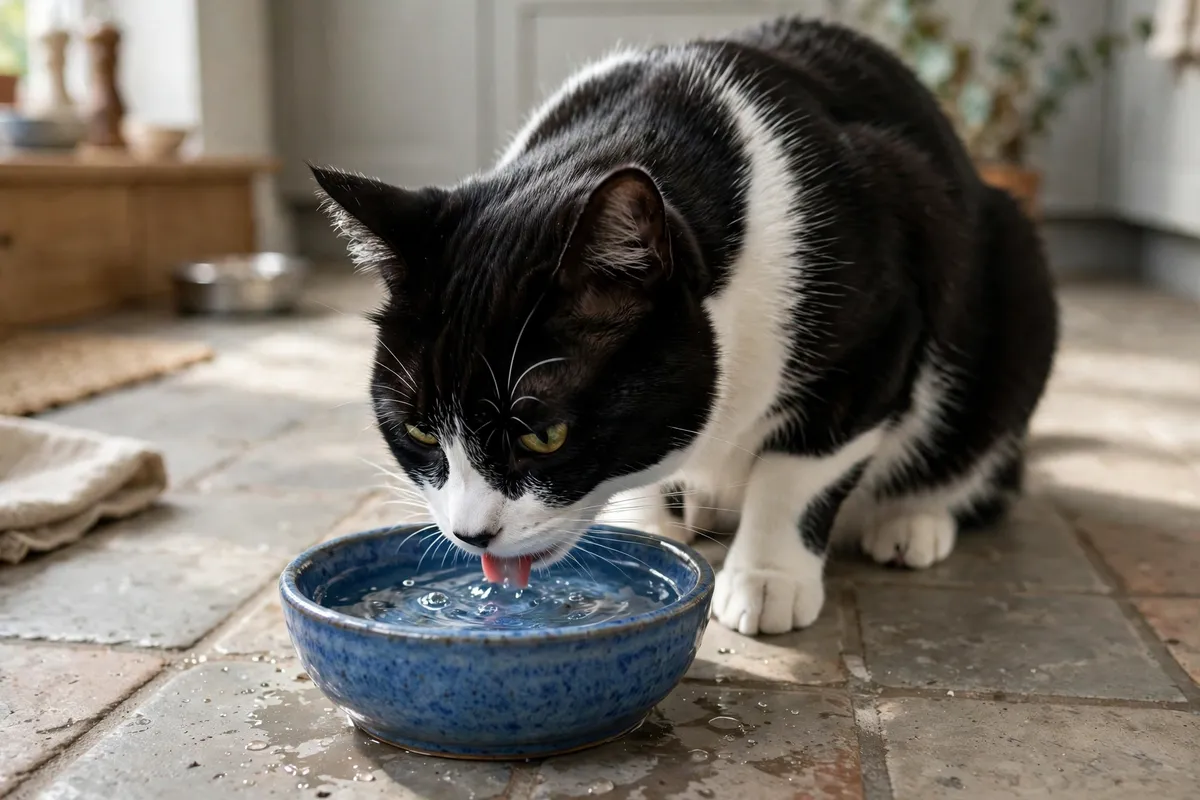
Water is half the treatment. A cat that drinks more pees more, and a cat that pees more flushes crystals out before they can grow. Wet food is about 70 percent water, so if your cat only eats dry food, add a water fountain, put water bowls in several rooms, and mix in some wet food.
Wet or dry — pick what your cat eats. The best urinary food is the one your cat finishes every day — a prescription dry food your cat refuses is useless. If your cat will only eat one form, tell your vet.
Transition slowly. Switch foods over 7 to 10 days, mixing a little more of the new food in each day. A cat that refuses to eat for more than a day needs a vet visit. Cornell’s guide to feline lower urinary tract disease explains why urinary problems happen.
The 8 Best Cat Foods for Urinary Health
1. Hill’s Prescription Diet c/d Multicare — Best Overall
Hill’s Prescription Diet c/d Multicare is the best cat food for urinary health overall — the most researched urinary diet in the world, and the food vets reach for first when a cat has had struvite crystals, bladder stones, or a blockage.
The formula dissolves struvite stones — in trials, most dissolve within a few weeks — and keeps them from coming back by controlling magnesium, calcium, and phosphorus.
It needs your vet’s approval and costs more than supermarket food. But for a cat that has already had a urinary emergency, it is the safest, best-proven choice.
Best for: Cats that have had crystals, stones, or a blockage.
2. Royal Canin Urinary SO — Best Prescription
Royal Canin Urinary SO is the best prescription alternative — the pick if your cat will not eat Hill’s or your vet prefers it. Like c/d, it is a therapeutic diet that dissolves struvite stones and prevents both struvite and calcium oxalate stones from forming.
The formula uses a low magnesium level and a controlled urine pH, and it comes in dry kibble, wet pouches, and a moderate-calorie version for cats that need to lose weight.
Like all prescription diets, it needs a vet’s approval and is not right for a healthy cat with no urinary history. But for a cat with a diagnosed urinary problem, it is one of the two best options.
Best for: Cats with a diagnosed urinary problem.
3. Hill’s Science Diet Adult Urinary & Hairball Control — Best Non-Prescription
Hill’s Science Diet Adult Urinary & Hairball Control is the best urinary food you can buy without a prescription — the pick for a healthy cat prone to urinary issues. It is the only over-the-counter dry formula that supports the whole urinary system while also using natural fiber to reduce hairballs.
The recipe controls magnesium and other minerals to support a healthy urine pH, and it comes in dry kibble and wet minced entrees, so you can mix the two or stick with one.
It is not a treatment: if your cat has active crystals or stones, this food will not dissolve them — that job belongs to a prescription diet. But for prevention in a healthy adult cat, it is the best non-prescription option.
Best for: Healthy adult cats prone to urinary issues.
4. Purina Pro Plan Urinary Tract Health — Best Wet Food
Purina Pro Plan Urinary Tract Health is the best wet urinary food — the pick if your cat prefers wet food or needs more water in its diet. The formula is about 70 percent water and is made with real chicken or ocean whitefish as the first ingredient.
The recipe controls magnesium and supports a healthy urine pH, and it comes in several flavors. It needs no prescription and is widely available in supermarkets.
Wet food costs more per day than dry, and an opened can needs refrigerating. But for a cat that will not drink enough on its own, wet food is the easiest way to add water to the diet — and more water means a healthier bladder.
Best for: Cats that prefer wet food or do not drink enough.
5. Blue Buffalo Natural Veterinary Diet W+U — Best for Weight + Urinary
Blue Buffalo Natural Veterinary Diet W+U Weight Management + Urinary Care is the best pick for a cat that needs to lose weight and protect its bladder at the same time — a common combination, since overweight cats are more prone to urinary problems. It needs your vet’s approval.
The formula is built around real chicken, with ideal fat, calorie, and fiber levels to help your cat reach a healthy weight, and controlled minerals to support urinary health. Its St-O-Ne Guard promotes a urinary environment that helps dissolve struvite stones and prevent calcium oxalate stones.
It costs more than over-the-counter food and is only available through a vet or a vet pharmacy. But if your cat is overweight and has had a urinary problem, it solves both with one food.
Best for: Overweight cats with urinary problems.
6. Iams ProActive Health Urinary Tract Health — Best Budget
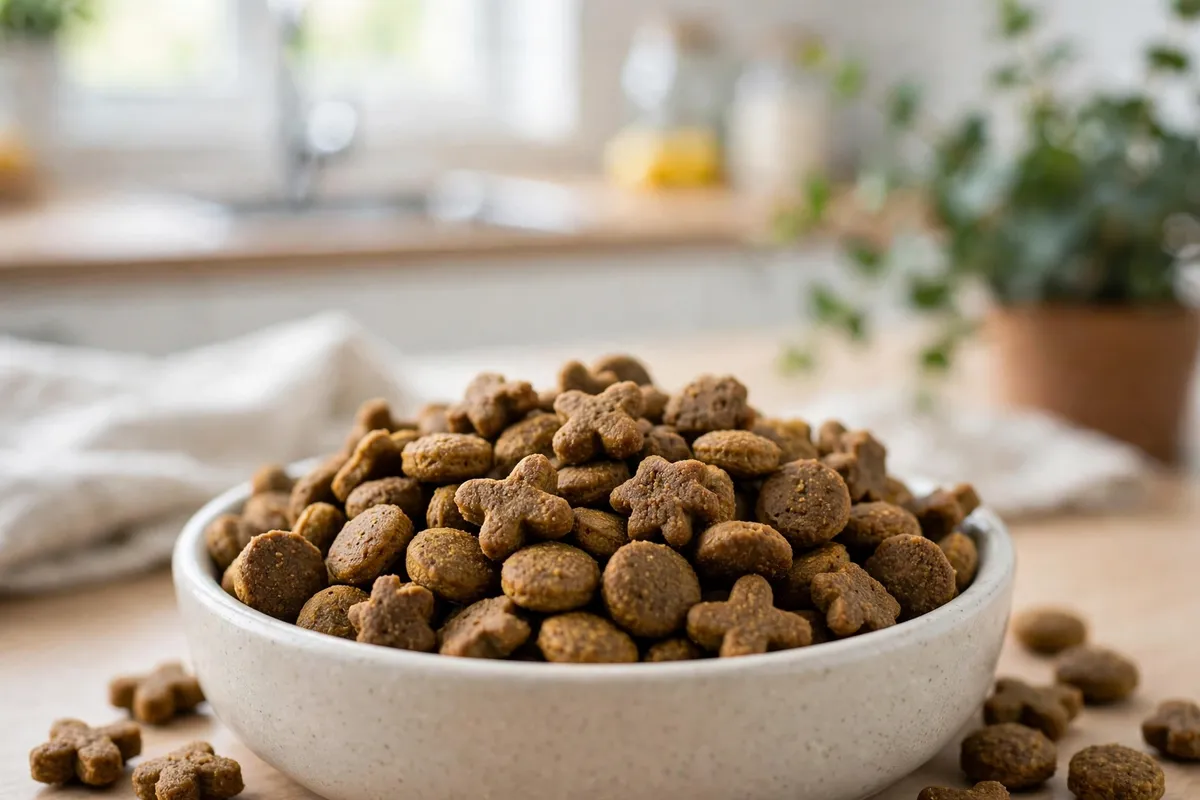
Iams ProActive Health Urinary Tract Health is the best budget urinary food — proof that urinary support does not need a prescription price. It is an over-the-counter dry food with real chicken first, made to reduce urinary pH and restrict magnesium to lower struvite risk.
It is complete and balanced for adult cats and sold in supermarkets and pet stores. At a much lower cost per pound than the prescription diets, it is the easiest urinary food to feed every day for years.
It is not therapeutic: a cat with active stones or oxalate problems needs a prescription diet. But for a healthy cat that needs everyday urinary support on a budget, it does the job well.
Best for: Tight budgets and healthy cats needing everyday support.
7. Purina Cat Chow Urinary Tract Health — Best Value
Purina Cat Chow Urinary Tract Health is the best value urinary food — the cheapest way to support your cat’s urinary health. It is an over-the-counter dry food, widely available in supermarkets, with controlled magnesium for a healthy urinary tract.
It is a simple food — no prescription, no premium price, no complicated feeding guide. For a multi-cat household, it is the most affordable urinary-support food on this list.
It is not a treatment for a cat with a diagnosed urinary disease, and it is not as precisely formulated as the prescription diets. But for a healthy cat, it is a solid, affordable choice.
Best for: Multi-cat households and budget-conscious owners.
8. Wellness CORE Grain-Free Indoor — Best Natural
Wellness CORE Grain-Free Indoor is the best natural urinary-support food — the pick if you want a high-protein, grain-free diet with urinary benefits built in. The recipe is built around deboned chicken, chicken meal, and turkey meal, with whole cranberries for urinary tract health and added probiotics for digestion.
Grain-free and protein-first, it suits cats that do best on a meat-rich diet, and the added fiber helps indoor cats feel full. No prescription is needed.
It is one of the more expensive foods here, and a general urinary-support food, not a therapeutic diet — a cat with active crystals needs a prescription food instead. But for a healthy indoor cat, it is the cleanest urinary-support option here.
Best for: Owners who want a natural, high-protein food with urinary support.
How to Feed for Urinary Health
A good food is only half the job — how you feed and water your cat matters too. The most important thing is water: put a clean bowl in every room your cat uses, away from the litter box and the food bowl, and consider a pet water fountain — many cats drink much more from moving water. Add wet food to the diet, even a little each day, because the water in it goes straight to the bladder.
Keep the litter box clean and quiet. A cat that avoids a dirty or noisy box holds its urine longer, and holding urine lets crystals grow. Scoop daily and keep one box per cat plus one extra, in quiet, low-traffic spots.
Watch the weight. Overweight cats are more prone to urinary problems, so measure every meal and keep treats under 10 percent of daily calories. If your cat needs to lose weight, ask your vet for a target and a plan — never cut food suddenly.
Know the warning signs: straining to pee, crying in the litter box, going in and out without producing anything, blood in the urine, or constant licking are all signs to see a vet the same day. A male cat that cannot pee at all is an emergency — minutes matter. The ASPCA’s guide to common cat diseases explains the warning signs of urinary problems and other common cat illnesses.
For more help, our roundup of the best cat trees for large cats has high perches and hiding spots that help a stressed cat relax, our comparison of clumping vs non-clumping cat litter can help you pick a litter your cat will use, and our roundup of the best cat calming products covers products that take the edge off a stressed cat — stress is a big trigger for urinary flare-ups.
Frequently Asked Questions
Can cat food really prevent urinary problems?
It can lower the risk, but it cannot guarantee prevention. A good urinary food controls the minerals that form crystals and keeps the urine at the right acidity, and wet food adds water that flushes the bladder. But genetics, stress, weight, and water intake matter too — food is one part of the picture.
Do I need a prescription diet for my cat?
Only if your vet says so. Prescription diets like Hill’s c/d and Royal Canin Urinary SO are for cats that have already had crystals, stones, or a blockage. A healthy cat with no urinary history does fine on a good over-the-counter urinary-support food.
How long does my cat need to stay on a urinary diet?
Usually for life, if the problem was crystals or stones. Urinary problems come back easily once the diet stops, so most vets keep cats on their prescription food permanently. An over-the-counter food for prevention is also a long-term choice — the benefit comes from feeding it every day, not for a few weeks.
The Bottom Line
The best cat food for urinary health is the one your vet recommends for your cat’s situation. Hill’s Prescription Diet c/d Multicare is the safest all-round pick for a cat that has had crystals or stones, with the strongest evidence behind it. Royal Canin Urinary SO is the best prescription alternative, Hill’s Science Diet Urinary & Hairball Control is the best choice without a prescription, Purina Pro Plan Urinary Tract Health is the best wet food, Blue Buffalo W+U covers weight and urinary health together, Iams is the best budget option, Purina Cat Chow is the best value, and Wellness CORE is the cleanest natural choice. Pick the right one with your vet, keep the water bowls full and the litter box clean — and watch for the warning signs, because a blocked cat is an emergency.