Best Rabbit Hay (2026): 7 Timothy Hay Picks
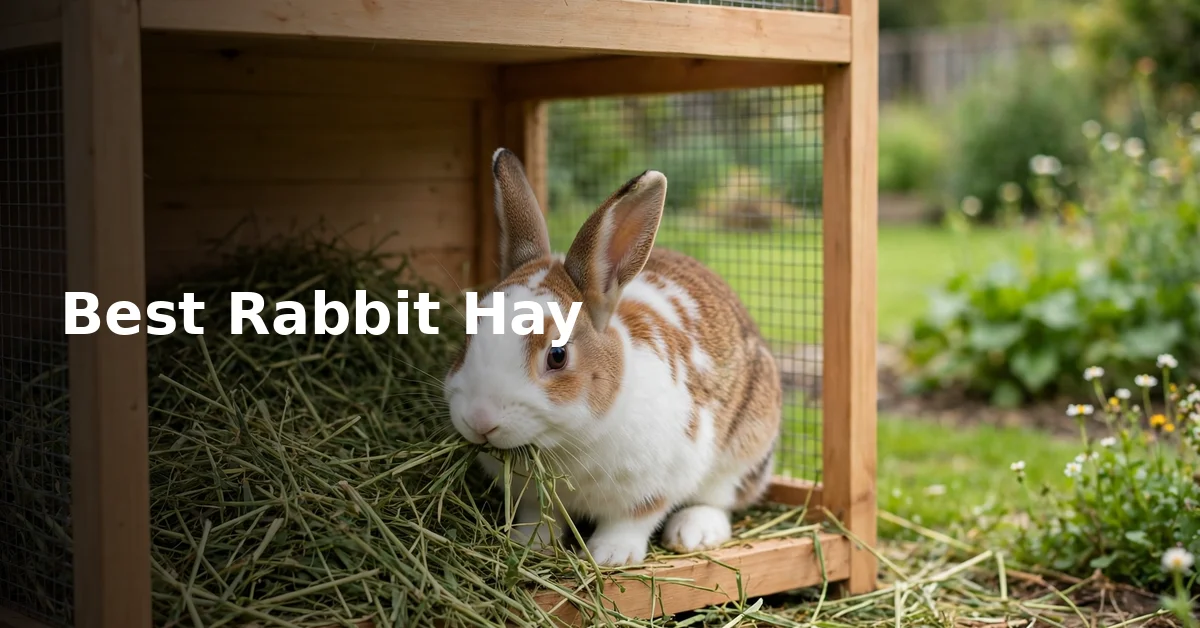
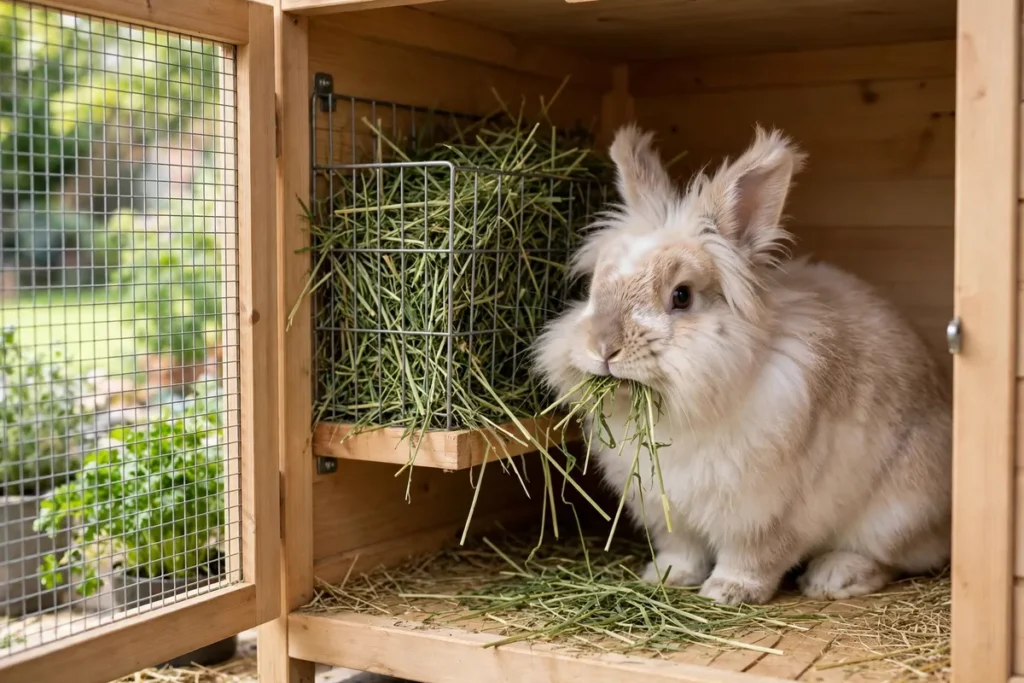
If you only get one thing right about feeding your rabbit, get the hay right. Grass hay should make up around 80 to 85 percent of an adult rabbit’s diet. It keeps the gut moving, wears the teeth down, and keeps your rabbit busy for hours. The best rabbit hay is fresh, green, sweet-smelling timothy hay, and this guide covers seven real options, plus how to pick the right cut for your rabbit.
Prices change, so check the current price before buying.
Our Quick Picks
- Best overall: Oxbow Western Timothy Hay — the vet-recommended standard, consistently fresh.
- Best 2nd cut: Small Pet Select 2nd Cutting Timothy Hay — soft, leafy, and hand-sorted.
- Best budget: Kaytee Timothy Hay — widely available, easy on the wallet.
- Best bulk: Standlee Premium Western Forage Timothy Hay — big bales for multi-rabbit homes.
- Best soft hay: Sweet Meadow Farm Soft Eastern Timothy Hay — gentle on senior and dental-issue rabbits.
- Best high-fiber: Viking Farmer 1st Cut Timothy Hay — coarse, stemmy, maximum tooth wear.
- Best premium: Rabbit Hole Hay Ultra Premium Timothy Hay — small-batch, farm-direct quality.
How to Choose the Best Rabbit Hay
Before the reviews, here is what actually matters when you are picking the best rabbit hay for your bunny.
Timothy is the default for adults. Timothy hay is a grass hay with the right balance of fiber, protein, and calcium for an adult rabbit. Alfalfa hay is richer in protein and calcium, which is great for babies under six months and nursing mothers, but too rich for most adults — it can lead to weight gain and bladder sludge over time.
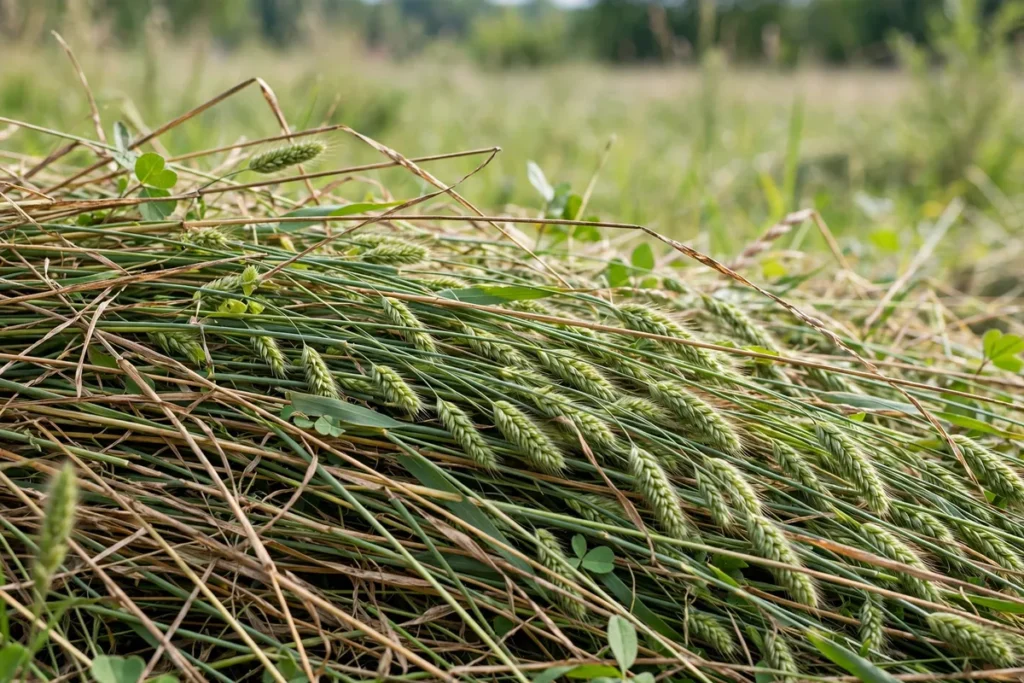
Know your cuttings. Timothy hay is sold by cutting, and the cut changes everything. First cut is coarse and stemmy, with the highest fiber — best for tooth wear and gut health, but some rabbits find it too tough. Second cut is softer and leafier, with a balance of fiber and palatability — the cut most rabbits eat most happily. Third cut is very soft and leafy, almost like grass clippings — great for picky rabbits, seniors, and rabbits with dental problems, but lower in fiber.
Fresh hay looks and smells fresh. Good hay is green, not brown. It smells sweet and grassy, not musty or dusty. It should feel dry, not damp, and it should have long strands, not a pile of dust and short bits at the bottom of the bag. If a bag smells stale or looks brown, send it back — stale hay is hay your rabbit will not eat.
Unlimited means unlimited. Your rabbit should never run out of hay. Keep a full hay rack or a big pile available at all times, and top it up at least once a day. A rabbit that runs out of hay stops eating, and a rabbit that stops eating can develop GI stasis — a dangerous condition where the gut slows or stops — within hours.
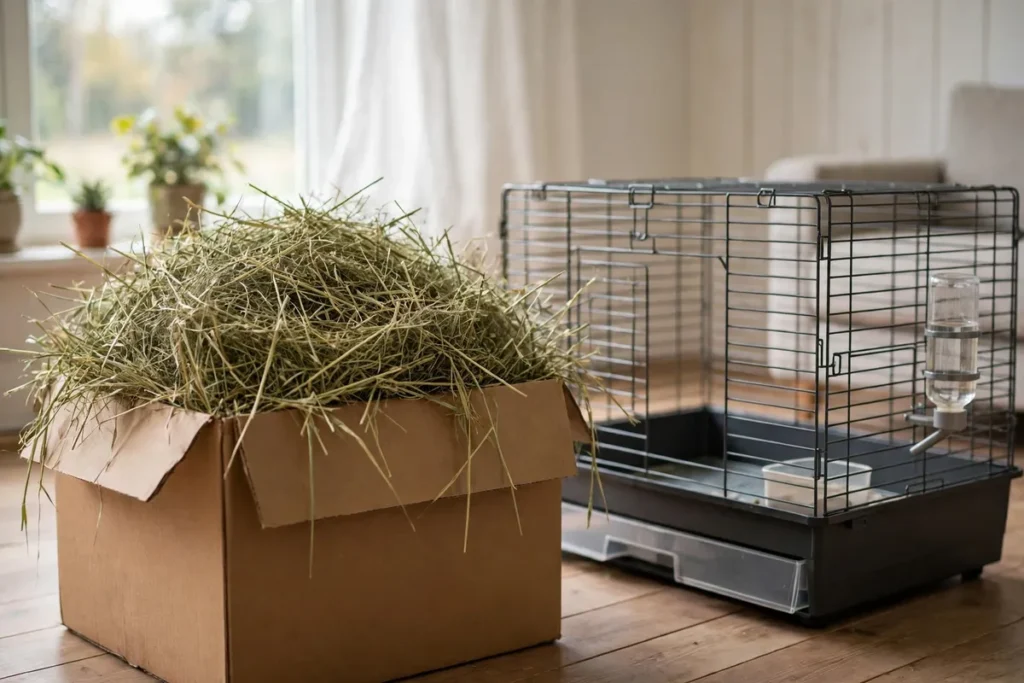
Store it dry and aired. Hay goes bad in damp, sealed places. Keep it in a cool, dry spot with airflow — a cardboard box or a bin with the lid cracked open. Never store it in a sealed plastic bag, which traps moisture and grows mold.
The 7 Best Rabbit Hays
1. Oxbow Western Timothy Hay — Best Overall
Oxbow Western Timothy Hay is the best rabbit hay for most owners, because it is the one vets recommend most often and the one you can find almost anywhere. Oxbow has been making small-pet hay for decades, and its western timothy is grown in the United States, harvested at the right stage, and packed to stay fresh.
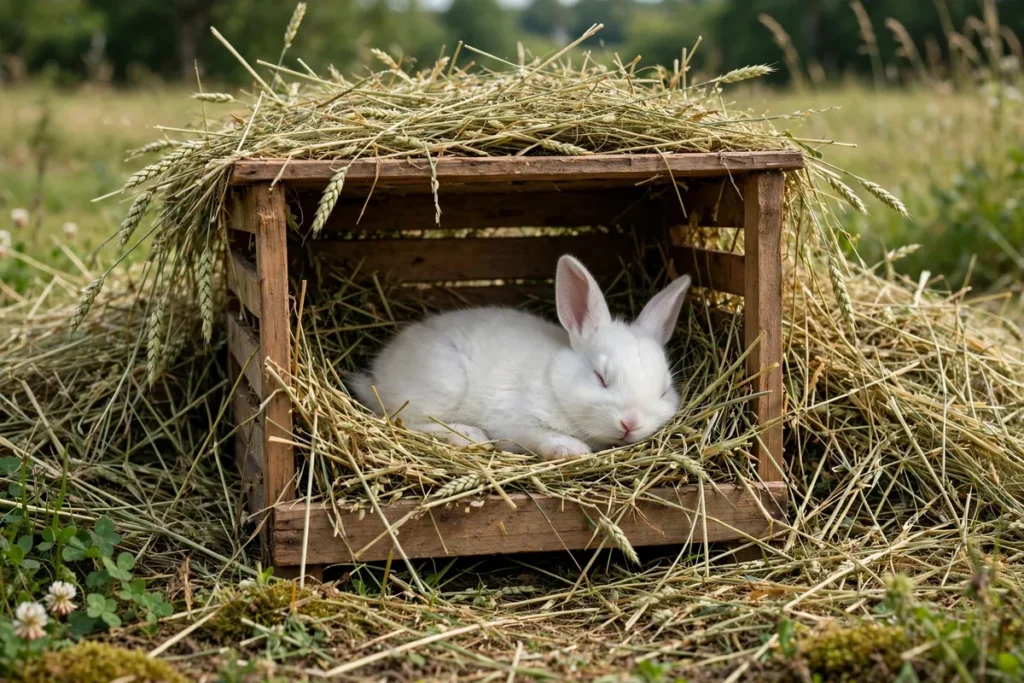
The hay is a mix of first and second cut, so it has enough coarse stems for tooth wear and enough soft leaves to keep rabbits interested. It comes in bags from small to very large, so you can buy a little to try it or a lot to save money.
Like any farm product, one bag can be greener than the next — but across years of use, Oxbow is the most reliable hay on this list.
Best for: Most rabbits, and owners who want the vet-recommended standard.
2. Small Pet Select 2nd Cutting Timothy Hay — Best 2nd Cut
Small Pet Select 2nd Cutting Timothy Hay is the best second-cut hay, and the pick for rabbits that turn their nose up at coarse, stemmy hay. The company hand-sorts its hay, pulling out dust and short pieces, so what arrives in the box is long, soft, leafy strands with a sweet smell.
Second cut is the sweet spot for most rabbits: softer than first cut, so even picky eaters dig in, but still fibrous enough to keep the gut moving and the teeth wearing down.
It costs more per pound than supermarket hay, and it is sold mostly online. But for a rabbit that refuses other hay, it is worth every penny — a rabbit that eats its hay is a rabbit that stays healthy.
Best for: Picky rabbits, and owners who want hand-sorted, dust-free hay.
3. Kaytee Timothy Hay — Best Budget
Kaytee Timothy Hay is the best budget hay, and proof that good hay does not need a premium price. It is sold in nearly every pet shop, it comes in small and large bags, and it is the hay most new rabbit owners buy first.
The hay is a sun-cured timothy, with a decent mix of stems and leaves, and it is easy to find — no waiting for a delivery, no minimum order. For a single rabbit, a bag lasts a reasonable time, and the price is hard to beat.
It is not as green or as consistent as the premium brands, and some bags have more dust. But for the price, it is a solid everyday hay.
Best for: Tight budgets, and owners who want hay they can buy anywhere.
4. Standlee Premium Western Forage Timothy Hay — Best Bulk
Standlee Premium Western Forage Timothy Hay is the best bulk hay, and the pick if you keep more than one rabbit or you go through hay fast. Standlee is a forage company that sells hay by the bale and the compressed bag, so you can buy a large amount at a much lower cost per pound.
The hay is a western-grown timothy, sun-cured and compressed, with long strands and a fresh smell. A compressed bag takes up less space than loose hay.
The drawback is the size — a big bag is heavy and needs dry storage space. But for a multi-rabbit home, or a rabbit and a guinea pig sharing the hay supply, it is the cheapest way to keep the hay rack full.
Best for: Multi-rabbit homes, and owners who buy hay in bulk.
5. Sweet Meadow Farm Soft Eastern Timothy Hay — Best Soft Hay
Sweet Meadow Farm Soft Eastern Timothy Hay is the best soft hay, and the one to choose for a senior rabbit, a rabbit with dental problems, or a rabbit that simply refuses coarse hay. It is a second-cut eastern timothy, grown on a small farm, with soft, leafy blades and very few stiff stems.
The softness is the selling point: a rabbit with sore teeth can eat it easily, and a picky rabbit that leaves first-cut hay untouched will often finish a pile of this. It also kicks up less dust, which helps owners with a timothy allergy.
It is one of the more expensive hays per pound, and it is softer, so it wears teeth down a little less than first cut. But for a rabbit that needs gentle hay, it is the best option on this list.
Best for: Senior rabbits, rabbits with dental problems, and picky eaters.
6. Viking Farmer 1st Cut Timothy Hay — Best High-Fiber
Viking Farmer 1st Cut Timothy Hay is the best high-fiber hay, and the pick if you want maximum tooth wear and gut health. It is grown at over 6,000 feet in the mountain valleys of the Intermountain West, where the slow growing season produces a coarse, stemmy, high-fiber first cut.
First cut is the highest-fiber timothy you can buy. The long, tough stems force your rabbit to chew properly, which grinds the teeth down evenly and keeps the gut moving.
It is coarser than most rabbits are used to, so some rabbits will pick through it and leave the toughest stems. Introduce it mixed with your rabbit’s usual hay, and give them time to get used to it. But for a healthy adult rabbit, it is the most natural hay on this list.
Best for: Healthy adult rabbits, and owners who want maximum fiber and tooth wear.
7. Rabbit Hole Hay Ultra Premium Timothy Hay — Best Premium
Rabbit Hole Hay Ultra Premium Timothy Hay is the best premium hay, and the one to buy if you want small-batch, farm-direct quality. Rabbit Hole Hay is a small family company that grows its timothy in the Pacific Northwest, harvests it at peak, and ships it fresh — no warehouse storage, no stale bags.
The hay is soft, green, and sweet-smelling, with long strands and very little dust. Rabbit owners who switch to it often report that their rabbits eat more hay and waste less — the real test of any hay.
It is the most expensive hay on this list, and it is sold mostly online in smaller boxes. But for a rabbit that wastes other hay, or an owner who wants the freshest hay available, it is worth trying.
Best for: Owners who want the freshest, small-batch hay, and rabbits that waste other brands.
How to Get Your Rabbit to Eat More Hay
A good hay is only half the job — how you offer it matters just as much. Put hay where your rabbit already spends time: next to the litter box, in a hay rack at head height, and in a pile on the floor. Rabbits like to eat while they use the litter box, so a hay rack above it is the single best trick for increasing hay intake.
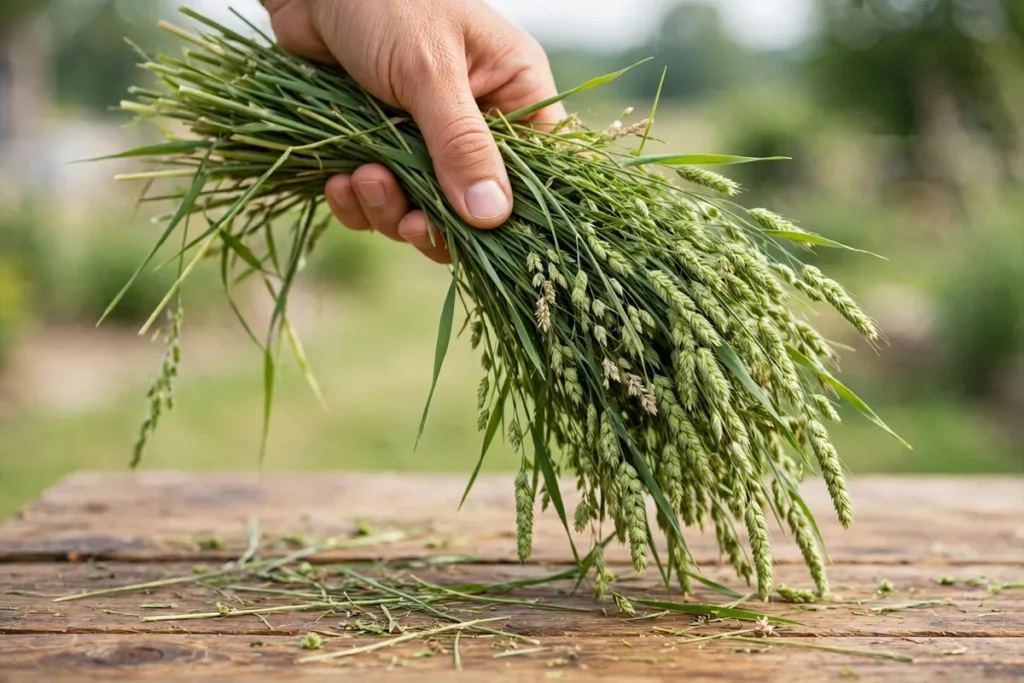
Offer more than one type. Keep a pile of your rabbit’s usual hay and a small pile of a different cut or a different grass hay — orchard grass, oat hay, or meadow hay — so your rabbit has a choice. Variety keeps hay interesting, and different hays have slightly different fiber and nutrients.
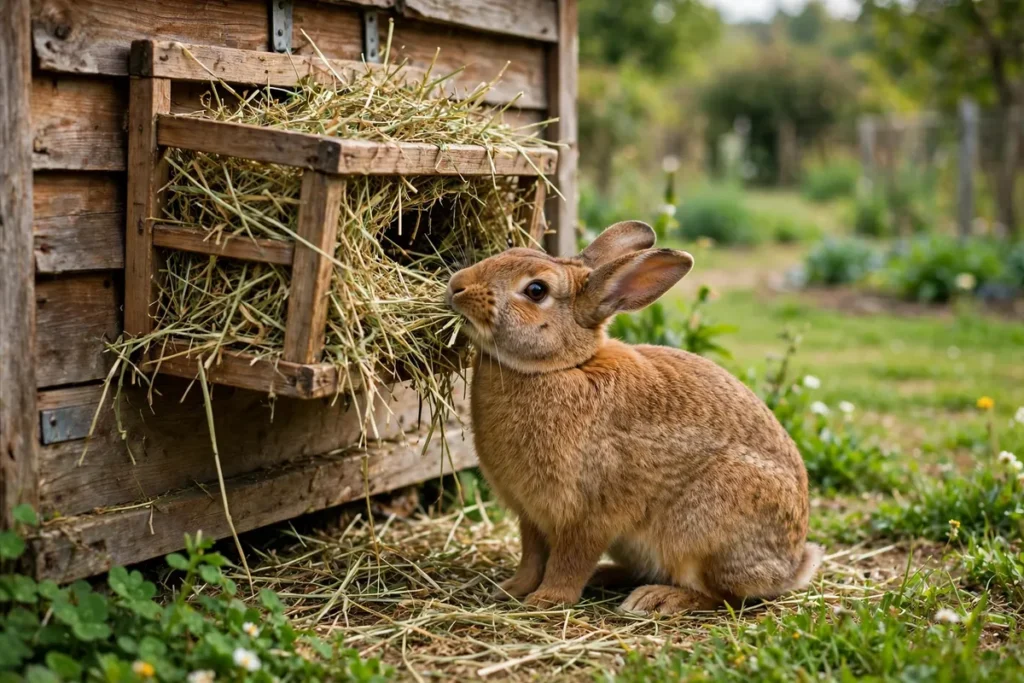
Refresh it daily. Hay that has sat in the rack for two days or gone stale gets ignored. Top up the rack every morning, and throw out the soiled bits — rabbits eat with their noses first.
If your rabbit still will not eat hay, check the basics: is the hay fresh and green, or brown and dusty? Is the rack easy to reach, or is your rabbit stretching to get it? And is your rabbit filling up on pellets or treats instead? Cut pellets to a small daily portion and treats to almost nothing, and the hay will start disappearing. The San Diego House Rabbit Society’s guide to all about hay explains why hay matters, how cuttings differ, and how much of the diet should be hay.
If you are still setting up your rabbit’s home, our roundup of the best rabbit toys for bunnies has ideas for keeping a hay-eating rabbit entertained, our guide to the best guinea pig food covers another hay-eating pet, and our guide to the best guinea pig cage for beginners explains cage setups that work well with a big hay rack. The RSPCA’s rabbit diet advice is also worth reading — it covers hay, greens, pellets, and what never to feed.
Frequently Asked Questions
How much hay should my rabbit eat every day?
As much as it wants — unlimited, all day, every day. Hay should make up about 80 to 85 percent of an adult rabbit’s diet. A rabbit should never run out of hay, not even overnight.
What is the difference between 1st, 2nd, and 3rd cut timothy hay?
First cut is coarse and stemmy with the highest fiber, best for tooth wear. Second cut is softer and leafier, the best all-round choice for most rabbits. Third cut is very soft and leafy, best for picky rabbits, seniors, and rabbits with dental problems, but lower in fiber.
Can rabbits eat alfalfa hay?
Young rabbits under six months and nursing mothers can, because alfalfa is rich in protein and calcium for growth. Most adult rabbits should not eat alfalfa as their main hay — it is too rich and can lead to weight gain and bladder problems. Stick to timothy or another grass hay for adults.
The Bottom Line
The best rabbit hay is fresh, green, sweet-smelling timothy hay that your rabbit actually eats — and Oxbow Western Timothy Hay is the safest all-round pick, with the most vet support and the widest availability. Small Pet Select is the best second cut for picky rabbits, Kaytee is the best budget option, Standlee is the best bulk buy, Sweet Meadow Farm is the softest hay for seniors, Viking Farmer is the highest-fiber first cut, and Rabbit Hole Hay is the freshest premium option. Keep the hay rack full, refresh it daily, and offer a second type for variety — and your rabbit’s gut and teeth will thank you for years.