
Best Dog Food for Sensitive Stomachs (2026): 5 Gentle Picks
Best Dog Food for Sensitive Stomachs (2026): 5 Gentle Picks
Loose stools, gassy rumblings, and surprise vomit are your dog’s way of telling you something is wrong with their food. A sensitive stomach means recurring digestive upset rather than a single off day, and the fix is often simpler than you think. In this guide to the best dog food for sensitive stomachs, we compare five formulas that veterinarians recommend most often, so you can find one that calms your dog’s gut.
In This Article
Prices change — check the current price before buying.

1. Hill’s Science Diet Sensitive Stomach & Skin — Best Vet-Recommended Pick
When a veterinarian says “start with a sensitive stomach food,” Hill’s Science Diet Sensitive Stomach & Skin is usually the bag they mean. Its prebiotic fiber feeds the good bacteria in your dog’s gut, for a balanced microbiome and firmer stools.
It also includes omega-6 fatty acids and vitamin E for skin and coat, since food sensitivities often show up as itchy skin too. The recipe uses easily digestible ingredients, backed by decades of feeding trials. It comes in dry and canned versions, plus a small-bites formula for small breeds.
Best for: Dogs with chronic gas, loose stools, and dry or itchy skin.
Keep in mind: Some owners report the formula seems to lose effectiveness after a year or more. If that happens, ask your vet about rotating to a different protein source.
2. Purina Pro Plan Sensitive Skin & Stomach Salmon & Rice — Best Mainstream Kibble
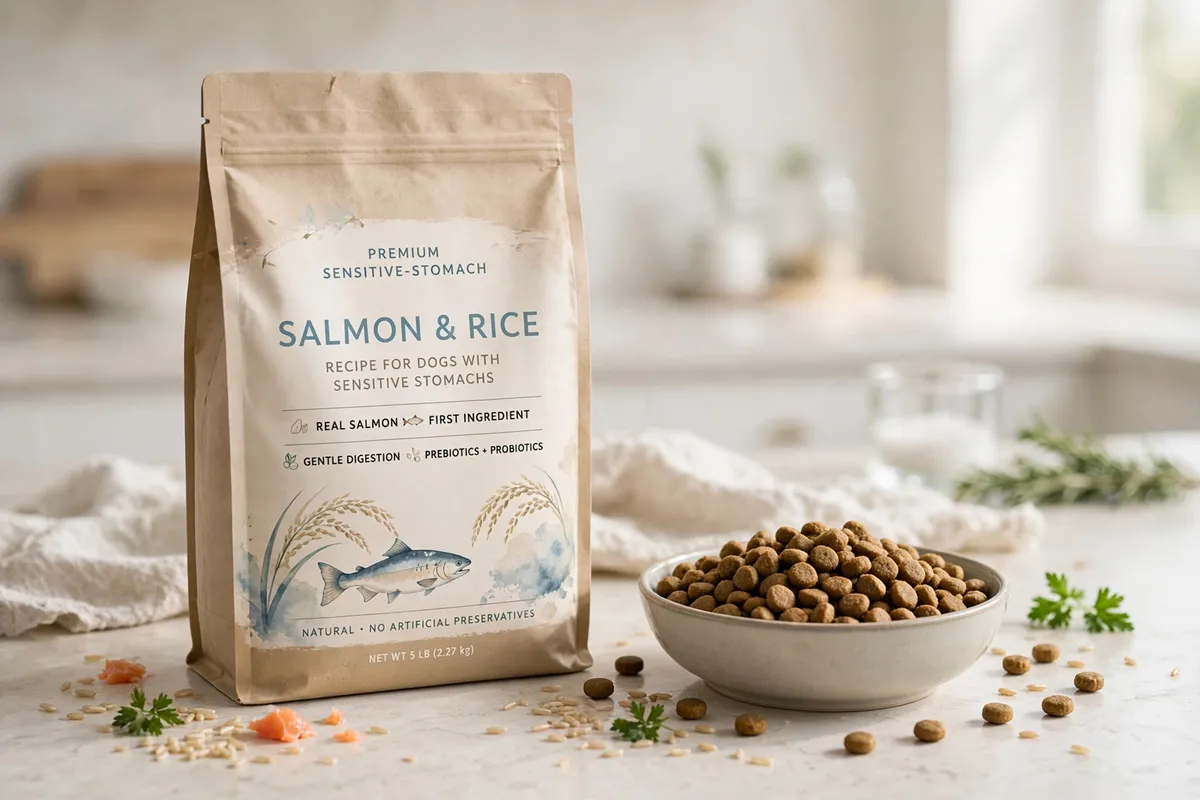
Purina Pro Plan Sensitive Skin & Stomach Salmon & Rice is the best-selling sensitive stomach kibble in the USA. Real salmon is the first ingredient, paired with oatmeal and rice — two carbohydrates most dogs digest easily — plus live probiotics, prebiotic fiber, and omega-3 and omega-6 fatty acids for skin and coat health.
Purina meets the World Small Animal Veterinary Association’s manufacturer guidelines, with on-staff nutritionists and feeding trials behind it. Many owners see firmer stools and less gas within two weeks.
Best for: Dogs with mild to moderate digestive sensitivity who need an affordable, widely available kibble.
Keep in mind: If your dog dislikes the smell of salmon-based food, a lamb-based version is also available.
3. Royal Canin Gastrointestinal Low Fat — Best for Chronic Digestive Trouble
For dogs whose stomach problems go beyond occasional upset, Royal Canin Gastrointestinal Low Fat is the heavy hitter. It is a veterinary diet, sold with veterinary authorization, for dogs with chronic digestive disease, pancreatitis, or long-term diarrhea.
The formula is low in fat — a key trigger for pancreatitis and chronic loose stools — and uses a protein blend that testing shows reaches more than 90 percent digestibility, leaving little residue for harmful gut microbes. Every production run passes controlled feeding trials, so the nutrient profile stays consistent.
Best for: Dogs with diagnosed chronic digestive conditions, pancreatitis, or diarrhea that has not improved on over-the-counter foods.
Keep in mind: This veterinary diet requires your vet’s approval and costs more than standard kibble.

4. Blue Buffalo True Solutions Digestive Care — Best Limited-Ingredient Option
Blue Buffalo True Solutions Digestive Care is a vet-formulated recipe with a short, simple ingredient list. Real chicken is the first ingredient, and the formula includes prebiotic fiber for digestive health, with no corn, wheat, soy, or artificial flavors and preservatives.
The limited-ingredient approach makes it easier to spot what your dog reacts to: fewer ingredients means fewer suspects when a flare-up happens. Blue Buffalo also includes its LifeSource Bits, a blend of antioxidants, vitamins, and minerals.
Best for: Dogs that may have a food intolerance and owners who want a simpler ingredient list to help identify triggers.
Keep in mind: Chicken is the most common protein dogs react to — if it is your dog’s trigger, try the lamb or fish formulas instead.
5. Wellness CORE Digestive Health — Best Holistic Pick
Wellness CORE Digestive Health combines a protein-rich recipe with dedicated digestive support. Deboned chicken and brown rice lead the ingredient list, and the formula includes probiotics, prebiotic fiber, and pumpkin — a natural source of soluble fiber that firms stools and soothes upset stomachs.
The grain-inclusive recipe is free from corn, wheat, soy, and artificial additives, made in the USA, with omega fatty acids and guaranteed live probiotics in every cup.
Best for: Owners who want a holistic, protein-rich formula with pumpkin and probiotics for everyday digestive support.
Keep in mind: It is richer in protein than some sensitive stomach foods, so dogs with very delicate digestion may need a gentler option like the Royal Canin or Hill’s picks.
Buying Guide: How to Choose the Best Dog Food for Sensitive Stomachs
Look for high digestibility first. Vets consistently say digestibility matters more than any single ingredient — a food with highly digestible protein and few ingredients gives your dog’s gut less work to do.
Choose a single, gentle protein. Salmon, lamb, and turkey are usually easier on sensitive stomachs than beef or chicken, and a limited-ingredient food makes it much easier to find the trigger.
Check for prebiotic fiber and probiotics. Prebiotic fiber feeds the good bacteria in your dog’s gut, and guaranteed live probiotics keep that bacteria balanced. The best sensitive stomach foods almost always include at least one.

See your vet before switching. The cause is not always the food: parasites, infections, and conditions like inflammatory bowel disease can look exactly like a sensitive stomach. Rule those out first, then change diets only if your vet agrees. For feeding basics, see our guide to how to take care of a new puppy.
Transition over seven to ten days. Mix 25 percent new food with 75 percent old food for three days, split it 50-50 for the next three, then move to 75 percent new food before switching fully.
Frequently Asked Questions
What causes a sensitive stomach in dogs?
The most common causes are food intolerances, eating too fast, sudden diet changes, and hard-to-digest ingredients. Stress, parasites, and conditions like pancreatitis or inflammatory bowel disease can also cause recurring upset. If it lasts more than a couple of weeks, see your vet.
How long does it take for a sensitive stomach food to work?
Most owners see improvement within two weeks — firmer stools, less gas, and a happier dog at mealtimes. Give any new food at least four to six weeks before judging it, and keep treats and table scraps consistent during the trial.

Can puppies eat sensitive stomach dog food?
Some formulas are labeled for all life stages, but most sensitive stomach foods are made for adults. If your puppy has recurring digestive problems, see your vet first — puppies dehydrate faster than adults, and the cause may need treatment, not just new food.
The Bottom Line
The best dog food for sensitive stomachs depends on how serious your dog’s symptoms are. For most dogs with mild to moderate trouble, Hill’s Science Diet Sensitive Stomach & Skin and Purina Pro Plan Sensitive Skin & Stomach Salmon & Rice are the two safest starting points — both vet-recommended and proven to calm digestion within a couple of weeks. Blue Buffalo True Solutions Digestive Care is the pick for a simpler ingredient list, Wellness CORE Digestive Health is the holistic option with pumpkin and probiotics, and Royal Canin Gastrointestinal Low Fat is the veterinary diet to discuss with your vet if nothing else works. Whatever you choose, transition slowly, keep treats consistent, and give it time — a calmer gut is usually just a few weeks away.
Disclaimer: This article is for general information only and is not a substitute for professional veterinary advice. If your dog has ongoing vomiting, diarrhea, blood in their stool, or rapid weight loss, consult your veterinarian promptly — these symptoms may indicate a condition that needs treatment beyond a diet change.