
Best Dog Food for Puppies (2026): 5 Vet-Recommended Picks
Bringing home a puppy is exciting — and the food aisle is overwhelming. Puppies need more calories, protein, and DHA for brain development than adult dogs, so adult food won’t cut it. This guide picks five puppy foods that veterinarians consistently recommend, explains what to look for on the label, and helps you match a food to your puppy’s size. If this is your first puppy, also read how to take care of a new puppy for the first-week checklist. Read on to find the best dog food for puppies for your budget and breed size.
Table of Contents

Prices change — check the current price before buying.
Quick picks
| Best for | Pick | Why it stands out |
|---|---|---|
| Best overall | Hill’s Science Diet Puppy | Vet-recommended, small easy-to-digest kibble, DHA for brain development |
| Best for small breeds | Royal Canin Small Puppy | Size-specific kibble, antioxidants and vitamins for small puppies |
| Best for large breeds | Hill’s Science Diet Puppy Large Breed | Supports strong bones and teeth as large puppies grow |
| Best value | Iams Proactive Health Smart Puppy | Chicken first, great nutrition at a budget price |
| Best popular all-rounder | Purina Pro Plan Puppy | Backed by extensive research, several protein options |
1. Hill’s Science Diet Puppy — Best Overall
Hill’s Science Diet is one of the most recommended brands among veterinarians, and its puppy formula is a safe first choice for most puppies up to 1 year old. The kibble is small and easy to digest, with chicken as a top ingredient and DHA for healthy brain and eye development.
Good for: First-time puppy owners who want a vet-trusted default.
Watch out for: Premium price compared with supermarket brands.
2. Royal Canin Small Puppy — Best for Small Breeds
Small-breed puppies have fast metabolisms and tiny mouths. Royal Canin Small Puppy is made specifically for them, with smaller kibble and a blend of antioxidants and vitamins to support their immune system.
Good for: Toy and small breeds such as Chihuahuas, Pomeranians, and Shih Tzus.
Watch out for: Breed-size formulas cost more per bag; buy the size that matches your puppy’s expected adult weight.
3. Hill’s Science Diet Puppy Large Breed — Best for Large Breeds
Large-breed puppies grow fast, and the wrong food can stress growing bones and joints. This large-breed formula is designed to support controlled growth, strong bones, and strong teeth. For size-specific formulas and growth guidance, see our guide to the best puppy food for large breeds.
Good for: Puppies expected to grow over 50 lbs / 23 kg as adults, such as Labradors and German Shepherds.
Watch out for: Never feed a large-breed puppy a generic “all life stages” food without checking it is formulated for large-breed growth.
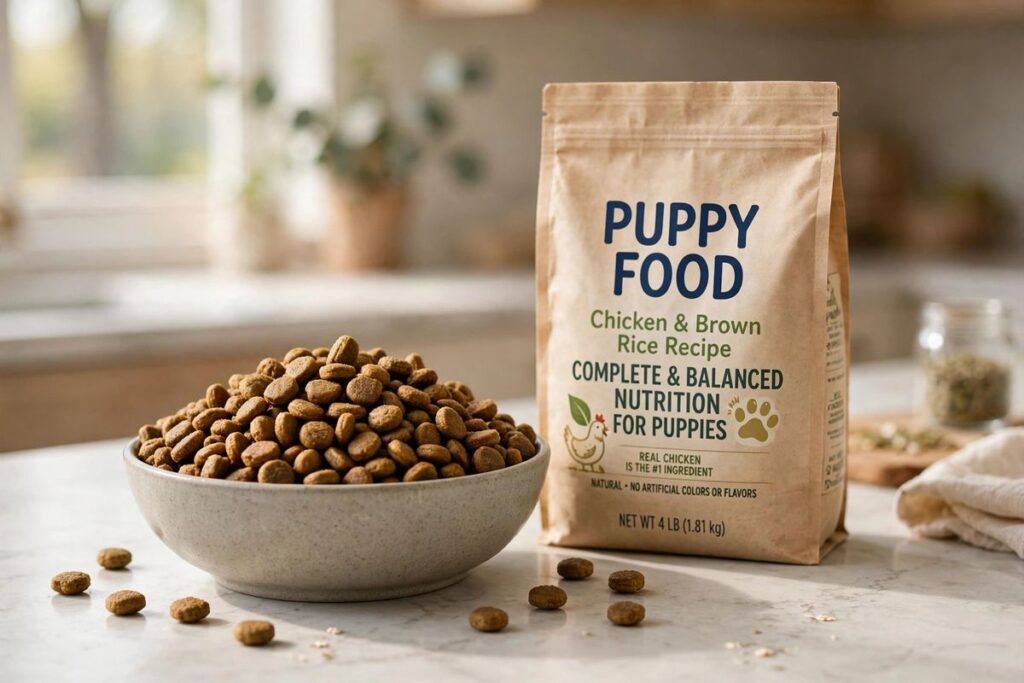
4. Iams Proactive Health Smart Puppy — Best Value
Iams is a long-established brand with a solid growth formula. Chicken is the number one ingredient, and it is one of the best puppy foods for the money — highly rated by owners, with a 4.7-star average from thousands of Amazon reviews.
Good for: Owners who want solid nutrition without the premium price.
Watch out for: Fewer specialized formulas than Hill’s or Royal Canin.
5. Purina Pro Plan Puppy — Best All-Rounder
Purina Pro Plan is widely used by breeders and backed by extensive research, with formulas for sensitive skin and stomachs, toy breeds, and large breeds. It is a strong pick if your puppy has a sensitive stomach.
Good for: Puppies with sensitive digestion, and owners who want lots of formula choices.
Watch out for: Pick the formula that matches your puppy’s size — the range is wide.
How to Choose the Best Dog Food for Puppies (Buying Guide)
- Look for the AAFCO statement. In the US, the label should say the food is “complete and balanced” for growth, based on AAFCO nutrient profiles. This is the single most important check.
- Named animal protein first. Chicken, lamb, or salmon should be the first ingredient — not “meat meal” or corn.
- DHA for brain development. DHA (an omega-3) supports brain and eye development in puppies.
- Match breed size. Small, medium, and large-breed puppies have different calorie needs and growth rates. Large-breed puppies especially need a large-breed formula.
- Switch foods slowly. Mix the new food with the old over 7 days to avoid an upset stomach.
- Ask your vet. The right food depends on your puppy’s breed, age, weight, and any sensitivities.
How much to feed a puppy
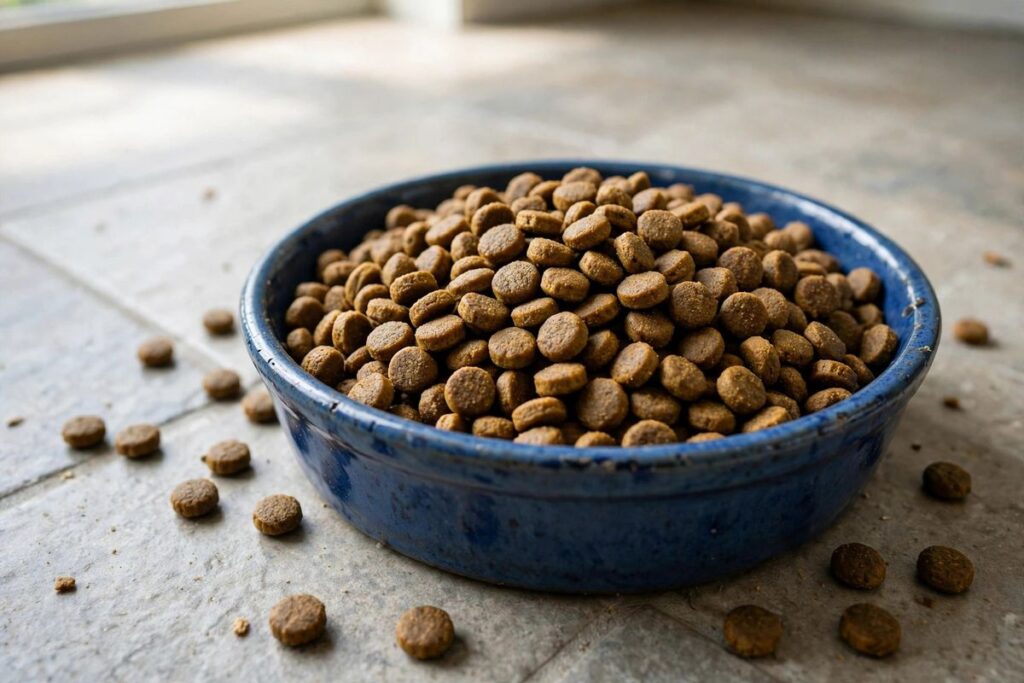
Follow the feeding guide on the bag for your puppy’s current weight and age, then adjust. Puppies usually eat 3–4 small meals a day until about 6 months old, then 2 meals a day. Keep fresh water available at all times, and avoid overfeeding — extra weight stresses growing joints. For vet-recommended picks and feeding advice, see PetMD’s best puppy food guide.


FAQ
When can my puppy switch to adult food?
Most puppies switch at 12 months; large and giant breeds at 18–24 months. Ask your vet. The ASPCA’s dog nutrition tips explain weaning and feeding your puppy.
Is grain-free puppy food better?
Not necessarily. Grain-free is only needed if your vet diagnoses a grain sensitivity. AAFCO-approved grain-inclusive foods are fine for most puppies.
Can I feed my puppy homemade food?
Only with a vet or veterinary nutritionist’s recipe. Most homemade diets are not complete and balanced for growth.
Best Dog Food for Puppies: The Bottom Line
If you want one safe choice, start with Hill’s Science Diet Puppy. For small breeds, Royal Canin Small Puppy; for large breeds, the large-breed Hill’s formula; on a budget, Iams Proactive Health. Whichever you choose, check for the AAFCO growth statement and switch foods gradually. Still deciding whether a dog fits your home? Read our guide on which pet is right for you. Our best dog food for puppies verdict: start with a vet-recommended formula and match it to your puppy’s size.
Disclaimer: This article is for general information only and does not replace professional veterinary advice. Always consult your veterinarian before making major changes to your puppy’s diet.