
Grain-Free vs Grain-Inclusive Dog Food: What Vets Actually Say (2026)
Walk down a pet food aisle and you will see two camps: bags that shout “grain-free” and bags that list rice, barley, or oats right on the front. The grain free vs grain inclusive dog food debate has been running for years, and it got a lot more serious in 2018, when the FDA started looking into a possible link between grain-free diets and a heart condition in dogs.
So what do vets actually say? For most healthy dogs, a good grain-inclusive food is just as good as grain-free, and often the safer default. Grain-free has a real place, but it is much narrower than the marketing suggests. This guide explains what each type really is, what the heart investigation found, and how to pick the right food for your dog.
In This Article

Grain Free vs Grain Inclusive Dog Food: What Do the Words Actually Mean?
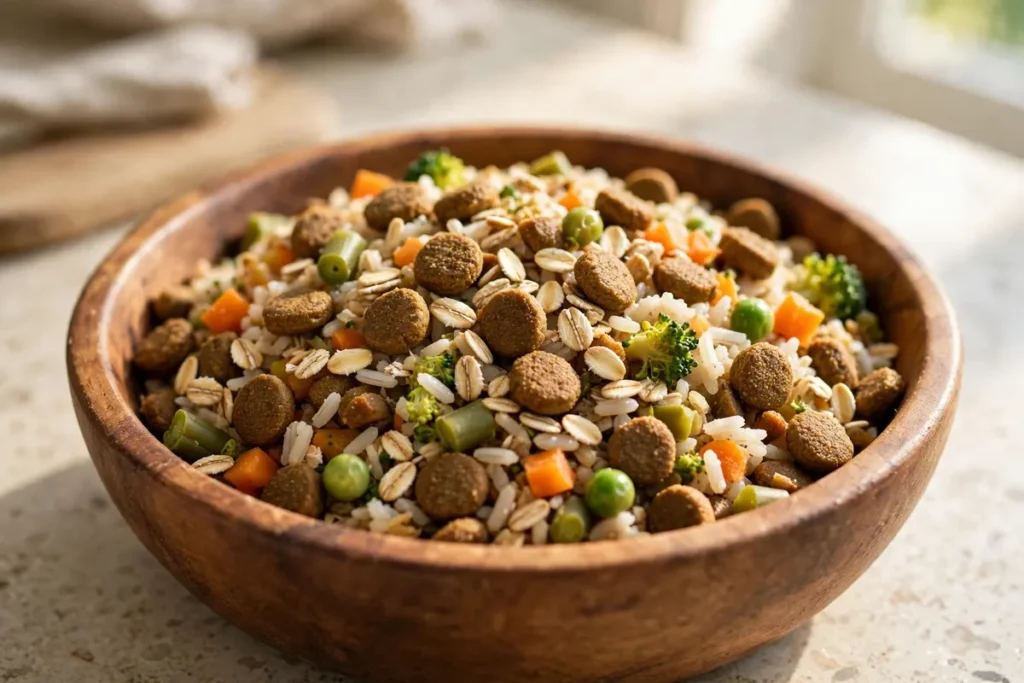
A grain-inclusive food contains cereal grains such as rice, corn, wheat, barley, or oats, cooked into the kibble as a source of energy, fiber, and nutrients. Most traditional dog foods fall into this group, and dogs have eaten grains in commercial food for decades.
A grain-free food leaves all of those grains out, using other carbohydrates instead — most often potatoes, sweet potatoes, peas, lentils, or chickpeas. That swap is the whole difference. Grain-free does not mean low-carbohydrate or high-meat: a grain-free kibble can carry just as much starch as a grain-inclusive one. The starch simply comes from a pea instead of rice.
Much of the marketing around grain-free rests on two ideas that do not hold up: that grains are “fillers” with no value, and that removing them is healthier. Whole grains supply fiber, B vitamins, and steady energy, and they rarely cause food allergy. The real question is whether the whole recipe is complete, balanced, and made by a company that knows what it is doing.
If you are also weighing wet food against dry food, our comparison of wet dog food vs dry dog food covers the other big choice owners face.
The FDA Investigation and Your Dog’s Heart
The reason this debate moved from the pet store to the vet’s office is dilated cardiomyopathy, or DCM — a disease in which the heart muscle weakens and stretches, so it cannot pump blood properly. DCM can be severe, even fatal, and in some breeds, such as Doberman Pinschers and Great Danes, it is a known genetic condition.
In July 2018, the FDA announced it was investigating reports of DCM in dogs eating certain diets, many labeled grain-free and rich in peas, lentils, and other legumes. Many of the affected dogs were breeds not normally prone to DCM, including Golden Retrievers, Labradors, and mixed breeds. Between January 2014 and April 2019, the FDA received 524 reports of DCM in dogs and cats. More than 90 percent of the products named were labeled grain-free, and 93 percent contained peas or lentils high on the ingredient list.
That sounds alarming, and it is worth taking seriously. But the FDA has been careful with its words: in its December 2022 update, the agency said there is still insufficient evidence to prove a causal link. No single ingredient has been proven to cause DCM, no food has been recalled, and the investigation remains open. The leading theory involves taurine, an amino acid that supports heart health — legume-heavy diets may interfere with how dogs make or absorb it, but that is not proven either.
Some dogs with diet-related DCM improved after a food change and veterinary treatment — but not every case reversed, and not every dog eating grain-free food is at risk. The honest summary: a real signal worth respecting, and no proven cause yet. You can read the FDA’s own summary on the FDA investigation page.
What Vets Actually Say About Grain Free vs Grain Inclusive Dog Food
Ask veterinarians and veterinary nutritionists what they feed their own dogs, and most will give you the same answer: a complete and balanced grain-inclusive food from a large, well-established company. Those companies usually employ veterinary nutritionists, run feeding trials, and have decades of quality-control data behind them.
Vets raise three main concerns about grain-free diets. First, the open DCM question. While the link is unproven, the pattern in the FDA reports was strong enough that many veterinary cardiologists prefer to play it safe, especially for breeds already at higher heart risk. Choosing grain-inclusive while the science is unsettled sidesteps an unresolved question at low cost.
Second, the benefit often is not there. For the average dog, there is no strong evidence that removing grains improves health, energy, coat, or digestion. Grain allergies are genuinely rare — the most common confirmed food allergens are animal proteins such as beef, dairy, and chicken, not wheat or corn. Most dogs switched to grain-free “for allergies” were never allergic to grain in the first place.
Third, vets point to a pattern they call BEG diets: boutique brands, exotic ingredients, or grain-free formulas. Many of the diets named in the FDA investigation came from smaller companies using unusual proteins and legume-heavy recipes, often without the deep nutrition science and feeding-trial backing of established companies. Formulation quality, not the grain question alone, is a big part of the concern.
That does not mean every grain-free food is bad. A well-made grain-free recipe from a company with real nutrition expertise can be a fine food. But vets generally want a reason to choose it — a diagnosis, not a hunch. Vetstreet’s guide to grain-free dog food and what the science says reaches the same conclusion: formulation quality and your dog’s individual needs decide, not the label on the bag.

Grain Free vs Grain Inclusive Dog Food: Side-by-Side Comparison
| Feature | Grain-Free | Grain-Inclusive |
|---|---|---|
| Carbohydrate source | Potatoes, peas, lentils, chickpeas, sweet potato | Rice, corn, barley, oats, whole wheat |
| Total carbohydrate level | Often similar to grain-inclusive, not automatically lower | Comparable; varies widely by recipe |
| Heart health (DCM) | Over-represented in FDA reports; link unproven | Not implicated to the same degree |
| Food allergies | Helpful only if a grain sensitivity is diagnosed | Fine for most dogs |
| Best suited for | Dogs with a vet-confirmed grain intolerance | Most healthy dogs |
Neither category is automatically better. A thoughtfully made food in either group can be excellent, and a poorly made one can fall short. What matters most is the company behind the recipe and whether it fits your dog’s actual needs. The grain free vs grain inclusive dog food label on the bag is only one part of that choice — formulation and your dog’s response matter more.
Who Should Eat Grain-Free?
Grain-free has a genuine place, and it is a small one. The dogs who truly benefit are those with a diagnosed intolerance or allergy to a specific grain, confirmed by a proper elimination diet trial run by your veterinarian — one diet fed for several weeks, with suspected ingredients reintroduced one at a time. If a grain turns out to be the trigger, then a grain-free recipe has a clear and appropriate role.
A second group is dogs already doing well on a grain-free food, with a clean bill of health from their vet and no heart concerns. If your vet knows the food and is happy, there is no reason to panic-switch — but still ask about the DCM question at your next visit, especially if the food is legume-heavy or your dog is a higher-risk breed such as a Golden Retriever.
For everyone else, grain-free is a solution looking for a problem. If you switched because of itchy skin, soft stools, or low energy, talk to your vet before assuming grain was the cause — those symptoms have many causes, and the fix is often a different protein or a medical issue, not the absence of rice.
How to Choose a Good Food Either Way
Whether you go grain-free or grain-inclusive, the same checks separate a good food from a mediocre one. In the grain free vs grain inclusive dog food debate, those checks matter more than the label.
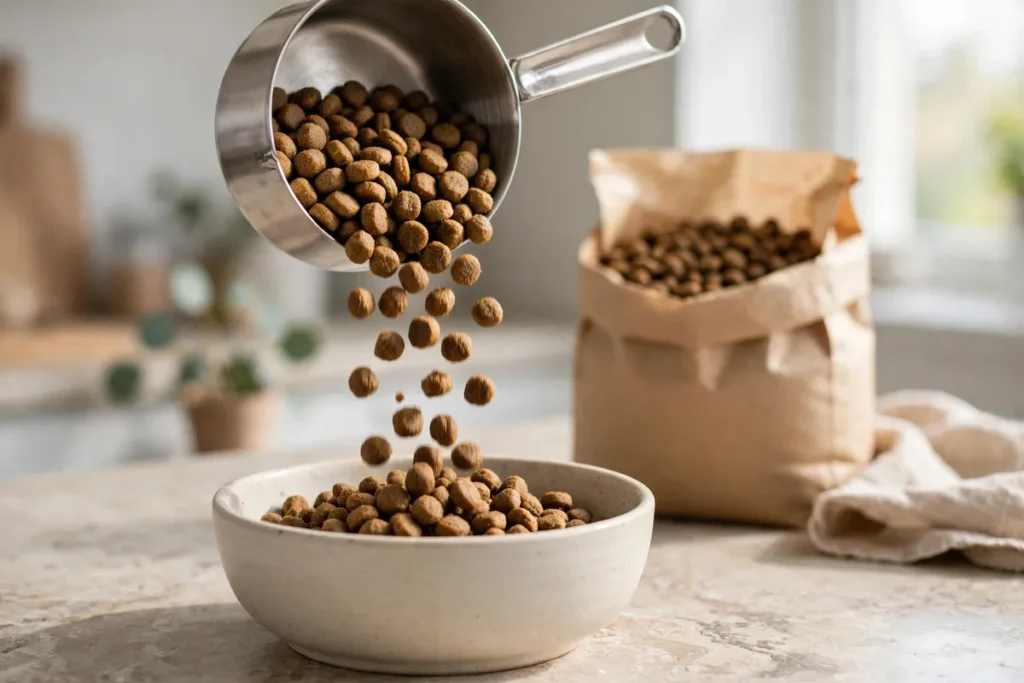
First, look for an AAFCO statement on the bag saying the food is complete and balanced for your dog’s life stage. That is the minimum proof the recipe meets established nutrient profiles.
Second, favor companies with real nutrition expertise — one that employs board-certified veterinary nutritionists and runs feeding trials, not just lab analysis. The big, research-driven brands are not fashionable, but they hold the deepest safety data.
Third, read the first five ingredients — they tell you what the food is mostly made of. A named animal protein first is a good sign; a long list of peas, lentils, and potatoes at the top of a grain-free recipe is worth noting, given the DCM investigation.
Fourth, switch foods slowly. Mix the new food with the old over seven to ten days, increasing the new share a little each day. A sudden switch is the most common cause of upset stomachs — and it makes it impossible to tell whether the new food agrees with your dog.
Finally, judge the food by your dog, not the bag. Over the first month, watch the stool, coat, energy, and weight. A good food means firm stools, a shiny coat, steady energy, and a stable weight. If any of those go wrong, talk to your vet before trying another bag at random.
One last note for puppy owners: growing dogs need precise nutrition, and large-breed puppies need carefully controlled calcium and energy. Our guide to the best dog food for puppies explains what to look for, and the best puppy food for large breeds covers the extra rules for fast-growing dogs.
Prices change — check the current price before buying.
Frequently Asked Questions
Is grain-free dog food bad for dogs?
Not automatically. Grain-free food is not proven to cause heart disease, and many dogs eat it without problems. But the FDA has investigated a possible link between grain-free, legume-heavy diets and dilated cardiomyopathy, and the question is still open. Most vets recommend grain-inclusive as the default unless a vet has diagnosed a grain allergy.
What is the FDA investigation into grain-free dog food?
In July 2018, the FDA began investigating reports of dilated cardiomyopathy (DCM) in dogs eating diets often labeled grain-free and high in peas, lentils, or potatoes. Between 2014 and 2019 it received 524 reports, and more than 90 percent of the products named were grain-free. In December 2022, the FDA said there is still insufficient evidence to prove a causal link. No foods were recalled.
Should I switch my dog from grain-free to grain-inclusive?
For most healthy dogs, yes — it is a reasonable, low-risk switch, and many vets recommend it. Change foods gradually over seven to ten days, and talk to your vet first if your dog has a heart murmur, a diagnosed heart condition, or a confirmed grain allergy. Your vet knows your dog’s history and can advise on the right food. If you are still weighing the grain free vs grain inclusive dog food choice, that slow switch is a good first step.
The Bottom Line

The grain free vs grain inclusive dog food debate has a clear answer for most dogs: a good grain-inclusive food is the safer default, and grain-free is the right choice only when a vet has diagnosed a grain problem. The FDA investigation into heart disease is real and worth respecting, even though no cause has been proven. Grain allergies are rare, grain-free is not lower in carbs, and the company behind the recipe matters far more than whether the bag says “grain-free.”
Pick a complete and balanced food from a company with veterinary nutritionists and feeding trials behind it, switch slowly, and let your vet weigh in — especially for breeds with higher heart risk. That is what vets actually say, and the simplest way to feed with confidence. It is also the most practical way to settle the grain free vs grain inclusive dog food question for your own dog.

Disclaimer: This article is for general information only and is not veterinary advice. If your dog has a heart condition, a suspected food allergy, or any health concern, talk to your veterinarian before changing diets.