Parrot vs Parakeet: Which Pet Bird Is Right for You?
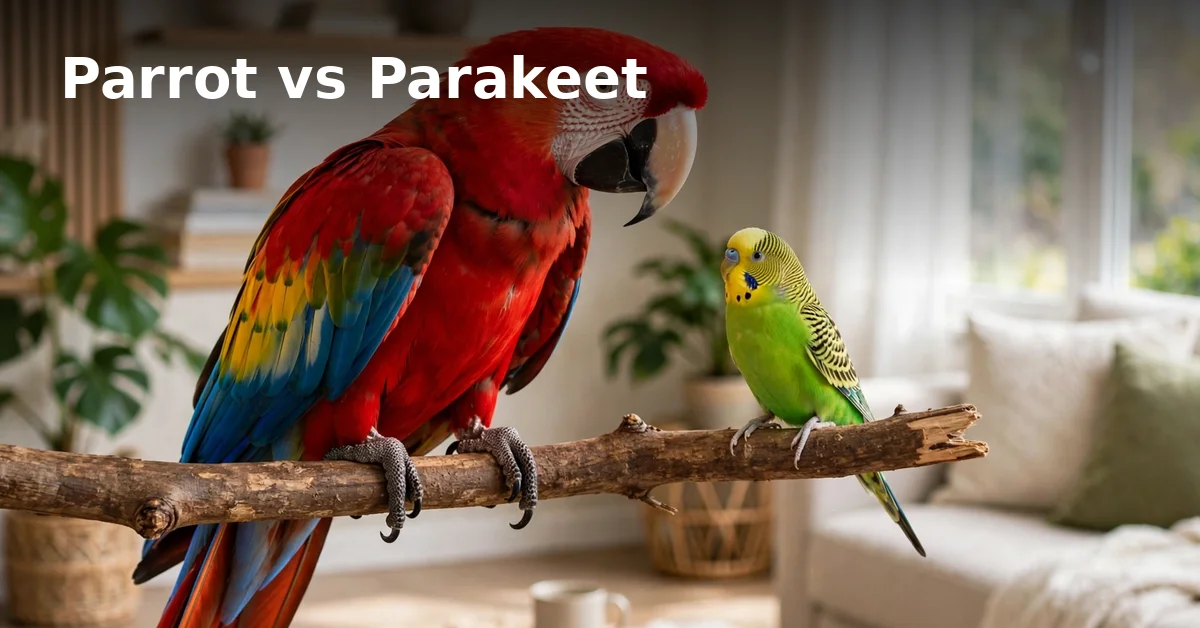
Walk into a pet store and you will see them side by side: big, bright parrots talking from their perches, and small, cheerful parakeets chirping in a group. Both are parrots, technically — but they are very different pets. The parrot vs parakeet choice matters more than most people expect, because one lives five to fifteen years and the other can outlive you.
This guide compares parrots and parakeets on size, lifespan, noise, cost, talking ability, and daily care, so you can pick the bird that actually fits your home, your budget, and your patience.
Prices change, so check the current price before buying.

Parrot vs Parakeet at a Glance
| Feature | Parrot | Parakeet |
|---|---|---|
| Size | 8 to 40 inches, depending on species | About 7 inches |
| Weight | 2 ounces to 3.5 pounds | About 1 ounce |
| Lifespan | 20 to 80 years | 5 to 15 years |
| Noise level | Loud, especially macaws and cockatoos | Chatty but much quieter |
| Talking ability | Excellent, large vocabulary | Good, can learn 100+ words |
| Cost to buy | $100 to $3,000+ | $20 to $60 |
| Monthly cost | $50 to $120 | $15 to $35 |
| Cage size | Large, often a room-sized aviary | Small to medium cage |
| Daily time needed | 2 to 4 hours of interaction | 30 minutes to 1 hour |
| Best for beginners | No, except small species | Yes, one of the best starter birds |
| Best for apartments | Usually no, too loud | Yes, quiet enough for most buildings |
| Mess | A lot of it | Some, but far less |
What Is a Parrot?
A parrot is a member of the parrot family, and the word covers more than 350 species — from tiny parrotlets the size of a sparrow to macaws nearly three feet long. When people say “parrot,” they usually mean a medium or large species: an African grey, an Amazon, a cockatoo, a conure, or a macaw.
Large parrots are famous for two things: their intelligence and their lifespan. An African grey can learn hundreds of words and solve simple puzzles. A macaw can live 60 years or more. That is not a pet — that is a family member who may need a plan in your will.
Parrots are also loud. A cockatoo’s scream can reach 135 decibels, louder than a chainsaw. Even a smaller conure can wake a whole apartment block. They are messy, too: food flung across the room, feathers everywhere, and toys shredded daily.
But for the right owner, a parrot is unmatched. They bond deeply, learn tricks, greet you by name, and become a genuine companion for decades.
What Is a Parakeet?
A parakeet — also called a budgerigar, or budgie — is a small parrot from Australia. In the United States, “parakeet” almost always means a budgie, the small green-and-yellow bird you see in every pet store.
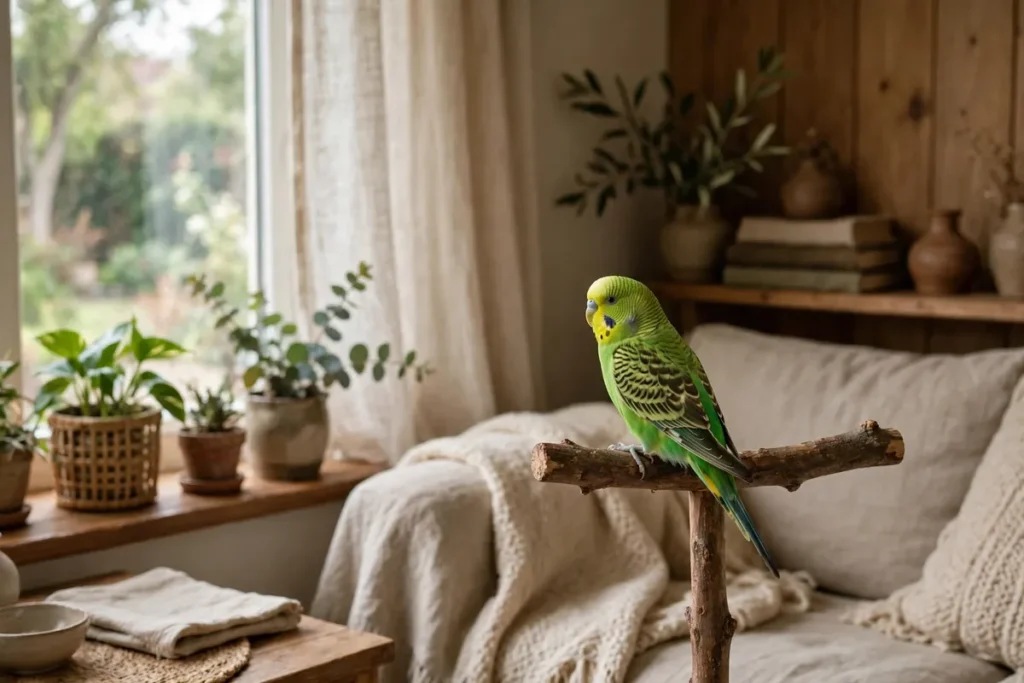
Parakeets are the friendliest starter bird there is. They are small, cheap, cheerful, and much quieter than a large parrot. They live 5 to 15 years, which is a real commitment but not a lifetime one. They can learn to talk, too — one famous budgie learned more than 100 words.
A parakeet needs a companion, though. In the wild they live in huge flocks, and a lone budgie with no one to talk to gets lonely fast. Many owners keep two, or spend plenty of time with one bird every day.
Size and Space: The First Difference
Size is the most obvious difference in the parrot vs parakeet debate, and it drives everything else.
A budgie is about 7 inches long and weighs around an ounce. It fits happily in a cage 18 inches wide, and it can fly around a living room without knocking anything over.
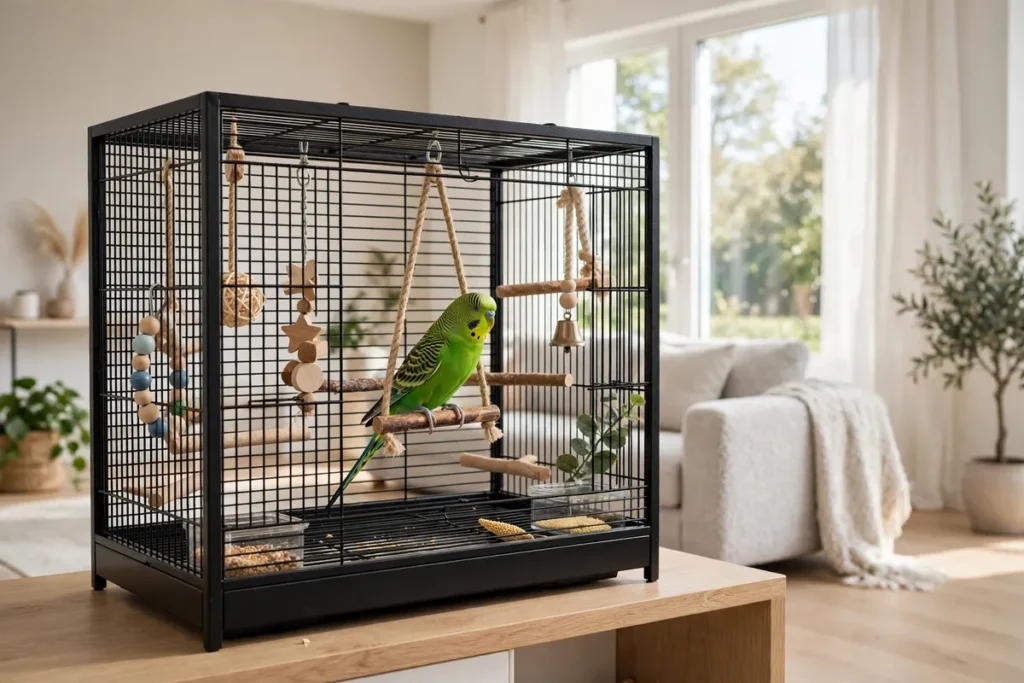
A large parrot needs a cage you could almost walk into. A macaw’s cage should be at least 3 feet wide and 4 feet tall, and the bird still needs hours outside it every day. A cockatoo needs a whole room, or an aviary.
If you live in a small apartment, the choice is nearly made for you. A parakeet fits. A macaw does not.
Lifespan: A Decade or a Lifetime
This is the difference most first-time owners underestimate.
A parakeet lives 5 to 15 years. That is a serious commitment, but it fits inside a normal chapter of life — a child can grow up with a budgie and head to college as it reaches old age.
A large parrot can live 50 to 80 years. An African grey bought at 25 may still be with you at 75. A cockatoo can outlive its owner. Before you buy a parrot, ask yourself who will care for it if you cannot — and put that in writing.
Smaller parrots sit in between: a conure lives 20 to 30 years, a Senegal about 30. If you want a parrot but not a lifetime, a smaller species is the honest middle ground.
Noise: Chirps or Screams
Parakeets chatter. They chirp, warble, and practice their words all day, but at a volume you can talk over. Most apartment neighbors never notice a budgie.
Large parrots scream. It is not a figure of speech — a macaw or cockatoo can scream at a volume that hurts your ears, usually at dawn and dusk, and sometimes just because it is bored. If you work from home, take calls, or have a baby in the house, a large parrot will make your life harder.
If noise matters to you — and it should — a parakeet wins easily. The Vet Desk’s guide to parrot vs parakeet differences explains the noise gap well, and it is worth reading before you fall for a bird in the store.
Talking and Intelligence
Both birds can talk, but not equally.
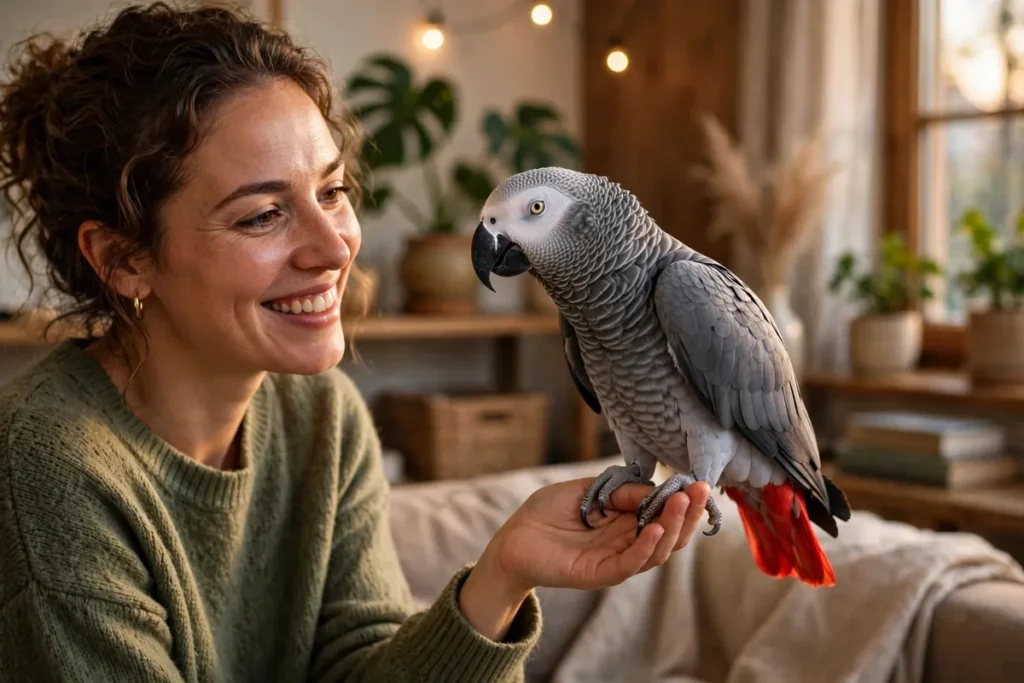
Large parrots are the best talkers in the bird world. African greys can learn hundreds of words and use them in context — greeting you, asking for food, naming their toys. Amazons sing. Macaws shout your name across the house.
Parakeets talk, too, just more quietly and with a smaller vocabulary. A tame budgie can learn 50 to 100 words, and males usually learn faster than females. Their voices are thin and squeaky, and you have to listen closely to make out the words — but they do talk, and it is charming.
On intelligence, large parrots are in another league. They solve puzzles, learn routines, and get bored without constant stimulation. A bored parrot plucks its own feathers or screams for hours. A budgie is clever too, but it is happy with a mirror, a swing, and a bit of millet.
Cost: The Real Price of a Bird
A budgie costs $20 to $60 in most pet stores. A large parrot costs $500 to $3,000, and a rare macaw can cost far more.
The monthly costs tell the same story. A parakeet eats about $15 to $35 a month in food, toys, and bedding. A large parrot runs $50 to $120 a month — bigger cage, bigger toys (which it destroys faster), more food, and higher vet bills.
Vet bills are the hidden cost. Birds hide illness well, so by the time a bird looks sick, it is often seriously ill. An avian vet visit can cost $100 or more, and a large parrot’s surgery can run into the thousands. Budget for it before you buy, not after.
Daily Care and Time
A parakeet needs 30 minutes to an hour of your time a day: fresh food and water, a quick cage clean, some talking and handling, and a bit of free flight time in a safe room.
A large parrot needs 2 to 4 hours of interaction every single day. Not just being in the same room — actual play, training, and attention. A parrot left alone all day while you work will scream, pluck, or bite. If your schedule does not have that time, do not get a large parrot.
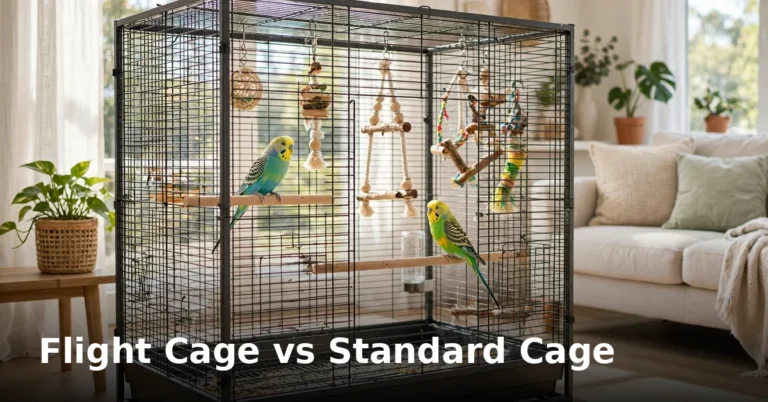
Both birds need the same basics: a seed mix is not enough on its own, so add pellets, fresh vegetables, and the occasional fruit. Our guide to seed vs pellets for parrots explains why pellets should be the backbone of the diet, and our roundup of the best bird perches covers perches that keep feet healthy. Cage size matters too — our comparison of flight cage vs standard bird cage helps you pick a cage your bird can actually move in.
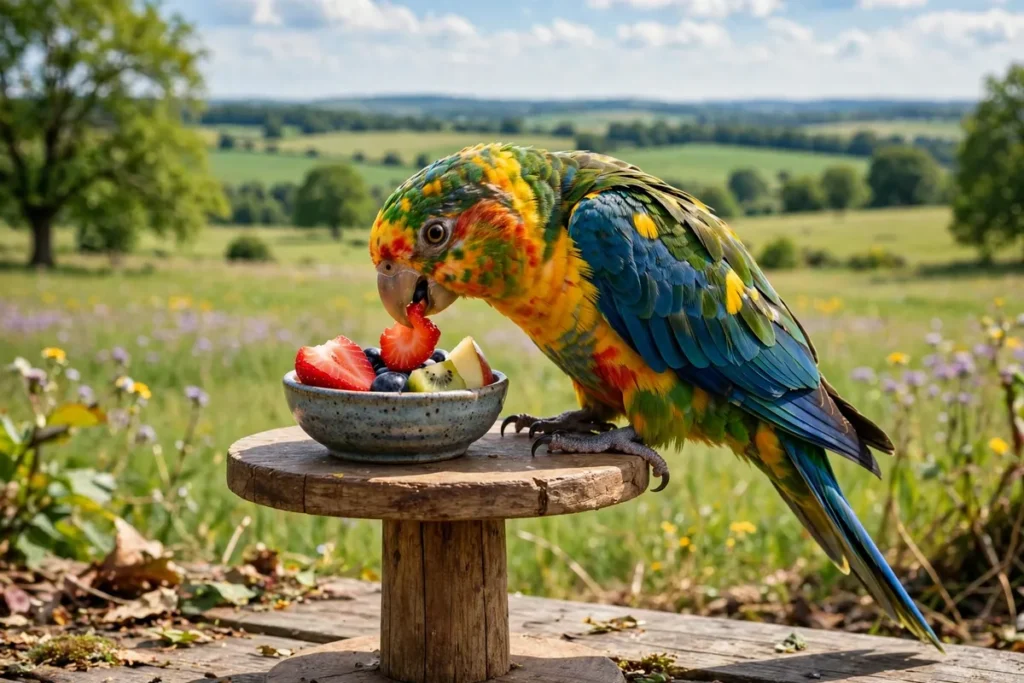
Parrot vs Parakeet: Which Bird Is Right for You?
Choose a parakeet if: you are a first-time bird owner, you live in an apartment, you want a friendly, affordable bird, or you cannot commit to decades. A budgie is the best starter bird there is, and two budgies together are happier than one alone.
Choose a parrot if: you have owned birds before, you have hours a day to spend with it, you have space for a huge cage, and you are ready for a 30- to 80-year commitment. A conure or a Senegal is a gentler first parrot than a macaw or a cockatoo.
Choose neither yet if: you travel often, you work long hours away from home, or you are not sure you can handle noise and mess. Birds are not low-maintenance pets, and a bird bought on impulse is a bird that ends up in a rescue. Visit a bird rescue first — you can meet both kinds, and you might adopt a bird that needs a home.
If you are still deciding, What Pet Should I Get’s side-by-side parakeet vs parrot comparison lays out the cost and lifestyle differences in one clear table.
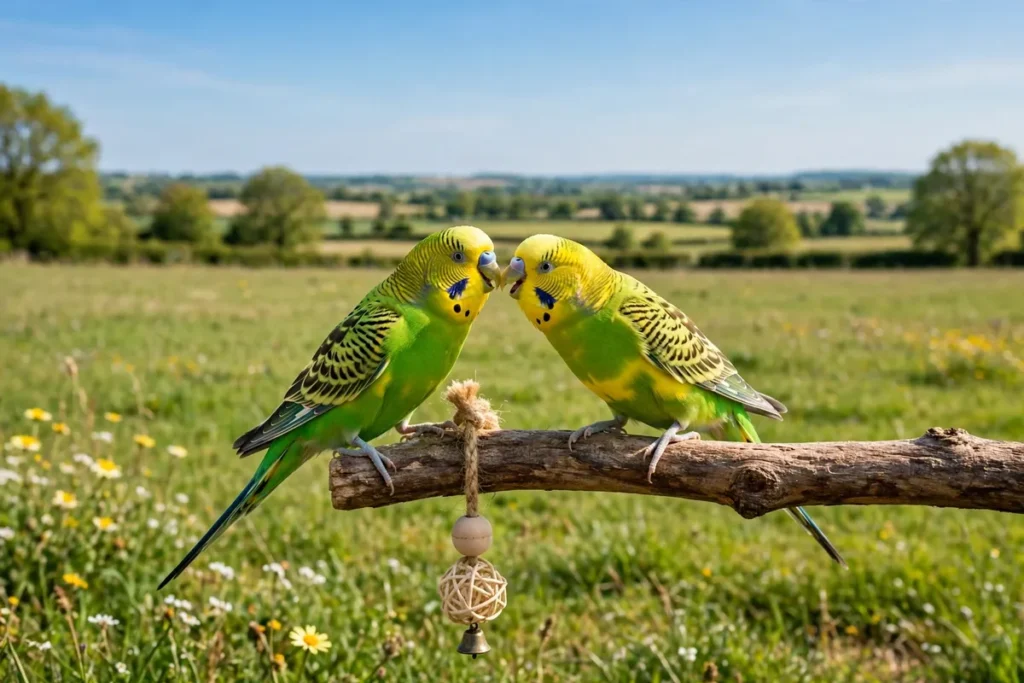
Frequently Asked Questions
Are parakeets actually parrots?
Yes. A parakeet is a small parrot — the word “parakeet” describes size and tail shape, not a separate family. Budgies are parrots, just small ones. That is why they can talk and why they need the same kind of care, scaled down.
Can a parakeet live alone?
It can, but only if you spend a lot of time with it every day. In the wild, budgies live in flocks of hundreds. A lone budgie with an owner who is away all day gets lonely and bored. Two budgies are usually happier — just know that a pair bonds more with each other than with you.
Which bird is better for kids?
A parakeet, by a long way. Budgies are gentle, small, and forgiving of clumsy handling, and their bite barely hurts. A large parrot can bite hard enough to need stitches, and it does not tolerate rough handling. Teach kids to handle any bird gently and calmly.
The Bottom Line
Parrot vs parakeet comes down to scale. A parakeet is small, quiet, cheap, and friendly — a wonderful first bird that lives 5 to 15 years. A parrot is big, loud, expensive, and brilliantly smart — a lifelong companion that needs hours of your time every day for decades. If you want a cheerful bird that fits your life, get a parakeet. If you want a feathered family member for the next fifty years and you have the time, space, and patience for one, get a parrot. Either way, visit a rescue first, meet the birds in person, and choose with your eyes open.