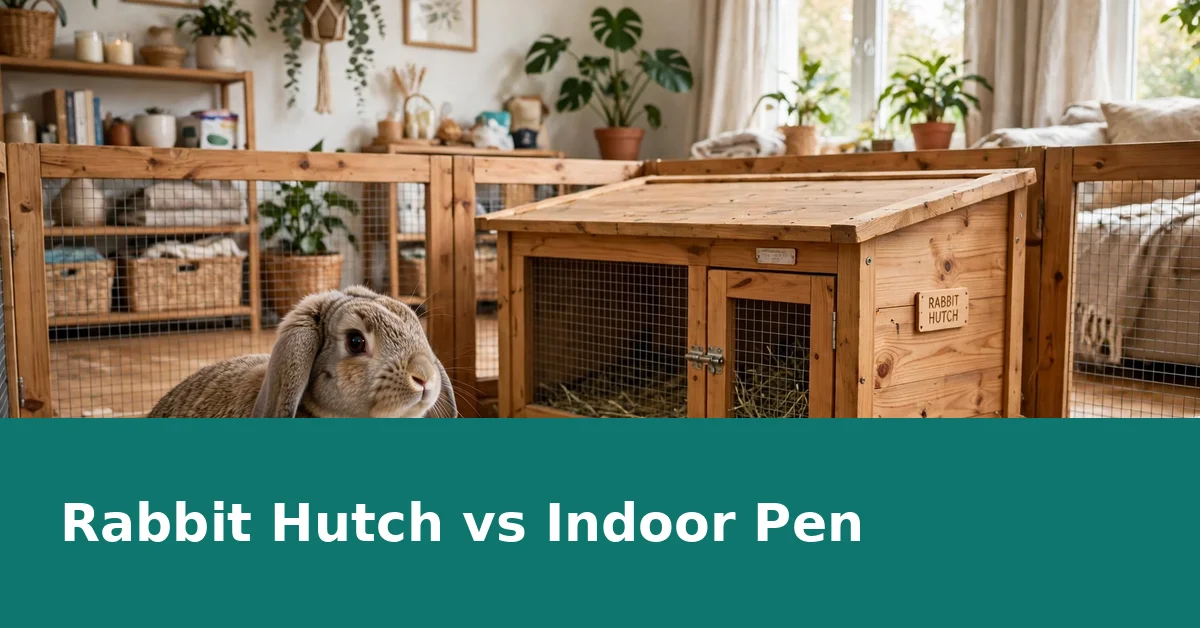
Rabbit Hutch vs Indoor Pen: Best Home for Your Rabbit
Bringing a rabbit home is exciting, and one of the first decisions is where your bunny will live. The two most popular options are a traditional rabbit hutch and an indoor pen, and they could hardly be more different. One is a small wooden box with a door; the other is an open, flexible space your rabbit can actually move around in.
So which one wins in the rabbit hutch vs indoor pen debate? For most pet rabbits, one option is clearly better — and it is probably not the one you see in pet store windows.
Rabbit Hutch vs Indoor Pen at a Glance
| Feature | Rabbit Hutch | Indoor Pen |
|---|---|---|
| Typical floor space | 4–8 sq ft | 8–24 sq ft (or more) |
| Room to run and hop | Very limited | Good — room for binkies |
| Height for standing up | Often too low | Usually fine with tall panels |
| Ventilation | Can be stuffy in summer | Open, plenty of airflow |
| Protection from predators | Good outdoors if sturdy, locked | None indoors |
| Protection from weather | Needs a sheltered spot | None |
| Cleaning | Harder — small door, corners trap mess | Easier — open top, lift panels out |
| Litter training | Possible but cramped | Much easier with a litter box |
| Bonding with your rabbit | Harder — rabbit is shut away | Easier — sit at floor level |
| Cost to set up | Low to moderate | Low to moderate |
| Works for free-roaming time | No — rabbit stays inside | Yes — open the gate |
| Best for | Temporary shelter, outdoor use | Everyday living for house rabbits |
What Is a Rabbit Hutch?
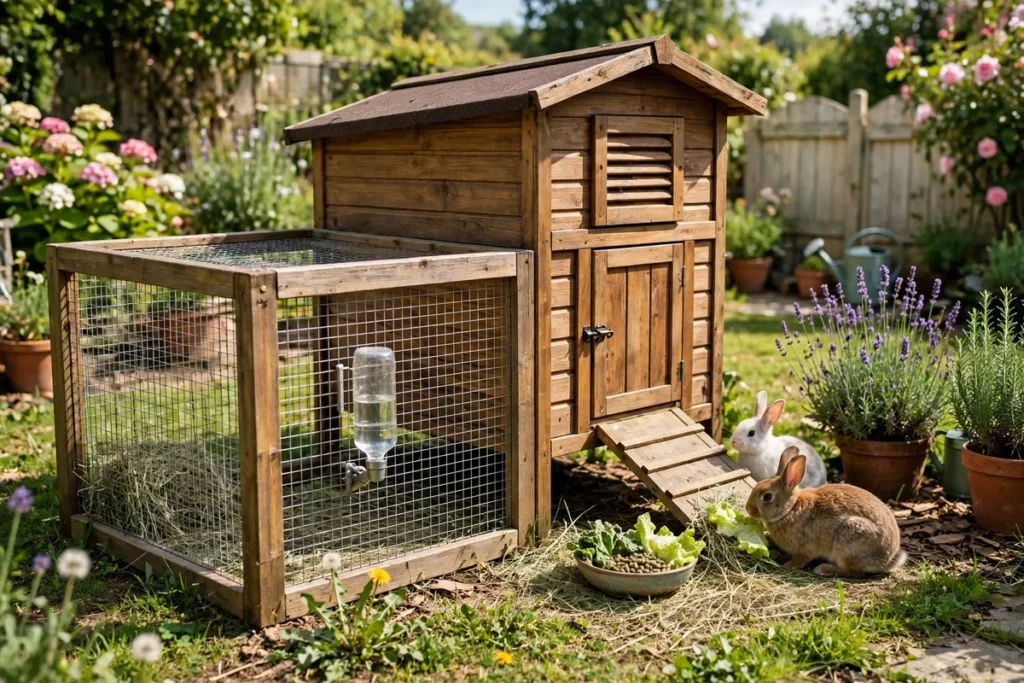
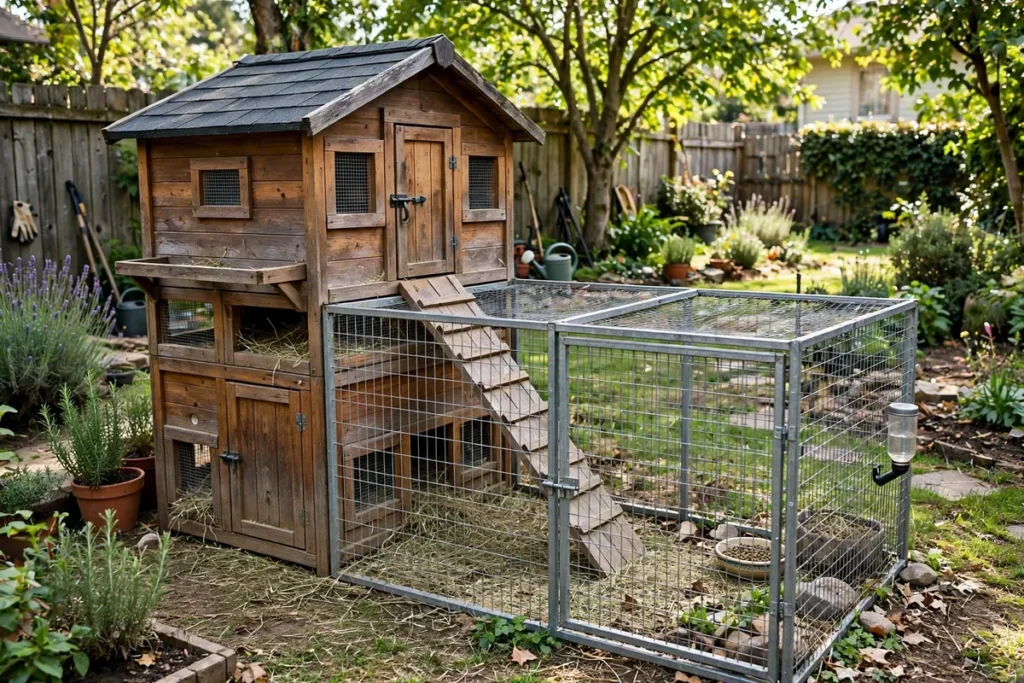
A rabbit hutch is a wooden box, usually raised on legs, with a wire-fronted door and a small sleeping compartment at one end. Hutches have been the traditional rabbit home for generations, and they are still sold in almost every pet store.
The problem is that most hutches sold in stores are far too small. A rabbit needs room to take at least three hops in a row, stretch out fully, and stand up without their ears touching the roof. Very few shop-bought hutches allow that. A hutch can work as a sleeping den or a shelter inside a bigger run, but as a rabbit’s only home, it is usually too cramped.
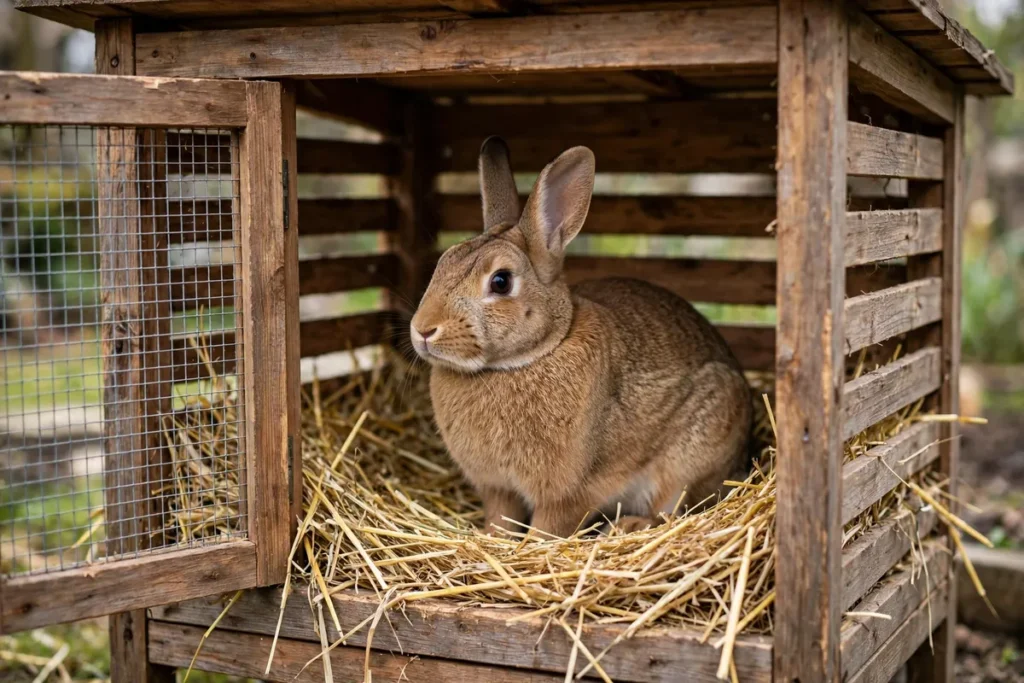
If you do use a hutch, buy the biggest one you can afford, keep it sheltered from sun and rain, and attach a run. The House Rabbit Society recommends pens over hutches for indoor rabbits, because pens give rabbits the room they need to behave like rabbits.
What Is an Indoor Pen?
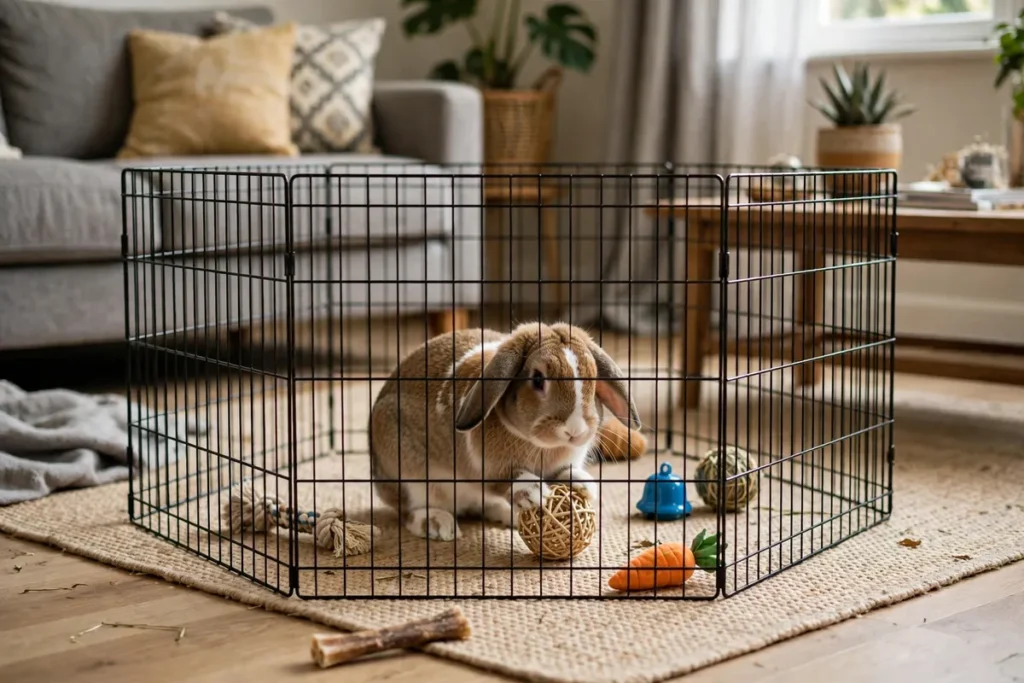
An indoor pen, sometimes called an exercise pen or x-pen, is a set of tall panels that clip together to fence off a section of a room. Inside go a litter box, a hay rack, a water bowl, a hideaway, and a few toys. Your rabbit lives in the pen, and you open the gate to let them out for free-roaming time.
Pens are flexible: make them bigger as your rabbit grows, reshape them around furniture, and fold them away when needed. The open top makes cleaning quick, and you can sit inside the pen with your rabbit to build trust — almost impossible with a hutch.
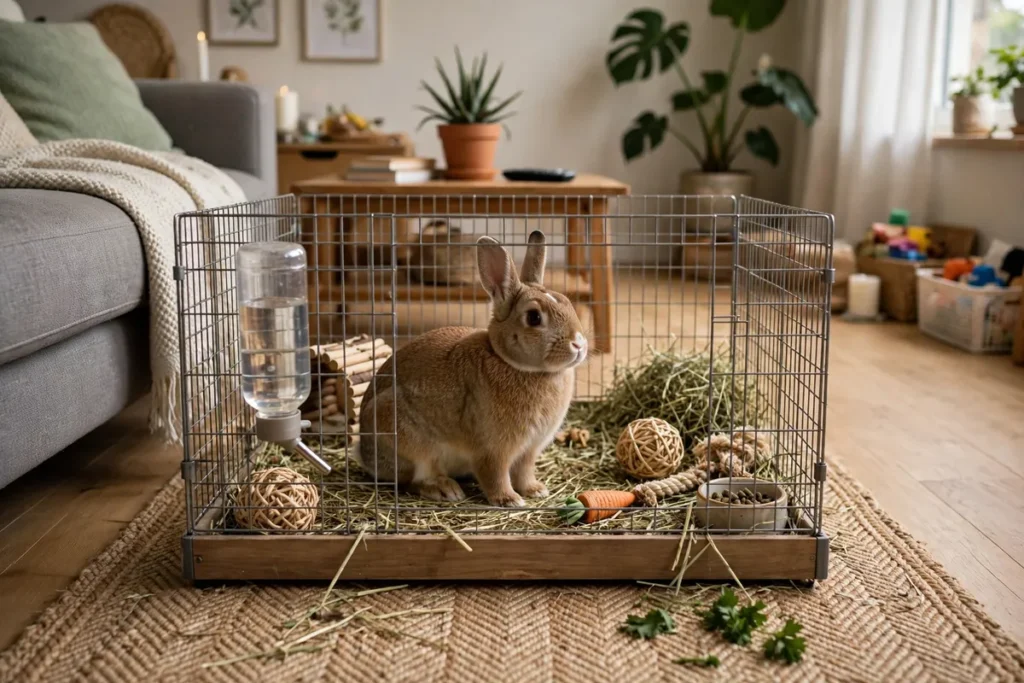
A pen is not a cage. It is a base camp: a safe home your rabbit returns to for food, rest, and the litter box, with the freedom to come out and explore.
Space: The Pen Wins by a Lot
Space is where the rabbit hutch vs indoor pen comparison is decided. In the wild, rabbits run, dig, jump, and explore all day. A rabbit shut in a small hutch cannot do any of that, and bored, cramped rabbits often develop health and behaviour problems — chewing bars, over-grooming, and even aggression.
Welfare guidance calls for at least 8 square feet of enclosed space plus room to exercise, and most experts now recommend much more for a pair of rabbits. The Rabbit Welfare Association and Fund has detailed guidance on rabbit housing that is worth reading before you buy anything. A standard shop hutch gives you a fraction of that space, while a pen can easily cover 12 to 24 square feet.
Safety: Different Risks, Different Answers
A good hutch does one thing well: it keeps a rabbit safe outdoors. A sturdy, lockable hutch protects against foxes, dogs, and cats, and keeps the rain off. But a cheap hutch with thin wire and a flimsy latch is not safe at all — predators can chew or push their way in.
Indoors, the risks change. A pen keeps your rabbit away from cables, toxic houseplants, and small gaps behind furniture, while still letting them see and hear the family. The main safety job is rabbit-proofing: cover cables, block off gaps, and use panels at least 36 inches high so your rabbit cannot jump out.
One risk people forget with hutches is heat. A wooden box in summer sun can overheat fast, and rabbits cope badly with heat. A pen indoors stays at room temperature.
Cleaning and Litter Training
Cleaning a hutch is awkward: you reach through a small door, pull damp bedding from corners you can barely see, and scrub a wooden floor that soaks up urine and smells over time.
A pen is far easier. The panels lift away, you sweep or wipe the floor, and you are done. Most pen setups use a litter box with paper-based litter, and rabbits take to litter training well when they have room to keep their toilet area separate from their sleeping area — very hard inside a tiny hutch, much easier inside a pen.
Cost: Closer Than You Think
A basic hutch and a basic pen cost roughly the same to buy. But the real cost of a hutch is higher, because a hutch alone is not enough — you also need a run, a cover, and often replacement parts as the wood rots or gets chewed.
A pen needs extras too — a litter box, hay rack, hideaway, and floor mat — but it is usually cheaper overall and far easier to repair: a bent panel swaps out in seconds, while a rotten hutch floor is a bigger job.
Prices change, so check the current price before buying.
Bonding With Your Rabbit
This is the difference people notice most once they live with a rabbit. A rabbit in a hutch is shut away in a box: you open the door, reach in, and lift them out, which many rabbits hate. It is hard to build trust that way.
With a pen, you can sit on the floor inside it and let your rabbit come to you. A rabbit that chooses to hop over and sniff your hand is learning to trust you — and that daily, low-pressure contact turns a nervous bunny into a friendly companion.
When a Hutch Still Makes Sense
A hutch is not useless. It works as a sleeping den inside a larger pen or run, a shelter for supervised outdoor time, or a temporary home. Some use one as a hideaway inside a pen — the rabbit hops in for a nap and out again when it likes. What a hutch should not be is a rabbit’s whole world, day after day, with no run and no time out.
How to Choose: Rabbit Hutch vs Indoor Pen
Ask yourself these questions first:
- Where will the rabbit live? Indoors, a pen is almost always the better choice. Outdoors, a hutch plus a large run is the minimum.
- How much space can you give? Measure the spot. If you can fit a pen of at least 8 square feet, do that.
- How much time will the rabbit spend out? A rabbit that gets several hours of free-roaming time daily can cope with a smaller base, but one shut away most of the day needs a big pen.
- One rabbit or two? Rabbits do best in bonded pairs, and two rabbits need even more room. A pen scales up easily; a hutch does not.
- What is your budget? Both are affordable, but remember the extras — a hutch needs a run, and a pen needs a litter box, hay rack, and hideaway.
If you are still unsure, start with a pen — you can always add a hutch inside it later, but the reverse is much harder.
Setting Up an Indoor Pen: Practical Tips
- Put a waterproof layer on the floor. A cheap vinyl mat, lino, or washable fleece protects your floor and is easy to clean.
- Place the litter box in the corner your rabbit chooses. Rabbits pick a toilet corner quickly. Put the box there with paper-based litter and a pile of hay — rabbits like to eat while they go.
- Give them a hideaway. A cardboard box with two doorways cut in it works perfectly. Rabbits need somewhere to retreat when they feel unsure.
- Keep hay available all day. Hay should make up most of a rabbit’s diet, and a hay rack keeps it clean and off the floor.
- Add a few toys and rotate them. A willow ball, a cardboard tube stuffed with hay, and a tunnel will keep a rabbit busy. For more ideas, see our guide to the best rabbit toys for bunnies.
If you already have a hutch, you do not need to throw it away. Place it inside or next to a pen with the door open, and let your rabbit choose. Our guide to the best rabbit hutch covers safe, roomy options, and our guide to the best guinea pig cage is useful if you keep small pets side by side.
Frequently Asked Questions
Can a rabbit live in a hutch full time?
A rabbit can survive in a hutch, but it is not a good life. A hutch on its own is usually too small for a rabbit to hop, stretch, and stand up properly, and rabbits kept this way often become bored and unhealthy. If you use a hutch, attach a large run and give your rabbit several hours of exercise outside it every day.
Is an indoor pen safe for a rabbit when I am not home?
Yes, as long as the pen is set up properly. Use tall panels your rabbit cannot jump over, keep cables and toxic plants out of reach, and make sure there is nothing inside the pen your rabbit can chew that would hurt them.
Do rabbits need a hutch inside an indoor pen?
No, they do not need a full hutch, but they do need a hideaway. A cardboard box, a wooden hide, or a small pet house gives your rabbit a dark, enclosed spot to rest in.
The Bottom Line
In the rabbit hutch vs indoor pen debate, the pen wins for most house rabbits. It gives your rabbit more space, makes cleaning and litter training easier, costs about the same, and lets you spend time with your rabbit at floor level.
A hutch still has a place as a shelter, a sleeping den, or part of an outdoor setup with a large run. But as a rabbit’s only home, it is too small.
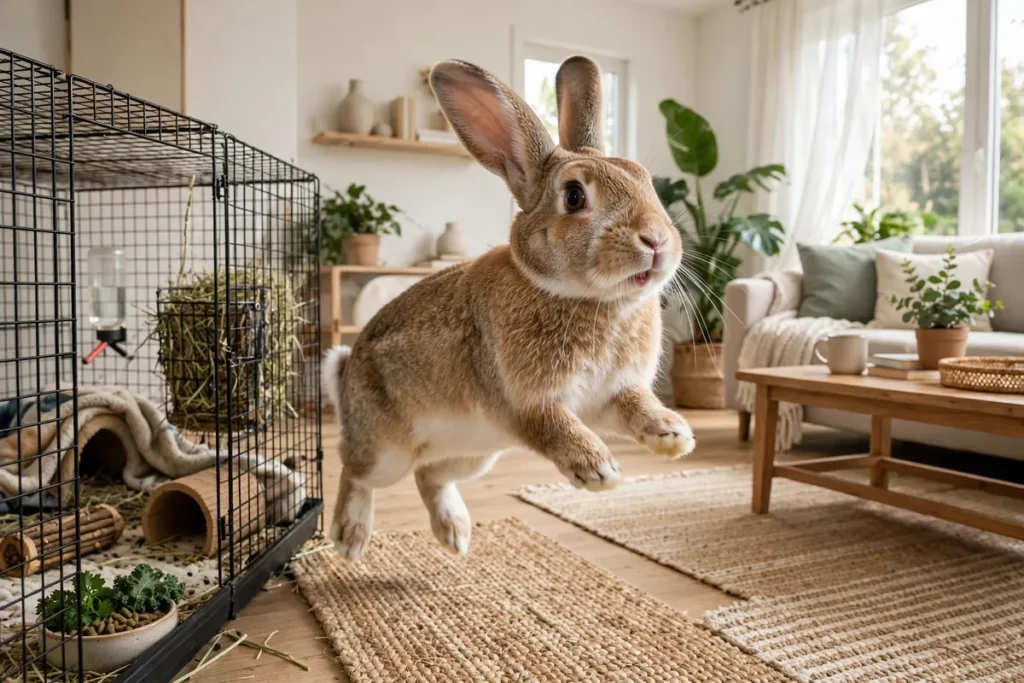
If you are setting up for a new rabbit, start with a pen, add a hideaway and a litter box, and let your rabbit show you how much they enjoy the room. You will see the difference in the first week — more exploring, more binkies, and a rabbit that comes to greet you.