How to Take Care of a Kitten: First-Week Checklist
How to Take Care of a Kitten: First-Week Checklist
Bringing a kitten home is one of the happiest days in a pet owner’s life. Your kitten has just left everything it knows: its mother, its littermates, and the only home it has ever had. The first week sets the tone for your whole relationship, and a little preparation makes all the difference.
If you are wondering how to take care of a kitten in those first seven days, this guide covers preparing your home, the first vet visit, feeding, litter box training, safe spaces, socialization, grooming, and the warning signs that mean you should call a vet.
In This Article

Before Your Kitten Comes Home: Prepare the Space
The best time to get ready is before your kitten arrives. A kitten’s world should start small. Pick one quiet room — a spare bedroom or a bathroom works well — and make it your kitten’s base camp for the first few days. For a second checklist to compare with this one, see PetMD’s tips for bringing a new kitten home.
Set up the room before the carrier door opens: a food bowl and a separate water bowl, a litter box with unscented, kitten-safe litter, a cozy bed, a scratching post, and a couple of small toys. Keep the room warm and draft-free.
Kitten-proof the room the way you would baby-proof a house: tie up blind cords, hide electrical wires, remove toxic houseplants like lilies, and lock away cleaning products, medications, and anything small enough to swallow.
Have the right food ready. Ask the shelter, breeder, or previous owner what the kitten has been eating, and buy the same food for the first week. A sudden food change on top of a new home is a recipe for an upset stomach. You can switch foods later, gradually, over seven to ten days. For food recommendations, see our guide to the best cat food for kittens.
Day 1: Let Your Kitten Set the Pace
When you get home, carry the carrier into the base camp room, set it on the floor, open the door, and step back. Do not reach in and pull your kitten out. Some kittens march out immediately; others hide in the carrier for an hour or more. Both are normal.
Sit quietly in the room, talk softly, and let the kitten come to you. Offer a treat or a toy, but do not chase, grab, or corner your new pet. A kitten that hides under the bed on day one is not rejecting you — it is being sensible. Trust is earned in small steps: a sniff of your hand, a cautious step toward you, a first purr.
Keep the first day calm and quiet. Hold off on inviting friends and family over, and limit handling to short, gentle sessions, always letting the kitten walk away when it wants to.
Expect some crying at night for the first two or three nights — your kitten misses its mother and littermates. A warm blanket and a soft toy to snuggle can help.
The First Vet Visit: Book It Within the First Few Days
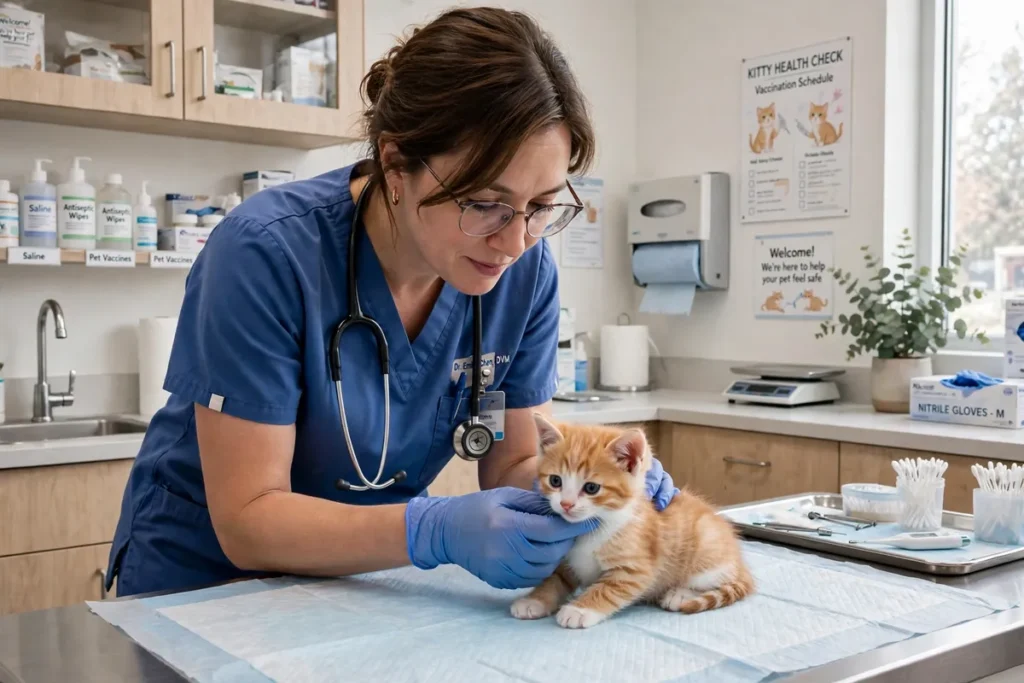
A vet visit within the first three to five days is one of the most important items on any new kitten checklist. Even if your kitten came with a clean bill of health, an independent check gives you a baseline and catches problems early, when they are easiest to treat.
Your vet will do a full physical exam, check for fleas, ear mites, and intestinal parasites, and talk to you about the vaccination schedule. Kittens typically start their core vaccines (often given as one FVRCP shot) at around six to eight weeks old, with boosters every three to four weeks until about 16 weeks old.
Bring a fresh stool sample if you can — the vet can test it for worms and other parasites, which are very common in kittens. Ask about flea prevention, deworming, and spaying or neutering, which most vets recommend at around five to six months old. Bring any adoption paperwork, and write your questions down beforehand so you do not forget them.
Feeding Your Kitten: Schedule and Food Choices

Kittens grow fast — a kitten can double or triple its weight in the first few months — and they need far more calories per pound than an adult cat. That is why kitten food exists: it is higher in protein, fat, and calories, and contains the nutrients a growing body needs, including DHA for brain and eye development.
Feed a food labeled for kittens (or “for all life stages”) and follow the feeding guide on the bag. A kitten under six months old should eat three to four small meals a day; from six months to one year, two to three meals a day is usually enough. Keep meals on a regular schedule and always leave fresh water available.
Wet food is a great choice for kittens — it is easier to chew and adds water to the diet.
Do not feed your kitten adult cat food, dog food, or cow’s milk. Adult cat food lacks the calories a growing kitten needs, dog food lacks taurine (an amino acid cats cannot make themselves), and most cats are lactose intolerant, so cow’s milk often causes diarrhea. Stick to fresh water and proper kitten food.
Treats should be no more than about 10 percent of daily calories. Skip table scraps — onion, garlic, grapes, raisins, chocolate, and cooked bones are all dangerous for cats.
Litter Box Setup and Training
Litter box training is usually the easiest part of kitten care, because kittens have a natural instinct to bury their waste in loose material. The trick is making the box easy to find, easy to get into, and kept clean.
Use a litter box with low sides so a small kitten can climb in and out easily, filled with two to three inches of unscented, non-clumping litter — clumping litter can be dangerous if a very young kitten eats it, so save it until your kitten is at least three to four months old. Place the box in a quiet corner of the base camp room, away from the food and water bowls.
The general rule is one litter box per cat, plus one extra — add a second box when you open up the rest of the house. After meals, naps, and play sessions, gently place your kitten in the litter box — these are the times it is most likely to need to go. If your kitten uses the box, praise it softly. If it has an accident, clean it up without scolding — punishment only teaches fear.

If your kitten doesn’t use the litter box at first, don’t scold it — punishment only teaches fear. If the problem continues, call your vet.
Safe Spaces, Sleeping, and Kitten-Proofing the Rest of the House
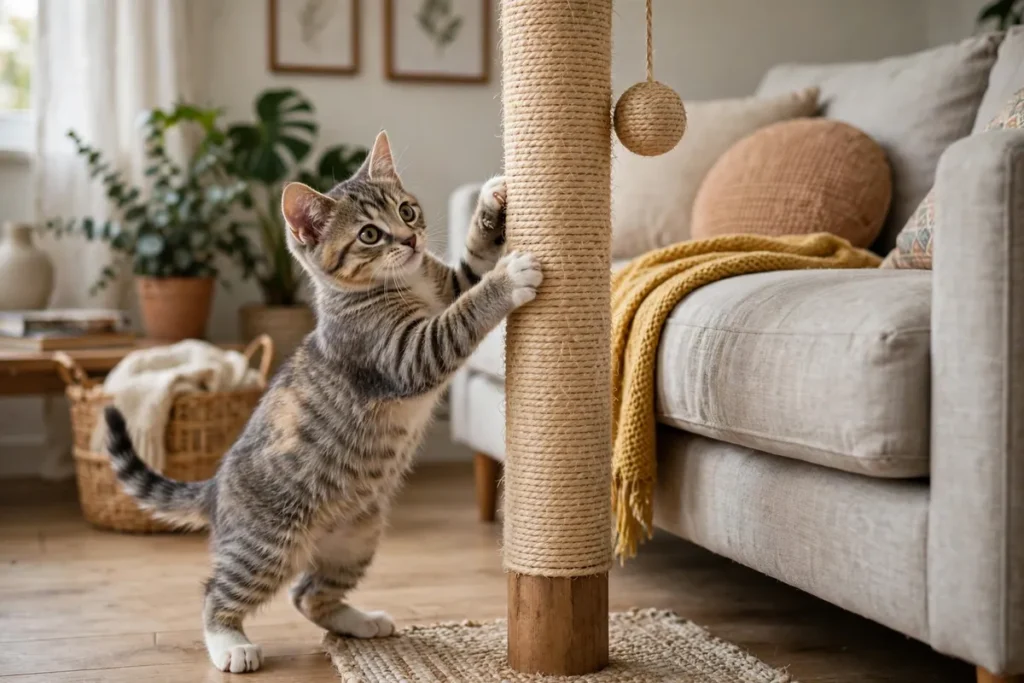
Your kitten needs places to hide and places to climb. Hiding is how a small animal feels safe — a cardboard box with a hole cut in the side, a covered cat bed, or a blanket draped over a chair all work well. A cat tree or sturdy shelf gives your kitten a high perch to survey its territory from. As your kitten grows more confident, gradually open up more rooms, one at a time.
Kittens sleep a lot — up to 18 to 20 hours a day. Give your kitten a warm, soft bed in a quiet spot.

Keep expanding the kitten-proofing as your kitten explores more of the house. Secure wobbly furniture, keep toilet lids closed and washer and dryer doors shut, and keep small objects like rubber bands, hair ties, string, and ribbon out of reach — swallowed string can cause a serious intestinal blockage. Keep medications, cleaning products, and essential oils locked away — many essential oils are toxic to cats.
Socialization and Play in the First Week

The first few months of a kitten’s life are the critical socialization window, and the first week at home is prime time. A kitten that meets different people and hears household sounds now is much more likely to grow into a confident, friendly adult cat.
Introduce new experiences gently and at your kitten’s pace. Let family members meet the kitten one at a time, speaking softly and offering a treat, and let your kitten hear household sounds like the vacuum cleaner from a safe distance. Handle your kitten every day: touch its paws, ears, and belly briefly so it gets used to being handled. If the tail starts lashing or the ears flatten, give it space.
Two or three short play sessions a day, five to ten minutes each, are ideal. Use wand toys, crinkle balls, and small stuffed mice. Never play with your hands or feet as the toy — a kitten that learns hands are for biting becomes an adult cat that bites hands. Redirect biting or scratching to a toy, and if your kitten gets too rough, end the play session calmly.
If you have other pets, do not rush introductions. Keep your kitten in its base camp room for the first few days and let the animals smell each other under the door. When you do introduce them, do it through a baby gate or a cracked door first, and supervise every interaction. The same slow approach works for a puppy in the house — see our guide to taking care of a new puppy.
Grooming Basics: Start Early, Keep It Short
Kittens groom themselves, but they still need your help — and the first week is the perfect time to start. Keep every grooming session short, gentle, and positive, with a treat at the end. For feeding, grooming, and routine health care, see the ASPCA’s general cat care guide.
Brush your kitten two to three times a week with a soft brush or a grooming glove — it removes loose fur, reduces hairballs, and gets your kitten used to being handled. Long-haired kittens need more frequent brushing to prevent mats. Check the ears weekly for dark debris, which can signal ear mites, and clean only the outer ear with a damp cloth.

Trim the nails every two to three weeks, taking off just the sharp tip and avoiding the pink quick inside the nail — ask your vet to show you how at the first visit if you are nervous. Start tooth brushing early too, with a small pet toothbrush and cat-safe toothpaste a few times a week. Never use human toothpaste on a cat. Bathing is rarely needed — cats clean themselves — but if your kitten gets into something pet-safe shampoo, and dry the kitten thoroughly afterward. For the whole household, see our guide to the best pet grooming kit.
Health Signs to Watch For in the First Week
Most kittens settle in without any trouble, but knowing what is normal — and what is not — helps you act fast when it matters.
Normal in the first week: hiding for the first day or two, eating a little less on day one, sleeping a lot, the occasional sneeze, and soft stools for a day or two after the stress of moving. A kitten that is eating, drinking, playing a little, and using the litter box is usually doing fine.
Call your vet promptly if you see any of these: not eating for more than 24 hours, refusing water, vomiting more than once, diarrhea that lasts more than a day, sneezing with thick discharge, watery or crusty eyes, difficulty breathing, lethargy, a swollen belly, or blood in the stool or urine. Kittens dehydrate fast, so call the vet the same day.
Also watch for fleas, ear mites (dark, coffee-ground-like debris in the ears), and worms. All are common and treatable with medication from your vet — never use flea products meant for dogs, some of which are toxic to cats.
What NOT to Do With a New Kitten
A few common mistakes can turn a smooth first week into a stressful one. Do not let your kitten roam outside in the first week — or at all until it is vaccinated, microchipped, and old enough. A kitten that slips out before it knows its way home may not come back.
Do not declaw your kitten. Declawing is the amputation of the last bone of each toe — it causes pain, changes how a cat walks, and often leads to litter box problems and biting. Trim the nails and provide scratching posts instead.
Do not punish your kitten for accidents, scratching, or biting — cats learn to fear you, not to behave. Redirect instead: scratching post instead of the sofa, toy instead of your hand. Positive reinforcement works far better.
Do not leave your kitten alone for long stretches in the first week. Kittens under four months old should not be left alone for more than a few hours at a time — they need frequent meals, company, and supervision. If you work long hours, arrange for someone to check in.
Your First-Week Checklist: Day by Day
Before arrival: Set up and kitten-proof the base camp room, buy the same food the kitten already eats, and book the first vet visit.
Day 1: Bring the kitten home, let it explore the base camp room at its own pace, and keep the house quiet.
Day 2 to 3: Start short handling and play sessions, keep meals regular, and introduce the family one person at a time.
Day 3 to 5: First vet visit — exam, vaccines, parasite check, and your questions.
Day 5 to 7: Open up one more room if your kitten is confident and start scent-swapping with other pets.
By the end of week one: Your kitten should be eating well, using the litter box, and playing every day.
Frequently Asked Questions
How long does it take a kitten to adjust to a new home?
Most kittens relax within two to three days and feel at home within one to two weeks; shy kittens may take longer. Give your kitten a safe base camp room, a steady routine, and patience — let the kitten come to you.
How much should a kitten eat in the first week?
A kitten under six months old should eat three to four small meals a day of food made for kittens. Fresh water should always be available, and if your kitten refuses food for more than 24 hours, call your vet.
When can a kitten be left alone?
Kittens under four months old should not be left alone for more than a few hours at a time. Older kittens can manage a workday with food, water, toys, and a safe room — but no cat should be left alone for more than 24 hours without someone checking in.
Should I get one kitten or two?
Two kittens are often easier than one, especially littermates. They play together, burn off energy on each other instead of your furniture, and keep each other company when you are out. The extra cost is mainly food and vet care.
The Bottom Line
Learning how to take care of a kitten comes down to a few simple things: prepare the home before arrival, keep the first week calm and small, get to the vet within a few days, feed proper kitten food on a schedule, keep the litter box clean, and let your kitten set the pace. The first week is about safety, routine, and trust.
Disclaimer: This article is for general information only and is not a substitute for professional veterinary advice. If you are worried about your kitten’s health, contact your veterinarian.