
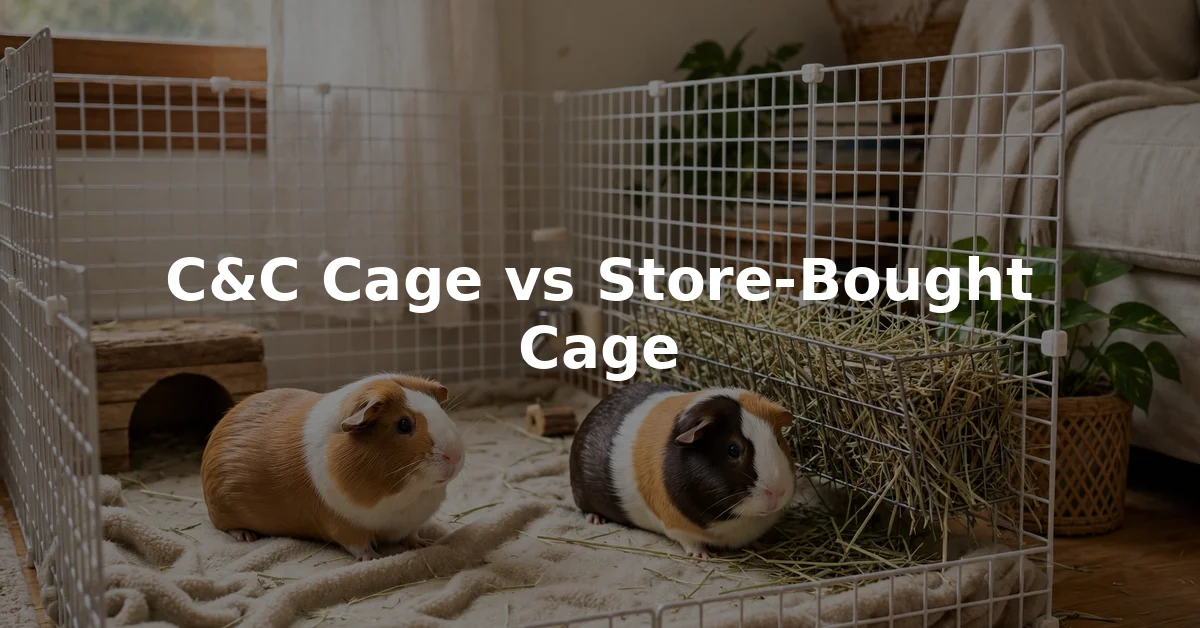
C&C Cage vs Store-Bought Cage: Best Home for Your Guinea Pig
Shopping for a guinea pig cage? You will quickly run into the same debate every guinea pig owner faces: C&C cage vs store bought guinea pig cage — which one is the best home for your pet? Both types keep your guinea pig safe, but they differ hugely in size, cost, and how much room your pig actually gets to run around in.
A C&C cage is a do-it-yourself enclosure made from wire storage grids and a sheet of corrugated plastic. A store-bought cage is a ready-made plastic and wire cage from a pet shop. The right choice depends on your budget, your space, and how many guinea pigs you keep — but for most owners, the answer is clearer than the pet shop shelf suggests.
Prices change, so check the current price before buying.
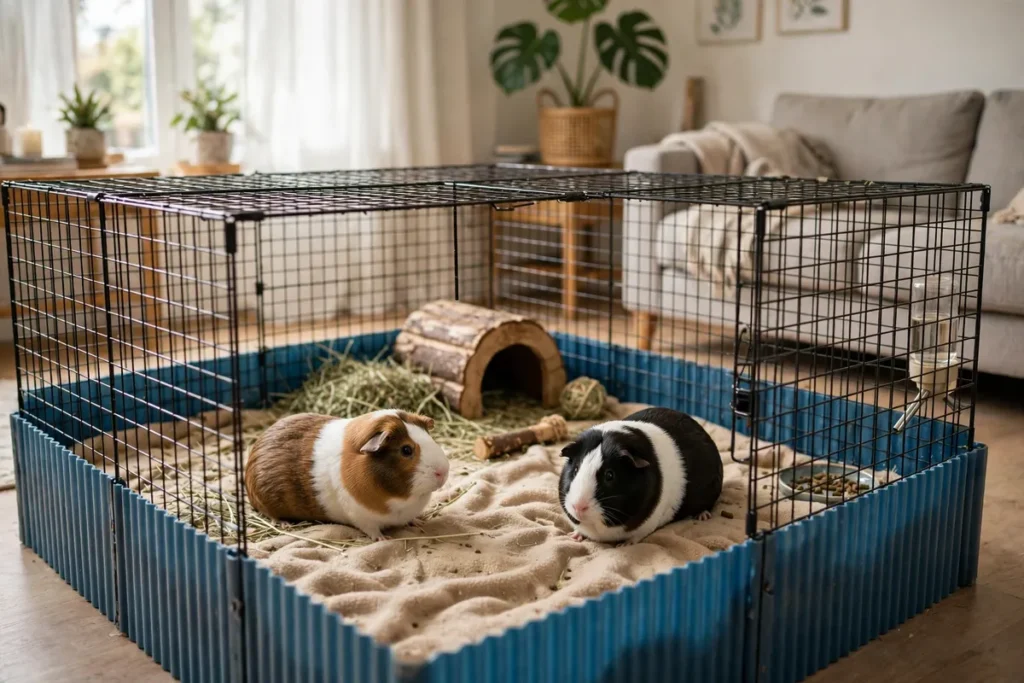
C&C Cage vs Store-Bought Guinea Pig Cage at a Glance
| Feature | C&C Cage | Store-Bought Cage |
|---|---|---|
| Floor space | 10.5 sq ft or more, easy to expand | Usually 4–6 sq ft, fixed size |
| Best for | Pairs and groups of guinea pigs | One pig, or as a temporary home |
| Cost per sq ft | Low — grids and coroplast are cheap | High — you pay more for less space |
| Setup | 1–2 hours of DIY assembly | Ready in minutes |
| Custom shape | Any size or shape, L-shapes and lofts | Fixed rectangle, one shape |
| Ventilation | Open grids, excellent airflow | Good, but smaller openings |
| Cleaning | Lift-out fleece or bedding, wipe the tray | Lift the top off, wipe the base |
| Portability | Heavy, stays in one place | Light, easy to move |
| Looks | Homemade, boxy | Neat, shop-bought finish |
| Expandable | Add grids any time | Buy a second cage or a playpen |
| Chew safety | Grids safe if spacing is 1.5 inches or less | Plastic base can be chewed |
| Availability | Order grids and coroplast online | In any pet shop, same day |
What Is a C&C Cage?
A C&C cage is named after its two materials: cubes and coroplast. The walls are wire storage grids — the cube shelves sold for home storage — clipped together with connectors or zip ties. The floor is a tray made from coroplast, a sheet of corrugated plastic, scored and folded up at the edges to hold in bedding.
Standard grids are 14 inches square. A 2×4 layout (28 by 56 inches) gives about 10.9 square feet — the size most rescues recommend for a pair, because it clears the recommended 10.5 square feet with room to spare.
C&C cages are the setup most guinea pig rescues and welfare groups recommend, and for a simple reason: they give the most floor space for the least money.
The trade-off is that you build it yourself. Cutting and folding the coroplast takes an hour or two the first time, and the finished cage looks homemade — because it is. It is also heavy once assembled, so it tends to stay in one place.
What Is a Store-Bought Cage?
A store-bought cage is the ready-made cage you find in a pet shop: a plastic base tray with a wire top, a door at the front, and sometimes a small ramp or a second level. The best-known large one is the MidWest Guinea Habitat, which is bigger than most and can be joined to a second unit.
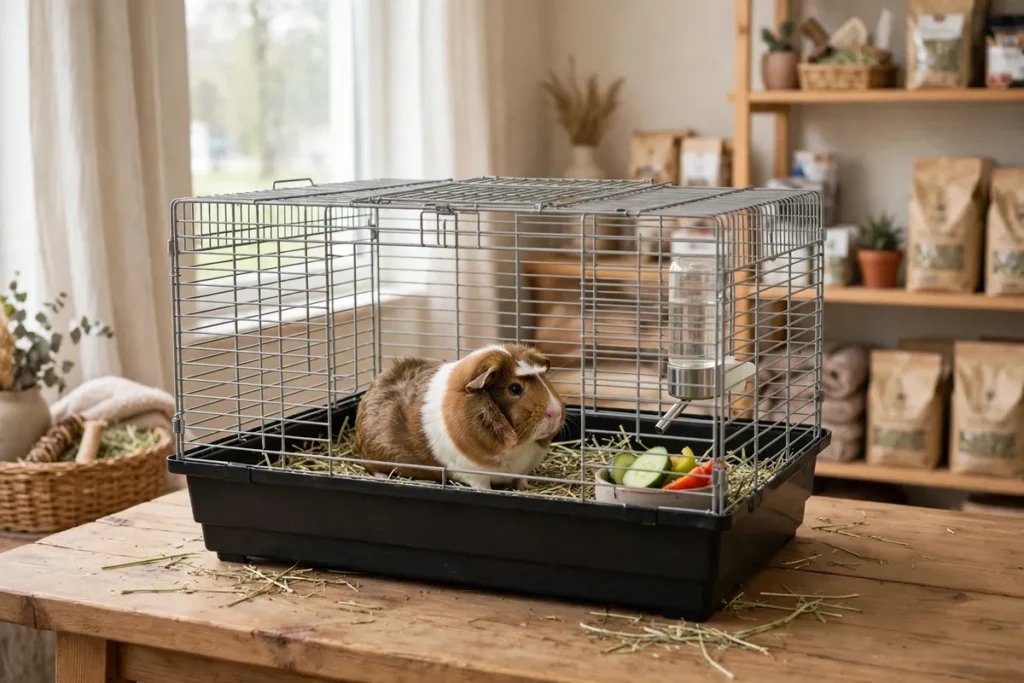
A store-bought cage is ready in minutes. Take it out of the box, clip the top onto the base, add bedding, and your guinea pig can move in the same day. It is light enough to carry outside for cleaning, and it fits easily on a table or a stand.
The problem is size. Most pet shop cages marketed for guinea pigs offer only 4 to 6 square feet of floor space — below the 7.5 square feet the Humane Society lists as the minimum for a pair, and far below the 10.5 square feet it recommends. A cage that small leaves no room for a guinea pig to run, popcorn, or get away from a cage mate, and cramped pigs get stressed, gain weight, and fight more.
Size and Floor Space
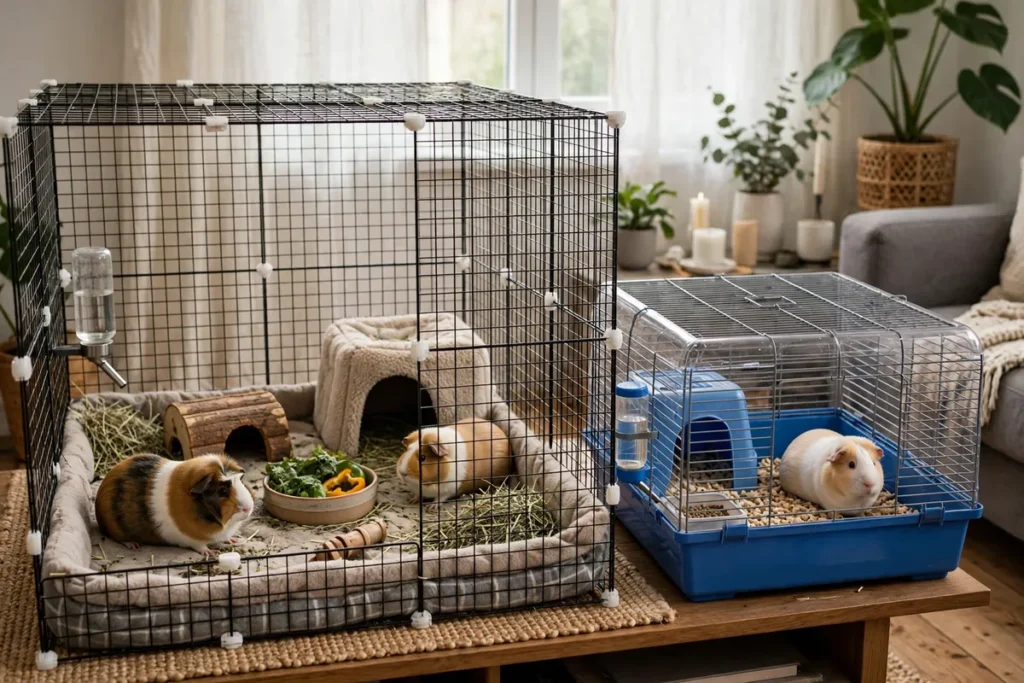
Size is where the C&C cage vs store bought guinea pig cage comparison is decided. Guinea pigs are ground dwellers. They run laps, popcorn, and explore on the flat — height and ramps do not count toward their living space the way they do for a climbing animal.
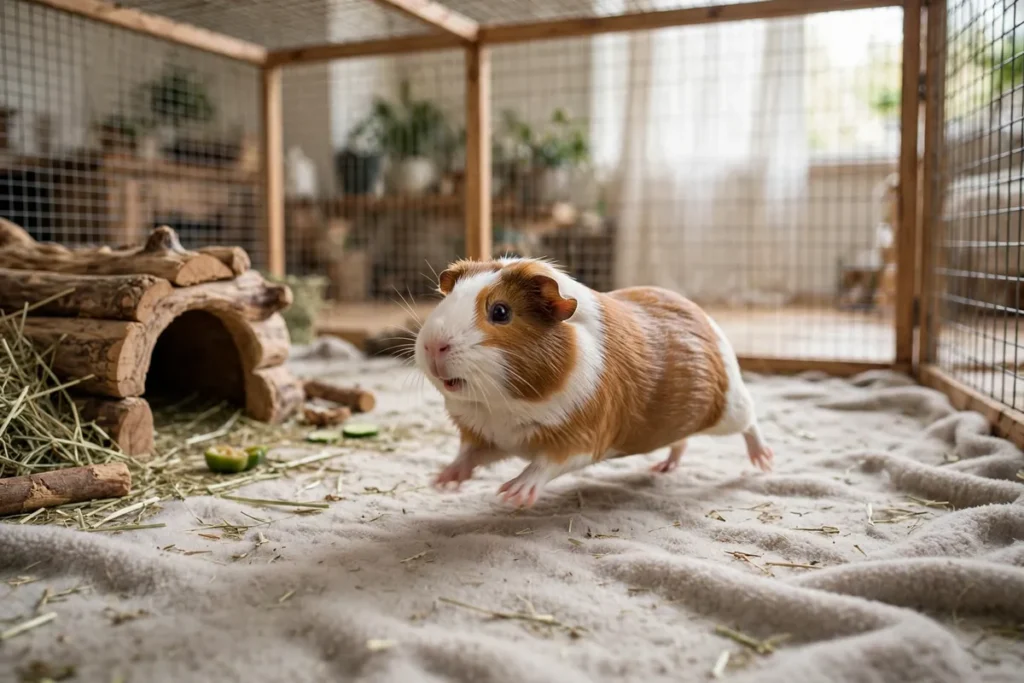
The numbers tell the story. The Humane Society recommends 7.5 square feet as the minimum for a pair of guinea pigs and 10.5 square feet as the recommended size, with 13 square feet for three pigs and 16 for four. A 2×4 C&C cage gives about 10.9 square feet, clearing the recommended size for a pair on its own. A typical store-bought cage gives 4 to 6 square feet — less than the minimum for even a single pig.
That gap matters for health, not just comfort. Guinea pigs in small cages move less, gain weight, and develop sore feet and breathing problems more often. Pigs in roomy cages run more, play more, and live longer, calmer lives. For many owners, that health gap is what settles the C&C cage vs store bought guinea pig cage question in favour of the roomier cage.
Cost
In the C&C cage vs store bought guinea pig cage cost comparison, the C&C cage wins easily: it is cheaper per square foot than almost any store-bought cage. Grids and connectors for a 2×4 setup usually cost less than a single mid-range shop cage, and a sheet of coroplast is inexpensive — so you end up with twice the floor space for roughly the same money.
A store-bought cage costs more per square foot, and the cost climbs fast if you need more room: the only way to double the space is to buy a second cage or a playpen to attach. The MidWest Guinea Habitat is the best value among shop cages because it is larger than most and can be expanded by joining two units, but even two Habitats cost more than a 2×5 C&C cage with more space. Over a year or two, that price gap is another reason the C&C cage vs store bought guinea pig cage decision often comes down to value, not just the first purchase.
Cleaning and Maintenance
Both cage types need the same routine: spot-clean daily, change the bedding fully once or twice a week, and wash the base with warm water and mild soap.
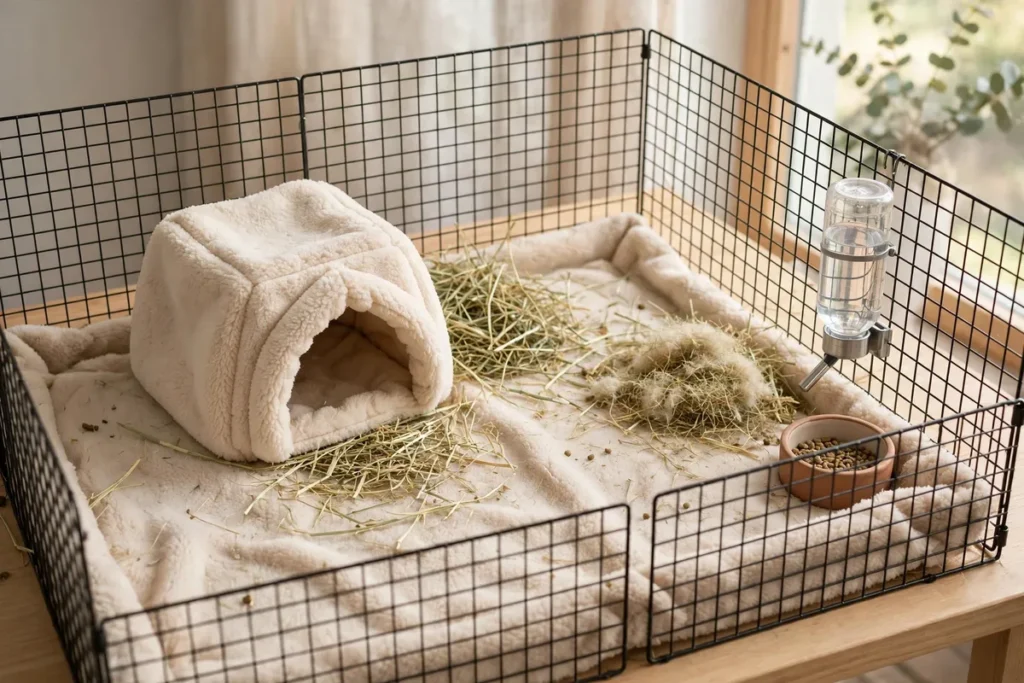
A C&C cage is easier to spot-clean because the whole top is open — you can reach in anywhere, sweep up droppings, and swap a fleece liner without taking anything apart. The coroplast tray wipes clean, and fleece liners go straight in the washing machine.
A store-bought cage is quicker to deep-clean because it is smaller and lighter — unclip the top, carry the base outside, and hose it down. But the small size means it gets dirty faster, so the full clean comes around more often. Plastic bases can also be chewed over time, and a chewed base holds smells and bacteria in the scratches.
Whichever cage you choose, never use a wire floor. Wire grids underfoot cause bumblefoot, a painful foot infection, and can trap toes and break nails. Every guinea pig cage needs a solid floor — coroplast, plastic, or wood.
Safety
Safety is mostly about grid spacing and materials. C&C grids are safe as long as the spacing is 1.5 inches or less — wider grids can trap a guinea pig’s head. Always check the spacing before you buy, because some storage cubes sold for home use have wider gaps, and baby guinea pigs can squeeze through gaps that stop an adult.
Store-bought cages are safe out of the box, with bar spacing designed for small pets. The main risk is the plastic base: a determined chewer can gnaw through thin plastic over time, and a hole in the base lets bedding and waste fall through. Check the base regularly, and replace the cage if the plastic is cracked or chewed through.
Both types need the same basics: a solid floor, no sharp edges, a water bottle that cannot be knocked over, and a hideout where your pig can retreat. The RSPCA’s guinea pig care advice covers housing, feeding, and companionship, and it is worth reading before you bring your pigs home.
Which Cage Is Better for Your Guinea Pig?
Choose a C&C cage if: you keep a pair or a group, you want the most space for your money, or you have a spare corner of a room. A C&C cage is the right choice for almost every guinea pig owner who has the space for one.
Choose a store-bought cage if: you need a cage today, you rent and may need to move it often, you have very little floor space, or you only keep one guinea pig — and even then, pick the largest you can find and check the square footage before you buy. The MidWest Guinea Habitat is the best shop option because it is bigger than most and expandable.
If you already own a small store-bought cage: do not throw it away. It works well as a hospital cage for a sick pig, a travel cage, or a temporary home while you clean the main cage. Even then, it helps to revisit the C&C cage vs store bought guinea pig cage comparison before buying a second small cage, so the next purchase adds real space instead of repeating the same limits.
Our guide to the best guinea pig cage for beginners covers cage size and setup in more detail, and our roundup of the best guinea pig food explains daily feeding. If you also keep rabbits, our roundup of the best rabbit toys for bunnies has ideas for playtime outside the cage.
How to Set Up Your Cage
Getting the setup right matters as much as the cage type. Put the cage somewhere quiet, away from draughts and direct sun, and keep it at room temperature — guinea pigs are sensitive to heat and cold.
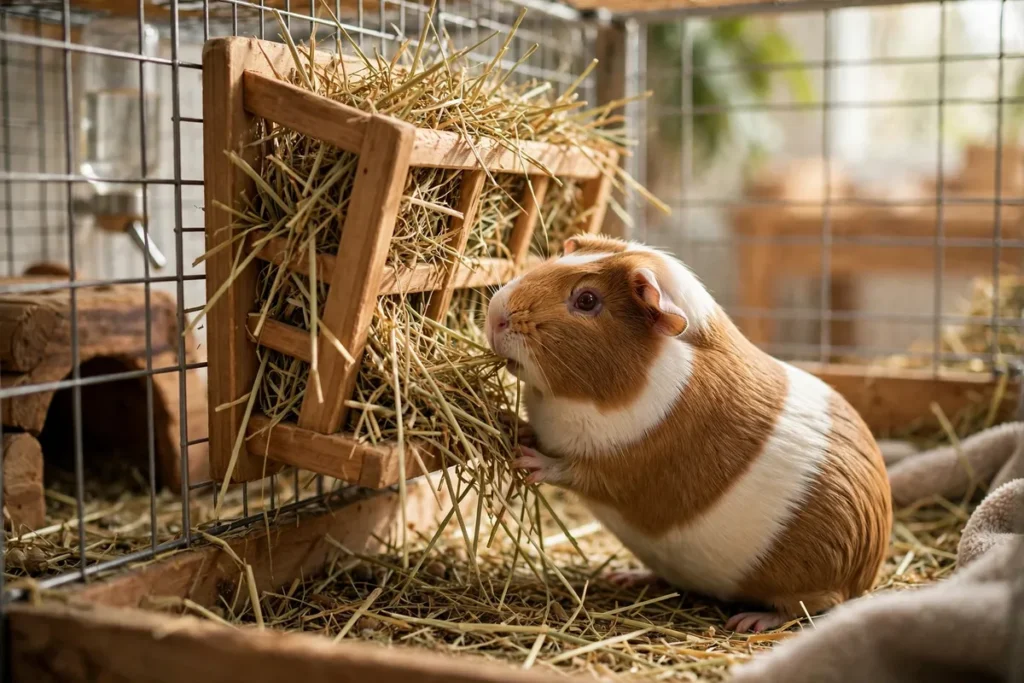
Inside, give each pig its own hideout, a hay rack that is always full, a heavy ceramic food bowl that cannot be tipped, and a water bottle or a heavy water bowl. Spread the food and water out so no pig can guard them all. The Humane Society’s guinea pig housing requirements explain the minimum space per pig and why floor space matters more than height.
Frequently Asked Questions
How big should a C&C cage be for two guinea pigs?
A 2×4 grid layout (28 by 56 inches, about 10.9 square feet) is the recommended size for a pair. A 2×3 layout (about 8 square feet) meets the minimum but leaves little room to spare.
Can I keep a guinea pig in a store-bought cage?
Yes, if it is large enough — at least 7.5 square feet for a pair, and 10.5 is better. Most pet shop cages are smaller than that, so check the actual floor dimensions before you buy, and be ready to add a playpen for daily exercise.
Are C&C cages safe for guinea pigs?
Yes, as long as the grid spacing is 1.5 inches or less and the floor is solid coroplast, not wire. Check the spacing carefully for baby guinea pigs, because a small pig can squeeze through gaps that stop an adult.
Do guinea pigs need a second level?
No. Guinea pigs are ground dwellers, and a second level does not count toward the floor space they need. A loft is a nice extra for a confident pig, but it never replaces a bigger ground floor.
The Bottom Line
C&C cage vs store bought guinea pig cage has a clear winner for most owners: the C&C cage. It gives more floor space for less money, it expands as your herd grows, and it is the setup rescues recommend. A store-bought cage wins on convenience — ready in minutes, easy to move, and neat to look at — and a large one like the MidWest Guinea Habitat is a fair choice if you need a cage today or move it often. Whichever you pick, measure the floor space first, because that number matters more than the brand, the color, or the second level. Give your guinea pigs room to run, and they will reward you with popcorning, zoomies, and a much happier life.