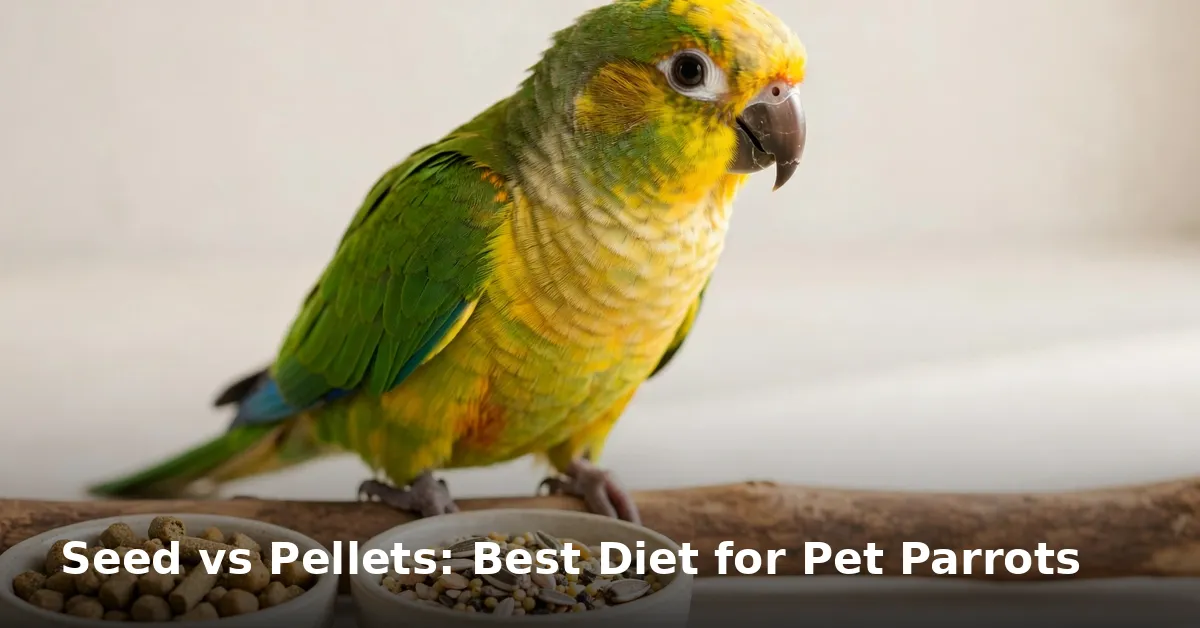
Seed vs Pellets: What’s the Best Diet for Pet Parrots?
Walk into any pet store and you will find two very different bags of parrot food sitting side by side. One is a colorful seed mix, full of sunflower seeds, millet, and safflower. The other is a plain bag of brown pellets that looks, honestly, a bit boring. If you are wondering about seed vs pellets for parrots, you are asking one of the most important questions in bird care.
Parrots are long-lived birds. A cockatiel can live 20 years or more, an African grey 40 to 60 years, and a macaw can outlive its owner. Poor nutrition is one of the leading causes of illness in pet parrots, and it is also one of the most preventable. This guide compares seeds and pellets honestly — what each one offers, where each one falls short, what it costs, and how to switch your bird if it is stuck on seeds.
Prices change — check the current price before buying.
In This Article
Seed vs Pellets for Parrots: The Quick Answer
If you only remember one thing from this article, make it this: for most pet parrots, a pellet-based diet is the healthier base, with fresh vegetables and a little fruit alongside it, and seeds kept as a small treat.
What Is a Seed Diet?
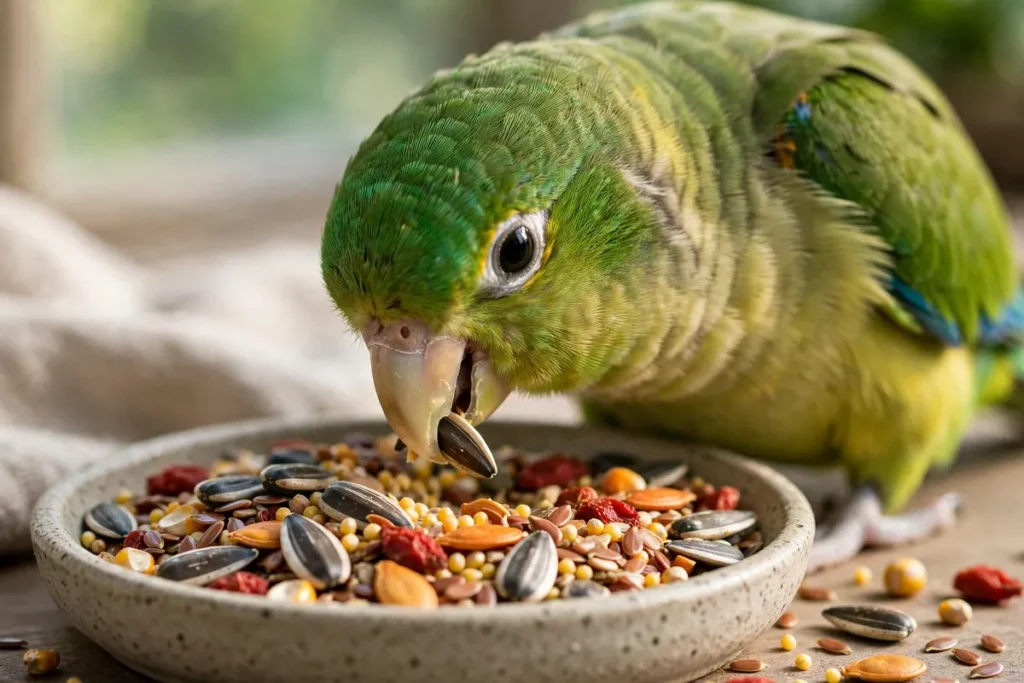
A seed diet is what most people picture when they think of bird food: a loose mix of sunflower seeds, safflower seeds, millet, and oats. It is the food parrots have been sold with for generations, and birds love it — which is part of the problem.
The trouble starts with how parrots eat a seed mix. They are picky. Given a bowl of mixed seeds, most parrots will eat their favorites first — usually the fatty sunflower and safflower seeds — and leave the rest. So even if the mix looks balanced on the bag, your bird is not eating a balanced diet. It is eating the bird equivalent of picking the frosting off a cake and leaving the rest.
Seeds are also very high in fat and low in several nutrients parrots need most — typically low in calcium and vitamin A, two of the most common deficiencies avian vets see. The vitamins and minerals added to seed mixes are often sprayed onto the hull, and parrots hull their seeds before eating them, so much of that coating ends up on the cage floor. Seeds also lose nutritional value as they sit in storage.
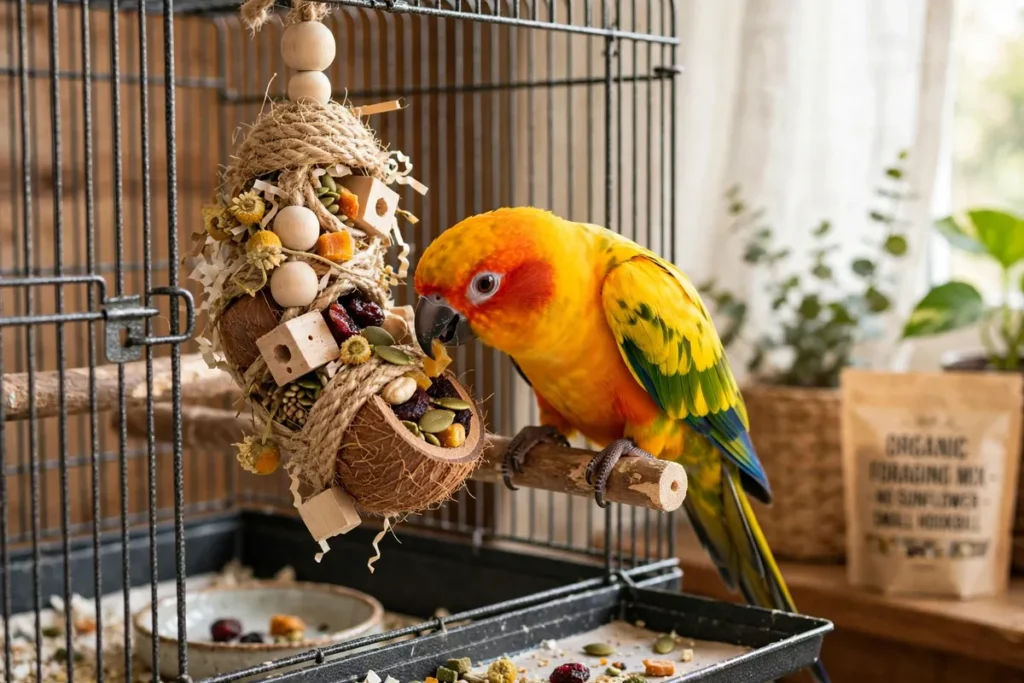
None of this means seeds have no place at all. They are natural, they encourage foraging, and they make excellent training treats. A small handful hidden in a foraging toy can keep a clever parrot busy for an hour. The mistake is letting seeds be the whole diet.
What Is a Pellet Diet?
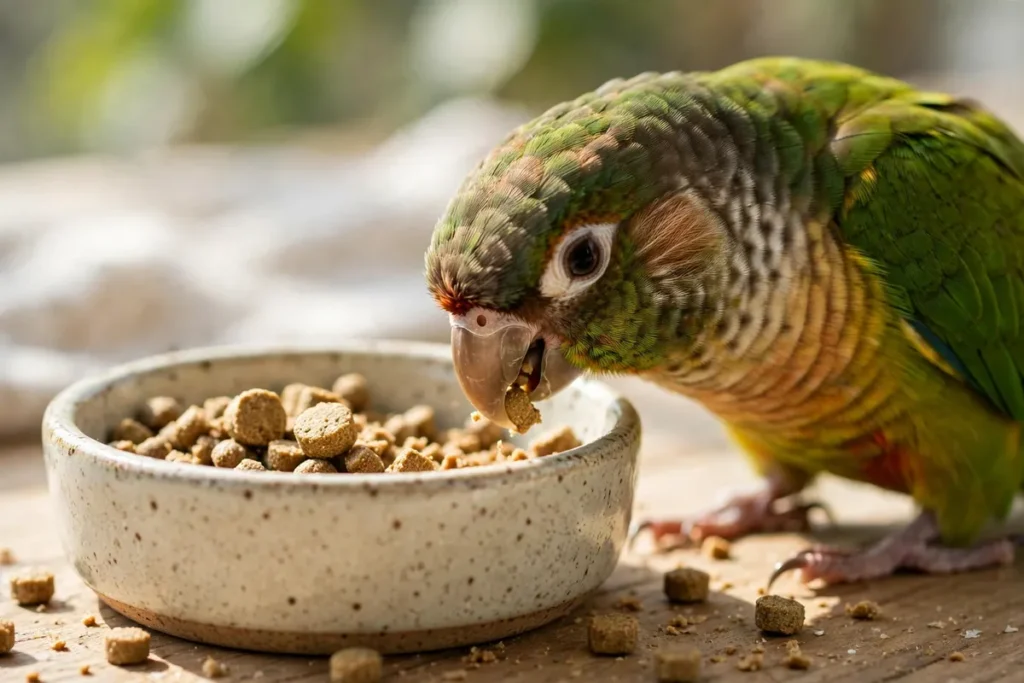
Pellets are a formulated food. Grains, legumes, and other ingredients are ground up, mixed with vitamins and minerals in carefully measured amounts, and pressed into small, uniform pieces. Every pellet in the bag has the same nutrition, so your parrot cannot pick out the tasty bits and skip the rest. That single fact is the biggest advantage pellets have over seeds.
Pellets do have real downsides. They are less fun to eat than seeds — no shelling, no foraging, no variety of shapes and flavors. Some parrots refuse them at first, especially older birds that have eaten seeds all their lives. And pellets are not a complete diet on their own: they still need fresh vegetables and a little fruit every day.
Seed vs Pellets for Parrots: Side-by-Side Comparison
| Feature | Seed diet | Pellet diet |
|---|---|---|
| Nutrition per bite | Uneven — bird picks favorite seeds, skips the rest | Balanced in every pellet, same nutrition in each bite |
| Vitamin A and calcium | Often deficient, a common cause of vet visits | Formulated to provide correct levels |
| Fat content | High, especially sunflower and safflower seeds | Moderate and controlled |
| Risk of obesity and fatty liver disease | Higher on a seed-only diet | Lower, when fed in proper portions |
| Selective eating | Easy — birds eat the fatty favorites first | Not possible — every pellet is the same |
| Variety and enrichment | High — different seeds, shapes, and textures | Low on its own — needs fresh food and foraging toys |
| Cost | Usually cheaper per bag | Usually more expensive per bag |
| Waste and mess | More hulls and uneaten seed on the cage floor | Less waste, though some birds crumble pellets |
| Vet recommendation | As a treat, not a staple | As the base of the diet, for most parrots |
| Best for | Training treats, foraging, occasional variety | Daily feeding, long-term health |
What the Vets Say About Seed vs Pellets for Parrots
Most avian veterinarians recommend a pellet-based diet over a seed-based one, and the reasoning is straightforward: they see the results of seed-only diets in their clinics every week. Liver disease is one of the most common problems in pet birds, and a high-fat, nutrient-poor seed diet is a major contributor. Lafeber’s veterinary team explains that pellets provide more balanced nutrition than seeds, with the right calcium and vitamin A levels. As pellets have become more popular, birds are living longer with fewer nutrition-related problems.
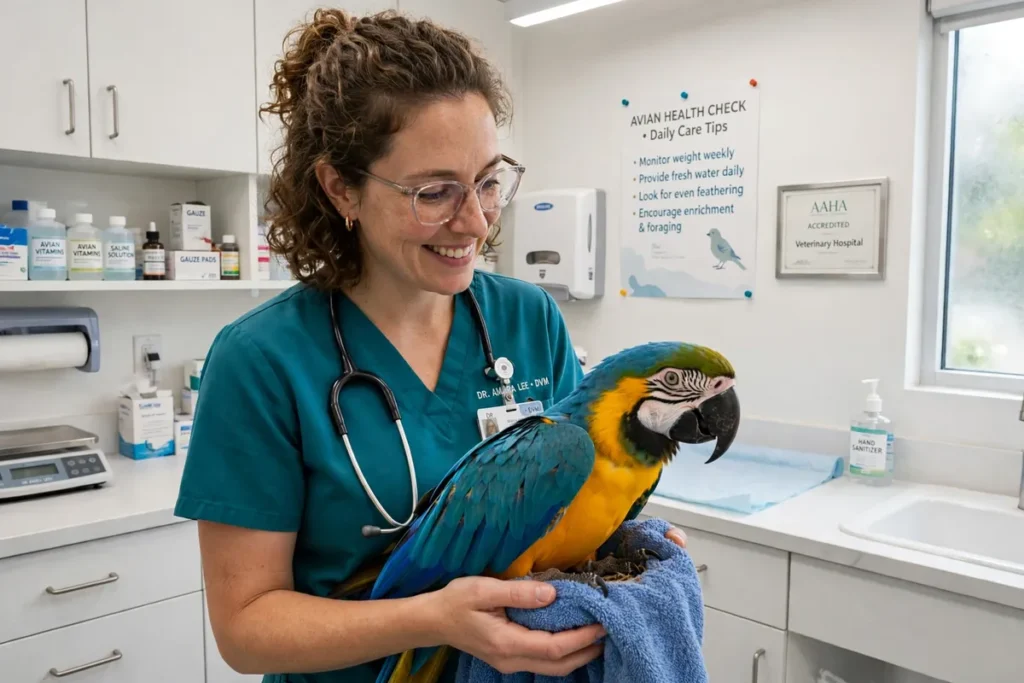
The veterinary guidance on the other side of the debate is equally clear: an all-seed diet is not a natural diet for a parrot, even though it looks like one. In nature, very few parrot species feed mostly on seed, and none feed on seed alone. The recommended balance, according to avian nutrition specialists, is a formulated diet making up roughly 60 to 80 percent of what a parrot eats, with fresh vegetables and a little fruit filling most of the rest, and seeds kept to a small treat portion of about 5 percent or less. PetMD’s guide to pet bird food: seeds vs. pellets lays out the same picture in detail.
Cost, Waste, and Everyday Practicality
Seeds win on price at the checkout. A bag of seed mix usually costs less than a bag of quality pellets, and that matters if you are feeding a large macaw that goes through food quickly. But the price on the bag is not the whole cost. Seed diets waste more: hulls pile up and uneaten seeds get tossed, and a bird that picks out only the sunflower seeds wastes much of what you paid for. Pellets waste less, since nearly every pellet gets eaten.
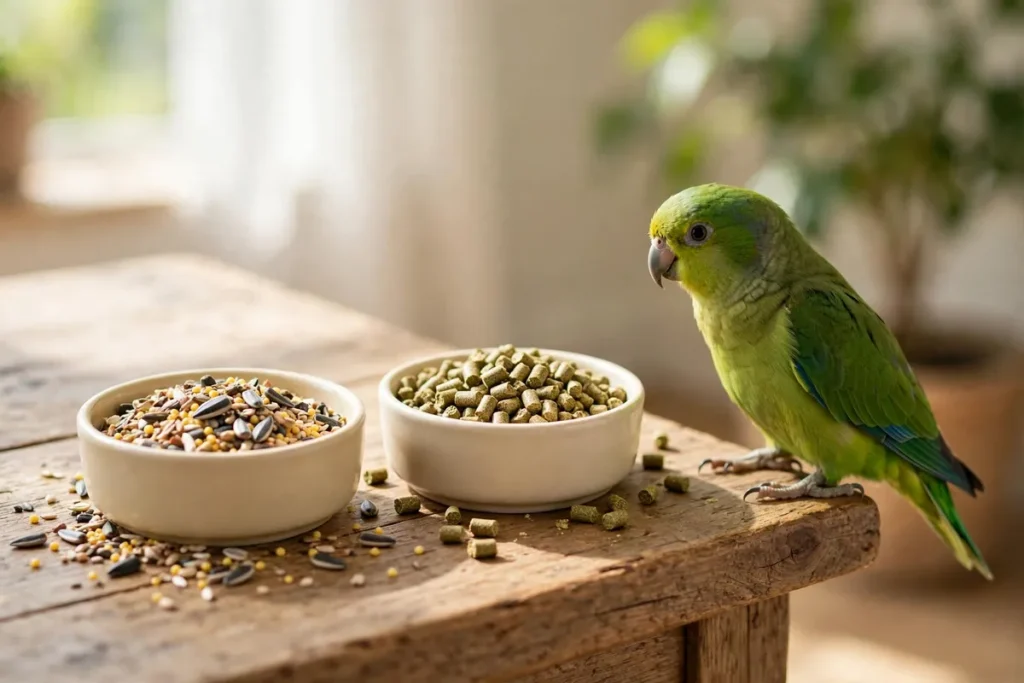
In daily life, pellets are also simpler. You measure a portion, fill the bowl, and you know your bird is getting balanced nutrition. The one place seeds clearly win is enrichment: a bowl of pellets is boring. Fix that by hiding pellets in a foraging toy or offering a few seeds as a reward — your parrot gets the fun without the fat.
How to Switch a Seed-Loving Parrot to Pellets
This is where many owners give up, and it is the part that needs the most patience. Parrots are cautious about new foods, and a bird that has eaten seeds for years may not even recognize a pellet as food. The switch usually takes one to several weeks, and it should never be rushed.
Start by offering pellets in a separate bowl next to the seeds, so your bird can investigate without pressure. Try crushing a few pellets over the seed, or moistening them with a little fruit juice so they smell familiar. Offer pellets in the morning, when your bird is hungriest, and keep the seed bowl available so your bird never goes hungry. Then gradually shift the ratio — a little more pellet and a little less seed each week. If your bird still refuses after a couple of weeks, try a different brand or pellet size. If your bird is losing weight or refusing to eat, stop and talk to your avian vet before going further.
One rule matters above all: never starve a bird into eating pellets. Withholding all food to force a switch is dangerous and can make a parrot seriously ill in a single day. Slow and steady is the only safe way.
Buying Guide: Choosing the Right Food for Your Parrot
Pick the right size and a trusted brand. Pellets come in different sizes for a reason — match the pellet to your species. Harrison’s, Roudybush, ZuPreem, and Lafeber are the names avian vets recommend most often, and they are worth the extra cost. Avoid mixes that are mostly seed with a few pellets thrown in — your bird will eat the seed and leave the pellets, which defeats the purpose.
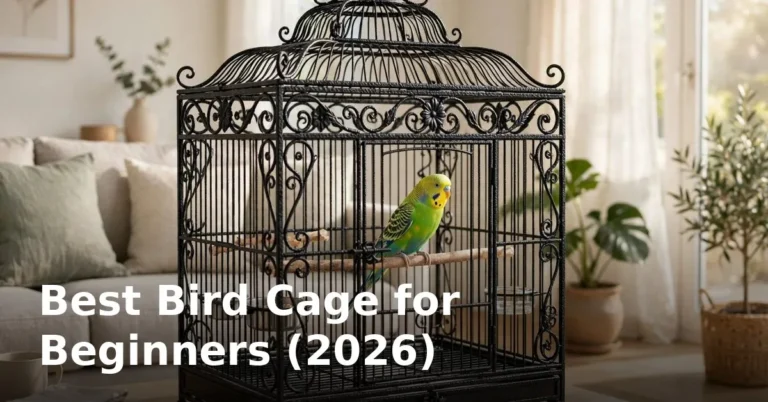
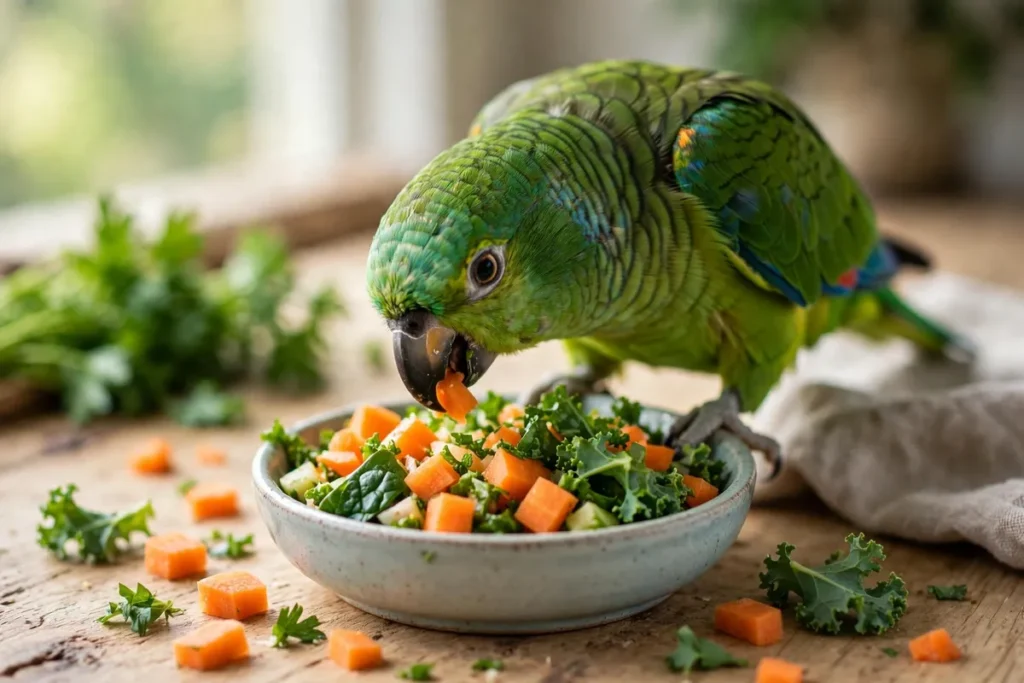
Build the whole diet, not just the bowl. Pellets are the base, not the entire meal. Offer chopped vegetables every day — leafy greens, carrots, broccoli, sweet potato — and a little fruit a few times a week. If you are setting up or upgrading your parrot’s home, our guide to the best bird cage for beginners covers safe sizes and bar spacing, and an automatic pet feeder can help keep portions consistent when you are out. Still deciding which pet fits your life? Our dog vs cat guide walks through the same kind of honest comparison for a different kind of companion.
FAQ: Seed vs Pellets for Parrots
Can I feed my parrot seeds and pellets together?
Yes, and most owners do — but the balance matters. Aim for pellets as the main food, fresh vegetables daily, and seeds as a small treat, roughly 5 percent of the diet. A 50/50 mix is not enough, because your parrot will still pick out the seeds first and leave the pellets.
Is a seed-only diet really that bad for parrots?
For most parrots, yes, over time. A seed-only diet is high in fat and low in vitamin A and calcium, and it is linked to obesity, fatty liver disease, and other problems avian vets see regularly. It may take years for the damage to show.
My parrot refuses pellets. Should I just give up?
Not yet. Try a different brand or pellet size, crush pellets over the seed, or offer them in the morning when your bird is hungry. Some birds take weeks to accept a new food. If your bird loses weight or stops eating, go back to seeds and talk to your avian vet.
Are pellets enough on their own, or does my parrot need fresh food too?
No, pellets are not enough on their own. Your parrot also needs fresh vegetables every day and a little fruit, plus clean water. Fresh food adds variety, moisture, and nutrients that no dry food can fully replace.
The Bottom Line
In the seed vs pellets for parrots debate, pellets win for most pet parrots — not because seeds are evil, but because pellets deliver balanced nutrition in every bite, while seeds let your bird eat the fatty favorites and skip the rest. The ideal diet is pellets as the base, fresh vegetables and a little fruit every day, and seeds kept as a treat for training and foraging.
If your parrot is a committed seed eater, do not feel guilty, and do not try to switch overnight. Start small and be patient. Your parrot may live for decades, and a better diet is one of the kindest gifts you can give it over that long life.
Disclaimer: This article is for general information only and is not a substitute for veterinary advice. Every parrot is different, and birds with health conditions, breeding birds, and species with specialist diets may need a different feeding plan. If your parrot is losing weight, refusing food, or showing signs of illness, contact an avian veterinarian.