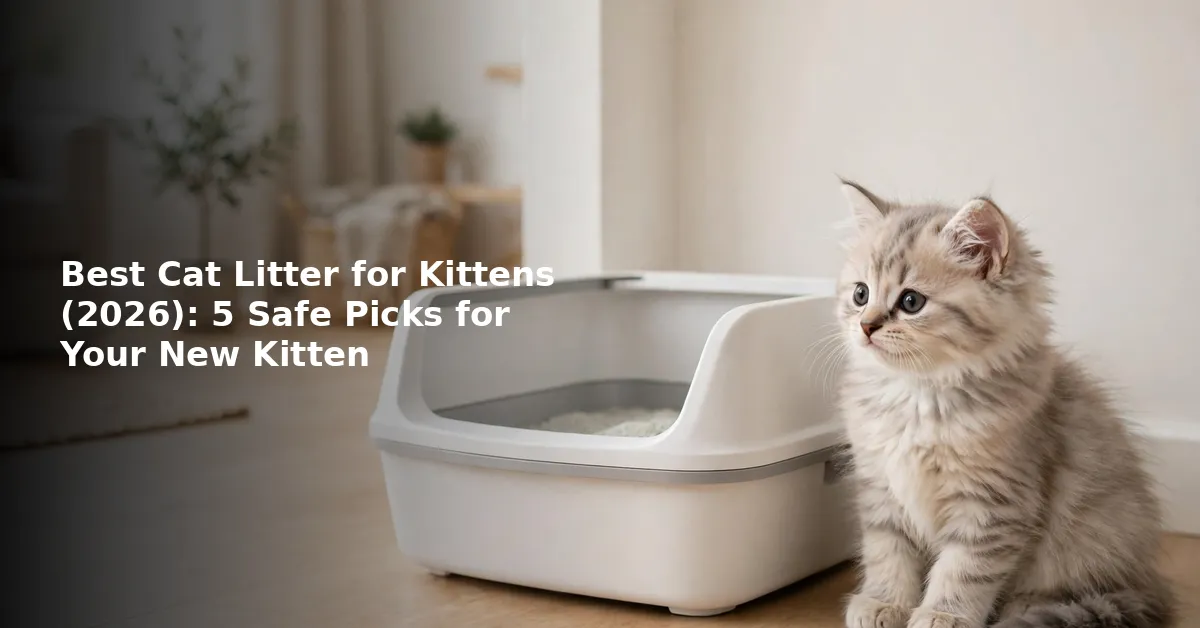
Best Cat Litter for Kittens (2026): 5 Safe Picks for Your New Kitten
Best Cat Litter for Kittens (2026): 5 Safe Picks for Your New Kitten
The litter you choose for a new kitten matters more than most owners realize. Kittens explore with their mouths and groom constantly, so the best cat litter for kittens is low-dust, unscented, and safe if a curious kitten swallows a little of it.
The most important safety rule is about clumping litter. Most veterinarians recommend avoiding clumping litter for very young kittens, until around four months old, because swallowed clumping litter can expand inside the gut and cause a dangerous blockage. Once a kitten is past eight weeks and reliably using the box without eating litter, many vets consider clumping litter acceptable.
In This Article
Prices change — check the current price before buying.
Quick picks
| Best for | Pick | Why it stands out |
|---|---|---|
| Best for litter training | Dr. Elsey’s Kitten Attract | Herbal attractant guides kittens to the box |
| Safest if swallowed | Yesterday’s News (Purina) | Recycled paper pellets, non-clumping, dust-free |
| Best natural option | World’s Best Original Non-Clumping | Corn-based, low dust, lightweight |
| Best low-dust | ökocat Dust-Free Paper Pellets | Natural paper, virtually dust-free |
| Best odor control | Arm & Hammer Feline Pine Platinum | Natural pine plus baking soda, non-clumping |
1. Dr. Elsey’s Kitten Attract — Best for Litter Training
Dr. Elsey’s Kitten Attract is the litter often recommended when a kitten will not use the box reliably. Its natural herbal attractant draws kittens toward the box, the granules suit tender paws, and the formula is 99% dust-free. It forms hard clumps, so scooping is easy.
Use it with care: it suits kittens at least eight weeks old who are not eating litter — younger kittens should start with a non-clumping pick below.
Best for: Kittens who need help learning where to go, and owners who want easy scooping.
Keep in mind: It is a clumping clay litter, so follow the age guidance above.
2. Yesterday’s News (Purina) — Safest If Swallowed
Yesterday’s News, made by Purina, is a non-clumping litter made from recycled paper pellets. Because it does not clump and contains no clay, there is no risk of an intestinal blockage if your kitten swallows some — which is why many vets and shelters recommend paper litter for the youngest kittens. It is effectively dust-free, soft on small paws, and free of added fragrances. Paper litter does not control odor as strongly as clay or pine, but for a kitten’s first weeks that trade-off is worth it.
Best for: Kittens under four months old, and any kitten who mouths or eats litter.
Keep in mind: Odor control is weaker than clay or pine, so scoop daily.
3. World’s Best Original Non-Clumping — Best Natural Option
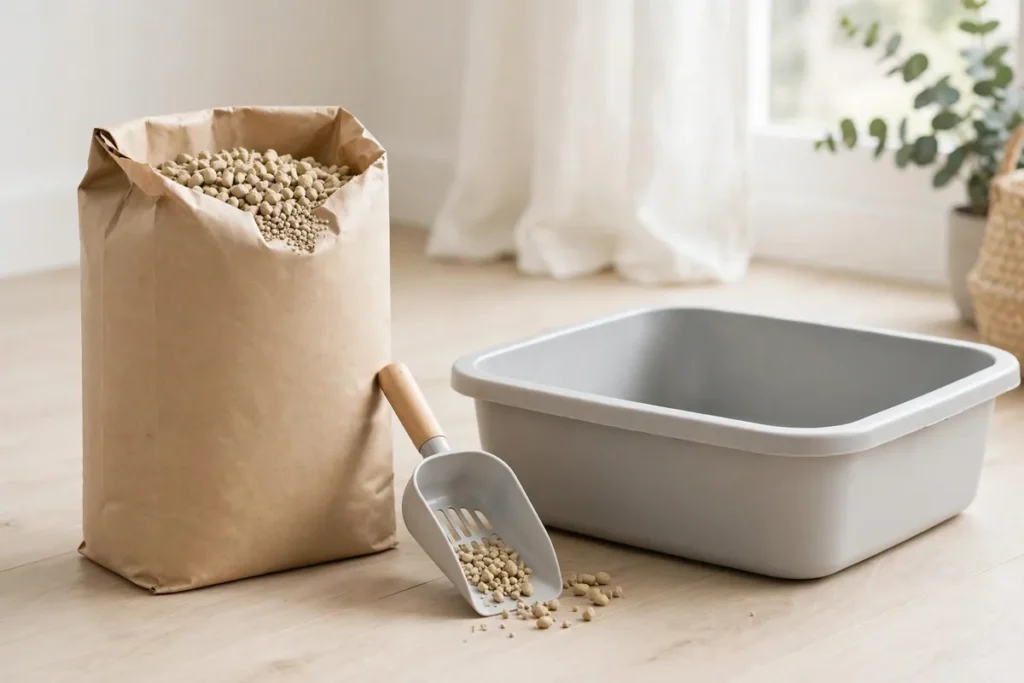
World’s Best Cat Litter is made from whole-kernel corn rather than clay, and the Original non-clumping version suits kittens. Corn gives it a familiar, clay-like feel that many cats accept easily, while producing very little dust, and it is lighter than clay. Because this version does not clump, there is no blockage risk if a kitten swallows some, and odor control comes from natural corn enzymes rather than added fragrance.
Best for: Owners who want a natural, lightweight litter with a familiar feel.
Keep in mind: It can track more than heavy clay litter, so a litter mat by the box helps.
4. ökocat Dust-Free Paper Pellets — Best Low-Dust
ökocat’s Dust-Free Paper Pellets are made from natural paper fiber and designed to be virtually dust-free, good for kittens with sensitive airways and owners with allergies. The pellets are non-clumping, so they carry no ingestion blockage risk, and they are unscented and free of added chemicals and artificial perfumes.
Best for: Kittens or owners with dust sensitivity, allergies, or asthma.
Keep in mind: The pellet texture feels different from clay, so give your kitten a few days to adjust.
5. Arm & Hammer Feline Pine Platinum — Best Odor Control
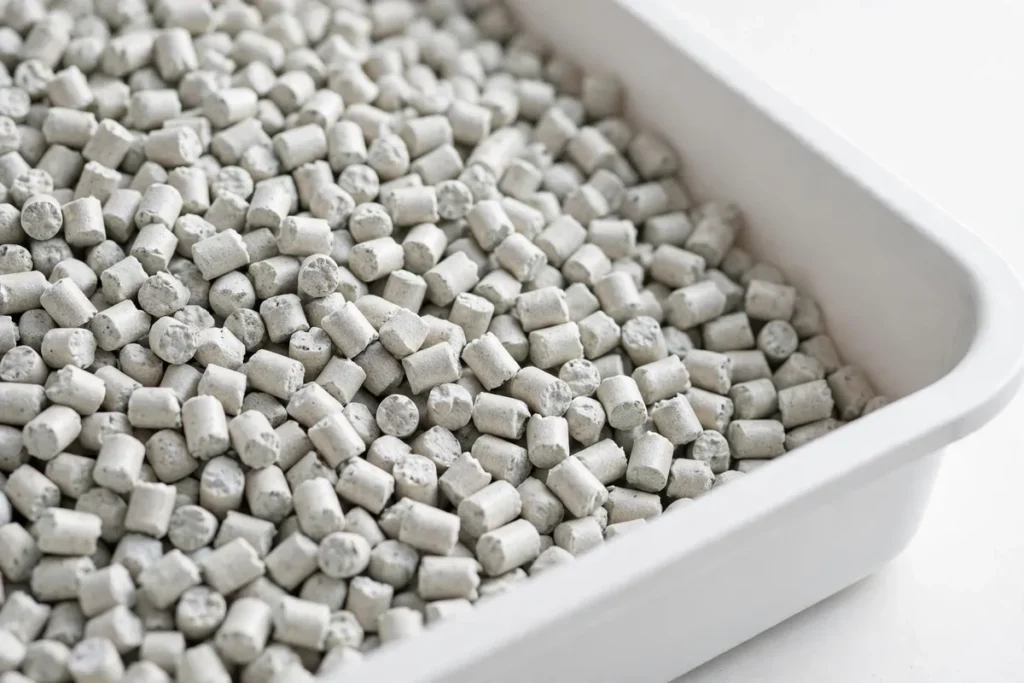
Arm & Hammer Feline Pine Platinum is a non-clumping litter made from 100% natural pine, with baking soda added for odor control. Pine is naturally absorbent with a mild, woodsy scent, so it controls odor without strong artificial fragrances that can put a kitten off the box. The non-clumping formula means there is no blockage risk if a kitten swallows some. This is a good pick for small apartments, where odor control matters most.
Best for: Small homes and apartments where odor control matters.
Keep in mind: Pine pellets feel very different from clay, so some kittens need a gradual switch.
Best Cat Litter for Kittens: What Makes a Litter Kitten-Safe?
Choose non-clumping for young kittens. Until your kitten is around four months old, non-clumping litter is the safest choice. Once your kitten is older and reliably using the box without eating litter, a clumping litter is generally considered safe.
Go low-dust and unscented. Dusty or heavily scented litter can irritate a kitten’s airways and put them off the box. Look for litters described as 99% dust-free or dust-free, and skip added fragrances.
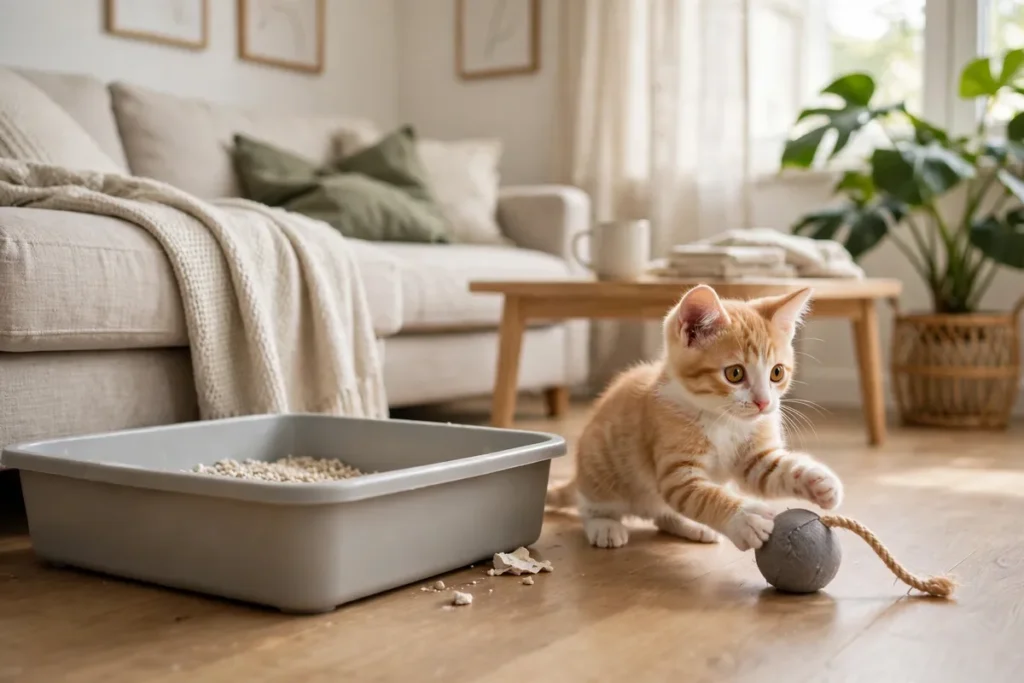
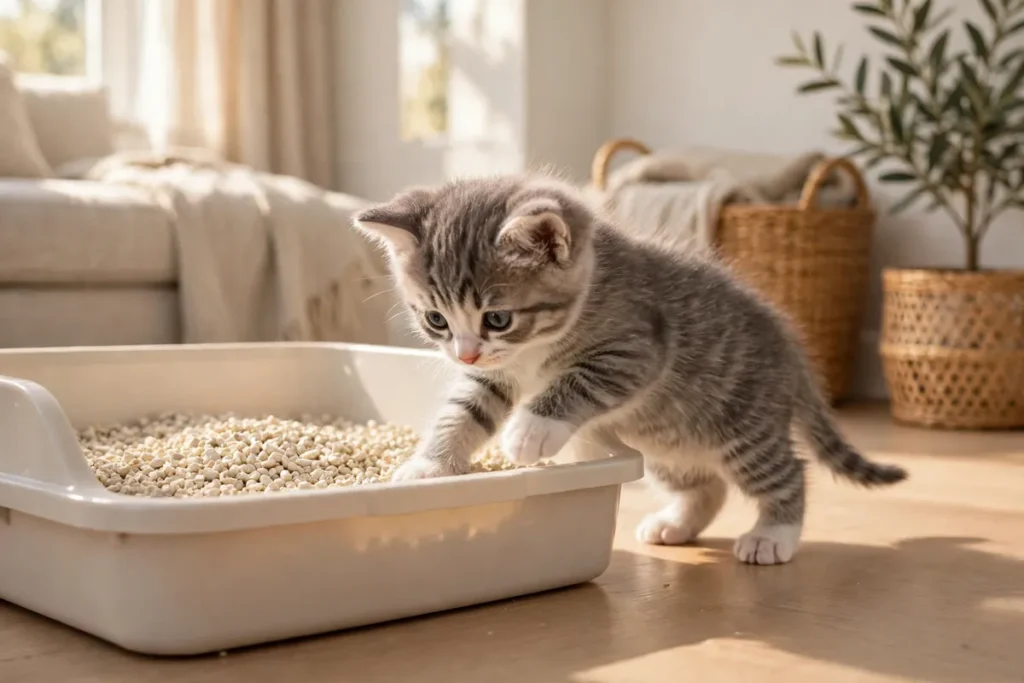
Pick a soft texture and a low-sided box. Tender kitten paws prefer a softer, finer granule, and a low-entry box lets a small kitten climb in and out easily. Keep the box in a quiet, accessible spot, and keep it clean.
Plan the switch to adult litter. Around four to six months, once your kitten is reliably using the box and not eating litter, you can move to a clumping litter. Change gradually over a week by mixing increasing amounts of the new litter into the old. For help with the first week at home, see our guide on how to take care of a kitten.
Frequently asked questions
Can kittens use clumping litter?
Most vets recommend avoiding clumping litter until a kitten is around four months old, because swallowed clumping litter can cause an intestinal blockage. After about eight weeks, if your kitten is reliably using the box and not eating litter, many vets consider clumping litter acceptable.
What is the safest cat litter for a kitten?
A non-clumping, unscented, low-dust litter made from paper, corn, or pine is generally the safest choice. Paper pellet litters such as Yesterday’s News are often recommended for the youngest kittens because they carry no blockage risk if swallowed.
How often should I change kitten litter?
Scoop solids at least once a day. Non-clumping litter should be fully changed and the box washed about once a week, or sooner if it smells.
Why won’t my kitten use the litter box?
Common reasons are a box that is too tall to climb into, litter that feels unpleasant on small paws, a strong scent, or a box placed somewhere noisy or hard to reach. Try a low-sided box in a quiet spot and an unscented litter, and see a vet promptly if your kitten is straining or crying when they try to go.
Bottom line
For a kitten’s first weeks, choose a non-clumping, unscented, low-dust litter — paper pellets such as Yesterday’s News or ökocat are the most cautious picks, while World’s Best and Arm & Hammer Feline Pine add natural odor control. If your kitten is past eight weeks and needs help learning the box, Dr. Elsey’s Kitten Attract is the best training aid. Keep the box clean and low-sided, and switch to adult litter gradually. To compare odor-control options for when your kitten is older, see our roundup of the best cat litter for odor control.
Disclaimer: This article is for general information only and is not veterinary advice. If your kitten is eating litter, straining, or showing any signs of illness, contact your veterinarian promptly.