
Blue Buffalo Life Protection Dog Food Review (2026): Is It Worth It?
Blue Buffalo Life Protection Formula is one of the best-selling dog foods in the United States, and it appears on almost every “best dog food” list. It promises real meat first, wholesome whole grains, and a special antioxidant blend called LifeSource Bits — all without corn, wheat, soy, or poultry by-product meals. In this Blue Buffalo Life Protection dog food review, we ask whether it is a good everyday food for your dog, or whether you are paying a premium for the marketing.
In This Article
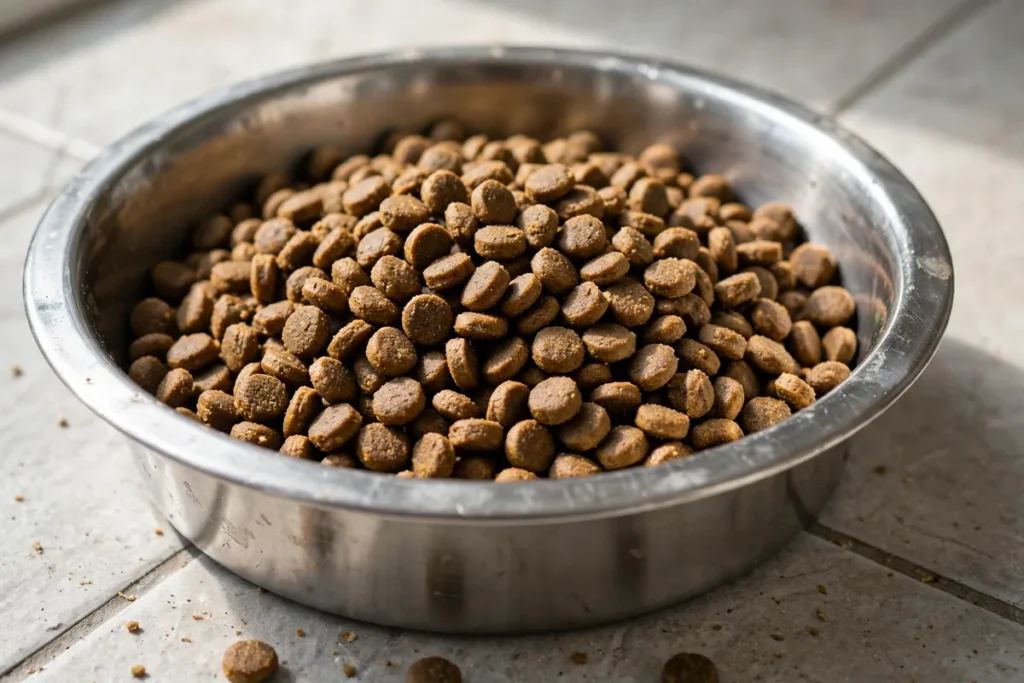
Prices change — check the current price before buying.
Blue Buffalo Life Protection Dog Food Review: What Is the Formula?
Life Protection Formula is Blue Buffalo’s flagship dry dog food line, with puppy, adult, senior, small-breed, and large-breed recipes in chicken, lamb, and fish. It rests on three ideas: real deboned meat first, whole grains instead of corn, wheat, or soy, and LifeSource Bits — a cold-formed blend of antioxidants, vitamins, and minerals chosen by veterinarians to support immune health. The food meets the AAFCO Dog Food Nutrient Profiles for maintenance. For young dogs, see our guide to the best dog food for puppies.
What’s Inside the Bag?
The adult chicken and brown rice recipe starts with deboned chicken, followed by chicken meal, brown rice, oatmeal, and barley. Chicken meal is chicken with the water removed — a concentrated protein source — so its place high on the list is a good sign. The guaranteed analysis lists 24% crude protein and 14% crude fat minimum — solid, middle-of-the-road numbers for an adult maintenance food. Flaxseed and fish meal supply omega-3 and omega-6 fatty acids for skin and coat health, and glucosamine supports joints.
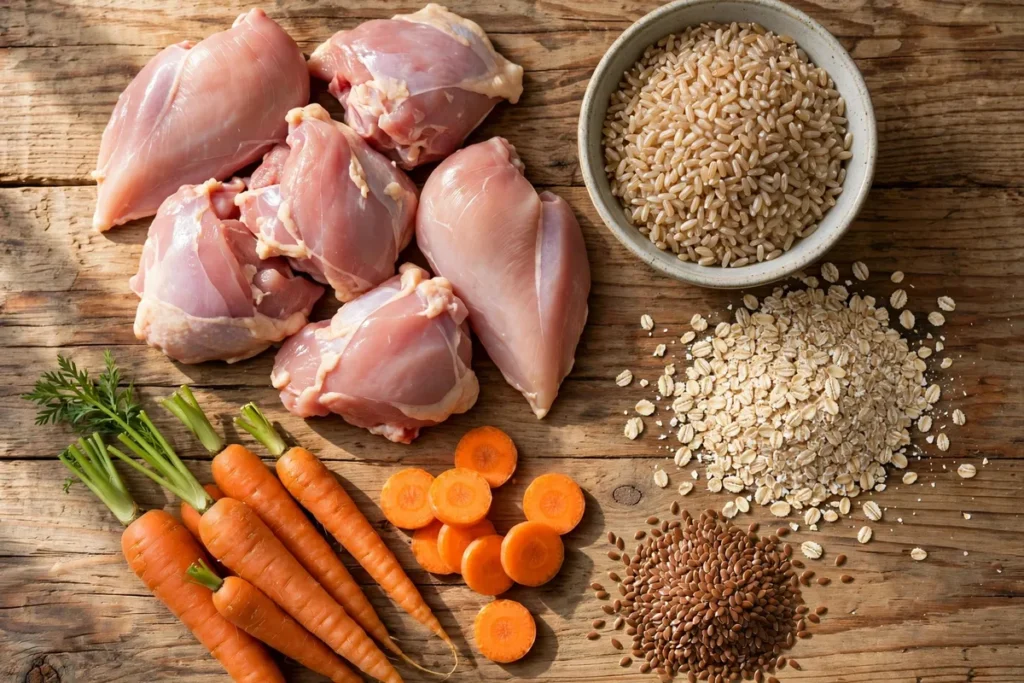
What is not in the bag matters too: no chicken or poultry by-product meals, no corn, wheat, or soy, and no artificial flavors or preservatives, while chicken fat is preserved with mixed tocopherols (vitamin E).
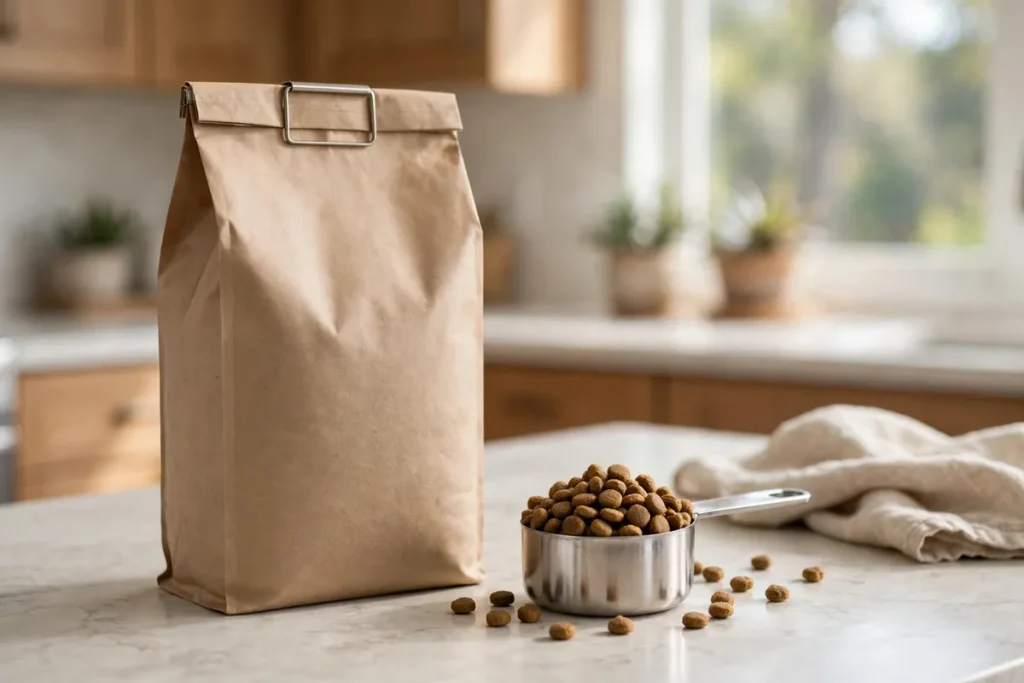
The LifeSource Bits: What Are They?
LifeSource Bits are the feature Blue Buffalo talks about most: small, dark kibble pieces mixed in with the regular kibble, made from a precise blend of antioxidants, vitamins, and minerals. The key detail is that they are cold-formed, made with minimal heat so the nutrients are not damaged the way high-temperature kibble cooking can damage some vitamins. Whether they make a measurable difference is hard to prove — no independent study has compared them with a standard vitamin premix — but the idea is sound, and many owners say their dogs pick the dark bits out first.
Pros and Cons
What we like: Real deboned meat is the first ingredient in every recipe. No corn, wheat, soy, or poultry by-product meals, and no artificial flavors or preservatives. LifeSource Bits add antioxidants, vitamins, and minerals. A wide range of recipes covers puppies, adults, seniors, small breeds, and large breeds.
What to watch out for: It costs more than supermarket dog foods, and the premium is real. Some dogs pick the LifeSource Bits out and leave the rest. The lamb and fish recipes still contain chicken fat and chicken meal, so it is not a good choice for dogs with a chicken allergy.
Which Dogs Is It Best For?
Most adult dogs. The standard adult chicken and brown rice recipe is a solid all-rounder for healthy adult dogs.
Large breeds. The Large Breed Adult recipe adds extra glucosamine and chondroitin for joint health.
Small breeds. The Small Breed recipe uses smaller kibble pieces for little mouths, with a minimum of 26% crude protein.
Seniors. The Senior recipe includes glucosamine and chondroitin, with 18% minimum protein and around 343 kcal per cup for less active older dogs.

Puppies. There is a dedicated puppy formula with DHA for brain and eye development — see our best dog food for puppies guide. Ask your veterinarian first if your dog has a chicken allergy: the lamb and fish recipes still contain chicken fat.
How to Switch Your Dog to a New Food
Switching foods too fast is the most common cause of an upset stomach. Take seven to ten days: start with a quarter new food mixed with three-quarters old food, then move to half and half, then three-quarters new, then fully new. Watch your dog’s stools, energy, and skin — loose stools for a day or two are common, but if they last longer, slow down or speak to your veterinarian. Keep fresh water available, and measure portions with a cup or kitchen scale.
Buying Guide: How to Choose the Right Recipe
Match the life stage first. Puppy, adult, and senior recipes differ for a reason — the wrong one can mean the wrong balance of calories, calcium, and protein.
Match the breed size. Kibble size and joint support really do differ — large breeds benefit from the extra glucosamine, while small dogs may struggle with standard kibble.
Pick a protein your dog tolerates. Lamb and fish recipes exist for dogs that do better on a different protein, but they still contain chicken fat, so they are not suitable for a true chicken allergy.
Check the bag size against your dog’s appetite. The largest bag only saves money if your dog eats it before it goes stale — store opened food sealed, cool, and dry, and use it within six weeks.

FAQ
Is Blue Buffalo Life Protection Formula good for dogs with allergies?
It can help dogs that react to corn, wheat, soy, or by-product meals, but it is not a limited-ingredient food, and dogs with a chicken allergy should avoid the whole line unless a veterinarian advises otherwise.
Is Blue Buffalo Life Protection Formula grain-free?
No — this line includes whole grains such as brown rice, barley, and oatmeal. Most healthy dogs do fine with grains, and grain-free diets should only be used on veterinary advice.
How much should I feed my dog?
Follow the feeding guide on the bag as a starting point, then adjust to your dog’s body condition — you should be able to feel the ribs easily and see a waist from above.
Can puppies eat Blue Buffalo Life Protection Formula?
Puppies should eat the puppy recipe, not the adult recipe — it is made for growth, with DHA for brain and eye development. Switch to an adult recipe at around 12 months for most breeds, or 18 to 24 months for large and giant breeds.

The Bottom Line
Blue Buffalo Life Protection Formula is a genuinely good mid-premium dog food: real meat first, no cheap fillers, no artificial flavors or preservatives, and the LifeSource Bits are a thoughtful addition. Most dogs can find a version that fits, thanks to the range of life-stage and breed-size recipes. Is it worth it? For most healthy adult dogs, yes — if the cost fits your budget and your dog eats and digests it well. It is not the cheapest food on the shelf, and it is not a specialist diet for allergies or medical conditions, but as an everyday food for a healthy dog, it earns its place on the shortlist. Buy a small bag first, and let your dog’s coat, energy, and digestion be the judge.
Disclaimer: This article is for general information only and is not veterinary advice. If your dog has a medical condition, food allergy, or digestive problem, ask your veterinarian before changing foods.