PetSafe ScoopFree Self-Cleaning Litter Box Review (2026): Is It the Best?
Scooping the litter box is the chore every cat owner hates most. The PetSafe ScoopFree promises to take it off your list for weeks at a time: it rakes the waste away by itself, uses crystal litter that controls odor, and all you do is throw away a disposable tray once a month or so. It is one of the best-known automatic litter boxes on the market — but it is not cheap, and it locks you into buying its own trays. If odor is your main worry, our best cat litter for odor control rounds up five picks that actually work.
Table of Contents
So is it worth it? This PetSafe ScoopFree self-cleaning litter box review covers what it does, what owners like about it, and where it falls short.
In this PetSafe ScoopFree self-cleaning litter box review, we test whether it is really worth the money.
Prices change — check the current price before buying.
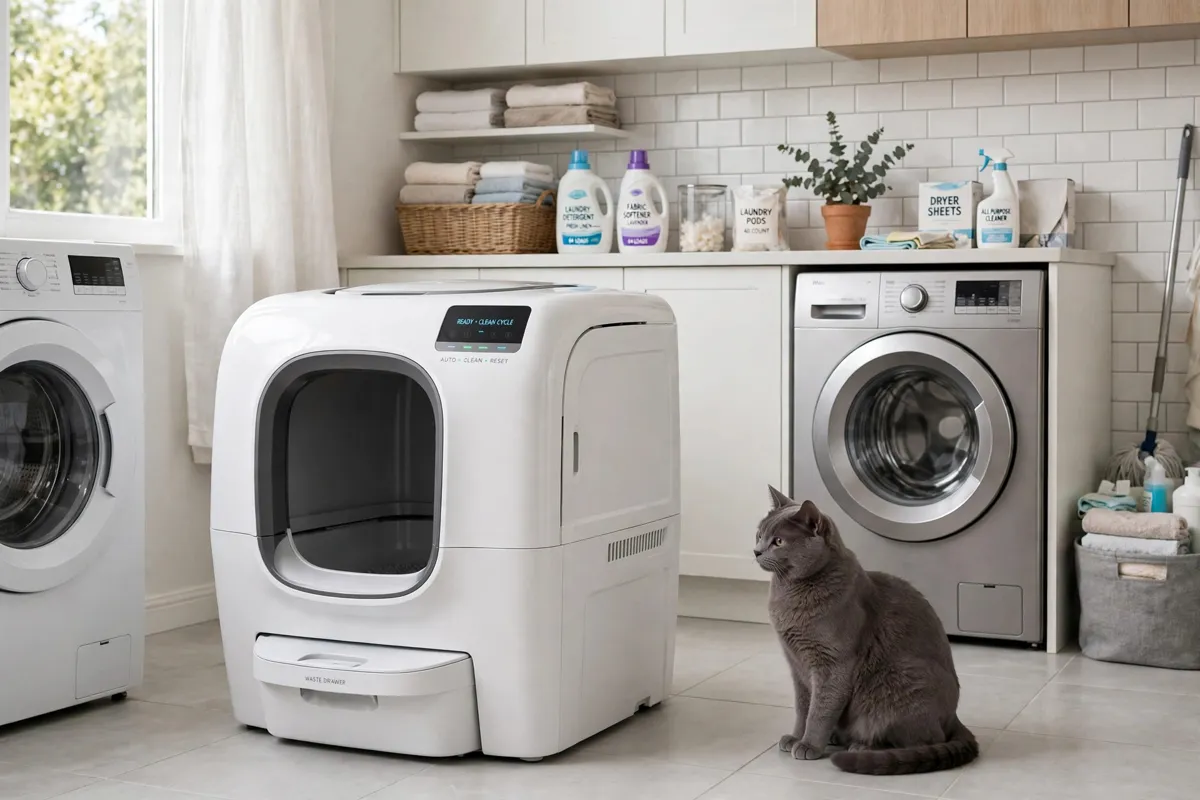
PetSafe ScoopFree Self-Cleaning Litter Box Review: What It Is and How It Works
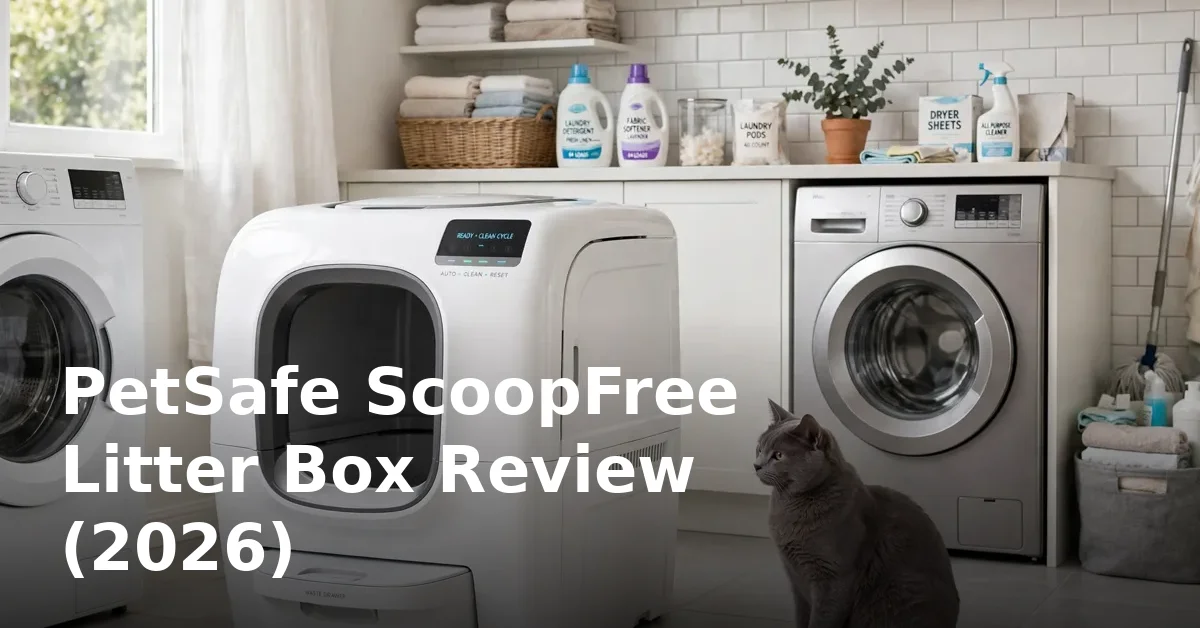
The ScoopFree is an automatic, self-cleaning litter box that works with disposable crystal litter trays. You slide a pre-filled tray into the base, and the box does the rest. It comes in several versions — open-top, covered, top-entry Ultra, and a Wi-Fi Smart model — but they all work on the same idea.
When your cat uses the box, a motion sensor starts a countdown. About 20 minutes later — or 5, 10, or 20 minutes, depending on the model and your timer setting — a motorized rake sweeps slowly across the crystal litter and pushes solid waste into a covered waste trap at the end of the tray. The rake then returns to its home position, and the box is ready again.
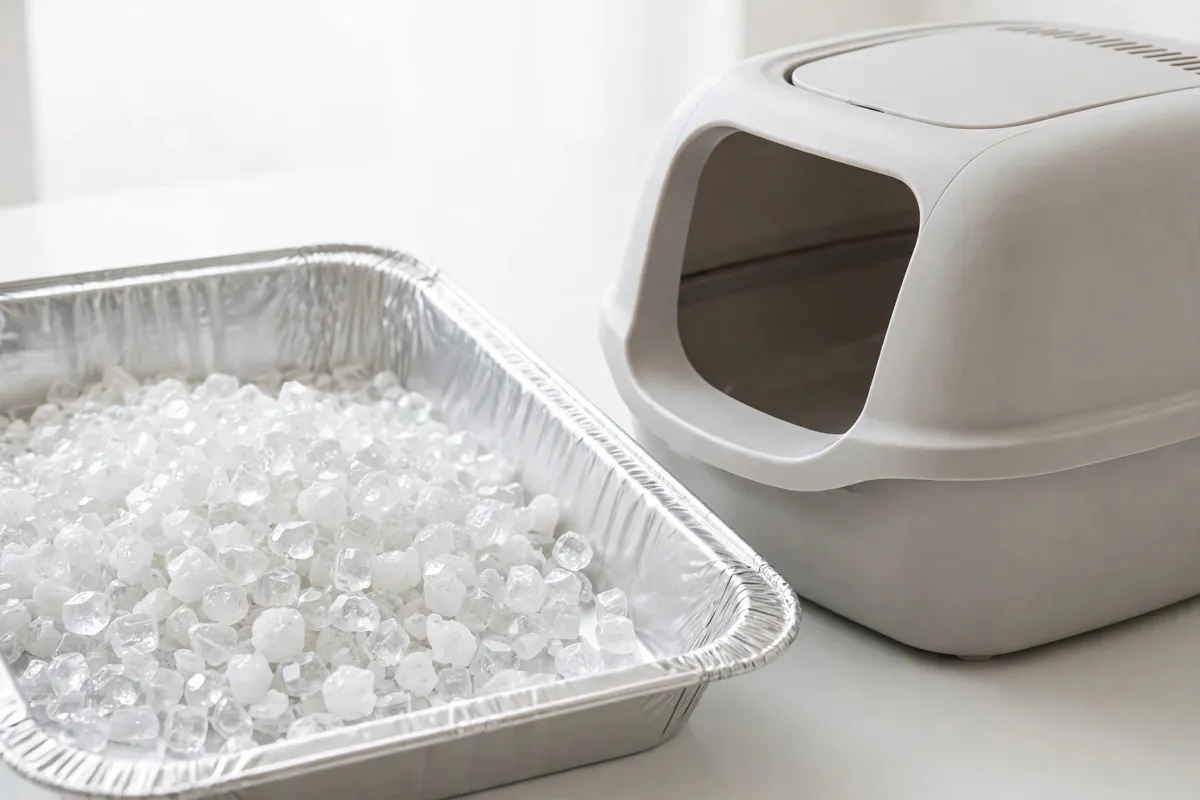
The crystal litter is the other half of the system. The blue crystals absorb urine on contact and dehydrate solid waste, which controls odor without clumping. PetSafe says it provides five times better odor control than traditional clumping clay litter, is 99% dust-free and low-tracking, and uses 5 to 10 times less litter than clay — which is why one tray can last up to 30 days in a single-cat household. For more on litter box hygiene, see Cornell’s guide to feline house soiling.
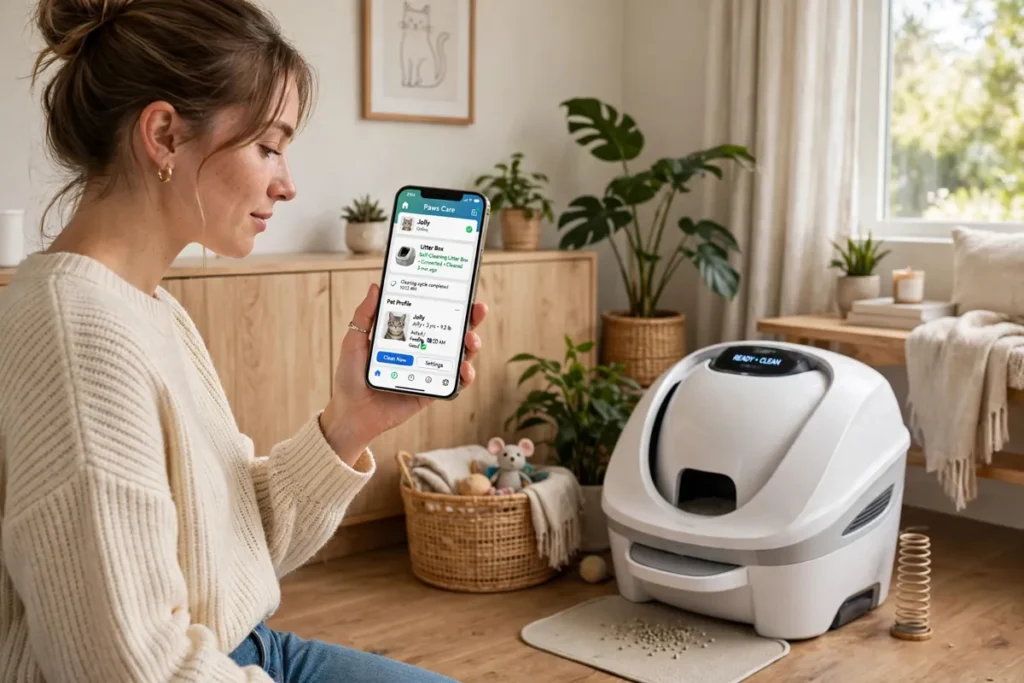
Each disposable tray has a plastic lining to protect against leaks, and it comes with a lid. When the tray is used up, you lift it out, put the lid on, throw it away, and slide a fresh tray in. There is no washing, no scrubbing, and no touching waste. Later models also include a health counter — an LCD display that counts how many times your cat uses the box — which can help you spot early signs of a urinary or kidney problem. The Smart version sends that data to the My PetSafe app over Wi-Fi. Safety sensors stop the rake if your cat climbs back into the box mid-cycle.
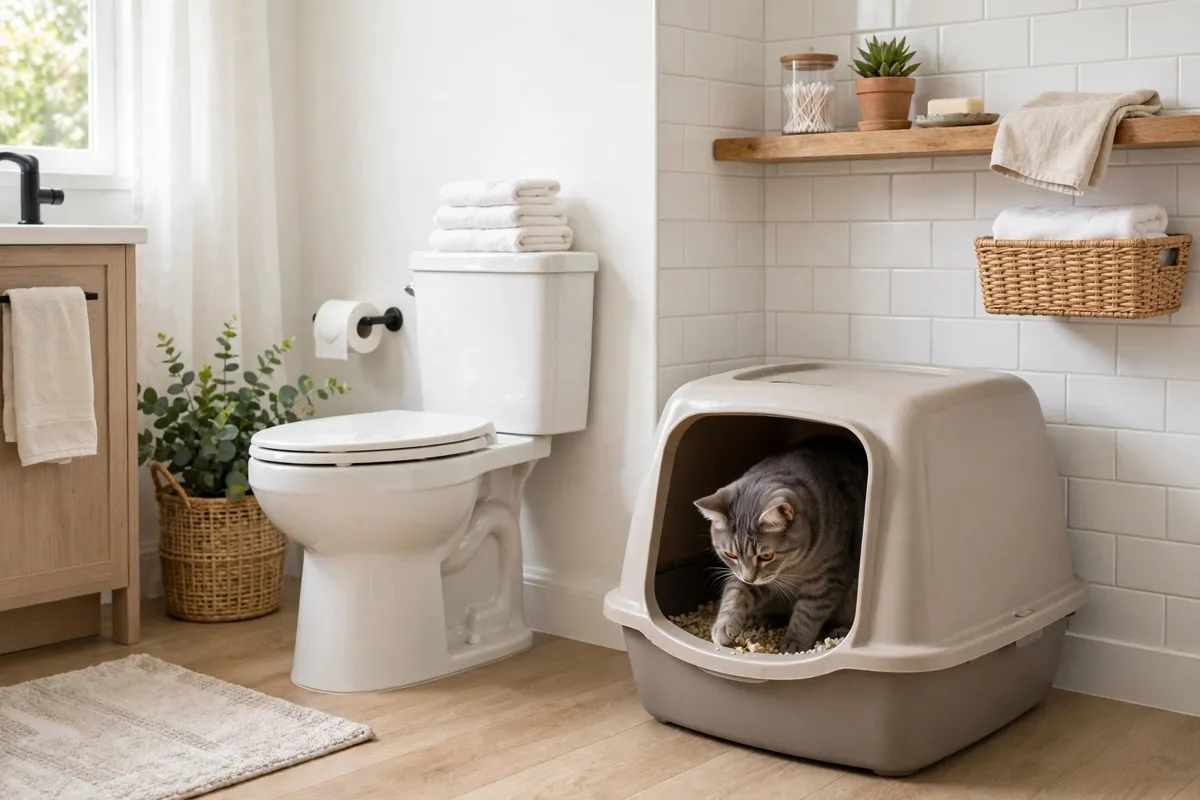
What is good
The biggest win is obvious: no scooping. For a single cat, the box genuinely runs for weeks without daily attention. This hands-off design is the main reason this PetSafe ScoopFree self-cleaning litter box review recommends it for single-cat homes.
Odor control is the second strength. The crystal litter absorbs urine and dries solid waste instead of masking the smell, and the covered waste trap locks the solids away. Most owners report that the box smells far better than a standard clumping litter box — especially in a small apartment. A simpler box can help too, so see our IRIS Top Entry Cat Litter Box review.
The tray system is genuinely easy: swapping a tray takes a minute, with no washing out a dirty box or breathing in dust. The health counter is a useful bonus no ordinary litter box offers, the crystals are a real improvement for homes with allergies, and the rake is quiet — most cats get used to it within a few days.
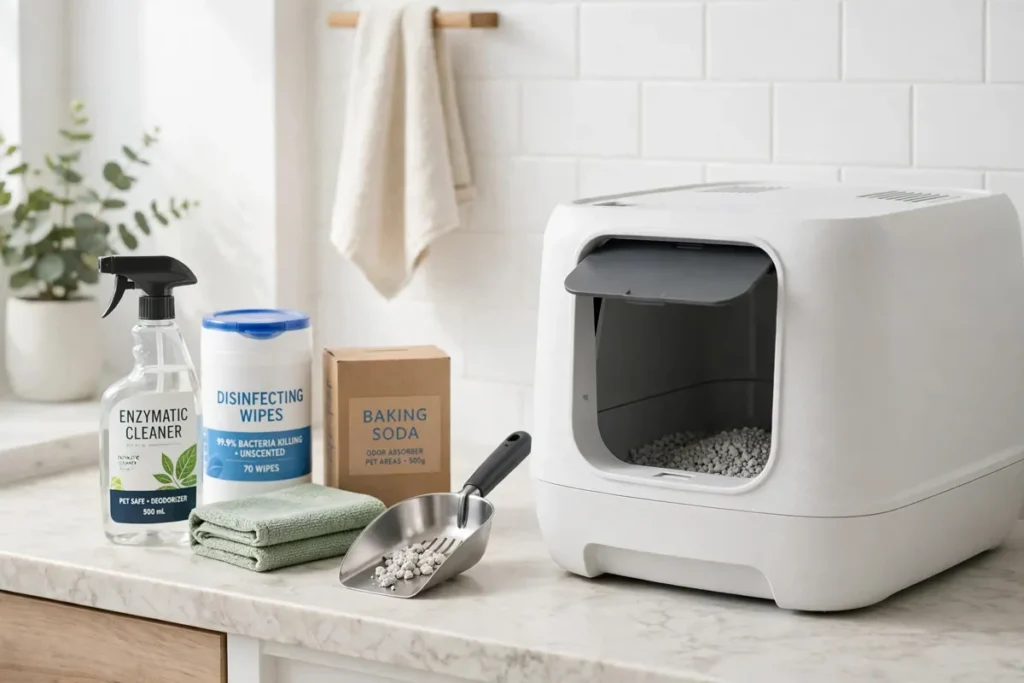
What to watch out for
The running cost is the main drawback. The box only works with official ScoopFree disposable crystal litter trays — PetSafe is clear that other litter will not scoop properly — so you are tied to buying their trays for as long as you own the box. A tray lasts up to 30 days for one cat, but with two cats it lasts roughly half as long. Over a year, the trays add up to a real ongoing cost, on top of the box itself.
The tray size is the second limitation: the standard ScoopFree suits average-sized cats best, and very large cats may find it cramped. Measure your cat against the box before you buy.
Some cats refuse crystal litter: it feels different underfoot, and a few cats will not step on it at all. Introduce the box gradually — place it next to the old box for a few days first. The rake is not perfect either: it can miss stuck waste, and very soft stools can smear across the crystals. The box also needs a power outlet nearby, and the rake motor will eventually wear out.
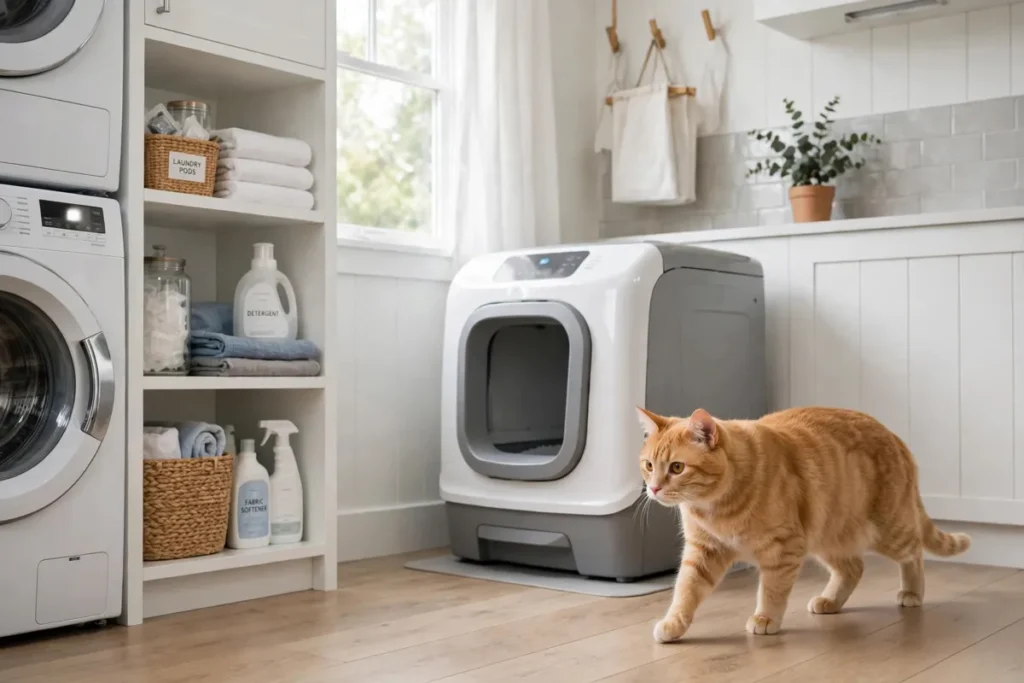
Who it suits — and who should skip it
The ScoopFree is a great fit if you hate scooping, live in a small home where odor matters, have one or two average-sized cats, and are happy to pay for disposable trays. It also suits people with dust allergies, older owners who find bending and scrubbing hard, and anyone who travels.
Skip it if you have three or more cats, if your cat is very large, very nervous, or refuses crystal litter, or if the ongoing tray cost bothers you — a good manual litter box costs far less over a year, even with daily scooping.
FAQ
How long does one ScoopFree tray last?
PetSafe says one tray can last up to 30 days for one cat; in practice, most owners get two to four weeks. With two cats, expect roughly half that time.
Do I have to use ScoopFree crystal litter?
Yes. The box is designed for its own pre-measured crystal litter trays, and PetSafe states that other litter will not scoop properly. You can buy official disposable trays or a reusable tray to fill with ScoopFree crystal litter.
Is the ScoopFree safe for kittens?
It is best for cats over six months old, big enough for the tray and heavy enough to trigger the sensors. Very small kittens should use a regular litter box until they grow. This PetSafe ScoopFree self-cleaning litter box review notes that kittens should wait until they are over six months old.
Does the rake scare cats?
Most cats get used to it within a few days, since the rake runs about 20 minutes after the cat leaves and moves slowly and quietly. For nervous cats, leave the box unplugged for a few days so the cat uses it as a normal litter box first. For cats that avoid a new box, see the ASPCA’s litter box problems guide.
PetSafe ScoopFree Self-Cleaning Litter Box Review: The Verdict
The PetSafe ScoopFree does what it promises: it removes the daily scooping chore, controls odor better than a standard litter box, and makes tray changes quick and clean. The health counter is a genuinely useful extra, and the crystal litter is low-dust and low-tracking. Our PetSafe ScoopFree self-cleaning litter box review verdict: worth it if you hate scooping and have one cat.
But it is not a magic box: the trays are an ongoing cost, the box suits average-sized cats best, and a few cats will refuse crystal litter. If you have one or two cats, hate scooping, and are willing to pay for the trays, it is worth it — and it is one of the most popular automatic litter boxes for good reason. If you have a multi-cat household or a tight budget, a good manual litter box is still the better value. Keeping your cat hydrated matters too, so see our best cat water fountains.
Disclaimer: This article is for general information only and does not replace professional veterinary advice. If your cat stops using the litter box, strains to urinate, or shows signs of illness, consult your veterinarian promptly.