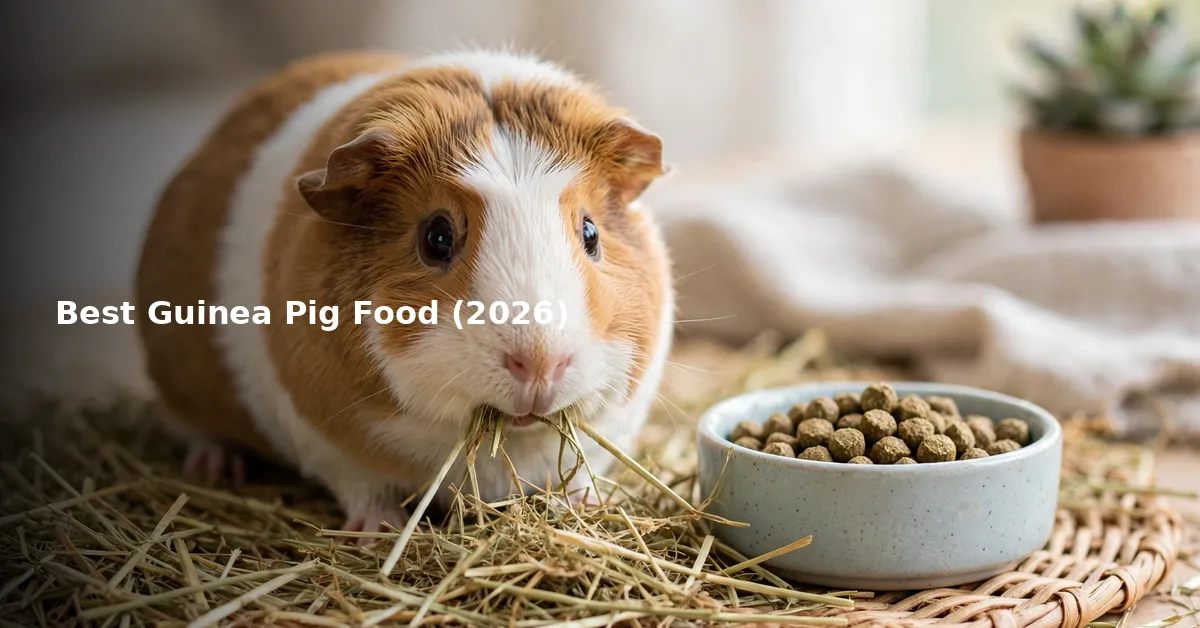
Best Guinea Pig Food (2026): 7 Picks for Healthy Guinea Pigs
Guinea pigs are small, gentle, and surprisingly fussy about food — and getting their diet right matters more than most new owners realize. Like humans, guinea pigs cannot make their own vitamin C, so a diet without enough of it can lead to scurvy, a painful and sometimes serious condition. They also need a lot of fiber to keep their teeth worn down and their digestion moving, since both their teeth and their guts never really stop working.
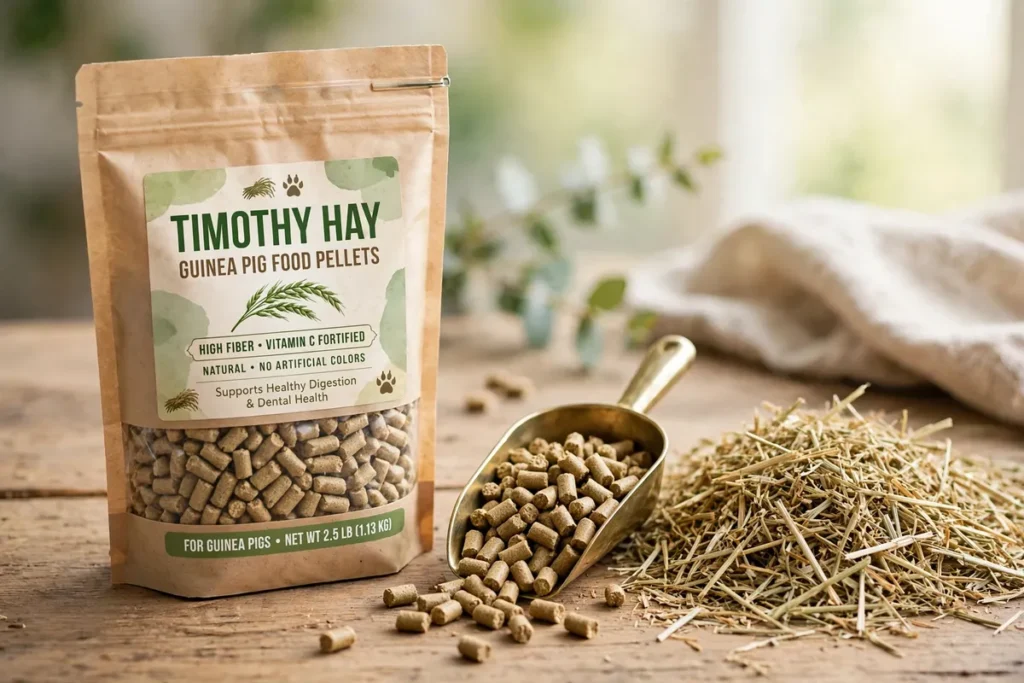
The best guinea pig food is a plain, timothy-hay-based pellet with stabilized vitamin C, no seeds, no nuts, and no colorful sugary bits. That sounds simple, but the pet store shelf is full of muesli-style mixes that look fun and are actually a bad idea: guinea pigs pick out the sweet pieces and leave the healthy ones, which leads to weight gain and dental problems. We compared the most trusted pellet brands on ingredient quality, vitamin C, fiber, and how well guinea pigs actually eat them, to find seven worth your money.
Prices change — check the current price before buying.
In This Article
1. Oxbow Essentials Adult Guinea Pig Food — Best Overall
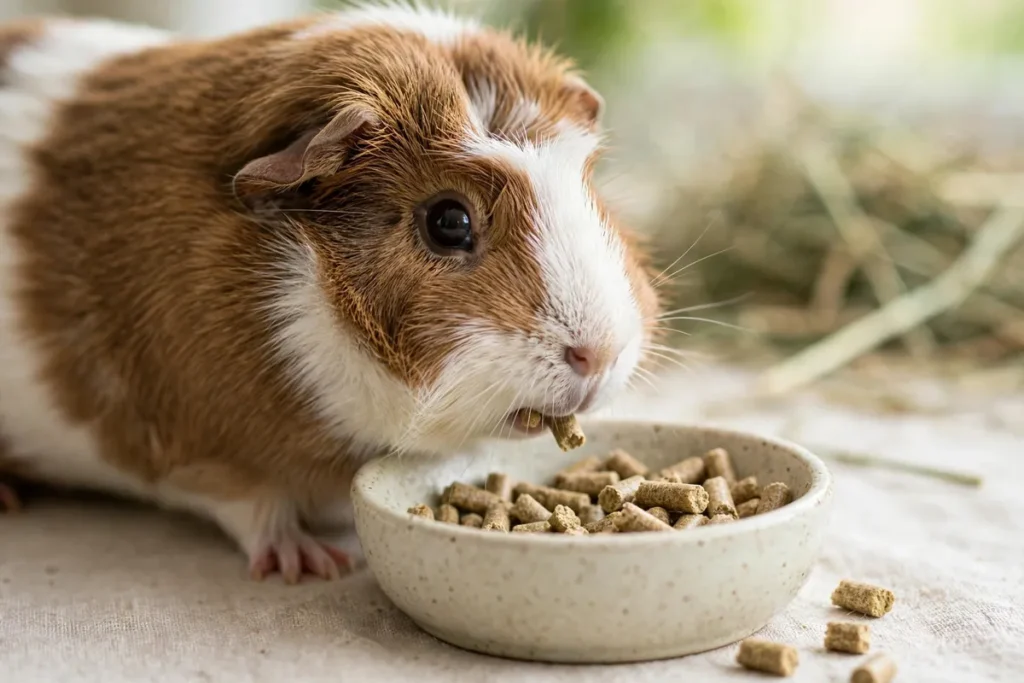
Oxbow Essentials is the food most exotic vets point owners toward first, and it is easy to see why. It is a uniform timothy-hay pellet with stabilized vitamin C, antioxidants, and prebiotics, made for adult guinea pigs. Because every pellet is the same, your piggy cannot pick out the tasty bits and skip the rest, which is exactly the problem with mixed foods.
The fiber comes from high-quality timothy hay, which supports digestion and helps wear down constantly growing teeth. There are no seeds, fruit, or colored pieces in the bag, and the pellets are a consistent size that most guinea pigs handle easily. Oxbow is also the brand most rescues and shelters use, which says a lot — when you feed hundreds of guinea pigs, you learn quickly which food causes problems and which one does not.
Best for: Adult guinea pigs over six months old, and first-time owners who want the safest default choice.
2. Small Pet Select Premium Guinea Pig Food Pellets — Best Premium
Small Pet Select takes a craft approach to guinea pig food. These are non-GMO, soy-free timothy hay pellets, milled in small batches from ingredients sourced in the Pacific Northwest, with stabilized vitamin C and all the minerals an adult guinea pig needs. Owners often say you can smell the freshness when you open the bag — it smells like hay, not like a factory.
The pellets are a little longer than some brands, so a few owners break them up for smaller or older guinea pigs, but most pigs take to them quickly. The small-batch approach means the food is fresher than mass-produced pellets, and the soy-free formula suits pigs with sensitive stomachs. The main downside is the bag size: it is usually sold in 5 lb bags, so multi-pig households will go through them fast.
Best for: Owners who want the freshest, highest-quality pellets and are happy to pay a little more for them.
3. Sherwood Pet Health Adult Guinea Pig Food — Best Vet-Formulated
Sherwood Pet Health makes a free-choice timothy pellet designed to be fed alongside unlimited hay, and it is the pick most often recommended by vets who want a soy-free, grain-free option. The formula is built around timothy hay with stabilized vitamin C, and it skips the fillers — no corn, no soy, no wheat — that show up in cheaper foods.
Because it is a free-choice food, it suits households where guinea pigs graze through the day rather than eating on a schedule. Sherwood also sells a professional version aimed at clinics and multi-pet homes, which makes it a good value in larger bags. The pellets are plain and a little unexciting, which is the point: there is nothing in here for a guinea pig to pick out and nothing to make it gain weight.
Best for: Owners who want a vet-formulated, soy-free and grain-free pellet, and homes with several guinea pigs.
4. Supreme Science Selective Guinea Pig Food — Best for Picky Eaters
Supreme Science Selective is an extruded pellet, which means the ingredients are cooked and shaped into a uniform piece that is easy to bite and digest. It is fortified with stabilized vitamin C, high in fiber, and made without added sugars, so it suits guinea pigs that turn their nose up at plainer pellets — the texture and taste seem to win over fussy eaters more often than most.
It is also a good choice if your guinea pig has had dental trouble, since the extruded pellets are a consistent size and shape that are easy to manage. The brand is widely available in the UK as well as the US, which makes it a handy pick for readers on both sides of the Atlantic. The only real complaint is that some owners find their pigs love it a little too much and eat through the bag quickly.
Best for: Picky eaters, guinea pigs with dental issues, and UK owners who want a pellet they can find locally.
5. Kaytee Timothy Complete Guinea Pig Food — Best Budget
Kaytee Timothy Complete is the budget pick that still gets the basics right. It is a timothy-hay-based pellet with added vitamin C, made for adult guinea pigs, and it is sold almost everywhere — pet stores, supermarkets, and online — so it is the easiest food on this list to find in a hurry.
The formula is straightforward: timothy hay as the base, uniform pellets to prevent selective feeding, and no seeds or nuts. It does contain some ingredients that the premium brands skip, such as ground corn, which is why it sits below Oxbow and Small Pet Select on this list. But for owners on a tight budget, or as a reliable backup when your usual brand is out of stock, it is a solid, honest food that covers the essentials.
Best for: Budget-conscious owners, first-time buyers, and anyone who needs a good pellet they can buy locally today.
6. Oxbow Essentials Young Guinea Pig Food — Best for Young, Pregnant, and Nursing Pigs
Young guinea pigs have different needs from adults. They are growing fast, and they need more calcium and protein than a timothy-based adult pellet provides. Oxbow Essentials Young Guinea Pig Food is the alfalfa-based version of the same trusted formula, made for guinea pigs under six months old, as well as pregnant and nursing sows.
It has the same strengths as the adult version — uniform pellets, stabilized vitamin C, no seeds or colored pieces — with the extra calcium and protein that growth and pregnancy demand. The important thing is to switch to a timothy-based adult pellet, like the Oxbow Essentials Adult at the top of this list, once your guinea pig reaches six months. Alfalfa is too rich in calcium for an adult, and feeding it long-term can contribute to bladder stones.
Best for: Guinea pigs under six months, pregnant sows, and nursing mothers.
7. Mazuri Timothy-Based Guinea Pig Food — Best for Multi-Pig Homes
Mazuri is a name many owners first meet at the zoo — the company has supplied zoos and animal facilities for decades — and its timothy-based guinea pig food brings that same professional approach to the home. It is a uniform pellet with stabilized vitamin C, high fiber, and no seeds or sugary pieces, designed as a complete daily food alongside unlimited hay.
The standout feature is the bag size: Mazuri is sold in large bags that make it one of the best-value options per pound on this list, which matters a lot when you have three or four guinea pigs going through food every week. The pellets are a little larger and firmer than some brands, so very young or older guinea pigs may take a day or two to get used to them, but most adapt quickly.
Best for: Multi-pig households, breeders, and owners who want a professional-grade food in a large, good-value bag.
Buying Guide: How to Choose the Best Guinea Pig Food
Look for a plain, uniform pellet. The best guinea pig food is a single, plain pellet with timothy hay as the main ingredient. If the bag contains seeds, nuts, dried fruit, or colorful pieces, skip it. The RSPCA is clear on this point: guinea pigs should not be fed muesli-style mixes, because they pick out the sugary bits and leave the rest, which leads to obesity and dental problems. Their guinea pig diet guide explains what a healthy daily diet should look like.
Check the vitamin C. Guinea pigs cannot make vitamin C, and they need it every day. Look for a pellet that lists stabilized vitamin C — the stabilized form survives storage and does not break down before your pig eats it. Vitamin C drops in water are not a good substitute, since the vitamin breaks down quickly in a water bottle and can put your pig off drinking.
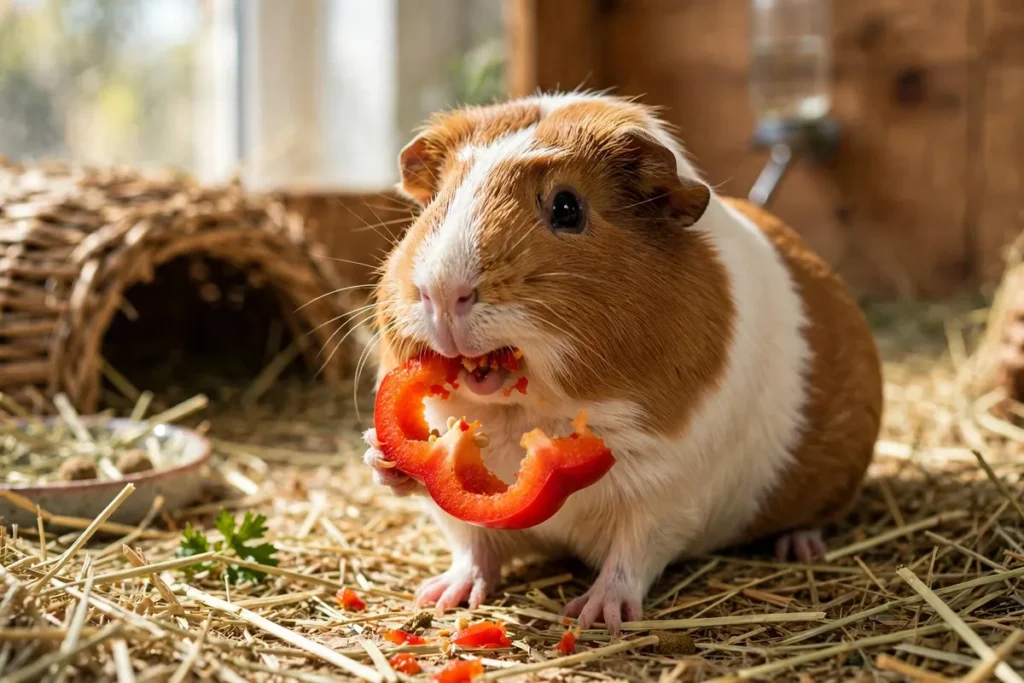
Feed the right amount. Pellets are a supplement to hay, not the main event. An adult guinea pig needs about one-eighth of a cup of pellets a day, unlimited timothy hay, and a small handful of fresh vegetables — leafy greens, bell pepper, and a little carrot. Hay should make up most of the diet: it keeps teeth worn down and digestion moving. PetMD’s guinea pig care guide covers housing, feeding, and daily care in one place, and it is worth a read if you are new to guinea pigs.
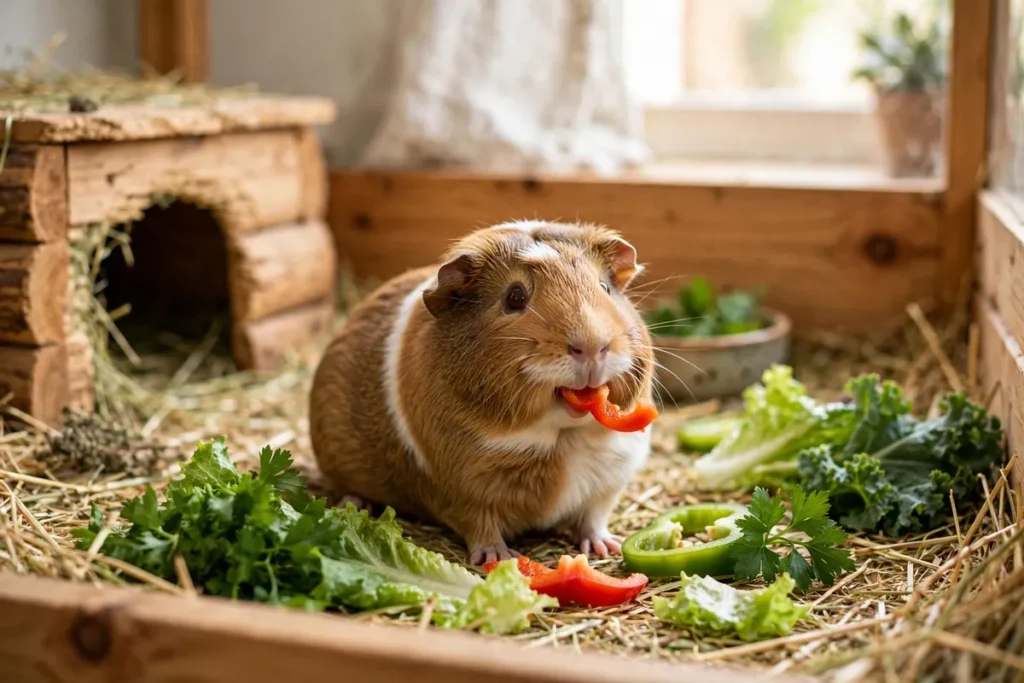
Match the pellet to the life stage. Young, pregnant, and nursing guinea pigs need an alfalfa-based pellet for the extra calcium and protein. Adults over six months need a timothy-based pellet, which is lower in calcium. Feeding an alfalfa pellet to an adult long-term can contribute to bladder stones, so make the switch on time.
Store it properly and buy fresh. Pellets lose vitamin C over time, so buy a bag your guinea pigs will finish within a month or two, keep it sealed in a cool, dry place, and throw it out if it smells stale. If you are setting up a home for a new guinea pig, our guide to the best guinea pig cage for beginners covers safe sizes and setups, and our roundup of the best rabbit toys for bunnies has ideas for small-pet enrichment that guinea pigs enjoy too. For grooming, a soft brush from our best pet grooming kit roundup works well on long-haired guinea pigs.
FAQ: Best Guinea Pig Food
How much should I feed my guinea pig each day?
An adult guinea pig needs about one-eighth of a cup of pellets a day, unlimited timothy hay, and a cup of fresh vegetables. Hay is the most important part — it should always be available. Pellets are a supplement, not the main food, so do not fill the bowl to the top.
Can guinea pigs eat rabbit food instead?
No. Rabbit food does not contain the vitamin C guinea pigs need, and some rabbit foods contain ingredients that are not safe for guinea pigs. Always buy food made specifically for guinea pigs, and check the label says so.
Are muesli mixes and seed blends bad for guinea pigs?
Yes, for daily feeding. Guinea pigs pick out the sweet, fatty pieces and leave the healthy pellets, so they end up with an unbalanced diet that leads to weight gain and dental problems. A plain, uniform pellet is always the better choice.
Do guinea pigs need vitamin C supplements as well as pellets?
Most guinea pigs get enough vitamin C from a good pellet and fresh vegetables, especially bell pepper, which is very high in vitamin C. If your vet says your guinea pig needs extra, follow their advice — but do not add vitamin C drops to the water bottle, since they break down quickly and can stop your pig drinking.
The Bottom Line
The best guinea pig food for most owners is Oxbow Essentials Adult Guinea Pig Food: a plain, timothy-based pellet with stabilized vitamin C that vets, rescues, and owners trust. If you want the freshest small-batch option, Small Pet Select is the premium pick, and Sherwood is the best vet-formulated choice for owners who want a soy-free, grain-free food. For picky eaters, try Supreme Science Selective; for a tight budget, Kaytee Timothy Complete; for young or pregnant pigs, Oxbow Essentials Young; and for multi-pig homes, Mazuri in the big bag.
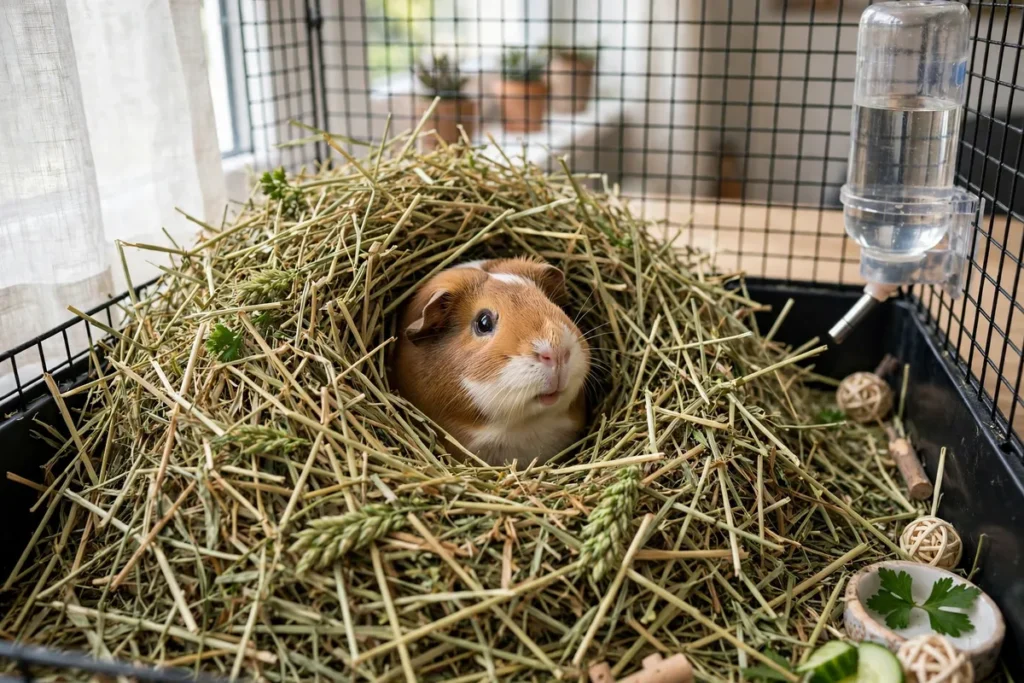
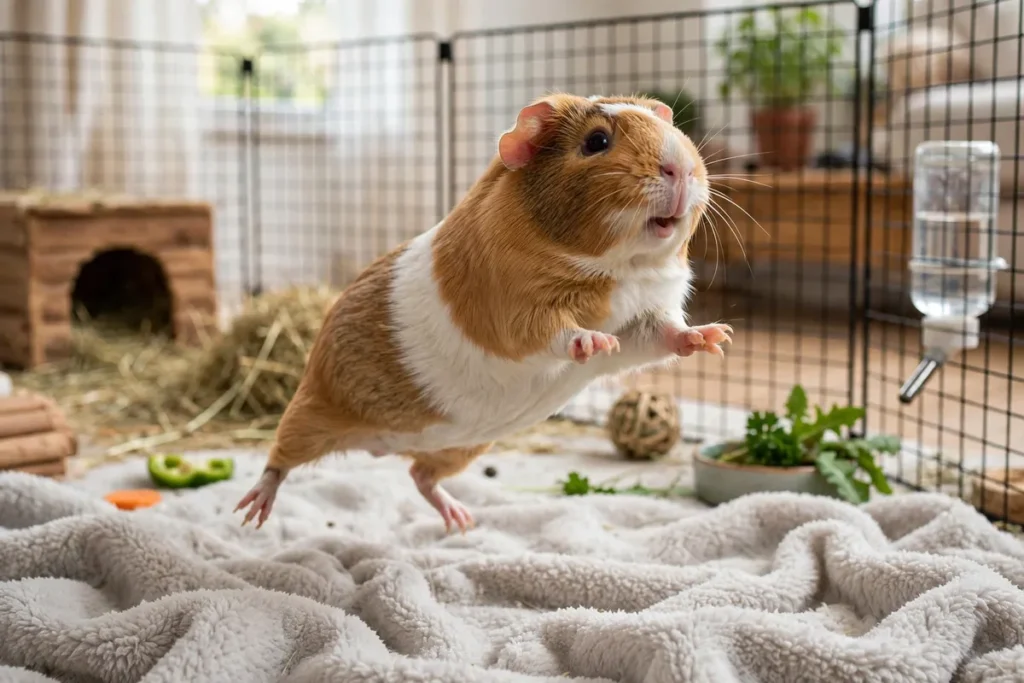
Whichever pellet you choose, remember that it is only one part of the diet. Unlimited hay, fresh vegetables every day, and clean water matter just as much — and a happy guinea pig with a full hay rack and a healthy pellet bowl is a guinea pig that will popcorn with joy.
Disclaimer: This article is for general information only and is not a substitute for veterinary advice. Guinea pigs with health conditions, pregnant sows, and very young or elderly pigs may need a different diet. If your guinea pig stops eating, loses weight, or shows signs of illness, contact a veterinarian experienced with small pets.