
How to Take Care of a New Puppy: First-Week Checklist (2026)
Bringing a puppy home is one of the best days of your life — and one of the busiest. In the first week, your puppy needs to learn where to sleep, where to go to the bathroom, what to eat, and that your home is safe. Good habits are also easiest to build now, so a little planning saves months of fixing problems later. Toilet training starts on day one — see our guide on how to potty train a puppy for the full step-by-step routine. Read on for the full guide on how to take care of a new puppy in the first week.
This checklist covers what to buy, puppy-proofing, the first day home, a day-by-day plan, feeding, toilet training, crate training, the first vet visit, and socialization. Work through it in order, and by Day 7 you will have a routine that works. Keep this guide on how to take care of a new puppy handy for the whole first week.
Table of Contents

Prices change — check the current price before buying.
Before your puppy arrives
Get these ready before pickup day:
- Crate and bed. A crate is a safe den. Buy adult size with a divider, plus a washable bed.
- Food and water bowls. Stainless steel bowls are easy to clean and hard to chew.
- Puppy food. Ask the breeder or shelter what food your puppy eats now, and buy the same brand.
- Collar, leash, and ID tag. A lightweight collar with an ID tag that has your phone number.
- Toilet training supplies. Puppy pads, poop bags, and an enzyme cleaner for accidents.
- Chew toys. A KONG and a couple of puppy-safe chew toys. Puppies chew constantly while teething.
- Grooming basics. A puppy shampoo, a soft brush, and nail clippers.
- Vet appointment. Book the first vet visit for the first few days after arrival.
- Baby gates or a playpen. A small safe area keeps your puppy out of trouble when you cannot watch them.
You do not need the most expensive version of everything — just the right version, ready before your puppy arrives.
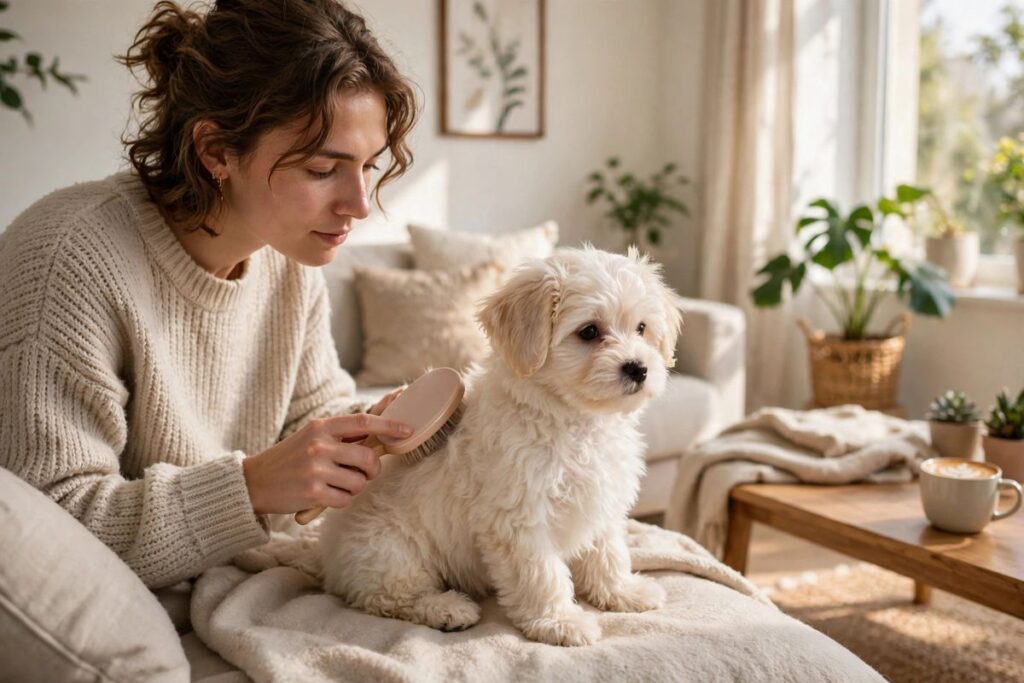
Puppy-proof your home
Puppies explore the world with their mouths. Walk through your home the day before pickup and look at it from a puppy’s point of view.
- Cords and cables. Move chargers and power strips out of reach, or cover them with cord protectors.
- Small objects. Pick up socks, hair ties, coins, and children’s toys — puppies can choke on them.
- Cleaning products and medicines. Move them to high cupboards or cupboards with childproof latches.
- Plants. Many houseplants are toxic to dogs, including lilies, sago palm, and aloe vera.
- Bins and food. Use bins with lids. Keep chocolate, grapes, onions, garlic, xylitol, and cooked bones away.
- Stairs and balconies. Block off stairs with a baby gate, and never leave a puppy alone on a balcony.
Check again every week or two — as your puppy grows taller, things that were out of reach may not stay that way.
The first day home
- Keep it calm. Your puppy has just left its mother and littermates. No big parties, no visitors, no loud music.
- Show the toilet spot first. Before going inside, take your puppy straight to the toilet spot. Praise it when it goes.
- Introduce the crate. Put a treat inside and let your puppy explore it alone. Never force a puppy into a crate.
- Set up a routine from day one. Same feeding times, same toilet times, same bedtime.
- Let your puppy sleep. Puppies sleep 18–20 hours a day. Let your puppy nap without waking it up.
- Keep the first meal familiar. Feed the same food your puppy was eating before.
Expect some crying on the first night — it usually passes within a few nights. Keep the crate near your bed, and keep night toilet trips quiet and boring, with no play.
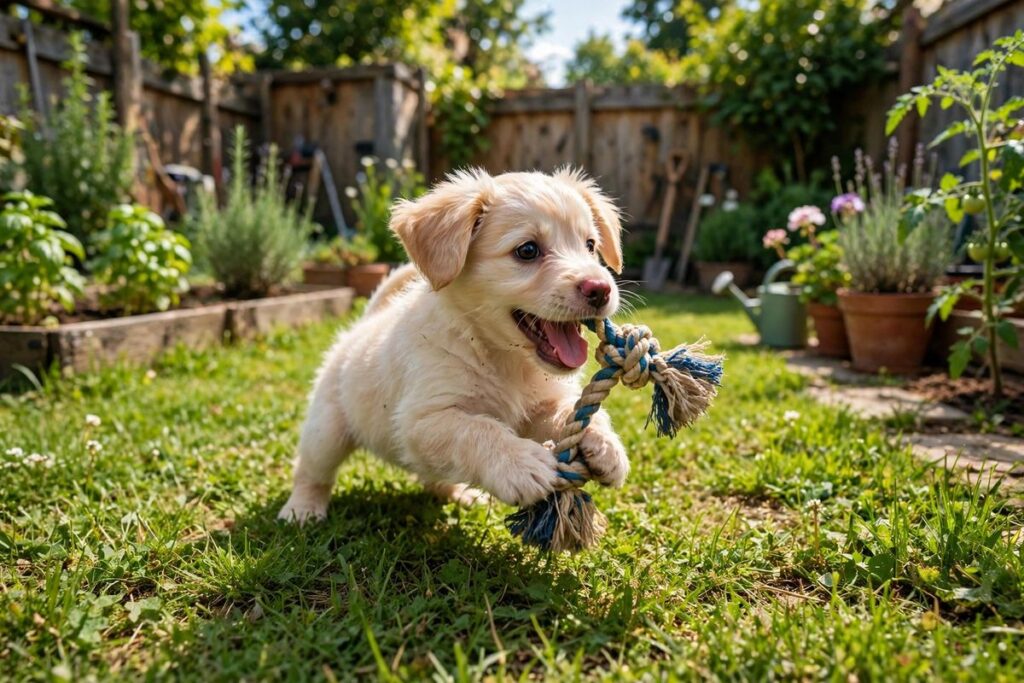
How to Take Care of a New Puppy: Your First-Week Plan (Day 1 to Day 7)
Every day follows the same rhythm — food, toilet, play, sleep — and each day adds one small new thing.
Day 1 — Arrive and settle in. Toilet spot first, then a calm tour, a meal, and a nap. No visitors.
Day 2 — Build the routine. Same feeding times, same toilet spot, same bedtime. Start gentle handling — ears, paws, belly — with treats.
Day 3 — First vet visit. First health check and vaccination plan. Bring the breeder or shelter paperwork.
Day 4 — Short training. Two or three 2–3 minute sessions of name recognition and “sit” with small treats.
Day 5 — Meet someone new. Invite one calm visitor over. Let your puppy approach them.
Day 6 — Explore further. A short leashed walk around your block or yard, if your vet says it is safe. For the technique, read our guide to train a puppy to walk on a leash before your first outing.
Day 7 — Review and rest. What is working? What needs adjusting? Write down your vet’s advice and vaccination dates.
If a day does not go to plan, do not worry. The plan is a guide, not a test — what matters is the routine underneath it. Remember, learning how to take care of a new puppy takes time.
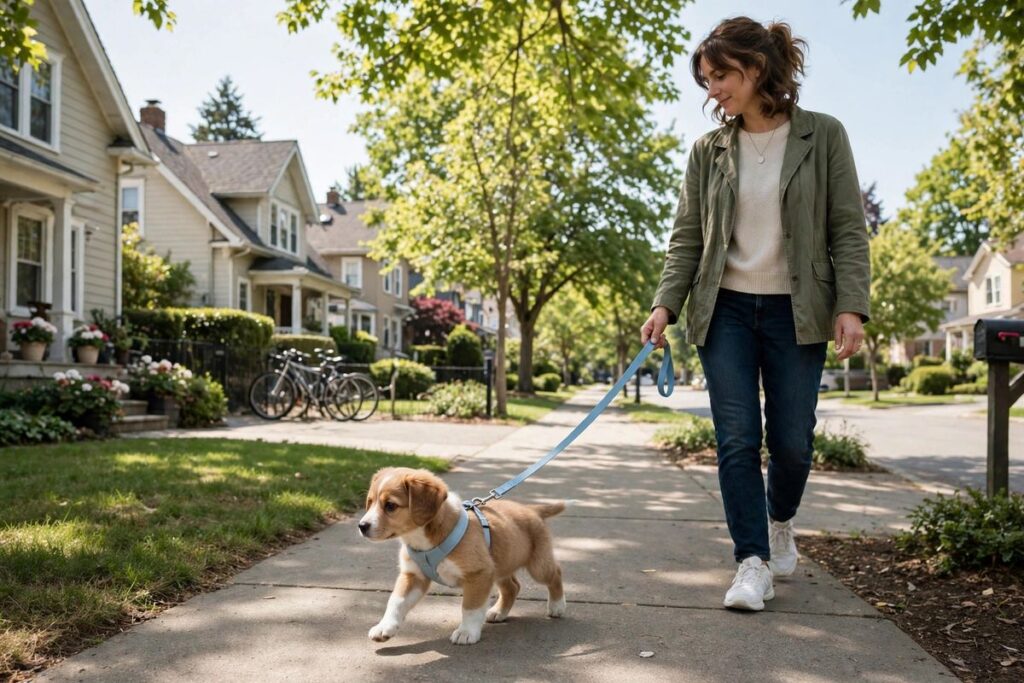
Feeding schedule
- What to feed. Feed a puppy food that is complete and balanced for growth (look for the AAFCO statement). Do not feed adult dog food. For what to look for, see the ASPCA’s dog nutrition tips.
- How often. Puppies under 6 months usually eat 3–4 small meals a day. From about 6 months, most move to 2 meals a day.
- How much. Follow the feeding guide on the bag for your puppy’s current weight and age. Your vet can help.
- Fresh water. Keep fresh water available at all times, and clean the bowl daily.
- Switching foods. Change foods slowly over 7 days — mix a little of the new food into the old, and increase it each day.
- Treats. Keep treats small and use them for training. Treats should be no more than 10% of daily calories.
A sample day: breakfast at around 7am, lunch at midday, dinner at around 5pm, and a last toilet trip before bed. Keep the times steady — a puppy that eats at the same time every day will need the toilet at roughly the same time too. A set feeding schedule is a core part of how to take care of a new puppy in week one.
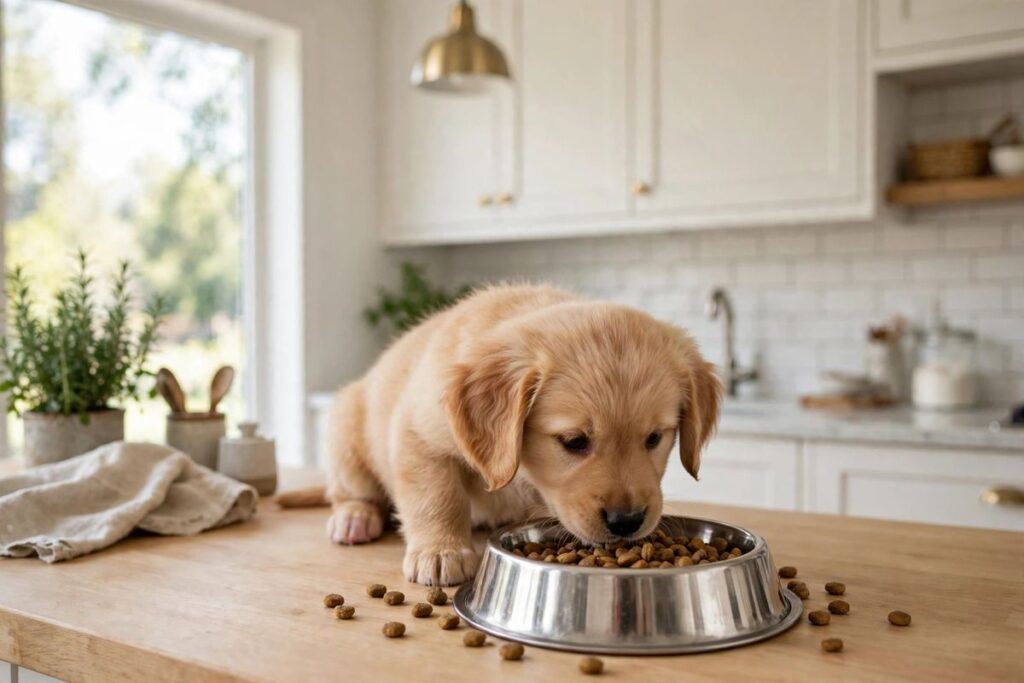

Toilet training basics
- Take your puppy out often. After waking up, after eating, after playing, and every 1–2 hours during the day.
- Use the same spot. Take your puppy to the same toilet spot every time. The smell reminds them what to do.
- Praise immediately. When your puppy goes in the right place, praise it right away and give a small treat.
- Never punish accidents. Clean up quietly with an enzyme cleaner and move on. Punishing after the fact teaches nothing.
- Watch for signs. Sniffing in circles, squatting, whining, or heading for the door all mean your puppy needs to go out.
Most puppies take a few weeks to a few months to be reliably toilet trained, and small breeds often take longer. What matters is consistency: same spot, same routine, same calm reaction to accidents.
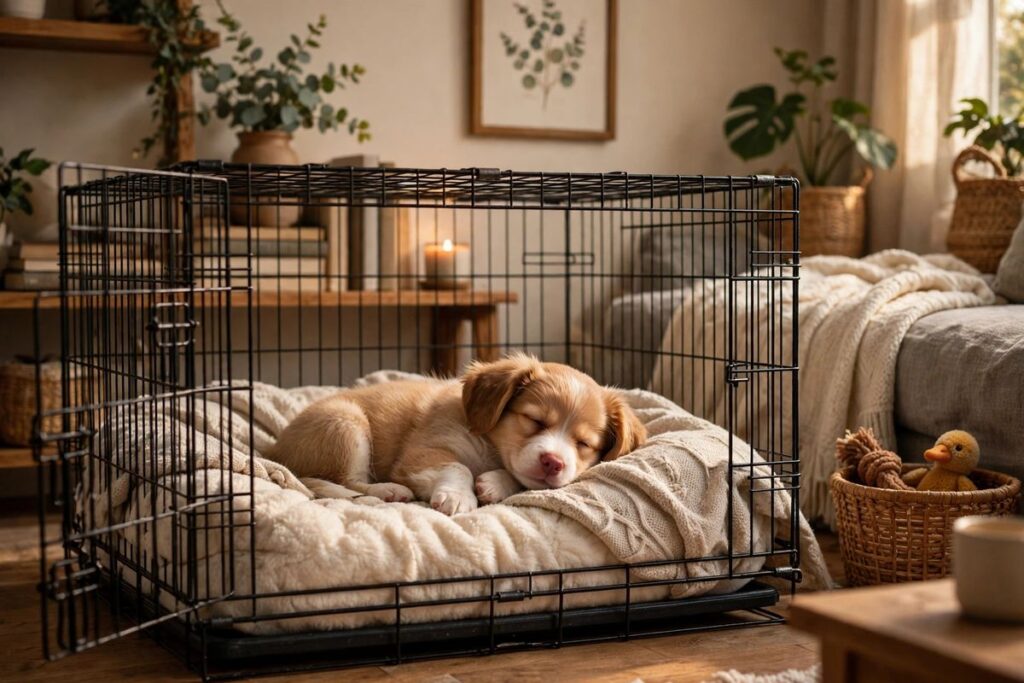
Crate training step by step
Done right, the crate becomes your puppy’s bedroom — a safe den they choose to rest in. Go slowly and never rush the steps. A crate is one of the most useful tools for how to take care of a new puppy at night.
Step 1 — Make the crate inviting. Put it in a quiet corner where your family spends time, door open, with a soft bed inside.
Step 2 — Let your puppy explore. Toss a treat just inside the door. Let your puppy walk in, take it, and walk out. Never push your puppy in.
Step 3 — Feed meals in the crate. Put the food bowl at the back of the crate with the door open. Soon your puppy will walk in on their own.
Step 4 — Close the door briefly. While your puppy eats or chews a treat, close the door for 5–10 seconds, then open it and praise them. Build up to a few minutes.
Step 5 — Short stays alone. Step out of the room for a minute or two, then come back calmly. Build up to 30 minutes, then an hour.
Step 6 — Overnight. When your puppy rests calmly in the crate for an hour during the day, try the first night. Keep the crate near your bed.
Crate rules: never use the crate as punishment, never leave a puppy in it all day (a rough guide is one hour per month of age, up to about 4 hours), always give a toilet break first, and take the collar off inside. If your puppy is distressed — panting, drooling, or trying to escape — go back a step.
First vet visit and vaccinations
- When to go. Book the first vet visit within the first few days of bringing your puppy home, even if your puppy looks healthy.
- What the vet checks. A general health check, weight, teeth, ears, and a check for parasites. Bring paperwork from the breeder or shelter.
- Vaccinations. Your vet will set up a schedule. Puppies usually need a series of shots in the first few months, including distemper, parvovirus, and rabies.
- Parasite prevention. Your vet will talk about flea, tick, and worm prevention. Puppies often need deworming.
- Microchip. Ask about microchipping — a small chip under the skin with your contact details.
- Ask questions. Write your questions down before the visit: feeding amount, toilet training, biting, sleep.
Keep vaccination records, vet visits, and next appointment dates in one folder. You will need them for puppy classes, boarding, and grooming. Your vet is the best source for advice on how to take care of a new puppy in the first month.
Socialization: do’s and don’ts
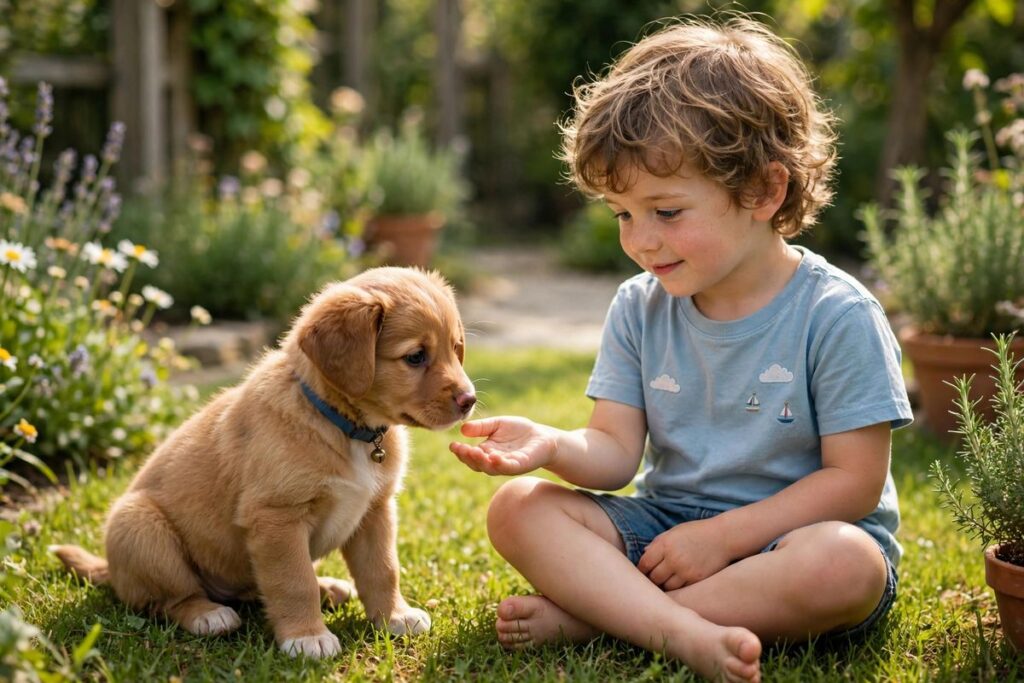
Socialization means gently introducing your puppy to new people, places, sounds, and other animals during the first few months of life. The window for easy socialization is roughly from 3 to 14 weeks of age, so the first week home is the perfect time to start — gently, at your puppy’s pace. Early socialization is part of how to take care of a new puppy the right way.
Do:
- Introduce new things slowly. One new experience at a time, with treats and praise.
- Meet different people. Adults, children (supervised), people in hats and umbrellas.
- Hear new sounds. Vacuum cleaners, traffic, doorbells. Pair new sounds with treats.
- Meet vaccinated, friendly dogs. Puppy classes are a great way to do this safely.
- Handle your puppy. Touch its ears, paws, and belly gently every day.
- Explore different surfaces. Grass, pavement, wooden floors, and carpet all feel different.
Don’t:
- Don’t overwhelm your puppy. If your puppy is scared, do not force it closer. Let it watch from a distance.
- Don’t take your puppy to busy public places before vaccinations are complete. Your vet will tell you when it is safe.
- Don’t let strangers grab your puppy. Ask people to let your puppy come to them.
- Don’t punish fear. A scared puppy that is punished learns to be more afraid, not less.
- Don’t flood your puppy with too much at once. One new thing per session is plenty.
A well-socialized puppy is not one that has met everything. It is one that has met enough new things, calmly and positively, to feel safe in the world.
Common first-week mistakes to avoid
- Too many visitors on day one. Keep the first day to your household only, and spread visits out over the week.
- Free run of the whole house. Start with one puppy-proofed room and expand slowly as your puppy earns more freedom.
- Inconsistent rules. Decide the rules as a household before your puppy arrives, and keep them the same.
- Changing food on day one. Keep the same food for the first week, then switch gradually if you want to.
- Punishing accidents or crying. Punishment after the fact teaches nothing — it only teaches fear. Calm, consistent responses are part of how to take care of a new puppy.
- Skipping sleep. Puppies need 18–20 hours of sleep a day. An overtired puppy is a biting, hyperactive puppy.
- Waiting too long for the vet. Even a healthy-looking puppy should see a vet within the first few days.
- Expecting too much too soon. Your puppy will not be toilet trained in a week. The first week is about settling in.

FAQ
How long does it take to toilet train a puppy?
Most puppies take a few weeks to a few months to be reliably toilet trained. Small breeds often take longer. Consistency matters more than speed.
Why is my puppy crying at night?
Your puppy has just left its littermates and is in a new place. It is normal for the first few nights. Keep the crate near your bed and keep toilet trips boring, with no play.
How much sleep does a puppy need?
A lot — usually 18–20 hours a day. Puppies grow while they sleep, so let them nap without waking them up.
What should I do if my puppy bites?
Puppy biting is normal. When your puppy bites too hard, say “ouch” in a calm voice, stop playing for a moment, and offer a chew toy instead. Never hit a puppy for biting.
When can my puppy go for walks outside?
Ask your vet. Most puppies can walk in their own yard from the start, but busy public places should wait until vaccinations are complete. For leash walks, see the AKC puppy training guide.
How to Take Care of a New Puppy: The Bottom Line
The first week is about three things: routine, patience, and safety. Set up a feeding and toilet routine from day one, puppy-proof your home, go slowly with crate training and socialization, and keep your puppy safe with a vet visit and vaccinations. Expect accidents, crying, and a few chaotic days — that is all normal. If you get the first week right, the rest of puppyhood gets much easier. If your puppy is a large breed, growth feeding matters even more — see our guide to the best puppy food for large breeds. This is how to take care of a new puppy in week one: routine, patience, and safety.

Disclaimer: This article is for general information only and does not replace professional veterinary advice. Always consult your veterinarian about your puppy’s health, vaccinations, and diet.