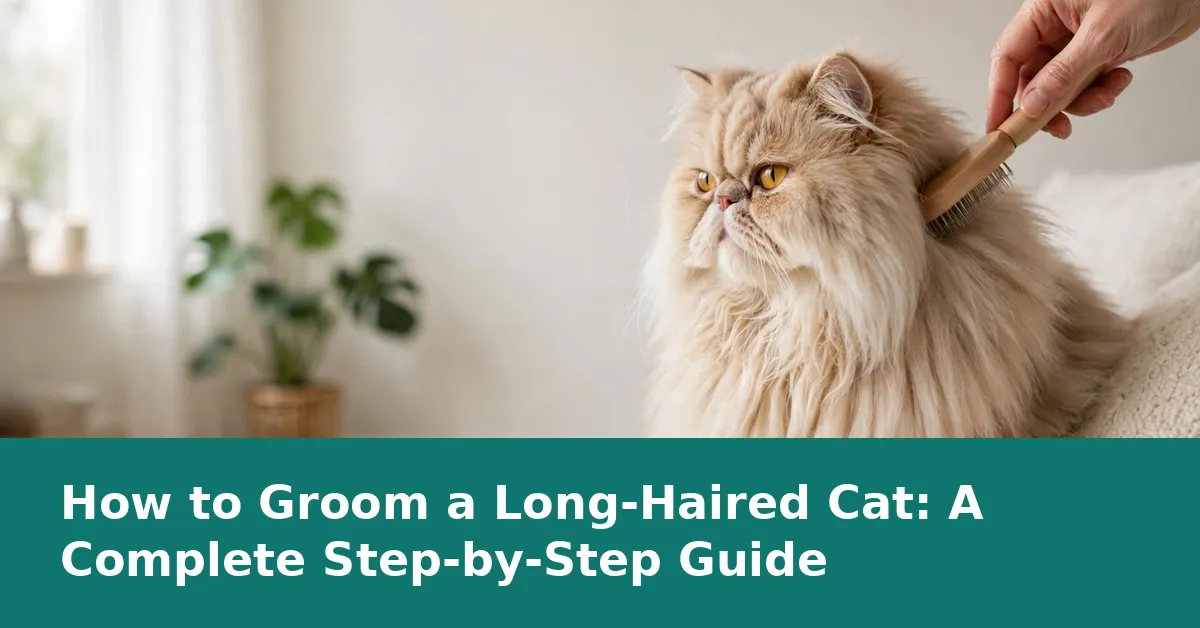
How to Groom a Long-Haired Cat: A Complete Step-by-Step Guide
A long-haired cat — a Persian, a Maine Coon, a Ragdoll, a Himalayan, or a gloriously fluffy mixed breed — is a joy to look at and a commitment to maintain. That beautiful coat does not stay beautiful on its own. Without regular grooming, loose fur compacts into mats, mats pull painfully on the skin, and a matted cat can develop skin irritation, sores, and hairballs from swallowing too much loose fur while trying to groom itself. Learning how to groom a long-haired cat properly is not about vanity. It is basic healthcare, and once you have the routine down, it takes about ten to fifteen minutes a day.
In This Article
Why long-haired cats need daily grooming
Short-haired cats usually manage their own coats well with a weekly brush. Long-haired cats cannot. Their coats are longer, denser, and often double-layered, with a soft undercoat beneath the longer guard hairs. Loose undercoat fur gets trapped in the topcoat instead of falling away, and within a day or two it starts to felt into tangles. Miss a few days and those tangles tighten into mats — dense clumps of fur pulled tight against the skin. Mats hurt: they tug every time the cat moves, they trap moisture and dirt against the skin, and they can hide irritation or infection underneath.
Regular brushing prevents nearly all of this. It removes loose fur before your cat swallows it, which also cuts down on hairballs — one of the most common complaints from long-haired cat owners. It distributes the skin’s natural oils through the coat, keeping it soft and shiny, and gives you a daily chance to check your cat’s skin for lumps, redness, fleas, or ticks while they are relaxed. Grooming organizations including the RSPCA recommend daily grooming for long-haired cats: a few minutes a day beats an hour of dematting once a week.
The tools you need
You do not need an expensive professional kit, but you do need the right tools. The wrong brush on a long coat can scratch skin or slide over the top without reaching the undercoat. Here is the core kit:
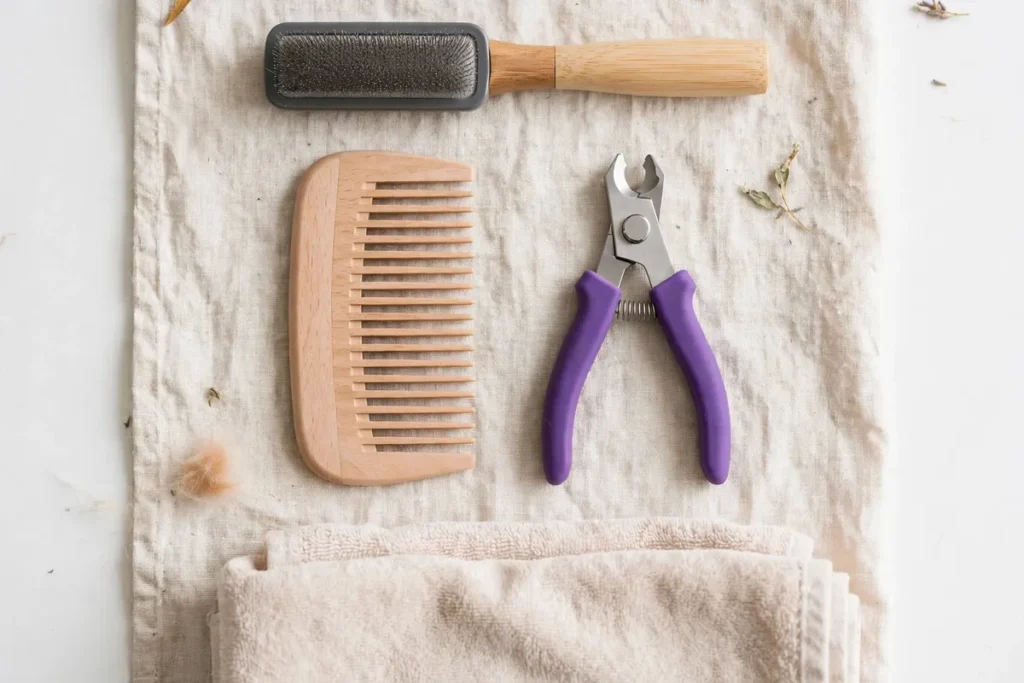
A wide-tooth stainless steel comb. This is the single most important tool for a long-haired cat. The wide teeth glide through the coat and reach the undercoat without pulling, and the comb is what you use to check whether a section is truly tangle-free. If the comb passes through smoothly, the section is done.
A slicker brush. A slicker brush has fine, thin wire pins set in a padded base. It removes loose surface fur and smooths the topcoat after combing. Use it gently — pressed too hard, the pins can scratch the skin. Look for one with bent pins and a comfortable handle.
A pin brush. A pin brush has longer, rounded pins and works well on long coats for a finishing pass. Some cats tolerate a pin brush better than a slicker brush, so it is a useful alternative if your cat dislikes the slicker.
A dematting comb or mat splitter. For tangles beyond what a comb can handle, a dematting tool has widely spaced, bladed teeth that cut through a mat without pulling the skin. Keep one on hand even if you rarely need it.
Cat nail clippers and styptic powder. Small, sharp clippers made for cats, plus styptic powder in case you nick the quick.
Cat-specific shampoo and conditioner. Human shampoo is too harsh for a cat’s skin and can strip the coat. Buy a shampoo made for cats, ideally one formulated for long coats, and a light conditioner if your cat’s coat tangles easily.
Treats and a calm spot. This is not optional equipment. Grooming goes far better when the cat associates it with rewards. Keep small treats in a pocket, choose a quiet room where your cat already likes to sit, and put the brush down where the cat can sniff it before you start.
How to groom a long-haired cat: the daily brushing routine
The daily routine has four steps and takes about ten to fifteen minutes once you and your cat are used to it. Do it at the same time each day — after a meal, or during the evening when your cat is sleepy — so it becomes part of the routine rather than a surprise.
Step 1: Check for mats first
Before you brush, run your fingers slowly through the coat, paying special attention to the mat-prone areas: behind the ears, under the collar, the armpits, the belly, the backs of the legs, and the base of the tail. These are the friction zones, where the coat rubs against itself and tangles form first. If you find a small tangle, deal with it now before it tightens — the dematting section below explains how. If you find a tight mat close to the skin, skip it and come back to it separately rather than forcing the brush through it.
Step 2: Comb through in sections
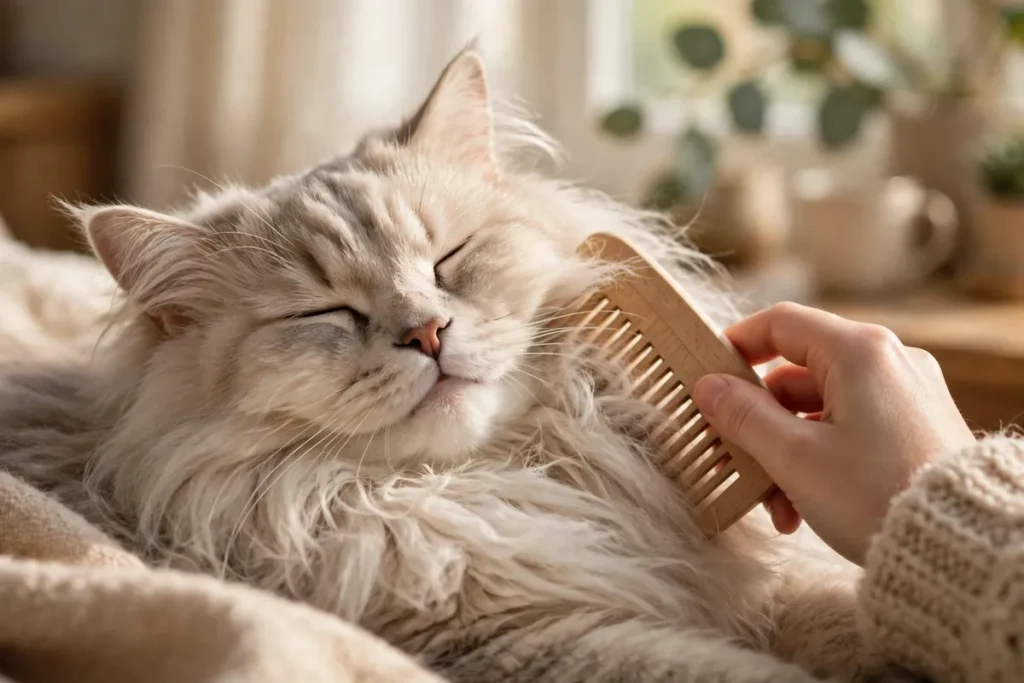
Start at the head and work toward the tail, always brushing in the direction of hair growth. Work in small sections rather than dragging the comb through the whole coat at once. Lift a section of fur, comb the undercoat beneath it, then let the topcoat fall back and comb that. The sequence that works best for most long-haired cats is: head and cheeks, neck and chest, back and sides, belly (only if your cat tolerates it), legs, and tail last.
Use short, gentle strokes. When the comb meets resistance, stop. Hold the fur between the skin and the tangle with your fingers so you are not pulling on the skin, then work the tangle out gently with the comb, starting from the outer edge and working inward. Never yank. If the comb passes through a section smoothly from skin to tip, that section is done — move on.
Step 3: Finish with the slicker brush
Once the wide-tooth comb has been through the whole coat, do a quick pass with the slicker brush or pin brush. This picks up the loose surface fur the comb missed and smooths the topcoat so it lies flat and shiny. Keep the strokes light and short, and avoid pressing the pins into the skin. On the belly and inner legs, use an even lighter touch — the skin there is thin and sensitive.
Step 4: Reward and end on a good note
End the session while your cat is still calm, even if you did not finish the whole coat. Give a treat, a few strokes in a spot your cat loves, and put the tools away. Ending early on a good note teaches your cat that grooming is pleasant and safe. If your cat gets restless, do not push through — split the routine into two shorter sessions, one in the morning and one in the evening. Consistency matters far more than duration.
If your cat is new to grooming, build up gradually: day one, let them sniff the brush and give a treat; day two, one gentle stroke on the back, then a treat. Add a little more each day. Most cats accept a full routine within a week or two if you never force it. This is especially useful for a new kitten — see our guide on how to take care of a kitten for the rest of the first-week basics.
Bathing a long-haired cat
Most cats do not need regular baths, and long-haired cats are no exception — they groom themselves well, and over-bathing strips the natural oils that keep the coat healthy. A bath is worth doing only when there is a real reason: the coat is dirty or sticky, your cat has rolled in something unpleasant, or your vet has prescribed a medicated shampoo for a skin condition. For most healthy long-haired cats, a bath every four to six weeks at most is plenty, and many owners never bathe their cat at all.
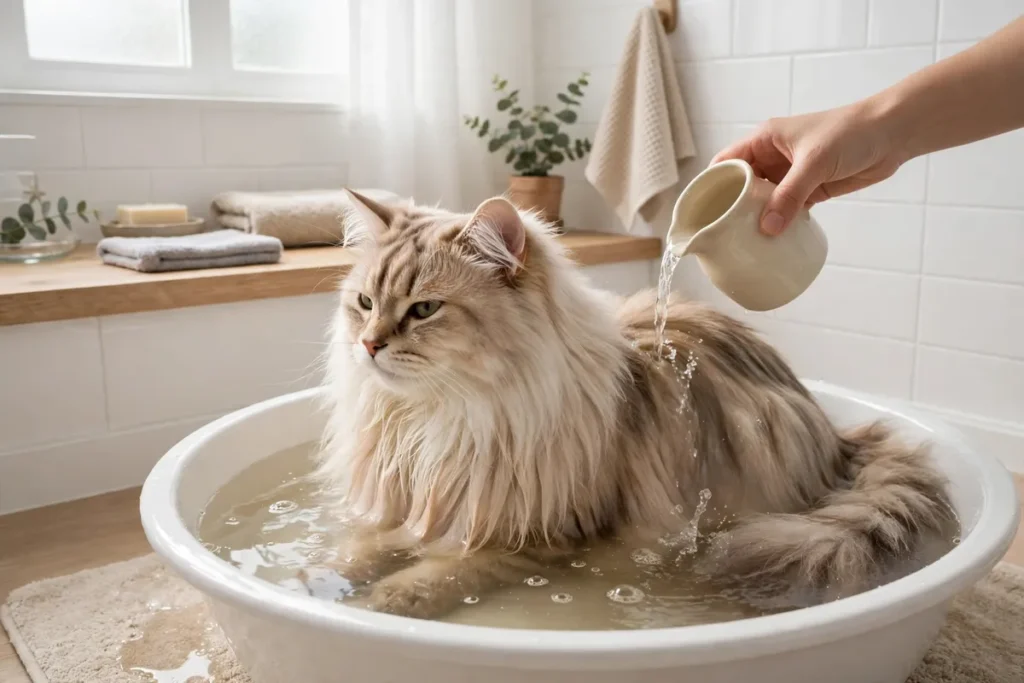
If a bath is needed, preparation matters more than the bath itself. Brush the coat thoroughly first — wet mats tighten and become almost impossible to remove, so never put water on a tangled coat. Gather everything before you start: cat shampoo, conditioner, towels, a non-slip mat, and a cup or jug for rinsing. Use lukewarm water only, and a sink or a shallow bath with a non-slip mat on the bottom so your cat feels secure.
Wet the coat gently, avoiding the ears and eyes, and work the shampoo through the fur in the direction of growth. Rinse thoroughly — shampoo residue irritates the skin and makes the coat tangle more easily, so rinse until the water runs completely clear. If you use conditioner, apply it to the lengths of the coat, leave it for the time on the bottle, and rinse again. Then wrap your cat in a towel and pat dry; do not rub, which creates tangles. Keep your cat in a warm room until the coat is fully dry, and comb through it once more when it is damp to prevent tangles forming as it dries. Never use a hair dryer on a high heat setting — if you use one at all, keep it on the lowest, coolest setting and hold it well away from the cat.
Dealing with mats and tangles
Even with daily brushing, mats happen — after a holiday, during heavy shedding season, or when a cat has been unwell and grooming less. The key rule is simple: never cut a mat out with scissors. A cat’s skin is extremely thin, and it is easy to pull a fold of skin up into a mat without realizing it. Vets and groomers see serious cuts from this mistake regularly. If a mat is tight, close to the skin, or your cat is in pain, stop and book a professional groomer or a vet visit.
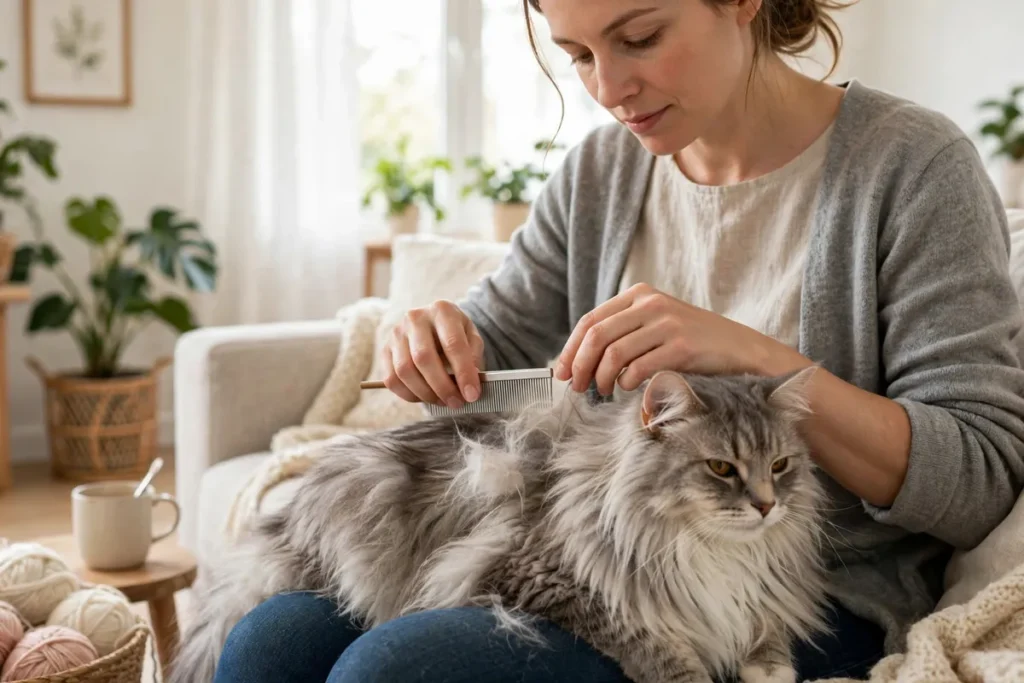
For a small, loose mat, try this. Hold the base of the mat firmly between your fingers, close to the skin, so nothing pulls. Work a wide-tooth comb into the outer edge of the mat and tease out a few hairs at a time, working from the outside in. If the comb will not move, use a dematting comb or mat splitter to cut through the mat in the direction of hair growth, a little at a time, then comb out the loosened fur. Work slowly, take breaks, and give treats. If the mat does not loosen after a few minutes, leave it for another day rather than forcing it — or hand it to a professional.
Prevention is easier than removal. The mat-prone zones — behind the ears, armpits, belly, and base of the tail — deserve an extra few seconds of combing every day, especially during spring and autumn shedding seasons, when loose undercoat is at its worst. A light conditioner after a bath can also help the coat resist tangling.
Nails, ears, and eyes: the basics
Grooming is not only about the coat. A few small checks each week keep the rest of your cat healthy.
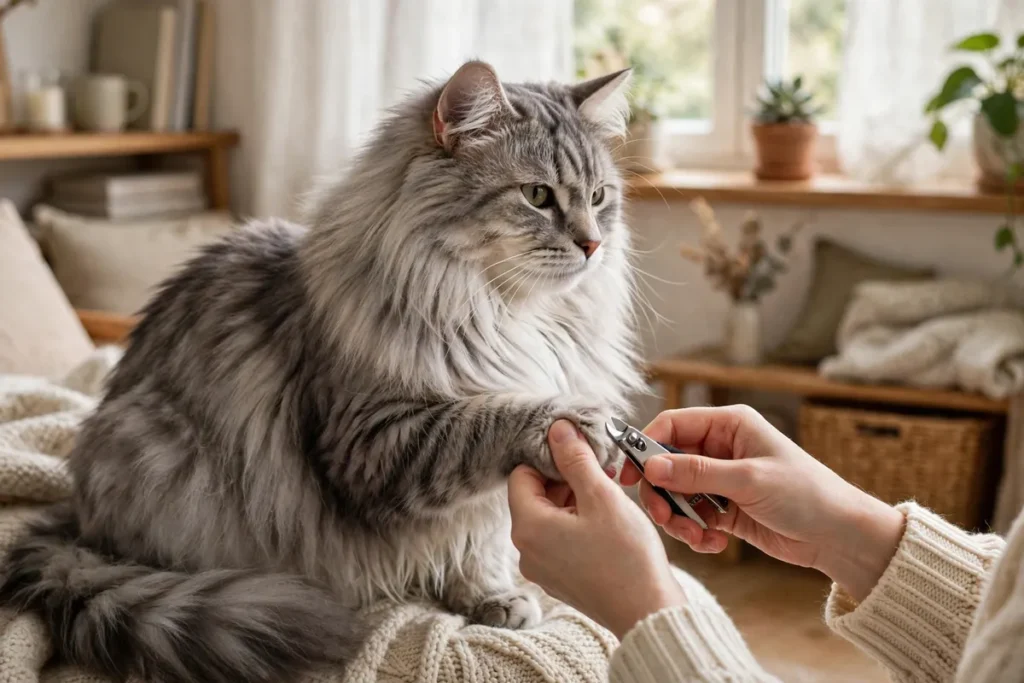
Nails. Trim your long-haired cat’s nails every two to three weeks. Press the paw pad gently to extend the claw, and cut only the sharp, clear tip — never cut into the pink quick visible inside the claw, as it bleeds and hurts. If you do nick the quick, press styptic powder onto the tip to stop the bleeding. If your cat hates nail trims, do one or two claws per session and spread the job across a few days. Indoor cats need trims more often than outdoor cats, who wear their claws down naturally.
Ears. Check the ears weekly. Healthy ears are clean and pale pink inside, with little or no wax. Wipe the outer ear gently with a damp cloth or a cotton pad moistened with a vet-approved ear cleaner — never push anything into the ear canal, and never use cotton buds inside the ear. The fur around the ears can hide wax buildup, redness, or mites, so look closely. Dark, crumbly discharge, a bad smell, or constant head shaking means a vet visit.
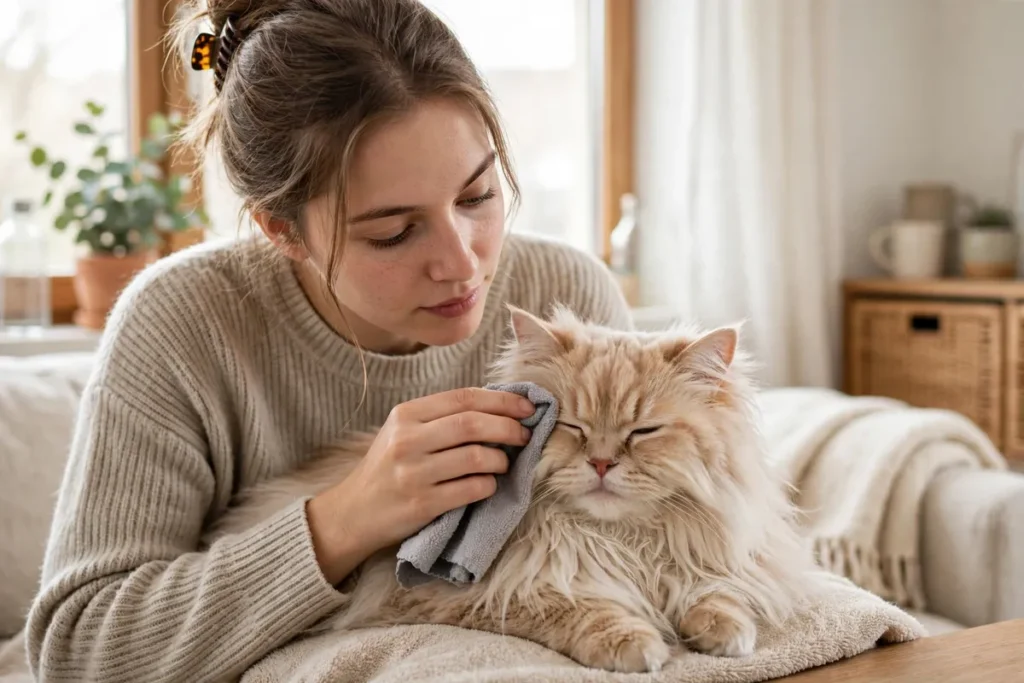
Eyes. Long-haired breeds, especially Persians and other flat-faced cats, often have watery eyes that leave tear stains on the fur. Wipe the corners of the eyes daily with a soft, damp cloth, using a fresh section of the cloth for each eye. If the discharge is yellow or green, or the eye looks red or swollen, see a vet rather than treating it at home.
A realistic grooming schedule
Here is a schedule that works for most long-haired cats. Adjust it to your cat — a Persian in full coat needs more than a Maine Coon in summer, and shedding season doubles the workload.
| Task | How often | Time |
|---|---|---|
| Full brush-out (comb + slicker) | Daily | 10–15 minutes |
| Quick comb of mat-prone areas | Daily, as part of the brush-out | 2–3 minutes |
| Nail trim | Every 2–3 weeks | 5–10 minutes |
| Ear check and wipe | Weekly | 2 minutes |
| Eye wipe | Daily for flat-faced breeds, weekly for others | 1 minute |
| Bath | Only when needed, at most every 4–6 weeks | 30–45 minutes |
| Professional groom | Every 6–8 weeks, or as needed | 60–90 minutes |
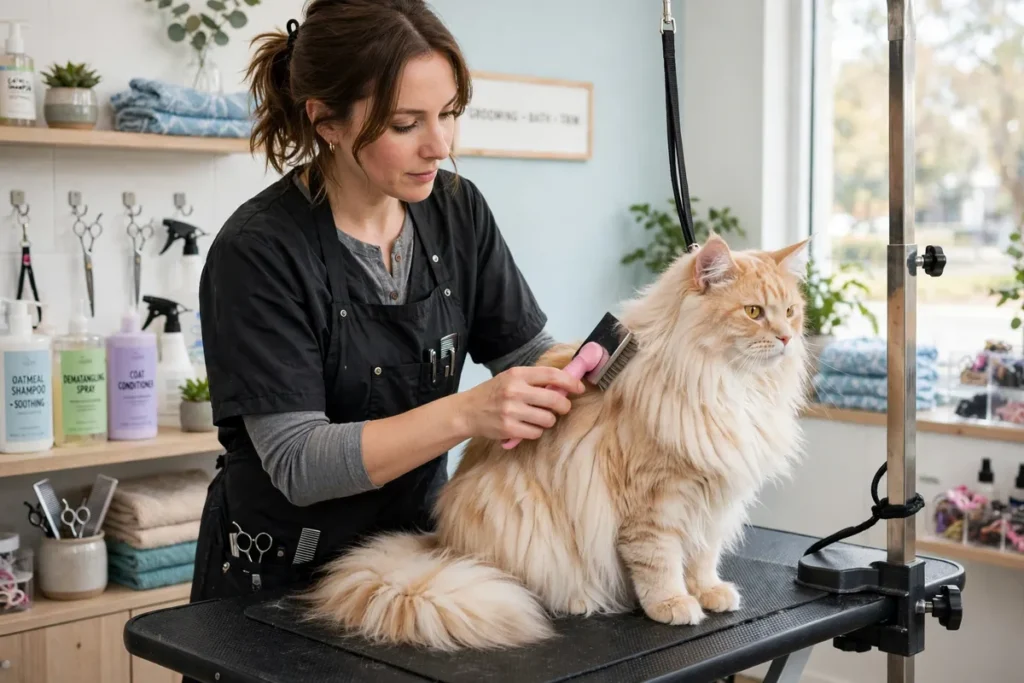
A professional groom every couple of months is worth considering even if you brush daily. A groomer can check the coat thoroughly, deal with any mats you have missed, trim the fur around the hindquarters where it gets soiled, and give the coat a proper wash and dry. It is also a good backup for times when you are away or unwell and the daily routine slips.
Common mistakes to avoid
Skipping days. This is the big one. A long coat that goes unbrushed for two or three days can develop mats that take an hour to remove. Daily brushing is the whole secret — miss it and you pay for it later.
Brushing a dry, dirty coat with the wrong tool. A slicker brush alone cannot reach the undercoat, and a fine-tooth comb on a tangled coat just pulls. Start with the wide-tooth comb, finish with the slicker, and never brush a coat that is wet or muddy without cleaning it first.
Cutting mats with scissors. As above, this is the most dangerous common mistake. Cat skin is paper-thin and folds easily into a mat. Use a dematting tool or a professional.
Bathing too often. Frequent baths dry out the skin and strip coat oils, which ironically makes the coat tangle more. Most long-haired cats need a bath only when they are genuinely dirty.
Forcing a stressed cat. If your cat is hissing, biting, or panicking, stop. Forcing grooming teaches your cat to fear it, and the next session will be worse. Short, calm, rewarded sessions build trust; one bad session can undo weeks of progress.
Forgetting the hidden areas. The armpits, belly, and base of the tail are where mats form first and where owners check least, because cats guard those areas. Make them part of every session, gently and briefly, rather than discovering a solid mat there a month later.
Frequently asked questions
How often should I brush a long-haired cat?
Daily. Long-haired cats need brushing every day, or at minimum four to five times a week, to prevent mats. Each session only takes ten to fifteen minutes once you have the routine down, and during spring and autumn shedding seasons you may need to brush twice a day.
Can I use human shampoo on my cat?
No. Human shampoo is formulated for human skin, which has a different pH from a cat’s skin, and it can dry out and irritate your cat. Always use a shampoo made specifically for cats, and rinse thoroughly so no residue is left in the coat.
What should I do if my cat hates being groomed?
Go slower and shorter. Let your cat sniff the tools, brush one gentle stroke and reward, then stop. Build up over days and weeks, keep sessions under five minutes at first, and always end while your cat is still calm. If your cat becomes aggressive or extremely distressed, ask your vet or a professional groomer for help.
Do long-haired cats need professional grooming?
Not strictly, but most owners find it helpful. A professional groom every six to eight weeks catches mats you may have missed, handles the tricky areas, and gives the coat a thorough wash and dry. It is especially useful for older cats who cannot tolerate long home sessions, and for owners whose schedules slip.
Bottom line
Learning how to groom a long-haired cat comes down to three things: the right tools, a short daily routine, and patience. A wide-tooth comb and a slicker brush, ten to fifteen minutes a day, and a calm, rewarded approach will keep most long coats mat-free, cut down on hairballs, and give you a daily window into your cat’s health. Bathe only when needed, never cut mats with scissors, and call in a professional for tight mats or a cat who will not tolerate home grooming. Your cat’s coat is a daily commitment, but it is a small price for the company of a beautiful, healthy long-haired cat. If you are building out your cat care kit, our roundup of the best pet grooming kit covers the brushes and tools mentioned in this guide.
Disclaimer: This article is for general information only and is not veterinary advice. If your cat has painful mats, skin sores, sudden changes in grooming behavior, or any sign of illness, contact your veterinarian or a professional groomer promptly.