
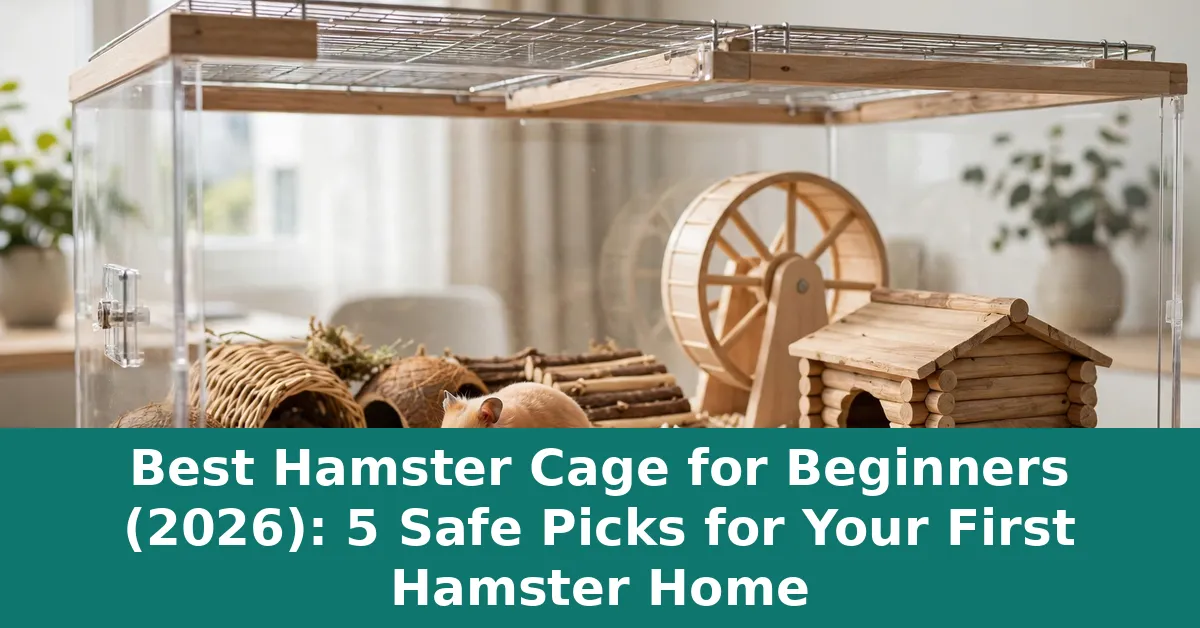
Best Hamster Cage for Beginners (2026): 5 Safe Picks for Your First Hamster Home
Finding the best hamster cage for beginners matters more than most first-time owners realize. A hamster spends almost its whole life inside its cage, so the cage is not just a box — it is your pet’s entire world. Too small, and you get a stressed hamster that chews bars and paces all night. Big enough, with deep bedding and a proper wheel, and you get a busy, happy pet.
The tricky part is that many cages sold as “hamster cages” are far too small. Welfare guidance recommends at least 450 square inches of unbroken floor space, with 600 or more as the real target. Every cage below meets the minimum, and we flag where each one falls short of the newer target. If you are setting up a home for a bigger small pet instead, see our Best Rabbit Hutch for Beginners (2026) guide.
In This Article
Prices change — check the current price before buying.
1. Prevue Pet Products 528 Universal Small Animal Home — Best Overall
The Prevue 528 is the cage most experienced hamster owners recommend first. At 32.5 by 19 inches, it offers about 617 square inches of floor space — above the 450 minimum and close to the newer dwarf-hamster target. The wire spacing is a tight 3/8 inch, so even small dwarf hamsters cannot squeeze out.
The deep plastic base holds a good layer of bedding for burrowing, and the large front door makes cleaning easy. The wire top lifts off completely, so you can reach every corner. It comes with a food dish and a water bottle; add a good wheel and a hideout yourself.
Best for: Most first-time owners — the best mix of size, safety, and easy cleaning.
Keep in mind: It falls short of the newest 900-square-inch target for Syrians, and the accessories are basic, so budget for a proper wheel.
2. Kaytee CritterTrail SUPER Habitat — Best Budget Starter
The Kaytee CritterTrail SUPER is the classic starter cage you will see most often in pet stores. At 30 by 18 inches it gives 540 square inches of floor space, with narrow 1/4-inch bar spacing that suits dwarf hamsters well. It comes with a wheel, water bottle, food dish, and bedding tray, so you can set it up the same day you bring your hamster home.
The modular design is the fun part: you can connect extra tubes and habitats later, so the cage can grow with your hamster’s curiosity.
Best for: First-time owners on a budget, families with kids, and dwarf or Roborovski hamsters.
Keep in mind: The wheel is too small for a Syrian, and the connector tubes can trap waste, so skip them or clean them often.
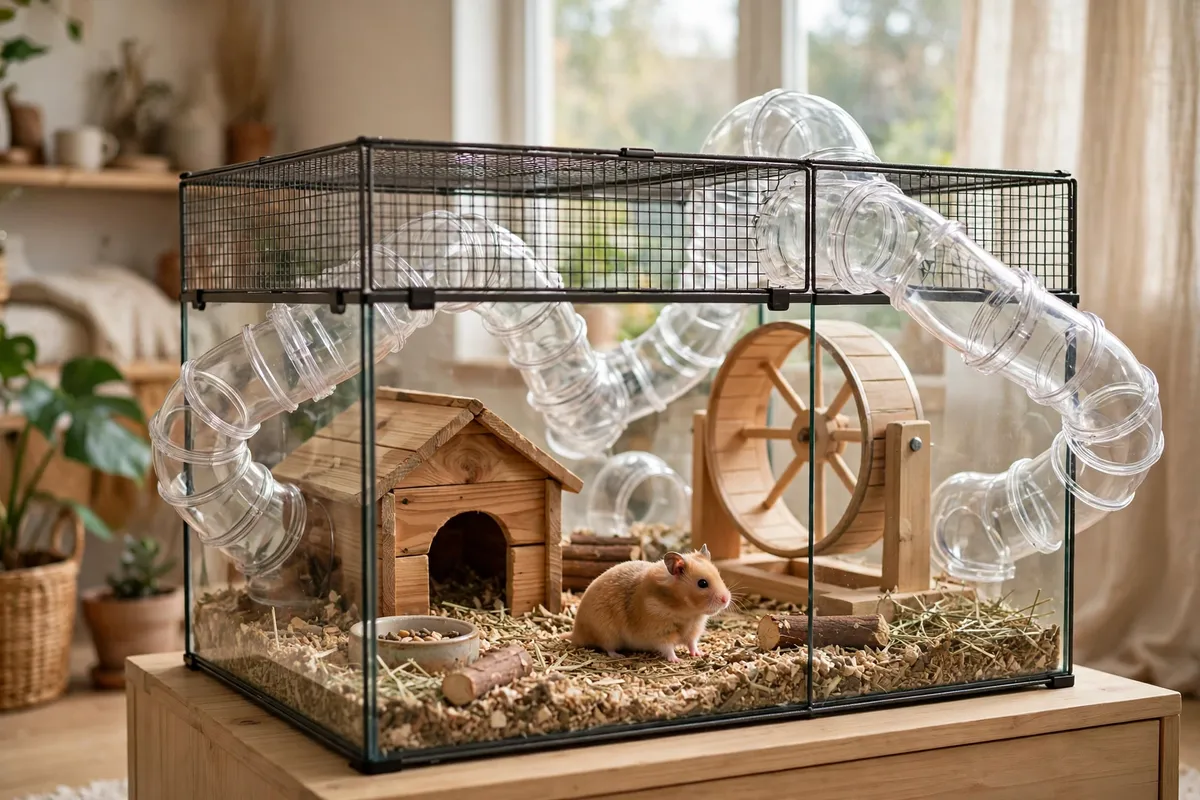
3. Niteangel Vista Hamster Cage (Small) — Best Modern Enclosure
The Niteangel Vista looks nothing like a traditional barred cage. A clear acrylic front gives you a full view of your hamster, while the ventilated top and sides keep air flowing. The small size offers about 566 square inches of floor space, with a deep base for thick bedding.
It is built for natural hamster behavior: room to burrow, space for a large wheel, and a calm look that fits a bedroom or living room. The front-opening door makes spot-cleaning simple.
Best for: Owners who want a stylish, quiet enclosure and hamsters who love to burrow.
Keep in mind: It costs more than a wire cage of the same size, and the wheel and accessories are bought separately.
4. MidWest Critterville Arcade Hamster Cage — Best for Kids and Families
The MidWest Critterville Arcade is the most playful cage on this list. It is a multi-level habitat with ramps, platforms, and a colorful arcade-style design that children love. Wheel, water bottle, food dish, and hideout are all in the box, so setup takes minutes.
The levels make the most of a small footprint. Large access doors make cleaning and handling easy.
Best for: Families with kids, and anyone who wants a fun, ready-to-go habitat.
Keep in mind: The levels do not replace floor space, so this suits a dwarf hamster better than a Syrian.
5. Aqueon 40 Gallon Breeder Tank — Best Tank-Style Home
A 40-gallon breeder tank is a great first home if you want maximum burrowing depth. The wide, low shape gives about 648 square inches of floor space, and the tall glass walls hold a deep layer of bedding — exactly what a burrowing hamster wants. Glass also keeps bedding inside the tank.
You will need a secure mesh lid (sold separately) for ventilation, plus your own wheel, bottle, and hideout. The tank itself is simple, sturdy, and easy to clean, and it works for any species.
Best for: Owners who want the deepest bedding and the easiest cleanup, and Syrian hamsters.
Keep in mind: It is heavy once filled with bedding, and the lid, wheel, and accessories are bought separately.
How to Choose the Best Hamster Cage for Beginners
Start with floor space. Unbroken floor space matters more than levels or tubes. Look for at least 450 square inches, and aim for 600 or more if you can.
Match the cage to the species. Syrians are much bigger and need more space and a larger wheel (at least 11–12 inches). Dwarfs need narrow bar spacing — 1/4 to 3/8 inch — or they can squeeze out.
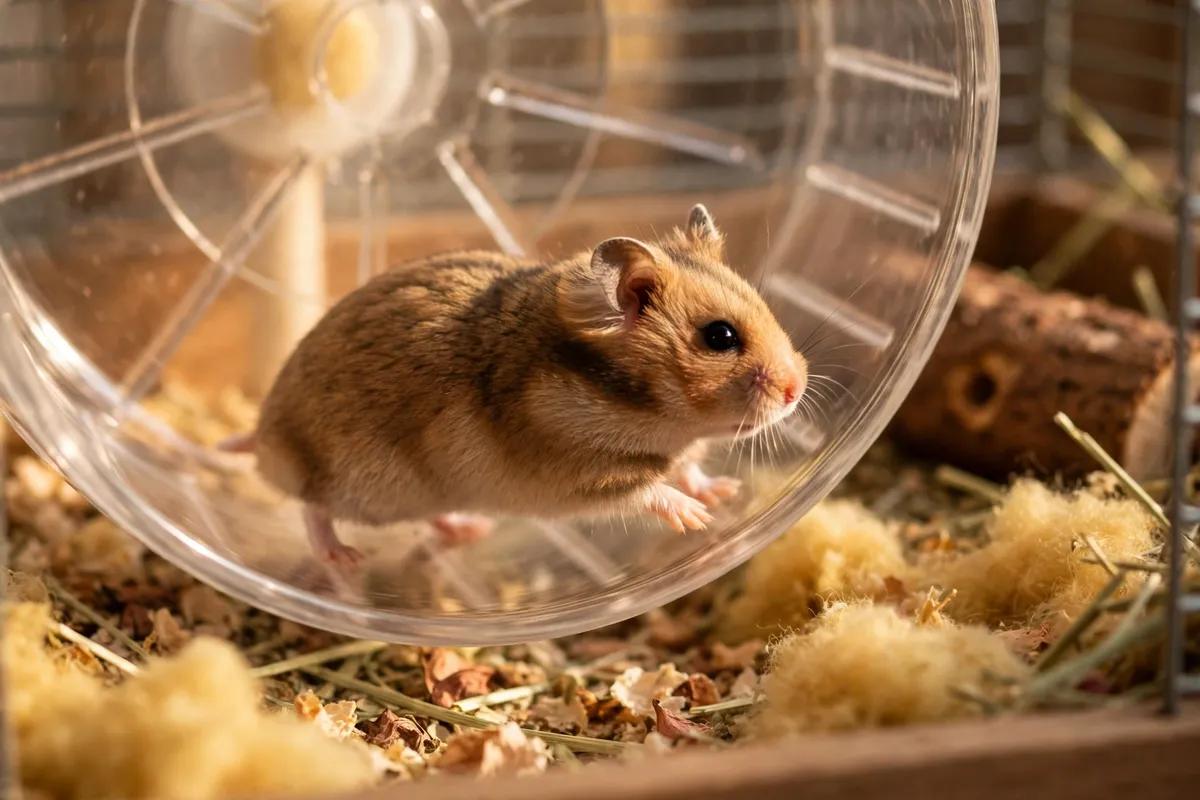
Check the wheel size. A wheel that is too small forces your hamster’s back to bend while running, which can cause injury over time. Check the size before you buy, and be ready to upgrade.
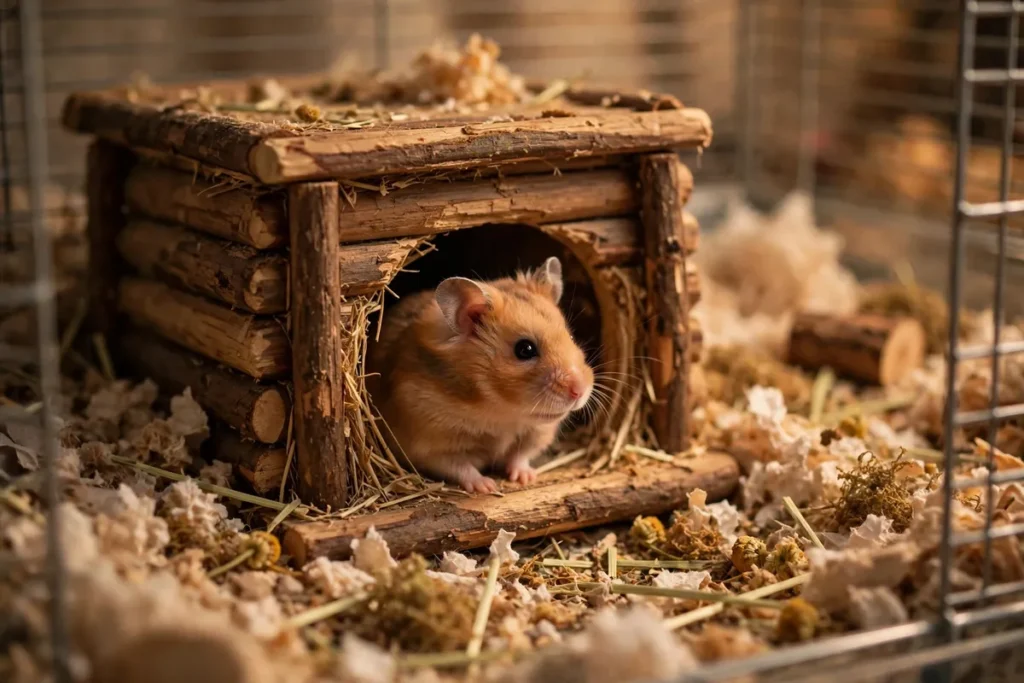
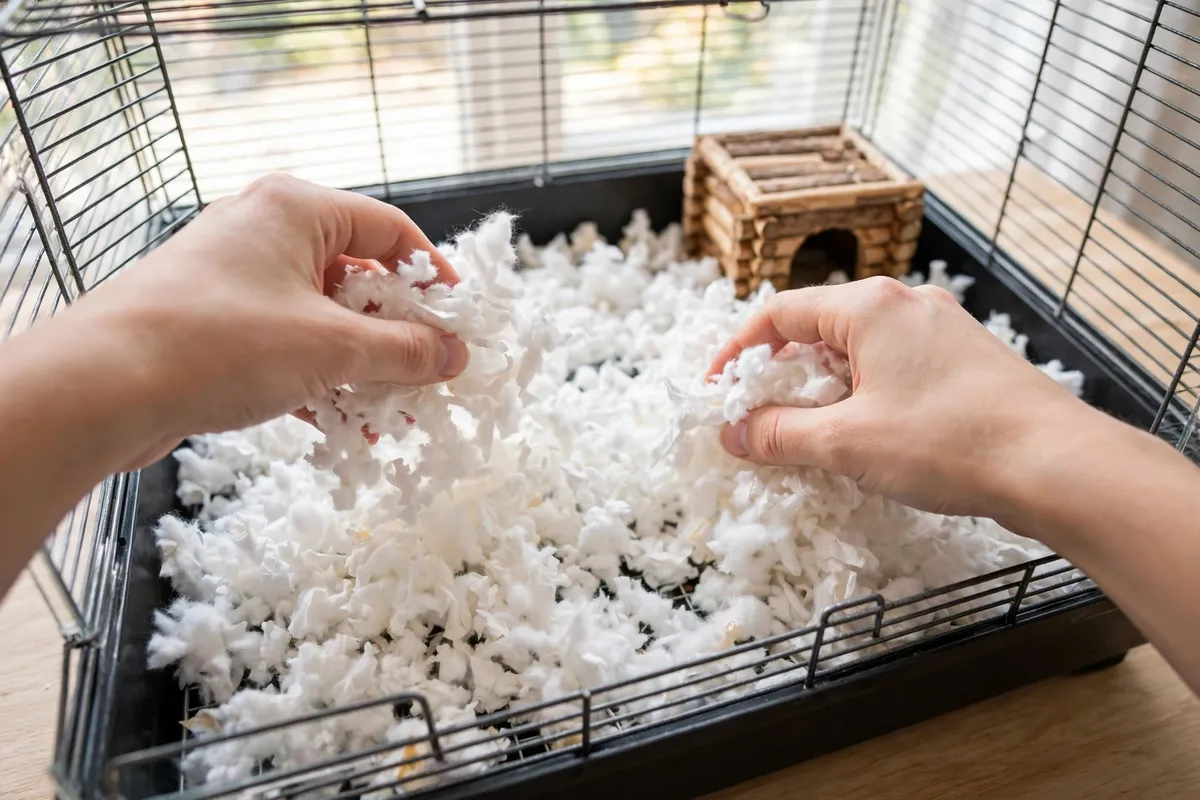
Make sure bedding can go deep. A deep base that holds 6 inches or more of bedding lets them dig tunnels, which keeps them busy and calm. Shallow trays are a warning sign.
Look for easy cleaning. A cage with a large door or a lift-off top makes cleaning far easier than one with a tiny access hatch.

Skip the tiny starter kits. The smallest cages in the pet store are almost always too small, whatever the packaging says. Buy the biggest cage you can fit and afford.
FAQ
How big should a hamster cage be?
At least 450 square inches of unbroken floor space, with 600 or more as the real target. Newer guidance recommends 700 for dwarfs and 900 for Syrians.
Are barred cages or tanks better for hamsters?
Both work. Barred cages ventilate well, while tanks hold deep bedding and keep mess inside. Avoid tanks with solid lids, and barred cages with wide spacing for dwarf hamsters.
Can two hamsters share one cage?
Almost always no. Syrians must live alone — they will fight — and most dwarf hamsters also do best alone. Keep one hamster per cage.
What do I need to put inside the cage?
A wheel sized for your species, a hideout, a water bottle or heavy bowl, a food dish, chew toys, and deep bedding. Add a sand bath if you can.

Bottom Line
For most beginners, the Prevue 528 is the best hamster cage for beginners: the most floor space for the money and easy cleaning. On a tight budget, or buying for a dwarf hamster, the Kaytee CritterTrail SUPER is a fun, ready-to-go starter. The Niteangel Vista suits owners who want a modern look and deep bedding, the MidWest Critterville Arcade is best for families with kids, and the Aqueon 40 Gallon Breeder Tank is the top choice for serious burrowers and Syrian hamsters.
Disclaimer: This article is for general information only and is not a substitute for veterinary advice. If your hamster shows signs of stress, injury, or illness, contact a veterinarian experienced with small pets.