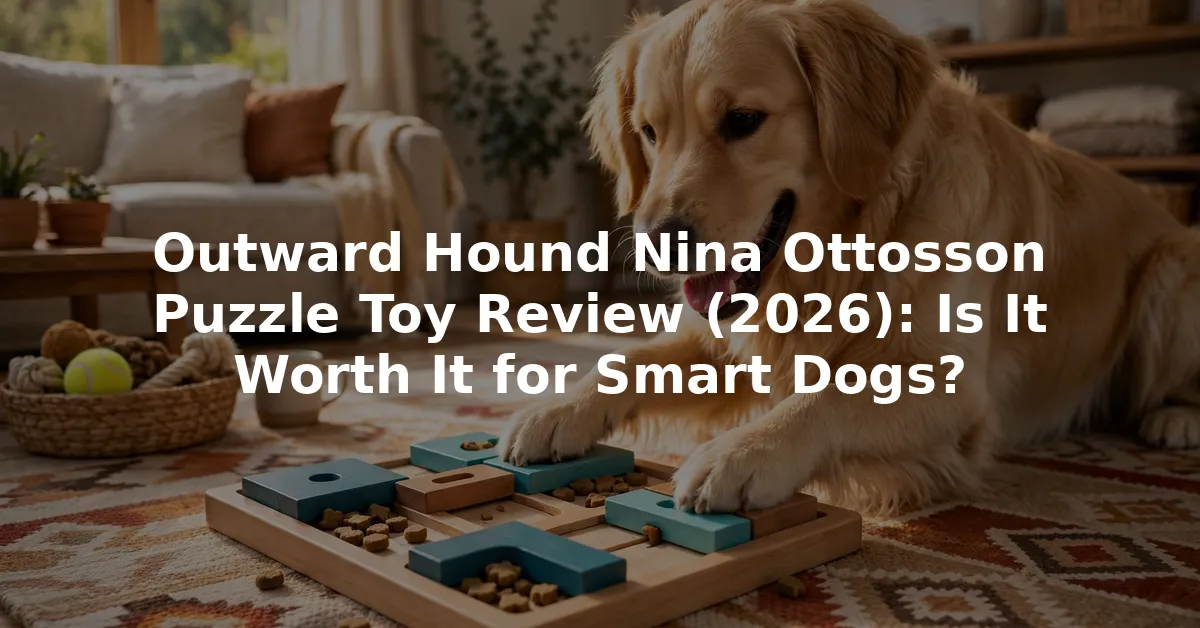
Outward Hound Nina Ottosson Puzzle Toy Review (2026): Is It Worth It for Smart Dogs?
Smart dogs get bored fast. A bored dog chews shoes, barks at the window, digs up the garden, and generally finds its own entertainment — usually the kind you do not want. Puzzle toys are one of the best fixes for that. In this Outward Hound Nina Ottosson puzzle toy review, we look closely at the Dog Brick — the best-selling model in the range — to see whether it really keeps clever dogs busy, who it suits, and where it falls short.
In This Article
Prices change — check the current price before buying.
What Is the Dog Brick?
The Dog Brick is a Level 2 Intermediate puzzle toy designed by Nina Ottosson, a Swedish puzzle-game designer, and made by Outward Hound. It is a flat, bright blue plastic board — about 12.75 by 8.75 inches and 1.75 inches tall — with treat compartments hidden under three kinds of moving parts: removable bone-shaped covers, flip-open lids, and red sliding blocks. Your dog has to sniff out the treats, then work out how to uncover each one.
Outward Hound rates its puzzles from Level 1 (Easy) to Level 4 (Expert), and the Dog Brick sits at Level 2: multiple one-step actions for dogs with little or no puzzle experience who are ready for something harder than a basic treat ball. It holds up to three-quarters of a cup of kibble or treats, so it can also double as a slow feeder. It is made from food-safe polypropylene plastic that is BPA, PVC, lead, and phthalate-free, and it suits small, medium, and large dogs of all life stages.
Outward Hound Nina Ottosson Puzzle Toy Review: Key Features
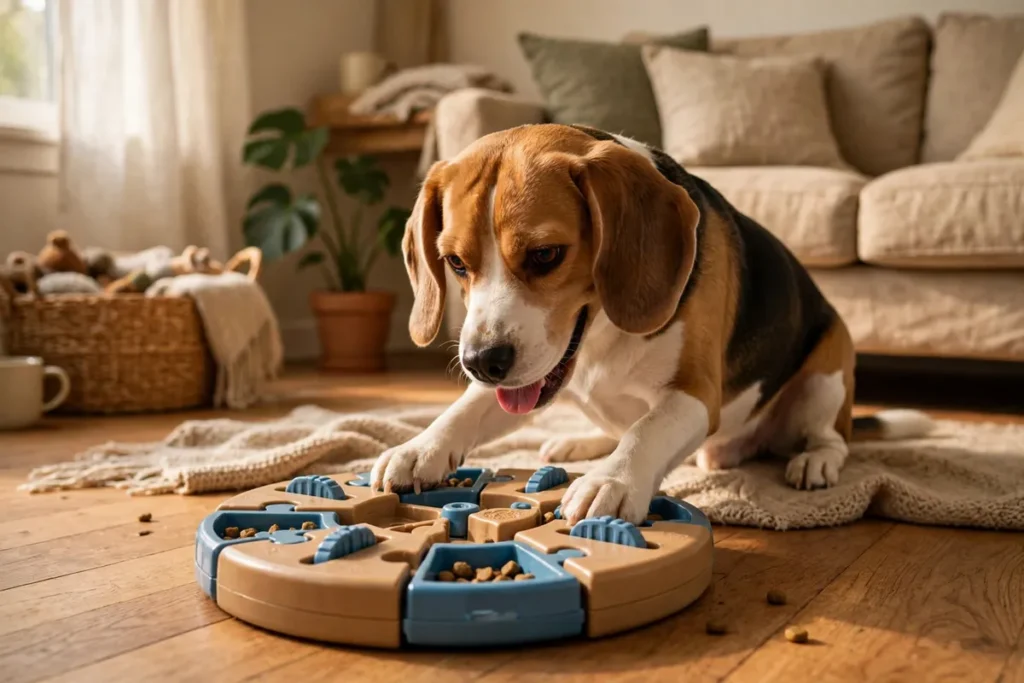
Three ways to play in one board. The bone covers lift off, the lids flip open, and the red sliders slide sideways to reveal hidden compartments. Learning three different moves keeps the game interesting longer than a toy with a single trick.
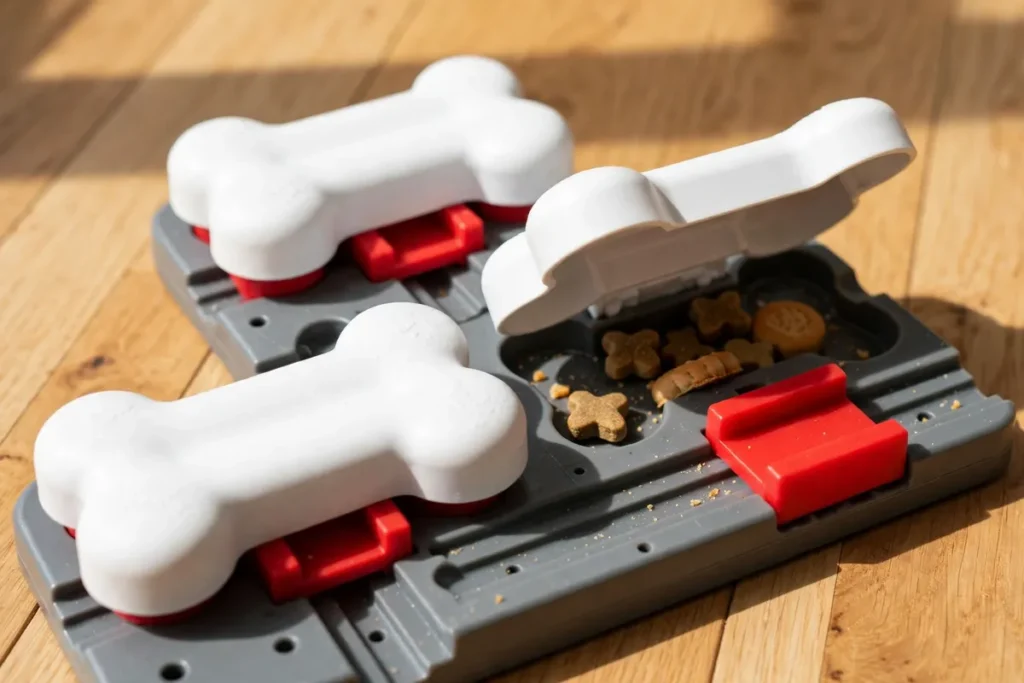
Adjustable difficulty. You can change how hard the puzzle is without buying anything else. Leave the bone covers off at first, then add them back once your dog has mastered sliding and flipping. You can also vary how many compartments you fill, or hide treats under only some of the covers.
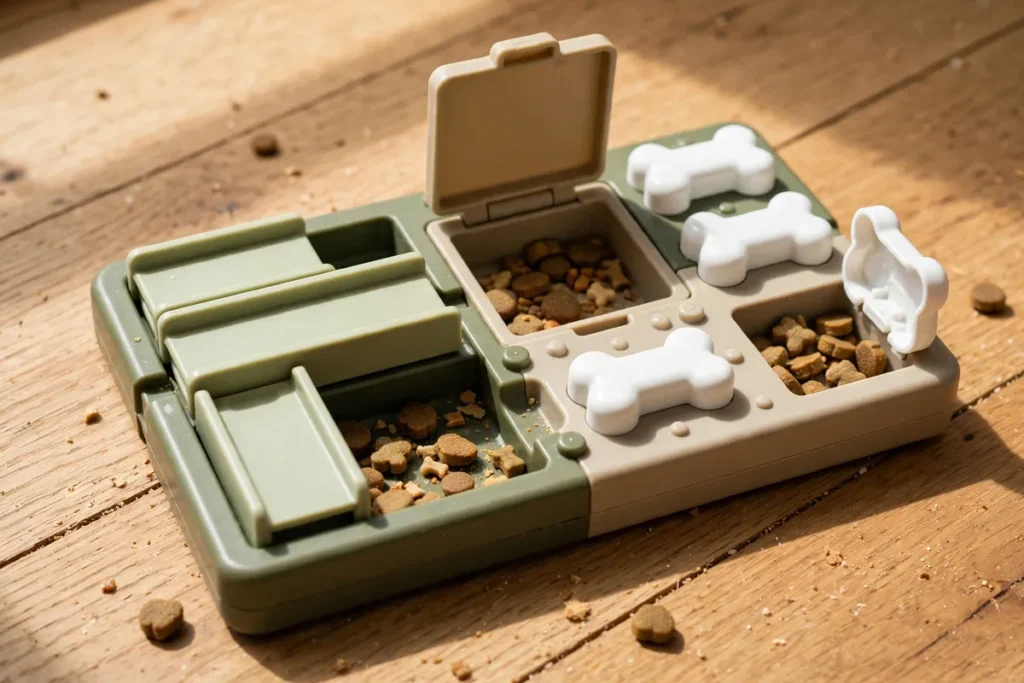
Decent treat capacity. At three-quarters of a cup, the board holds enough kibble for a small meal, making it genuinely useful as a slow feeder for dogs that gulp their food.
Who Is the Dog Brick Best For?
Dogs new to puzzle toys. Level 2 is the sweet spot for a first real puzzle — Level 1 toys are often solved in seconds by a clever dog, while Level 3 and 4 puzzles can frustrate a beginner.
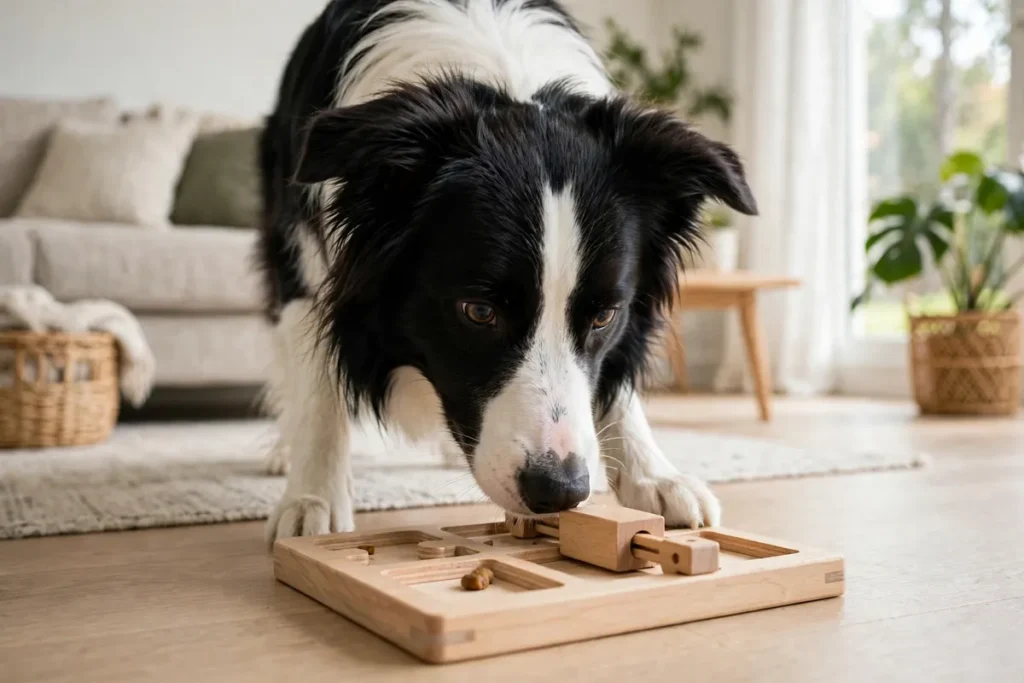
Smart, energetic breeds. Border Collies, Australian Shepherds, Poodles, and Labradors destroy a house out of boredom — a puzzle like this gives their brain a job to do.
Fast eaters. As a slow feeder, the board turns a thirty-second meal into a ten-minute activity, which is better for digestion.
Rainy days and recovery. When a walk is not possible — bad weather, an injury, or post-surgery rest — a puzzle session burns off mental energy without physical strain.
Who Should Skip It?
Aggressive chewers. The Dog Brick is made of hard plastic, not a chew toy. A determined chewer can crack the bones or sliders, and small broken pieces are a choking hazard. If your dog destroys toys, a heavy-duty rubber toy like the KONG Classic is a safer choice — our KONG Classic review explains why.
Dogs that give up easily. Some dogs get frustrated by puzzles and walk away. Start with the easiest setup — bones off, treats visible — and build up slowly.
Owners who want a toy they can leave unsupervised. Puzzle toys are supervised-play toys. Always watch your dog while they use the Dog Brick, and take it away when the treats are gone.
How to Introduce the Dog Brick to Your Dog
Let your dog sniff the empty board first, then put treats in the open compartments with the bones off and the lids open. Next, close the lids but leave the bones off; once your dog flips lids confidently, add the bone covers, then fill the compartments under the sliders.
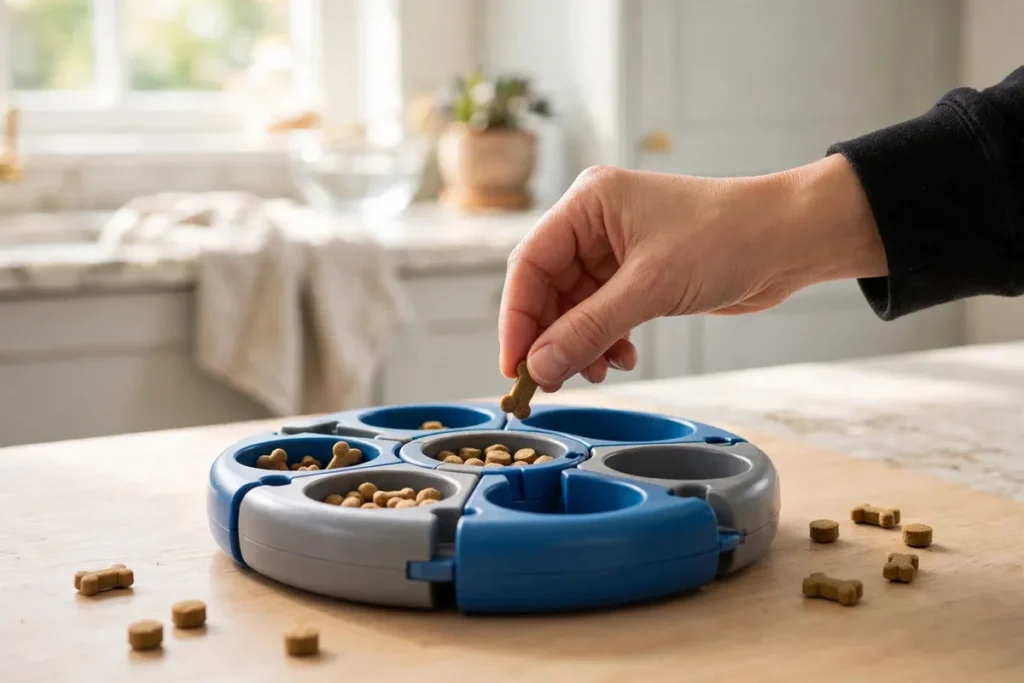
If your dog is stuck, tap a slider or lift a bone yourself while they watch — one demonstration is often enough. Keep sessions to ten to fifteen minutes, and end while your dog is still interested.
Cleaning and Maintenance
The Dog Brick is hand-wash only — dishwasher heat can warp the plastic. After each use, shake out crumbs, wash with warm water and mild dish soap, and let it air-dry completely. Check the pieces for cracks, chips, or teeth marks, and throw the toy away if a bone or slider is damaged — a cracked piece can break off and be swallowed. Store the board out of your dog’s reach between sessions.
Pros and Cons
Pros: three puzzle mechanics in one toy; difficulty is adjustable as your dog learns; holds three-quarters of a cup, so it works as a slow feeder; made from food-safe, BPA-free plastic; one of the most affordable Nina Ottosson puzzles; suits small, medium, and large dogs.
Cons: not suitable for aggressive chewers — plastic pieces can crack; clever dogs may solve it quickly once they learn the moves; hand-wash only; must be supervised — not a toy to leave a dog alone with; small parts could be a hazard if the toy is damaged.
Frequently Asked Questions
Is the Dog Brick good for puppies?
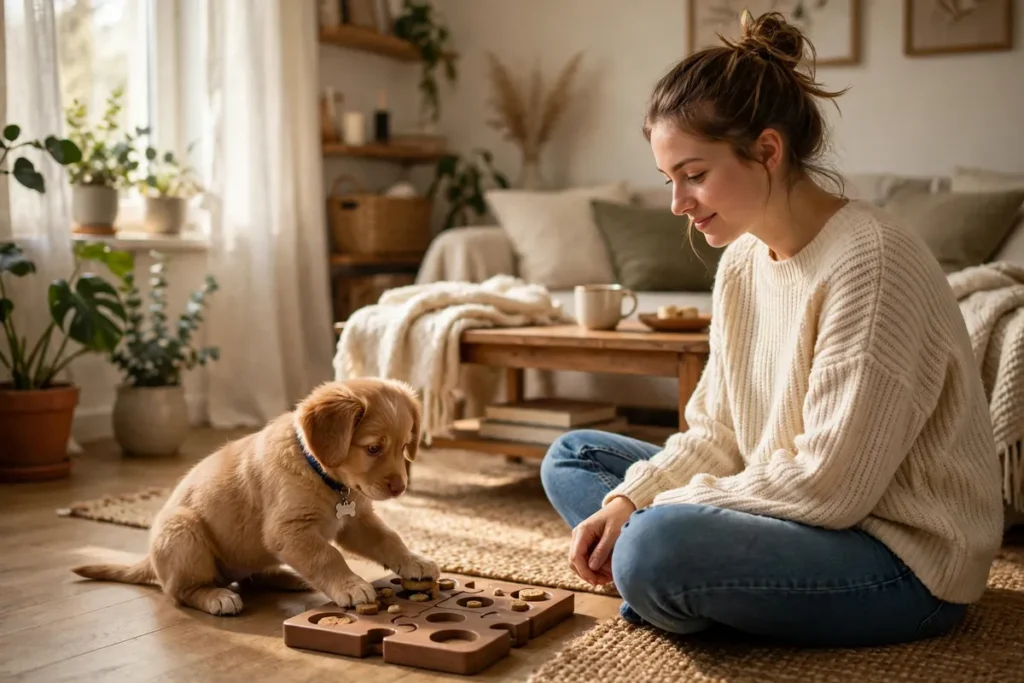
Yes, for puppies past the heavy teething stage. Start with the easiest setup — bones off, treats visible — and supervise every session. Very young puppies or toy breeds may find the sliders stiff at first.
Can the Dog Brick be used as a slow feeder?
Yes. It holds up to three-quarters of a cup of kibble, so it works well as a slow feeder for small to medium meals.
Is the Dog Brick safe for dogs?
Yes, when used as directed — supervised play, with the toy removed when the treats are gone. It is not safe for aggressive chewers, who can crack the plastic pieces, and any damaged toy should be thrown away.
How do I make the Dog Brick harder for a smart dog?
Add the bone covers back, fill fewer compartments so your dog has to search, and hide a treat under a slider with a bone on top. If your dog still solves it in minutes, they are ready for a Level 3 puzzle.
The Bottom Line
For most dogs and most owners, the Dog Brick is the puzzle toy to buy first. It is affordable, well made, and adjustable as your dog learns, covering three different problem-solving skills in a single board. It is not indestructible, it is not for aggressive chewers, and it needs supervision and a quick wash after each use — but those are fair trade-offs for a toy that genuinely tires a smart dog out. If your dog is clever, bored, or eats too fast, this Outward Hound Nina Ottosson puzzle toy review points to a simple answer: yes, the Dog Brick is worth it.
Disclaimer: This article is for general information only and is not a substitute for professional veterinary or animal behaviour advice. Always supervise your dog with puzzle toys, remove the toy when play is finished, and consult your veterinarian if your dog shows signs of distress, anxiety, or health problems during play.