Best Dog Crate for House Training (2026): 5 Picks That Make Potty Training Easier
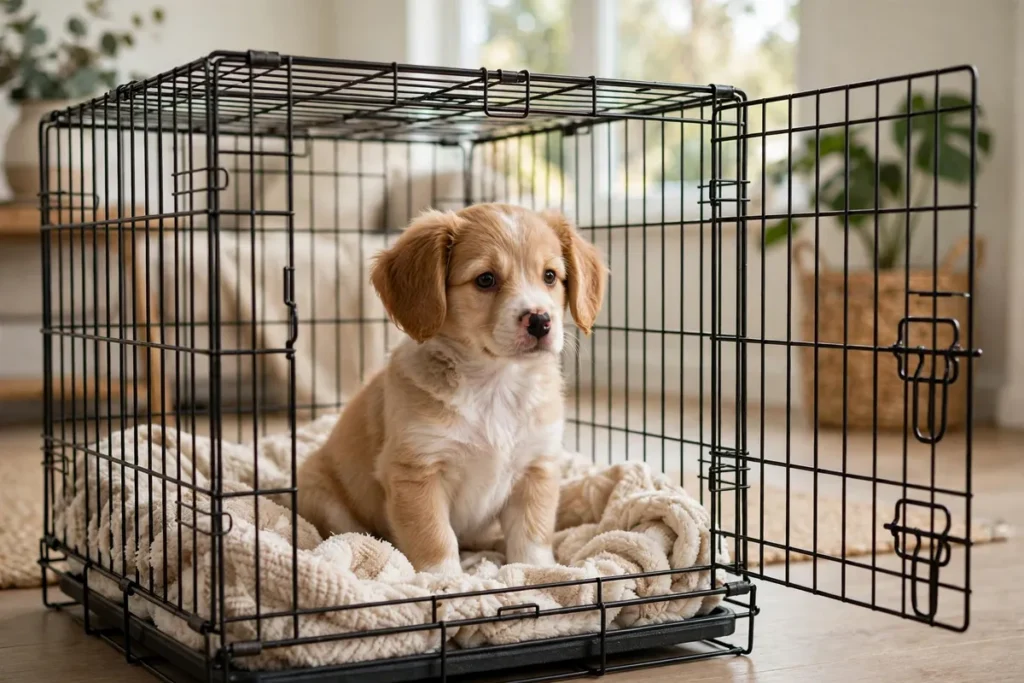
A crate is one of the most useful tools you can buy when you bring a puppy home. Dogs naturally avoid soiling where they sleep, so a properly sized crate teaches your puppy to hold it until you take them outside — and that habit is the foundation of house training. The best dog crate for house training is just big enough for your puppy to stand up, turn around, and lie down comfortably, with a divider panel so the space can grow as your puppy does. Get the size wrong and the crate works against you.
In This Article
Prices change — check the current price before buying.
1. MidWest LifeStages Double Door Folding Crate — Best Dog Crate for House Training Overall
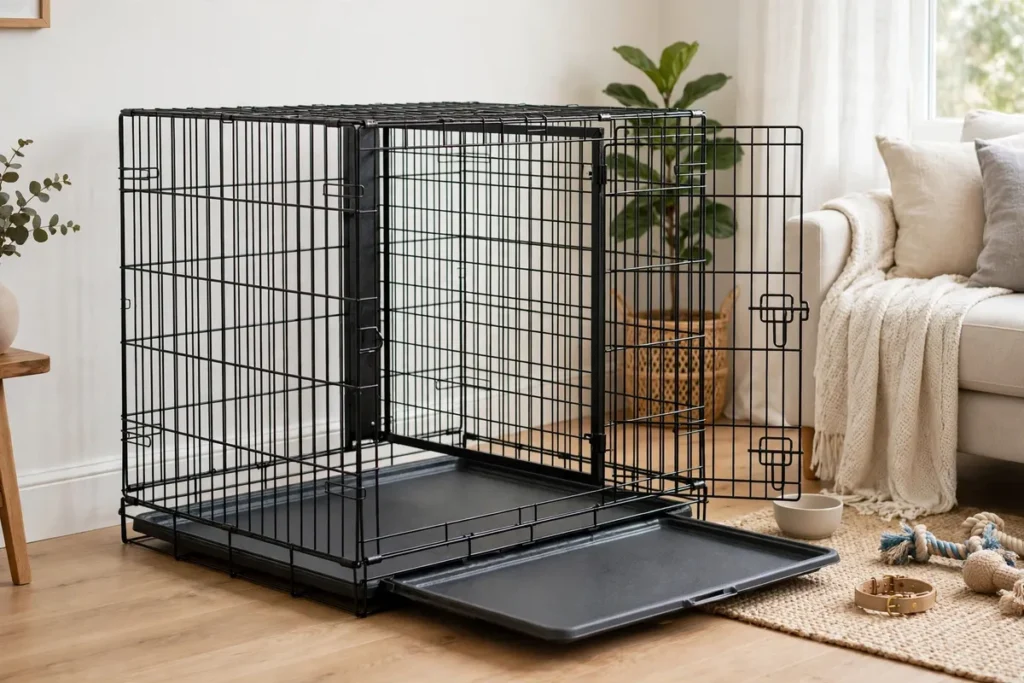
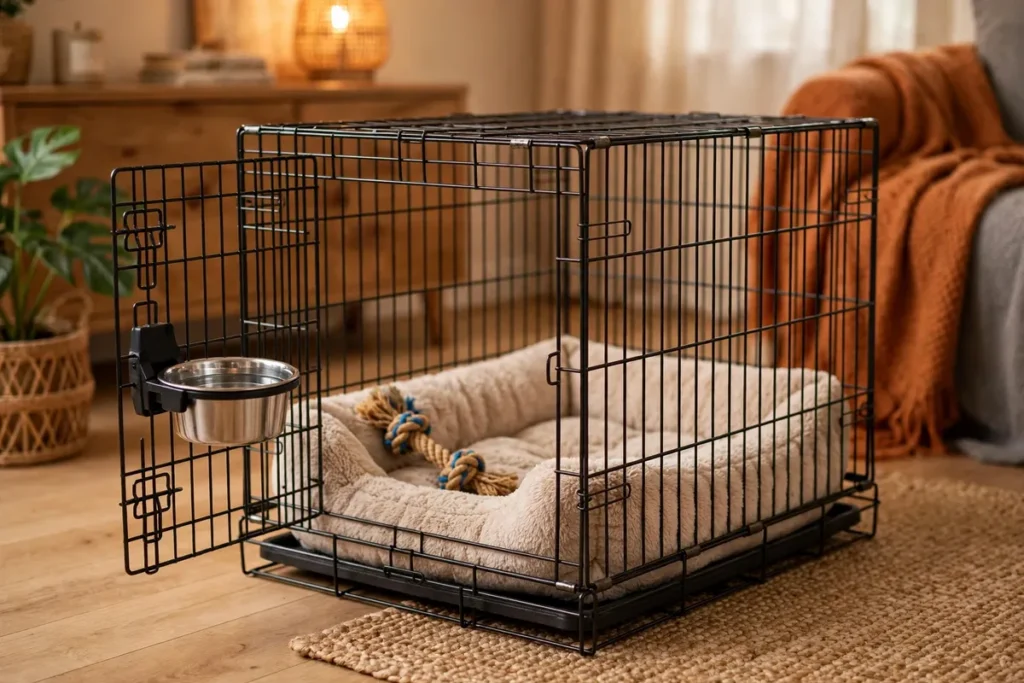
The MidWest LifeStages is the crate most trainers reach for first. This folding wire crate has two doors, so you can set it in a corner and still get your puppy in and out easily. Every size includes a divider panel — the key feature for house training. Slide it forward while your puppy is small, then move it back as they grow, so one crate lasts to adulthood. The wire mesh gives good airflow and lets your puppy see the family, and a slide-out tray catches accidents for a quick rinse.
Best for: Most puppies and most homes. Watch out for: Strong chewers can bend the wire.
2. MidWest iCrate Fold & Carry — Best Budget Wire Crate
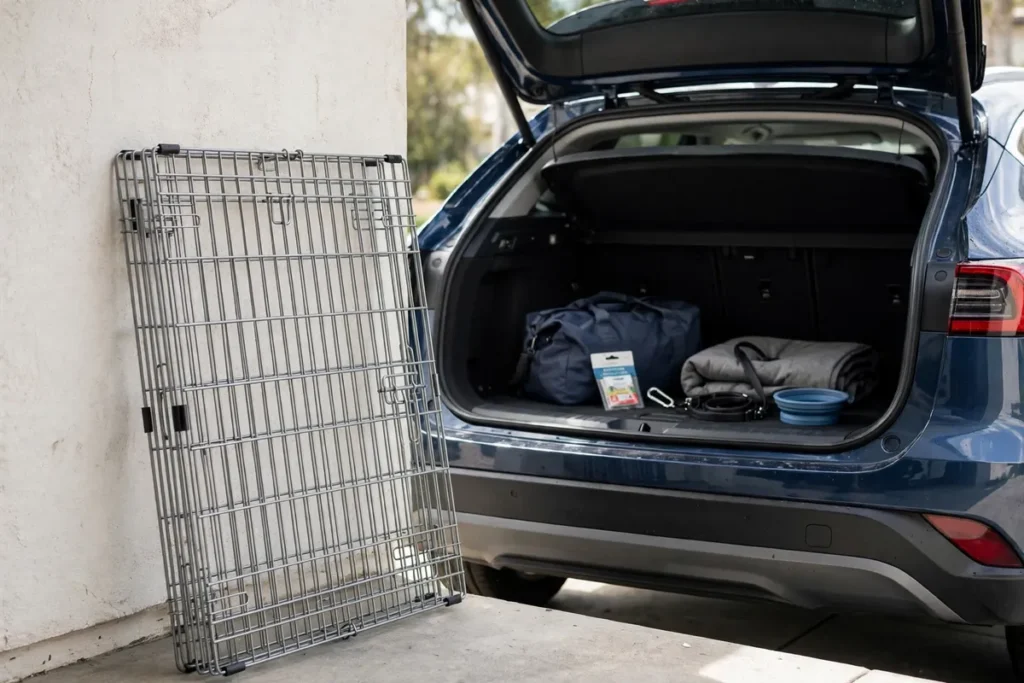
If you want the same wire-crate design for less money, the MidWest iCrate is the budget version of the same idea. It folds flat in seconds, comes with a divider panel and a leak-proof pan, and is available in sizes from extra-small up to extra-large. Single-door models cost less, while double-door versions are easier to position. It is also lighter than the LifeStages, so it is easy to move between rooms.
Best for: First-time owners on a budget. Watch out for: The thinner wire suits calm puppies better than powerful chewers.
3. Petmate Ultra Vari Kennel — Best Plastic Kennel for a Den-Like Feel
Some puppies settle faster in a more enclosed space, and that is where a hard-sided kennel earns its place. The Petmate Ultra Vari is a sturdy plastic kennel with ventilation slots on the sides and a wire front door. The enclosed walls block out distractions and give a nervous puppy a darker, den-like space to sleep in. It is also the most travel-friendly pick here: the two halves unbolt for storage, and the design meets the general requirements many airlines set for hold travel.
Best for: Nervous puppies and car travel. Watch out for: No divider is included, so you may need to size up later.
4. EliteField 3-Door Folding Soft Crate — Best Soft Crate for Travel and Small Spaces
A soft crate is not the right first crate for every puppy, but for a calm, crate-trained dog it is wonderfully convenient. The EliteField 3-Door is a fabric and mesh crate on a steel frame that pops open in seconds and folds flat into a carry bag. It has three doors — front, top, and side — plus mesh windows, and it comes in five sizes. At home it works as a second crate in another room; on trips it is a familiar bed your dog already knows. It is also one of the lightest crates you can buy.
Best for: Calm, crate-trained dogs and overnight trips. Watch out for: Chewers can work their way out of fabric.
5. Diggs Revol Dog Crate — Best Premium Crate That Grows With Your Dog
If you want one crate to last your dog’s whole life and you are happy to pay more for it, the Diggs Revol is the premium pick. It is a collapsible crate on wheels with three doors, including a wide garage-style side door so a nervous dog can walk straight in. It folds down without tools, divider included. The modern design looks more like furniture than a cage, and the wheels let you roll it from room to room. It costs several times more than a basic wire crate, but it is worth it if you will use a crate for years.
Best for: Owners who want a crate that lasts for years. Watch out for: Overkill for a few months of puppyhood.
How to Choose the Best Dog Crate for House Training
Measure your dog, not the breed label. The American Kennel Club advises measuring your dog standing, nose to tail tip and head to floor, then adding 3 to 4 inches. That is the size your adult dog needs — buy it now with a divider.
Always use a divider for a puppy. A crate that is too big lets a puppy sleep at one end and toilet at the other. The divider keeps the space snug and den-like until your puppy grows into it.
Pick the right material. Wire crates suit most puppies: they breathe well, fold flat, and clean easily. Plastic kennels suit nervous puppies that like a darker den. Soft crates are only for calm, trained dogs.
Think about cleaning. Accidents happen in the first weeks, so a slide-out tray makes clean-up a two-minute job. A comfortable bed also helps your puppy love the space: see our guide to the best dog beds for every budget.
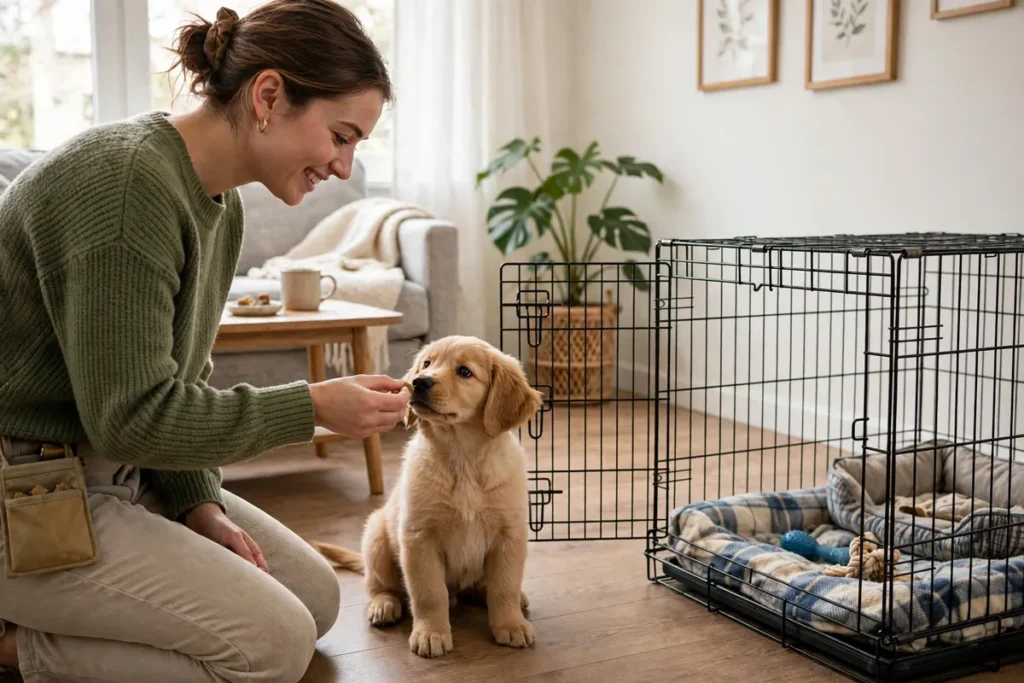
Introduce the crate slowly. Leave the door open, toss in treats, and let your puppy explore it before closing the door — it should feel like a safe bedroom, never a punishment. For a full first-week plan, see our guide.
Frequently Asked Questions
What size crate do I need for house training a puppy?
Measure your puppy’s expected adult size — nose to tail tip and head to floor, plus 3 to 4 inches — and buy that size with a divider panel.
How long can a puppy stay in a crate?
As a rough guide, a puppy can hold it for about one hour per month of age. A two-month-old puppy needs a toilet break every two hours at most, including at night.
Should I put a bed or blanket in the crate?
Yes, but use something washable — accidents will happen. Avoid loose blankets with a puppy that chews and swallows fabric.
Is crate training cruel?
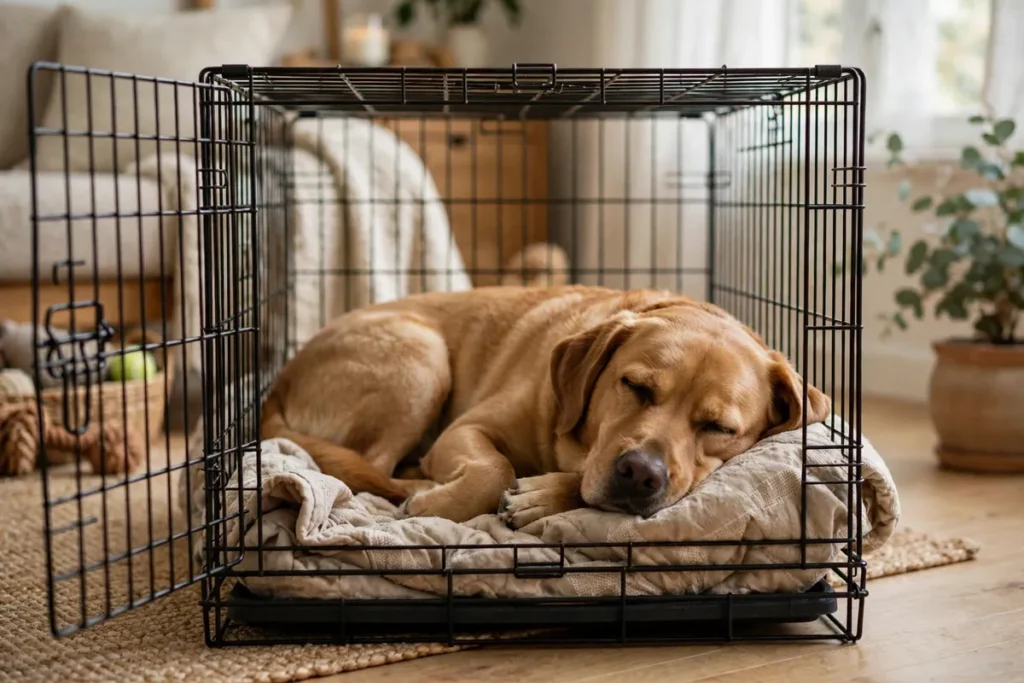
No, when it is done properly. Dogs are den animals, and a crate gives them a quiet, safe space of their own. It only becomes a problem if it is used as punishment or the dog is left in it too long.
The Bottom Line
For most puppies, the MidWest LifeStages is the best dog crate for house training — the divider panel, two doors, and folding design cover everything you need at a fair cost. Budget buyers will be happy with the MidWest iCrate, nervous puppies settle better in the Petmate Ultra Vari, and the EliteField is the best travel pick for a calm, trained dog. If you want a crate that lasts for years, the Diggs Revol is worth the extra money. Whichever you choose, size it with a divider, introduce it slowly, and keep toilet breaks frequent.
Disclaimer: This article is for general information only and is not a substitute for professional veterinary or animal behaviour advice. If your puppy shows signs of distress, anxiety, or health problems during crate training, consult your veterinarian or a qualified dog trainer.