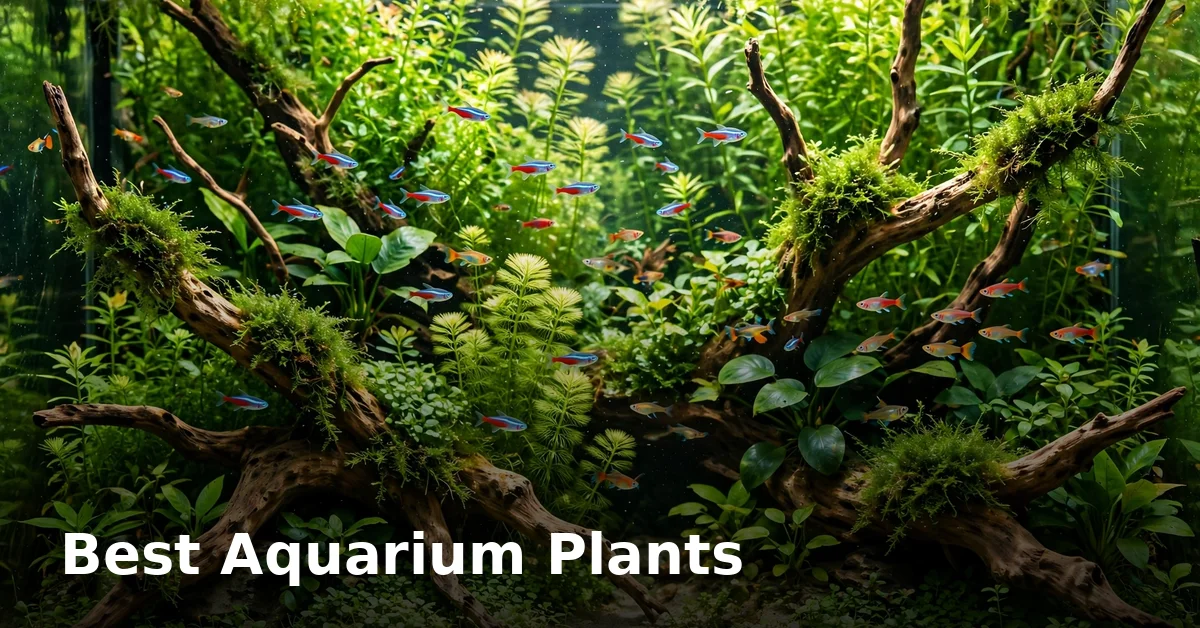
Best Aquarium Plants (2026): 8 Live Plants for Beginners
A tank with live plants looks better than a tank with plastic ones — and it works better, too. Live plants eat up the waste your fish produce, add oxygen to the water, and give shy fish somewhere to hide. The best aquarium plants for beginners do all of that without demanding special lights, CO2, or fertilizer schedules.
This guide covers eight live plants that actually survive in a beginner’s tank, plus how to plant them, light them, and keep them alive. No plant here needs CO2 injection or high-end lighting.
Prices change, so check the current price before buying.
Our Quick Picks
- Best overall: Java Fern — nearly impossible to kill, grows in low light.
- Best for low light: Anubias Nana — slow, tough, and happy in shade.
- Best background plant: Amazon Sword — big, lush, and fills the back of the tank.
- Best for color: Cryptocoryne Wendtii — bronze and red tones without special light.
- Best fast grower: Anacharis — grows an inch a week and eats up nitrates.
- Best carpet plant: Dwarf Hairgrass — a green lawn, with a little patience.
- Best for hiding fry: Java Moss — soft, dense, and perfect cover for baby fish.
- Best easy decor: Marimo Moss Ball — a living green ball, almost no care at all.
How to Choose the Best Aquarium Plants
Before the reviews, here is what actually matters when you are picking the best aquarium plants for a beginner tank.
Start with low-light plants. Most beginner tanks have a basic LED or fluorescent light, and that is enough for the plants on this list. High-light plants need stronger lights and often CO2, and they will melt away in a normal setup. If a plant’s label says “high light” or “CO2 required,” skip it for now.
Match the plant to the spot. Tall plants go at the back, medium plants in the middle, and short or carpeting plants at the front. A plant in the wrong spot either blocks the view or gets shaded out.
Do not bury the rhizome. Java Fern and Anubias grow from a thick green stem called a rhizome, and burying it in gravel will rot it. Tie or glue those plants to driftwood or rock instead — the roots will grip on their own in a few weeks.
Quarantine new plants. Plants from a store can carry snails, algae, or parasites. Rinse them well and, if you can, keep them in a bucket of tank water for a few days before they go in the main tank. A quick rinse in clean water removes most hitchhikers.
Expect some melting. Many aquarium plants are grown out of water at the farm, and their leaves melt back when they go underwater. Do not panic — new underwater leaves usually grow within two to three weeks. Trim the melted leaves off so they do not rot in the tank.
The 8 Best Aquarium Plants for Beginners
1. Java Fern — Best Overall
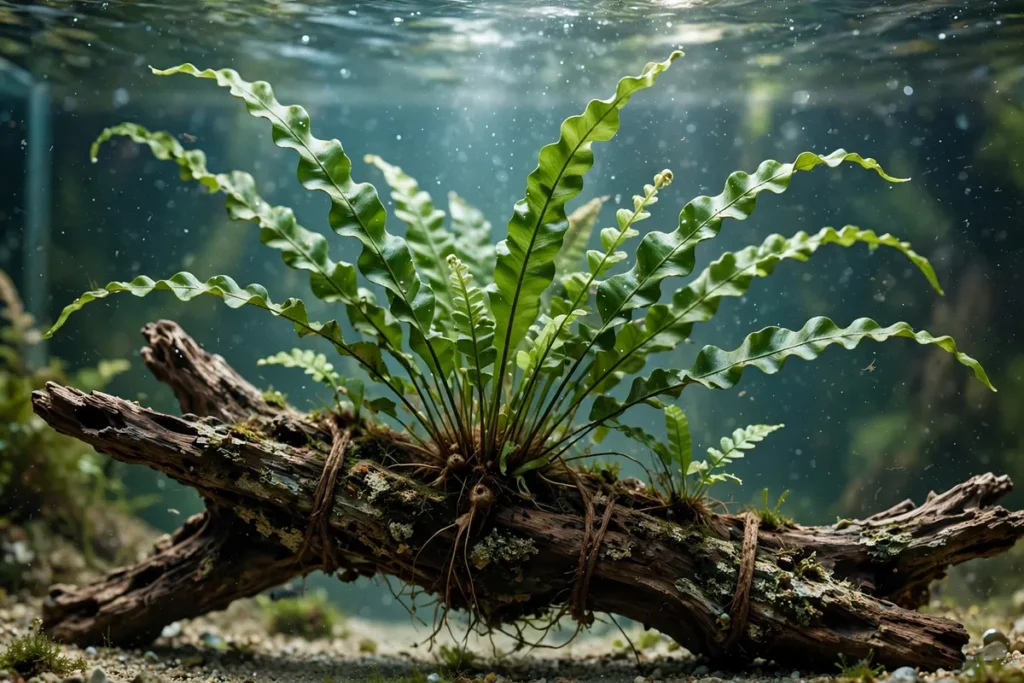
Java Fern is the best aquarium plant for beginners, and the one most fish keepers recommend first. It grows in low light, in almost any water, and it is nearly impossible to kill. It does not need CO2, it does not need fertilizer, and it does not care much about temperature.
The plant grows from a rhizome, so tie it to driftwood or a rock with thread or super glue gel — never bury the rhizome in the substrate. The long, wavy green leaves grow to about 8 inches, and new plantlets sprout from the leaf tips, which you can snap off and plant elsewhere.
Java Fern grows slowly, which is both its strength and its weakness: it will not take over your tank, but it will not fill it in quickly either. Buy a few bunches if you want coverage soon.
Best for: Every beginner tank, especially low-light setups.
2. Anubias Nana — Best for Low Light
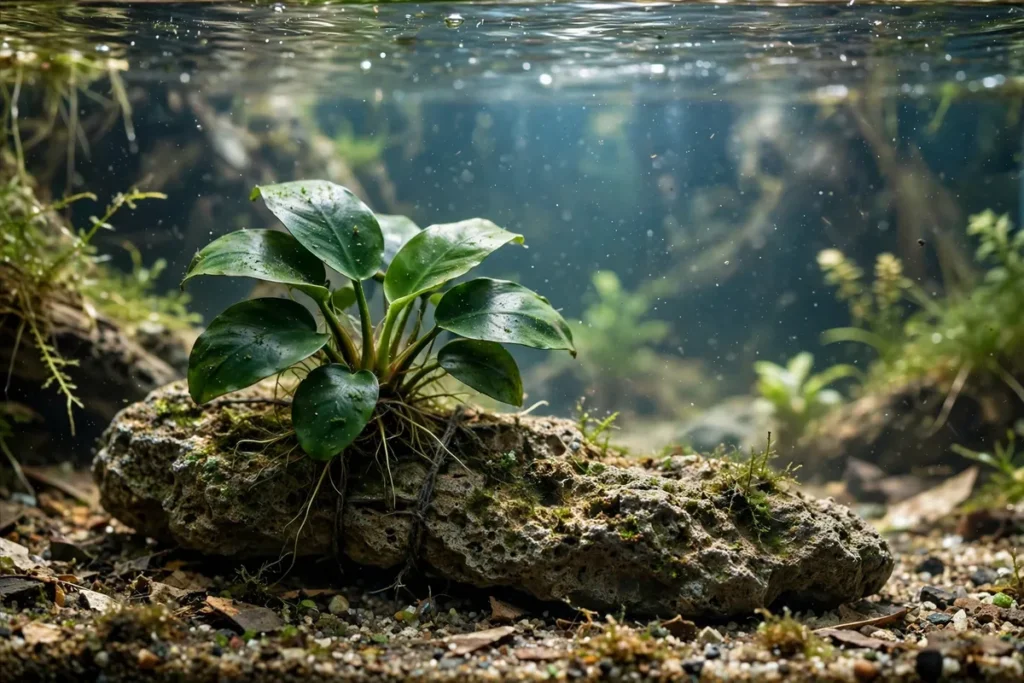
Anubias Nana is the best low-light aquarium plant — the pick if your tank light is basic and your tank sits in a dim corner. It grows in near-darkness, it tolerates a wide range of temperatures, and fish mostly leave it alone because the leaves are thick and bitter-tasting.
Like Java Fern, it grows from a rhizome that must stay above the substrate. Tie it to a rock or a piece of wood, and it will slowly spread. Growth is very slow — a new leaf every few weeks — so buy the size you want.
Anubias is a favorite for betta tanks and shrimp tanks, where its broad leaves make perfect resting spots and hiding places. It also survives in tanks with goldfish, which eat most other plants.
Best for: Low-light tanks, bettas, shrimp, and goldfish tanks.
3. Amazon Sword — Best Background Plant
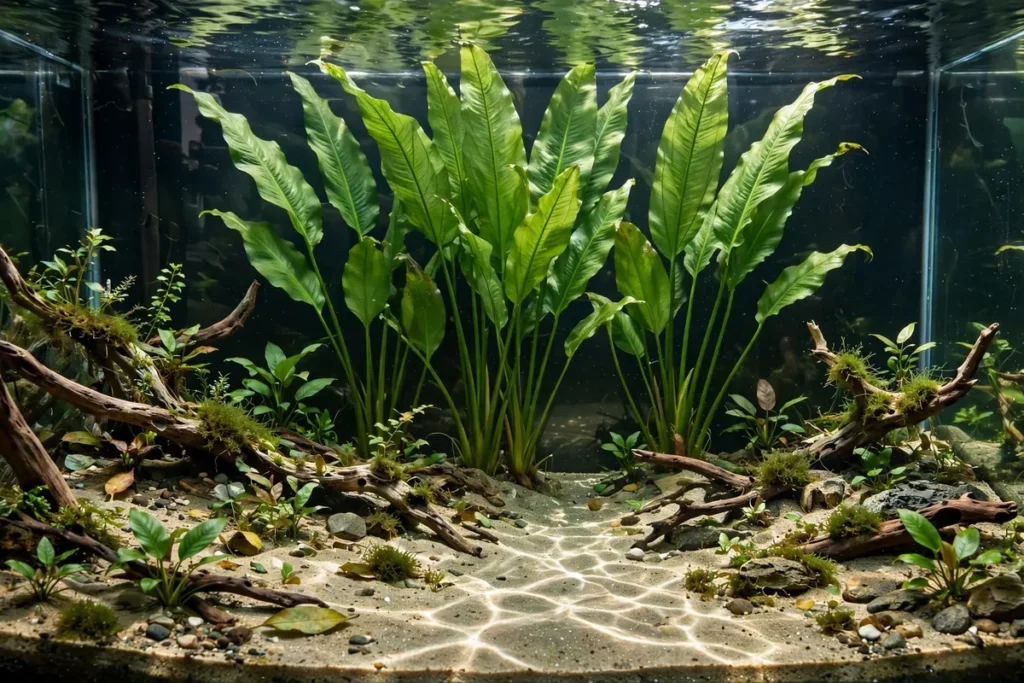
Amazon Sword is the best background aquarium plant, and the pick if you want a lush, jungle look at the back of the tank. A healthy sword grows 12 to 20 inches tall, with broad green leaves that fill the back corners beautifully.
Unlike the rhizome plants, a sword needs to be planted in the substrate, and it is a heavy root feeder — it pulls most of its food from the roots, so a root tab fertilizer in the gravel every couple of months makes a real difference. In a bare gravel tank with no root tabs, it will grow slowly and the leaves may yellow.
Amazon Swords need a tank of at least 20 gallons to reach full size. In a small tank they will outgrow the space. But in a medium or large tank, nothing else gives you that full, green background as easily.
Best for: Filling the back of medium and large tanks.
4. Java Moss — Best for Hiding Fry
Java Moss is the best aquarium plant for hiding fry, and the pick if you breed fish or keep shrimp. It is a soft, stringy moss that grows in a dense mat, and baby fish and shrimp hide in it where bigger fish cannot reach them.
Java Moss grows in almost any light and any water, and it attaches itself to wood, rock, and even filter pipes. Tie a clump to a piece of driftwood with thread and it will spread on its own. It also makes a great spawning mop — many breeders use it instead of a plastic one.
Java Moss collects debris, so shake it gently in old tank water during water changes, and trim it back every few weeks or it will cover everything.
Best for: Breeding tanks, shrimp tanks, and fry cover.
5. Marimo Moss Ball — Best Easy Decor
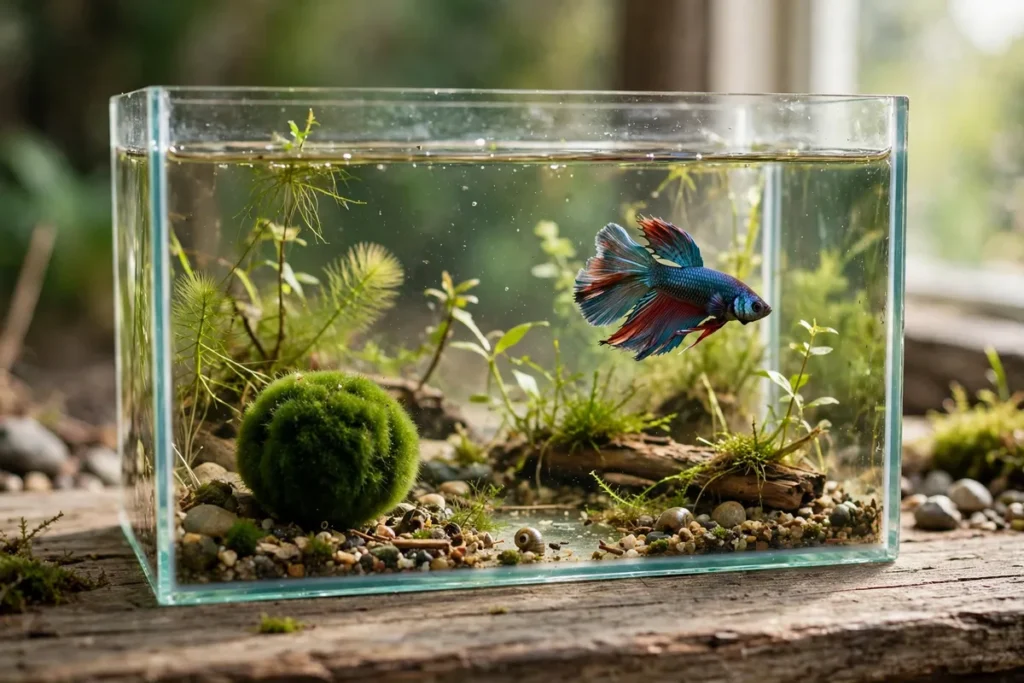
A Marimo Moss Ball is the best easy aquarium decor plant — a round ball of green algae that just sits on the bottom of the tank and looks after itself. It needs almost nothing: low light, cool water, and a gentle roll every week or so to keep its shape round.
Marimo balls grow incredibly slowly — about a fifth of an inch a year — so what you buy is what you get. They do not need planting, fertilizing, or trimming. They even help a little with water quality, absorbing nitrates like any plant.
They are a favorite in betta tanks and nano tanks, where a single ball adds a splash of green without taking up space.
Best for: Nano tanks, bettas, and anyone who wants a plant with zero work.
6. Cryptocoryne Wendtii — Best for Color
Cryptocoryne Wendtii is the best aquarium plant for color without special lighting. Most beginner plants are plain green, but Wendtii comes in green, bronze, and reddish-brown, which adds depth to the middle of the tank.
It is a root feeder like the Amazon Sword, so plant it in the substrate and give it a root tab now and then. It grows 6 to 10 inches tall, which makes it a perfect midground plant — in front of the tall background plants, behind the short foreground ones.
One warning: crypts are famous for “crypt melt.” If the water changes suddenly — a big water change, a move to a new tank — the leaves may melt away overnight. Do not throw the plant out. The roots are usually fine, and new leaves grow back within a few weeks.
Best for: Adding bronze and red color to the midground.
7. Anacharis — Best Fast Grower
Anacharis, also called Elodea or Brazilian waterweed, is the best fast-growing aquarium plant — the pick if you want quick results and cleaner water. It can grow an inch a week, and all that fast growth eats up nitrates, which keeps algae down and water quality up.
Anacharis can be planted in the substrate or left floating, and it grows in low light and cool water. It is so tough that it is sold as a pond plant, and in some states it is classed as invasive — never dump it in a local waterway.
Because it grows so fast, trim it every week or two or it will shade out everything below it — but for a new tank fighting algae, nothing works quicker.
Best for: New tanks, algae control, and fast nitrate removal.
8. Dwarf Hairgrass — Best Carpet Plant
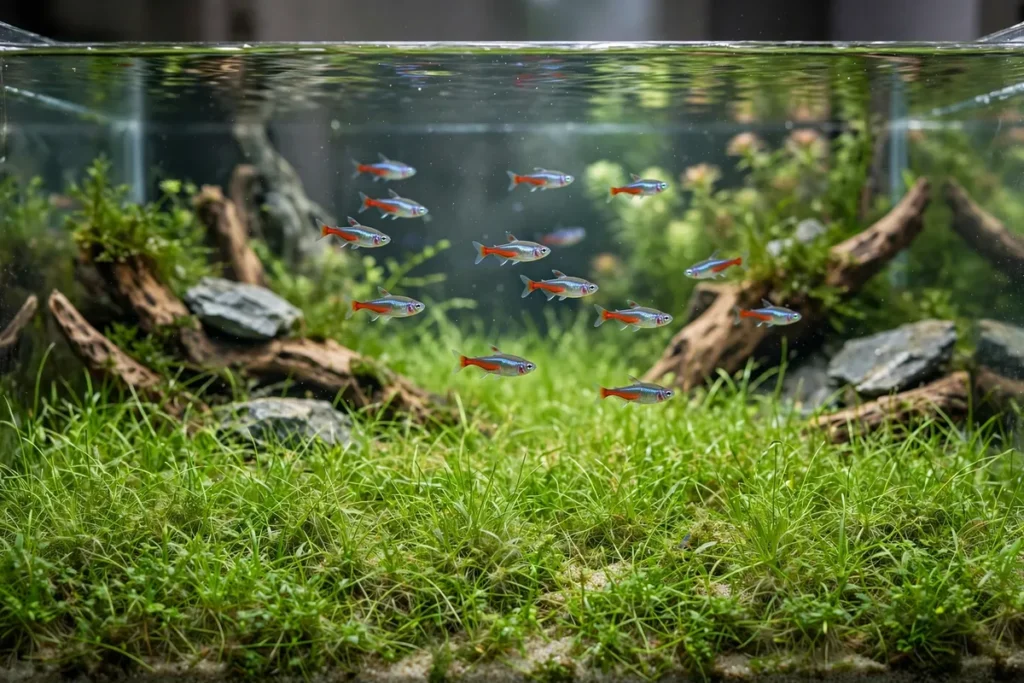
Dwarf Hairgrass is the best carpeting aquarium plant for beginners — the pick if you want a green lawn across the bottom of the tank. Planted in small clumps a couple of inches apart, it spreads by runners and slowly fills in to make a soft grass carpet.
It needs more light than the other plants on this list — a decent LED, not a dim stock light — and it grows faster with a nutrient-rich substrate or root tabs. In low light it will survive but spread very slowly, so give it the brightest spot in the tank.
A hairgrass carpet makes a tank look like a professional aquascape, and shrimp and small fish love grazing through it. Be patient — a full carpet takes two to three months.
Best for: A green carpeted foreground, with a little patience.
How to Plant and Care for Aquarium Plants
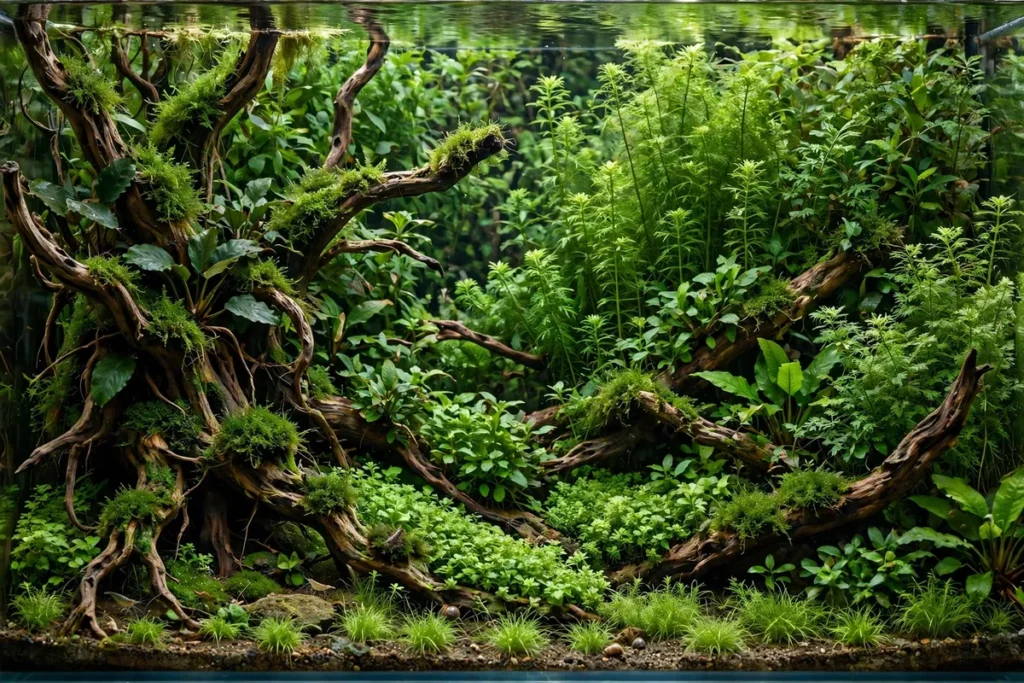
A good plant in the wrong spot will struggle, so plant with a plan. Put tall plants like Amazon Sword and Anacharis at the back, midground plants like Cryptocoryne and Anubias in the middle, and carpeting plants like Dwarf Hairgrass at the front. Tie rhizome plants to wood or rock, and plant rooted plants deep enough that they stay put.
Run the tank light 6 to 8 hours a day — more than that grows algae faster than plants. If algae appears on the leaves, cut the light back by an hour and do a water change.
Feed lightly. Most beginner plants do fine with a liquid fertilizer once a week and root tabs for the heavy root feeders. More fertilizer is not better — it feeds algae, not plants.
Prune weekly: trim dead leaves, cut back fast growers, and replant the trimmings. A planted tank is a garden, and a little care keeps it looking good. Aquarium Co-Op’s guide to the top 5 easy aquarium plants is a useful second opinion on which plants suit a beginner tank, and Fishkeeping World’s roundup of the best aquarium plants covers more species if you want to expand later.
If you are still setting up the tank, our guide to the best fish tank for beginners covers starter aquariums, our roundup of the best fish food for guppies helps you feed a community tank, and our comparison of canister filter vs hang on back filter explains which filter keeps a planted tank clean.
Frequently Asked Questions
Do aquarium plants need CO2?
Not the ones on this list. All eight grow without CO2 injection, though they grow faster with it. CO2 is for high-light, demanding plants — start without it, and add it later only if you want to grow harder species.
Why are my new plants melting?
Most aquarium plants are grown out of water at the farm, and their leaves melt when they go underwater. It is normal. Trim the melted leaves, keep the lights on a steady schedule, and new underwater leaves will grow in two to three weeks. If the roots are still firm, the plant is alive.
Can I keep live plants with goldfish?
Yes, but pick tough ones. Goldfish eat soft plants. Java Fern, Anubias, and Marimo Moss Balls usually survive because their leaves are thick or taste bad. Amazon Sword and Anacharis will likely get eaten. Give goldfish a plant they cannot destroy, and expect some nibbling anyway.
The Bottom Line
The best aquarium plants for beginners are the ones that forgive you. Java Fern and Anubias Nana survive almost anything, Amazon Sword fills the background, Java Moss protects fry, Marimo Moss Balls need no care at all, Cryptocoryne Wendtii adds color, Anacharis cleans the water fast, and Dwarf Hairgrass makes a beautiful carpet with a little patience. Start with two or three of these, plant them in the right spots, run the light 6 to 8 hours a day, and your tank will look better — and your fish will be healthier — within a few weeks.