Best Bird Perches (2026): 7 Natural Wood Picks
Your bird spends almost its whole life on its feet, so the perch it stands on matters more than almost any other accessory in the cage. A good perch exercises the feet, trims the beak and nails, and gives your bird somewhere to climb, chew, and play. A bad perch — the smooth, same-diameter dowel that comes free with most cages — can cause sore feet, weak grip, and arthritis over time.
The best bird perches are natural wood branches. Unlike a factory dowel, a real branch varies in diameter along its length, so your bird’s feet grip differently at every step. This guide covers seven natural wood perches, plus how to pick the right size and shape for your bird.
Prices change, so check the current price before buying.
Our Quick Picks
- Best overall: Zoo Med Natural Manzanita Branch Bird Perch — hardest wood, lasts for years.
- Best java wood: A&E Cage Co. Java Wood Multi-Branch Perch — gnarled branches, great for climbing.
- Best grapevine: Prevue Pet Products Natural Grapevine Branch Perch — varied grip, good for small birds.
- Best hardwood: Polly’s Pet Products Hardwood Bird Perch — vet-recommended dragonwood, dense and strong.
- Best coffee wood: Hagen HARI Coffee Wood Branch Perch — smooth but grippy, easy to clean.
- Best budget: Kathson Natural Forked Wood Bird Branch Perch — real forked branch, low cost.
- Best for large parrots: Sweet Feet & Beak Natural Manzanita Perch — thick, heavy-duty, built for big beaks.
How to Choose a Bird Perch
Before the reviews, here is what actually matters when you are picking the best bird perches for your cage.
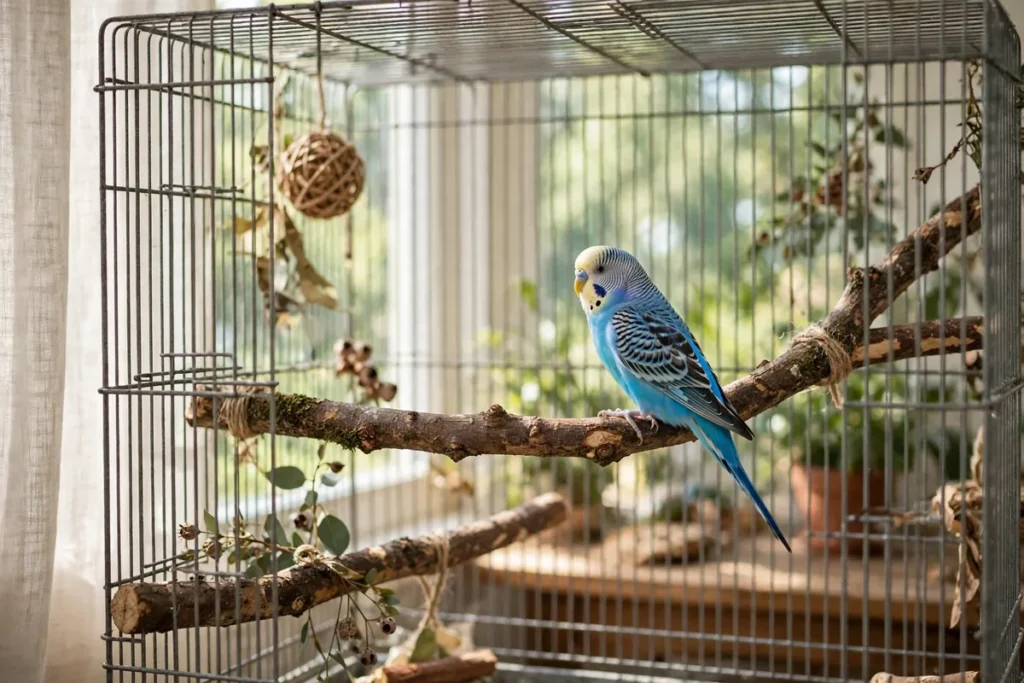
Varying diameter beats a uniform dowel. A bird’s foot should wrap about three quarters of the way around the perch. A perch that is the same thickness all the way along forces the foot into one position all day, which causes pressure sores and weak muscles. A natural branch varies in thickness, so the foot works differently at every step.
Match the perch to the bird. A budgie or cockatiel needs a perch around half an inch to three quarters of an inch thick. A conure or African grey needs three quarters to one and a half inches. A macaw or cockatoo needs one and a half to three inches. If the perch is too thin, the toes wrap all the way around and the foot cramps; if it is too thick, the bird cannot grip and slides off.
Wood type matters. Manzanita is the hardest and longest-lasting, and it resists chewing from even large parrots. Java wood is dense and gnarled, with multiple branches for climbing. Grapevine is lighter and more varied, good for smaller birds. Dragonwood is dense and strong with a textured bark that is easy to grip. Coffee wood is smooth but not slippery, and easy to wipe clean. All of them are safe, untreated, and free of chemicals.
Offer more than one perch. One perch is not enough, however good it is. A healthy cage has three or four perches of different diameters, materials, and heights: a natural wood branch as the main perch, a rope perch for a soft resting spot, and a grooming perch for beak and nail care. Put the main perch at the highest point — birds like to sleep high — and keep food and water away from directly underneath it.
Avoid unsafe woods. Never use branches from cherry, oak, redwood, cedar, or any treated or painted wood — they can be toxic or irritating. Stick to woods known to be safe: manzanita, java, grapevine, dragonwood, apple, ash, and elm. Bird Street Bistro’s guide to safe types of wood for parrots explains which woods are safe and which to avoid.
The 7 Best Bird Perches
1. Zoo Med Natural Manzanita Branch Bird Perch — Best Overall
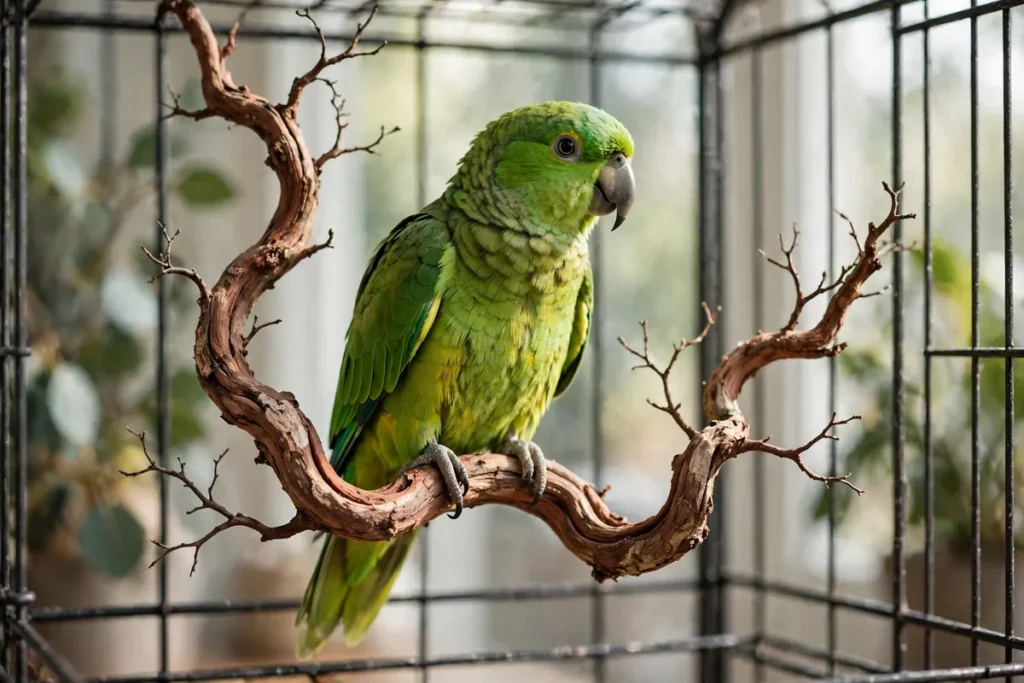
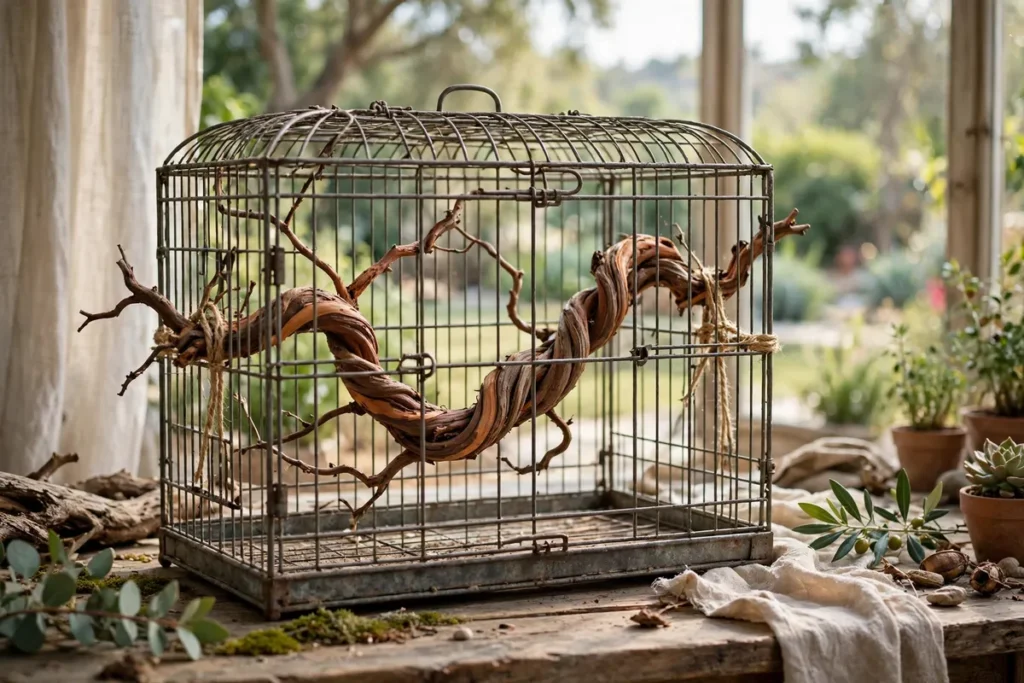
The Zoo Med Natural Manzanita Branch is the best bird perch for most owners, because manzanita is the hardest commonly available perch wood. It comes from the western United States, where manzanita grows as a dense, slow-growing shrub, and the branches are naturally twisted, with diameters that vary along the length — exactly what a bird’s feet need.
Manzanita resists chewing better than any other natural wood here, so it lasts for years even with a destructive parrot. It does not absorb water easily, so it is easy to scrub clean, and the smooth reddish bark is grippy enough for a bird to hold on without slipping.
The only drawback is the smooth surface when new — some birds take a day or two to get used to it.
Best for: Most birds, as the main perch in the cage.
2. A&E Cage Co. Java Wood Multi-Branch Perch — Best Java Wood
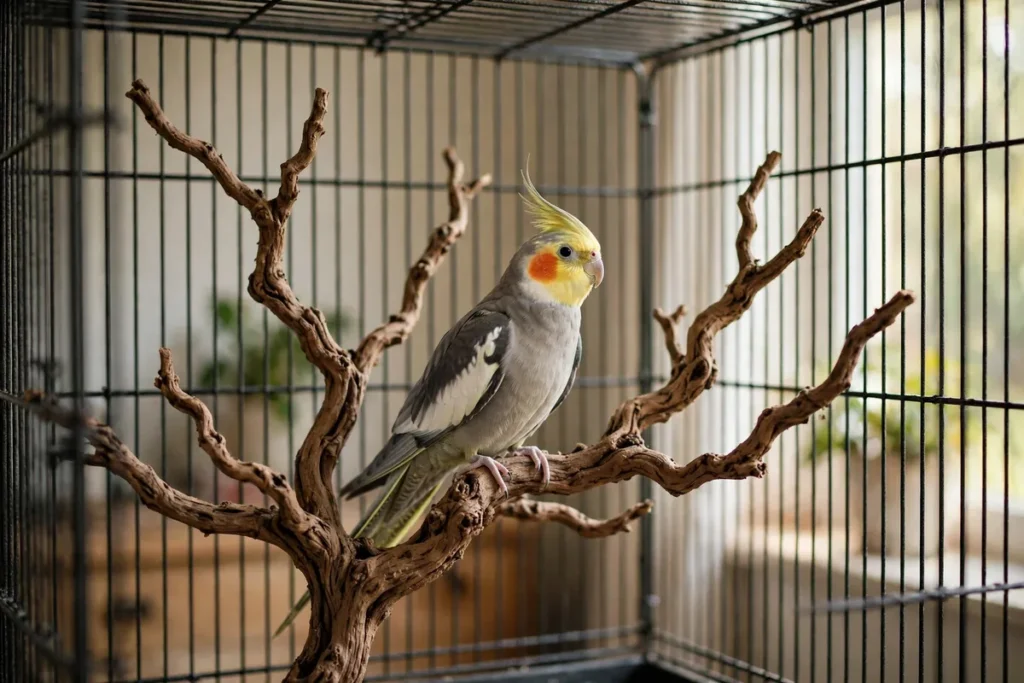
The A&E Cage Co. Java Wood Multi-Branch Perch is the best java wood option. Java wood comes from retired coffee trees, so each branch is gnarled, with multiple offshoots that give your bird several places to perch, climb, and explore.
The wood is dense and heavy — often called nature’s ironwood — and the bumpy, textured bark gives excellent grip and helps keep beaks and nails trimmed naturally. Because each branch is unique, no two perches are alike.
It costs more than a manzanita branch of the same size, and it is more porous, so it needs a good scrub now and then. But for a bird that likes to climb and explore, the multi-branch shape is hard to beat.
Best for: Climbing birds, conures, and parrots that like to explore.
3. Prevue Pet Products Natural Grapevine Branch Perch — Best Grapevine
The Prevue Pet Products Natural Grapevine Branch Perch is the best grapevine option, and the best pick for smaller birds. Grapevine is lighter than manzanita or java wood, with a naturally twisted shape and a varied surface that gives a budgie, cockatiel, or small conure plenty of grip without being too thick to hold.
The branch mounts easily to the cage bars with a wing nut, and the irregular shape encourages the bird to move along it rather than sitting in one spot all day.
Grapevine is softer than manzanita, so a large parrot will chew through it faster. But for small and medium birds, it is an excellent everyday perch.
Best for: Budgies, cockatiels, and small conures.
4. Polly’s Pet Products Hardwood Bird Perch — Best Hardwood
Polly’s Pet Products Hardwood Bird Perch is the best vet-recommended hardwood perch, and the one to pick if you want a perch that is both natural and backed by avian vets. It is made from dragonwood — also called rusty lyonia — a dense Florida hardwood with a naturally textured bark that is easy for a bird to grip.
Each perch is hand-picked, so every piece is unique, with its own shape and diameter variation. The wood is untreated, with no chemicals, and the nickel-plated hardware is bird-safe. It comes in sizes for birds from parakeets up to macaws, so you can match the diameter to your bird properly.
Because it is a natural product, the exact shape varies, and it can splinter in very humid conditions if it is not cleaned regularly.
Best for: Owners who want a vet-recommended natural hardwood perch.
5. Hagen HARI Coffee Wood Branch Perch — Best Coffee Wood
The Hagen HARI Coffee Wood Branch Perch is the best coffee wood option, from the Hagen Group’s HARI brand. Coffee wood comes from pruned coffee trees, so it is sustainably sourced, and the branches have irregular shapes with variable diameters and a smooth-but-not-slippery surface.
The smooth surface is the selling point: it wipes clean in seconds, which matters for a perch that sits under a bird all day, and it is gentle on feet that are arthritic or missing toes.
It is not the best pick for a heavy chewer — a determined parrot will work through coffee wood faster than manzanita. But for an older bird, a bird with sore feet, or an owner who values easy cleaning, it is an excellent choice.
Best for: Older birds, birds with sore feet, and easy cleaning.
6. Kathson Natural Forked Wood Bird Branch Perch — Best Budget
The Kathson Natural Forked Wood Bird Branch Perch is the best budget natural wood perch, and proof that a good perch does not need to cost much. It is a real forked branch, with two or three arms that give your bird a choice of where to sit, and a natural bark surface that is easy to grip.
The forked shape is genuinely useful: a bird can sit in the fork, climb from one arm to another, and use the branch as a small playground inside the cage. It mounts to the bars with a bolt and wing nut, and it comes in sizes for small and medium birds.
It is a lighter wood than manzanita, so it will not last as long with a heavy chewer. But for the price, it is the best value natural wood perch on this list.
Best for: Tight budgets, and a first natural wood perch.
7. Sweet Feet & Beak Natural Manzanita Perch — Best for Large Parrots
The Sweet Feet & Beak Natural Manzanita Perch is the best pick for large parrots, and the heaviest-duty perch on this list. Its manzanita perches are cut thick, with diameters suited to macaws, cockatoos, and African greys — birds that destroy a normal perch in a week.
The wood is the same hard manzanita as the Zoo Med perch, but in larger sizes, with a thicker branch and stronger hardware to match a heavy bird. The hardness means it survives months of chewing from a bird that treats every perch as a toy.
It is overkill for a budgie or a cockatiel — too thick, too heavy, and too expensive for a small bird. But if you keep a large parrot, this is the perch to buy.
Best for: Macaws, cockatoos, and other large parrots.
How to Set Up Perches in the Cage
A good perch is only half the job — where you put it matters just as much. Place the main natural wood perch at the highest point in the cage, since birds sleep high and feel safest up top. Put a second perch of a different diameter lower down, near the food and water, so your bird has a comfortable place to eat.
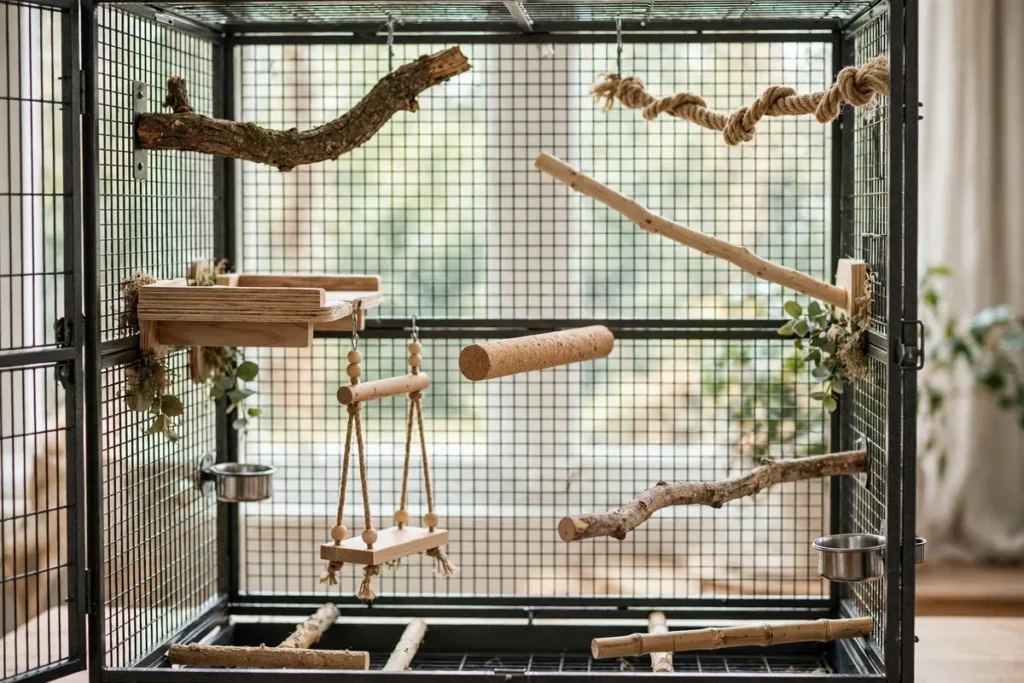
Keep perches away from directly above the food and water dishes, because droppings fall straight down. Leave the middle of the cage open so your bird can move, stretch, and fly the short distance between perches.
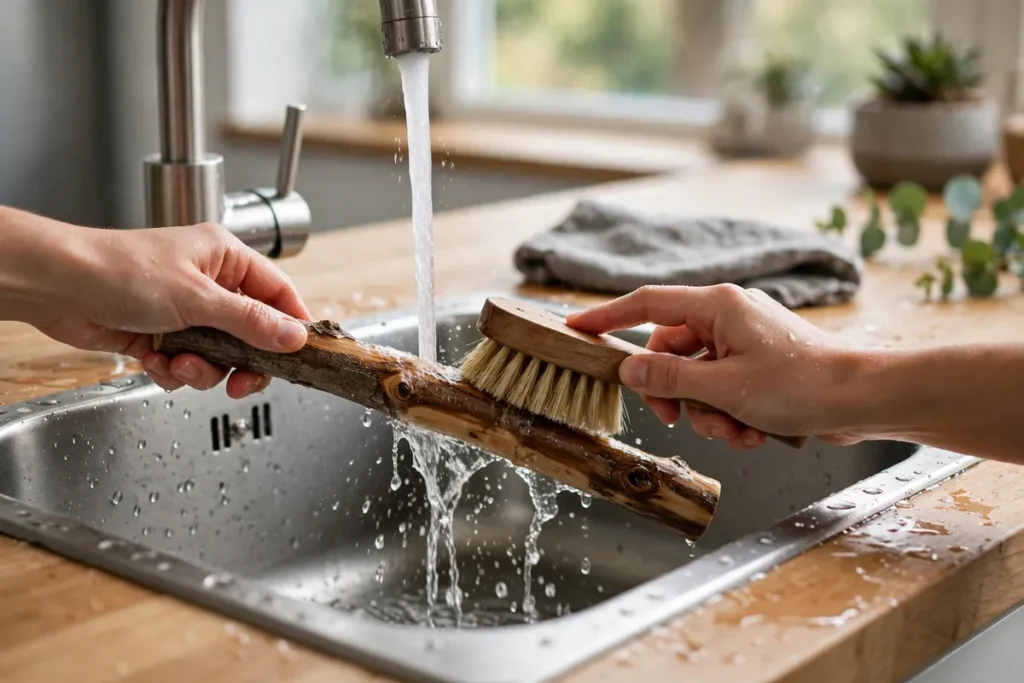
Clean perches weekly with warm water and a stiff brush, and replace any perch that is chewed thin, cracked, or soiled beyond cleaning. A worn perch is a slipping hazard and a source of bacteria. The RSPCA’s pet bird advice covers cage setup, perch placement, and why clean water matters for feather health.
If you are still setting up your bird’s home, our guide to the best bird cage for beginners can help you pick a cage with room for several perches, our roundup of the best bird food for parakeets covers daily feeding, and our comparison of seed vs pellets for parrots explains the two main diet types.
Frequently Asked Questions
How many perches should a bird cage have?
At least three: a natural wood branch as the main perch, a second perch of a different diameter and material, and a rope or grooming perch. More is better, as long as the cage is not so crowded the bird cannot move.
What size perch does my bird need?
The bird’s foot should wrap about three quarters of the way around the perch. Budgies and cockatiels need around half an inch to three quarters of an inch, conures and African greys need three quarters to one and a half inches, and macaws need one and a half to three inches.
Are dowel perches bad for birds?
The smooth, uniform dowel that comes with most cages is the worst common perch, because it forces the foot into one position all day and can cause pressure sores and arthritis. Replace it with a natural wood branch as soon as you can.
How often should I replace a perch?
Replace a perch when it is chewed thin, cracked, or soiled beyond cleaning. Manzanita perches can last years; softer woods like grapevine may need replacing every few months with a heavy chewer.
Can I use a branch from my garden as a perch?
Only if you know the tree species is safe for birds and the branch has never been sprayed. Safe choices include apple, ash, elm, and maple. Never use cherry, oak, cedar, or redwood, and always scrub and dry the branch thoroughly first.
The Bottom Line
The best bird perches are natural wood branches, and the Zoo Med Manzanita Branch is the safest all-round pick — hard, long-lasting, and the right shape for a bird’s feet. The A&E Java Wood perch is the best for climbing, the Prevue Grapevine suits small birds, Polly’s Hardwood is the vet-recommended choice, the Hagen Coffee Wood perch is easiest to clean, the Kathson forked branch is the best value, and Sweet Feet & Beak makes the manzanita perch for large parrots. Put three or four perches of different sizes in the cage, replace the free dowel first, and your bird’s feet will thank you for years.