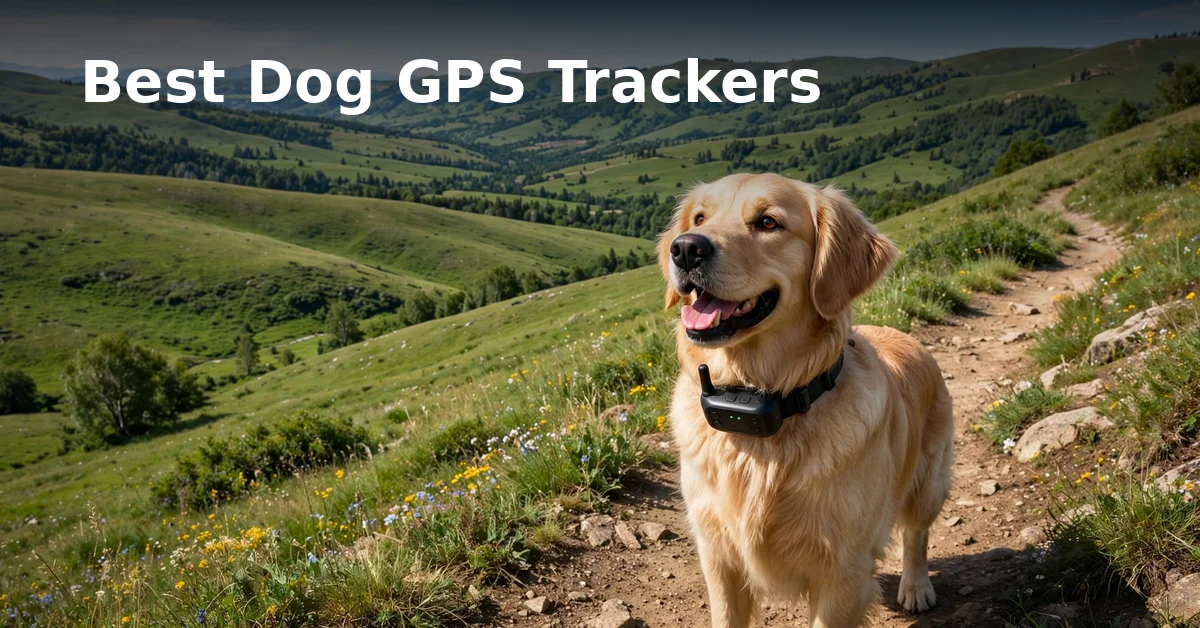
Best Dog GPS Trackers (2026): 7 Picks to Never Lose Your Dog
Every year, millions of dogs slip out of a gate, bolt after a squirrel, or wriggle out of a collar — and a lost dog can cover miles before you notice it is gone. A good GPS tracker will not stop your dog running, but it will tell you exactly where it went, in real time, on your phone.
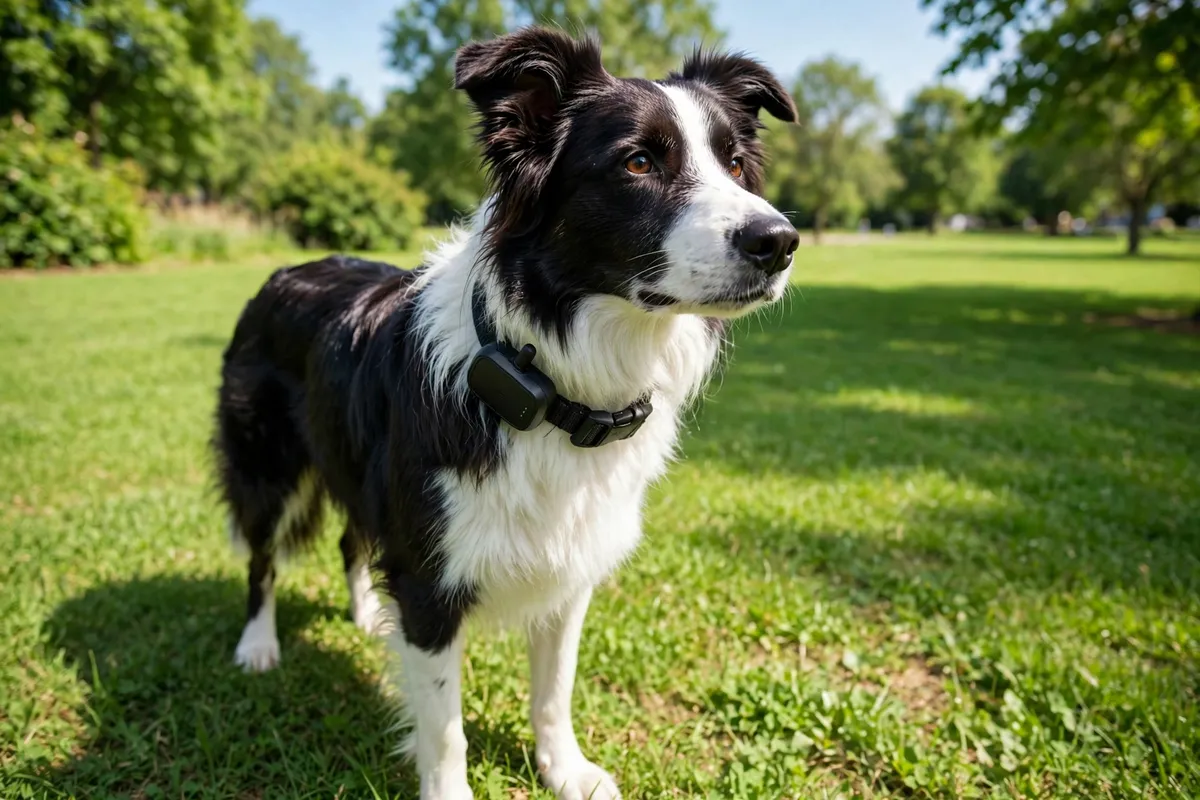
The best dog GPS trackers use cellular GPS to show your dog’s live location on a map, with alerts when your dog leaves a safe zone and a history of where it has been. This guide covers seven solid options, plus how to choose one.
Prices change, so check the current price before buying.
Our Quick Picks
- Best overall: Tractive GPS DOG 6 — fast live tracking in 175+ countries.
- Best battery: Fi Series 3+ — up to 3 months per charge, escape alerts.
- Best GPS fence combo: Halo Collar 5 — GPS fence plus tracking, no buried wire.
- Best for activity tracking: FitBark GPS Dog Tracker — GPS plus activity and sleep data.
- Best for small dogs: Jiobit — tiny and light at 17 grams, made for small pets.
- Best for hunting and rural dogs: Garmin Alpha T 20 — long-range tracking where phones have no signal.
- Best budget: Apple AirTag with a rugged holder — cheap, but Bluetooth only, not real GPS.
How to Choose a Dog GPS Tracker
Before the reviews, here is what matters when you are picking the best dog GPS trackers.
Real GPS vs Bluetooth. A true GPS tracker uses cellular and satellite signals to find your dog anywhere with phone coverage — even miles from home. A Bluetooth tag like an Apple AirTag only works when an Apple device passes nearby. If your dog can run far, buy real GPS.
Battery life matters more than you think. A tracker that needs charging every two days will be on the charger the day your dog escapes. Look for at least a week per charge for a clip-on tracker. Fi’s Series 3+ lasts up to 3 months on a mostly-at-home dog.
Subscription is part of the cost. Almost every GPS tracker needs a paid plan for the cellular connection, on top of the hardware. Check the yearly plan cost before you buy — a cheap tracker with an expensive plan costs more over two years than a pricier one with a cheap plan.
Size and weight. A tracker should be light enough that your dog forgets it is there. Small dogs need one under an ounce; a big dog can carry a heavier unit. If it is bulky, your dog will scratch at it.
Safe zones and escape alerts. The most useful feature is not the map — it is the alert. Set a safe zone around your home, and the tracker tells you the moment your dog leaves it. Tractive updates every two to three seconds in live mode — the fastest here.
A warning about Whistle. Whistle was once one of the biggest names in pet GPS, but Tractive bought the brand and shut its hardware and servers down in 2025. Whistle trackers no longer work. Do not buy one second-hand — it will not track your dog.
The 7 Best Dog GPS Trackers
1. Tractive GPS DOG 6 — Best Overall
The Tractive GPS DOG 6 is the best dog GPS tracker for most owners: a small, light clip-on tracker that attaches to any collar, updates your dog’s position every two to three seconds in live mode, and works in more than 175 countries.
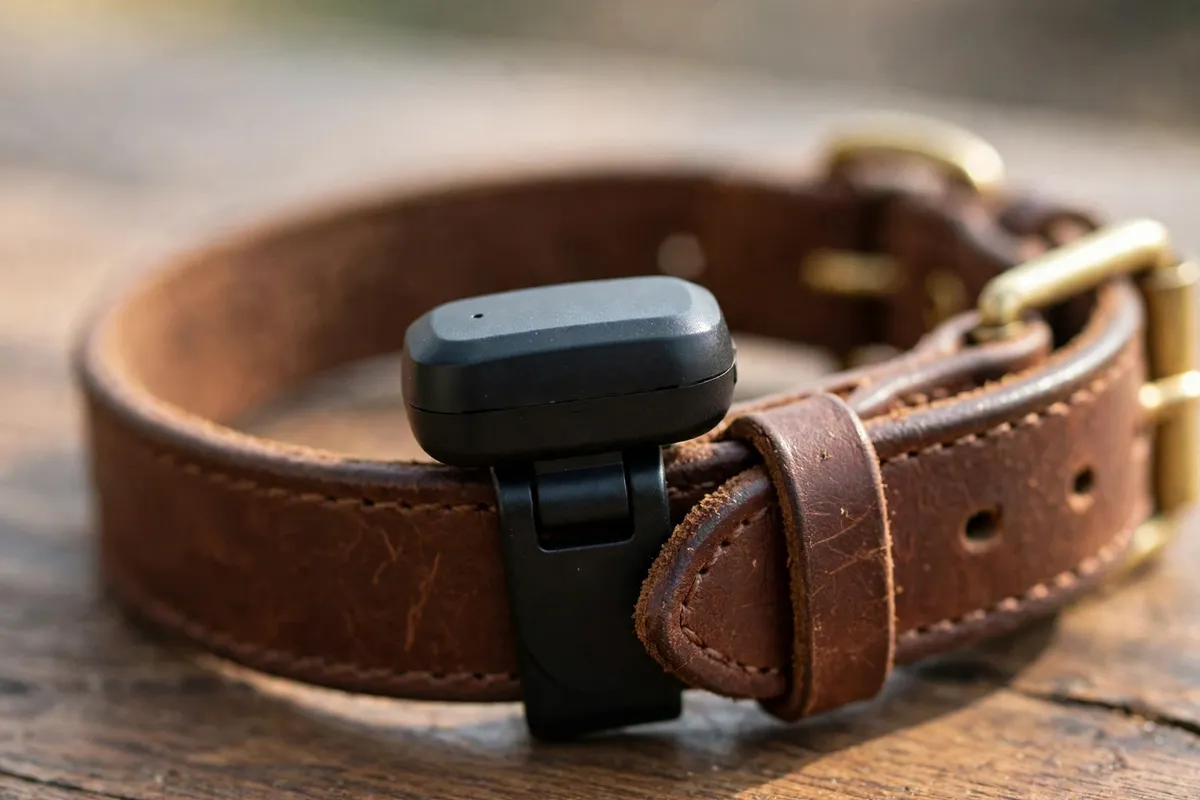
Battery life is up to 14 days with Power Saving Zones set up at home, where the tracker stops using GPS, and around 6 days without them. The app shows a live map, a history of where your dog has been, and activity and sleep data.
GPS only works with a paid Tractive plan, and the cheapest plans are yearly. But for speed, coverage, and simplicity, nothing else here matches it. PetTrackerLab’s detailed Tractive GPS DOG 6 review confirms the fast updates and battery figures from real-world use.
Best for: Most dogs, as the everyday tracker.
2. Fi Series 3+ — Best Battery
The Fi Series 3+ is a smart collar with GPS built in, and its headline trick is battery life measured in weeks and months: up to 3 months per charge for a mostly-at-home dog, 4 to 6 weeks at moderate activity, and up to 2 weeks for a dog outdoors most of the day.
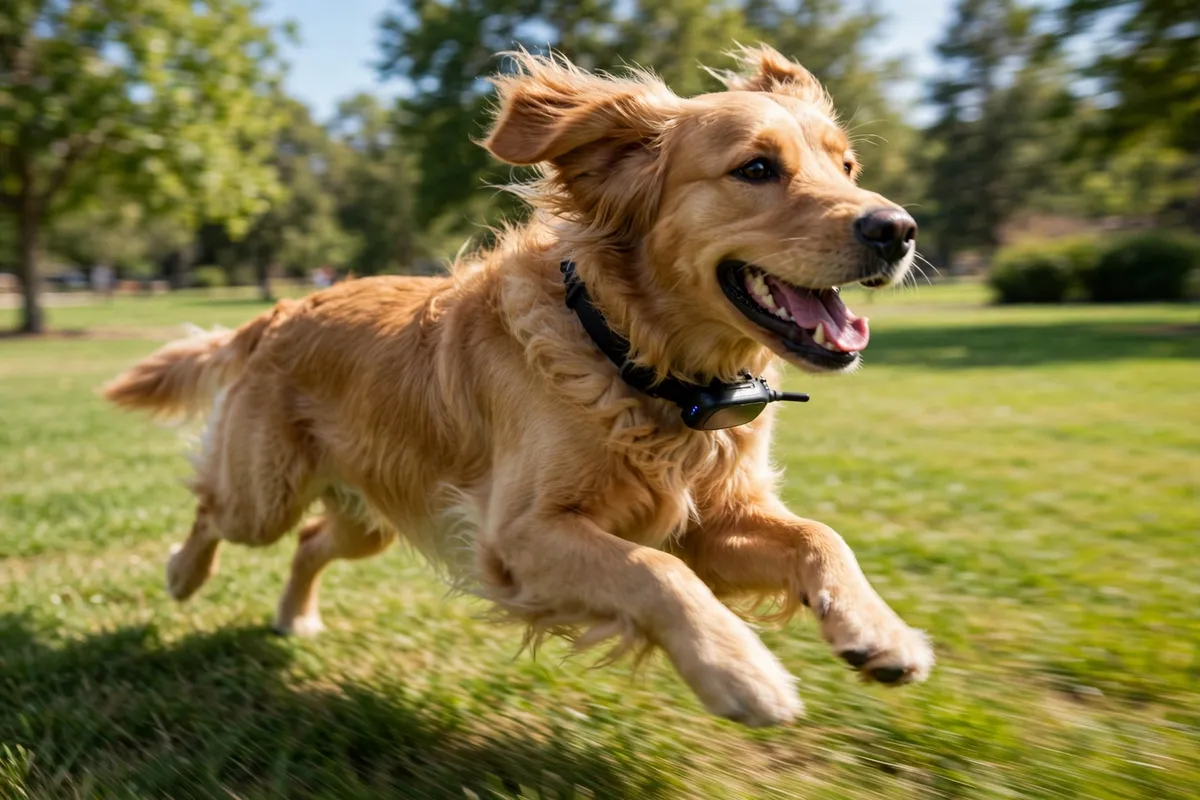
Because the tracker is built into the collar, it is harder for a dog to chew off or lose, and the escape alerts are fast. It also tracks barking, scratching, eating, and rest, so you see your dog’s habits alongside its location.
The catch is the Fi membership: the collar only works with an active Fi plan, and it is a premium-priced product aimed at larger, athletic dogs. But if you hate charging things and you have an escape artist, the Fi Series 3+ is one of the best dog GPS trackers you can buy.
Best for: Escape artists, and owners who do not want to charge a tracker every week.
3. Halo Collar 5 — Best GPS Fence Combo
The Halo Collar 5 is different: a GPS fence and a tracker in one. Instead of a buried wire, you draw a fence on a map in the app, and the collar warns your dog with sound and vibration at the boundary, then tracks it if it crosses.
That makes it the best pick if your dog roams a large garden or a farm and you want containment as well as tracking, with all-day battery life and a companion app for training.
The trade-off is cost: the Halo Collar 5 is the most expensive product here by far, and it needs a subscription too. It is overkill for a dog in a fenced garden that walks on a lead — but for a large property with no physical fence, nothing else does the same job.
Best for: Large gardens and farms, and owners who want a fence and a tracker in one device.
4. FitBark GPS Dog Tracker — Best for Activity Tracking
The FitBark GPS Dog Tracker is a small, light clip-on tracker that pairs cellular GPS with activity monitoring. It tracks steps, active minutes, sleep, and rest, and flags changes in your dog’s routine that can be an early sign of illness — genuinely useful for a senior dog or a breed prone to joint problems.
The tracker is waterproof, rugged, and light enough for most dogs, and the app shows the live map and a daily activity score. Battery life is around two to three weeks per charge.
It needs a subscription for GPS, like the others, and the health data only helps if you check it. But for owners who want to watch their dog’s health as well as its location, FitBark is among the best dog GPS trackers here.
Best for: Senior dogs, and owners who want health data with their tracking.
5. Jiobit — Best for Small Dogs
The Jiobit is the smallest GPS tracker here — just 17 grams — made for small dogs and cats that cannot carry a normal tracker. It clips to a collar or harness and uses cellular GPS with live tracking and safe-zone alerts, just like the bigger units.
Its small size is the whole point: a tracker under an ounce will not bother a small dog or catch on things the way a heavier unit can. The battery lasts around a week per charge.
The catch is coverage: Jiobit only works in the United States, so it is no good for owners in the UK, Canada, or Australia, and it needs a paid subscription. But for a small dog in the US, it is the best dog GPS tracker.
Best for: Small dogs and puppies that cannot carry a heavier tracker.
6. Garmin Alpha T 20 — Best for Hunting and Rural Dogs
The Garmin Alpha T 20 is built for a different world: hunting dogs and farm dogs working far from phone signal. It uses radio and satellite tracking, not a mobile network, so it keeps working in woods and fields where a cellular tracker goes dead.
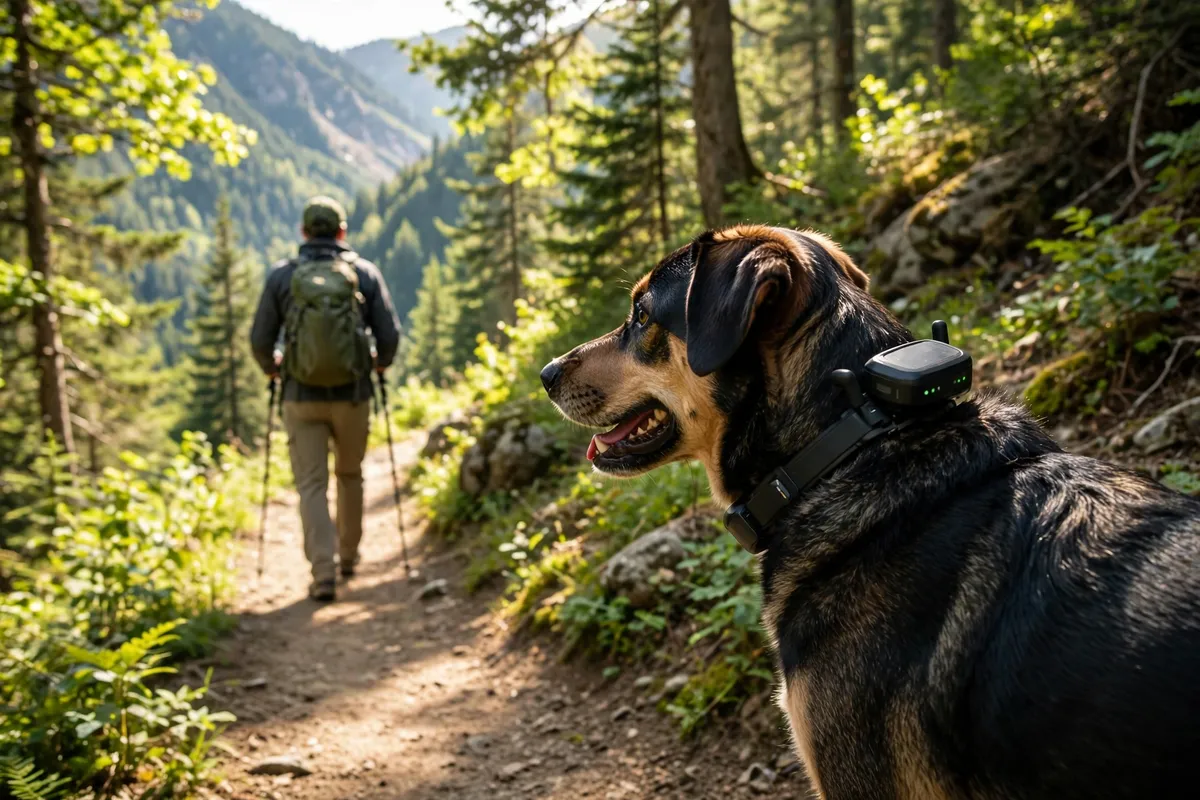
Range is measured in miles, not metres, and the handheld unit shows your dog’s position, direction, and distance on a map, even with no phone coverage. It is rugged and waterproof, built for mud, water, and rough ground.
The trade-off is that it is a specialist tool: heavier and more expensive than a normal pet tracker, needing a compatible Garmin handheld, and overkill for a city dog. But if your dog works off-lead in the countryside, the Garmin Alpha T 20 is the best dog GPS tracker for the job.
Best for: Hunting dogs, farm dogs, and anywhere with no phone signal.
7. Apple AirTag With a Rugged Holder — Best Budget
The Apple AirTag is the cheapest option here, worth including with one clear warning: it is not a GPS tracker. An AirTag uses Bluetooth and the Apple Find My network, so it only updates when an iPhone or other Apple device passes within Bluetooth range of your dog. In a busy town, that can be often. On a country walk, it may not update at all.
For a dog that never leaves a built-up area, an AirTag in a rugged holder is a cheap safety net. There is no subscription, the battery lasts about a year, and the holder keeps it on the collar.
Do not rely on it as your only tracker if your dog can run far or roam the countryside. Treat it as a backup, or as a first step before buying a real GPS tracker. The Consumers Guide’s roundup of the best pet GPS trackers explains the difference between Bluetooth tags and true GPS trackers — and why it matters when a dog is lost.
Best for: A cheap backup tracker for town dogs, and owners who only want to spend a little.
How to Set Up Your Tracker So It Works When It Matters
A tracker only helps if it is on your dog, charged, and set up before the escape happens. Put it on the collar your dog wears every day, and charge it on a fixed day each week.
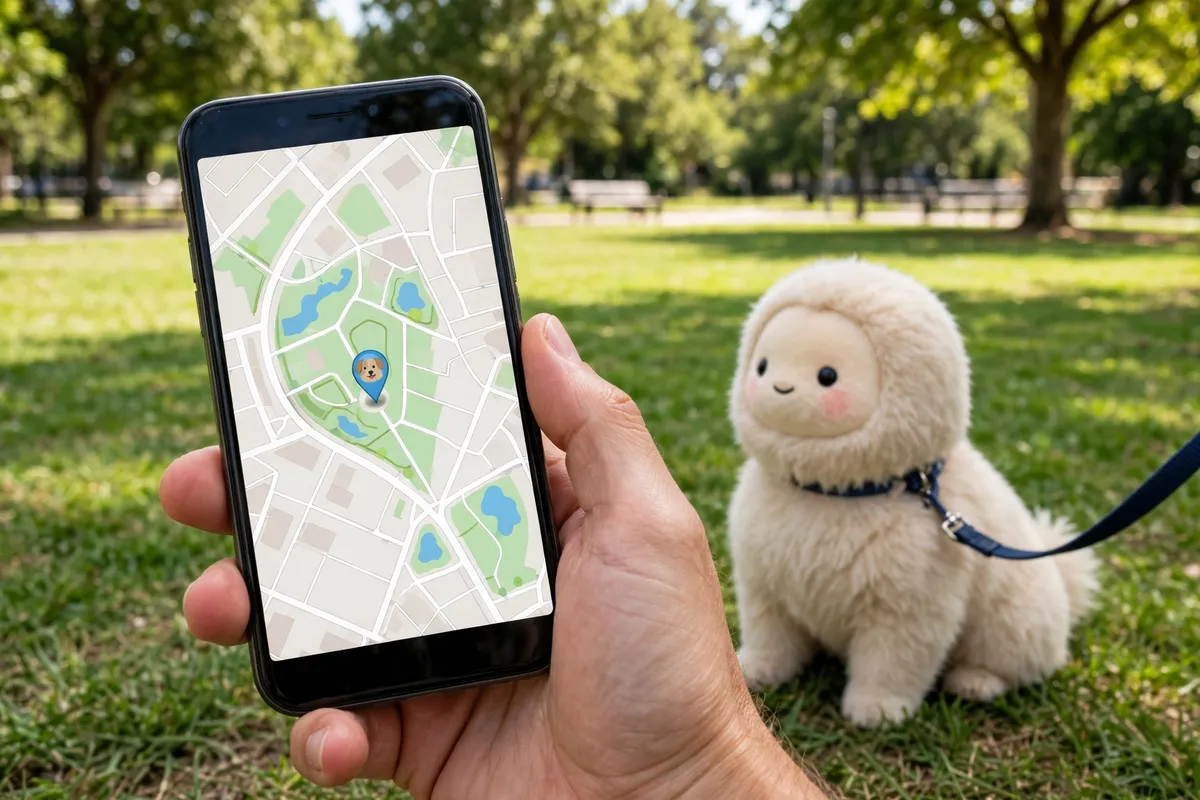
Set up a safe zone around your home as soon as you buy the tracker, and test the alert: walk to the end of the street and check your phone tells you the dog has left the zone. Test the live tracking too, so you know how fast it updates.
Keep your dog’s ID tag and microchip up to date too — a tracker tells you where your dog is, but a tag and a chip bring it home if someone else finds it. Our guide to the best dog puzzle toys has ideas for keeping a clever dog busy at home, and if your dog is a runner, our guide to how to crate train a puppy covers safe confinement while you work on recall. And our comparison of wet dog food vs dry dog food explains which diet suits different dogs.
Frequently Asked Questions
Do dog GPS trackers need a subscription?
Almost all of them do. The tracker needs a cellular connection to send its location to your phone, and that is what the subscription pays for. Only Bluetooth tags like the AirTag work without one — and they are not real GPS trackers.
How accurate is a dog GPS tracker?
In open ground, most trackers are accurate to within about 10 metres. Accuracy drops indoors, under thick tree cover, or in deep valleys, where the signal is weaker.
Can a GPS tracker replace a microchip?
No. A tracker tells you where your dog is right now. A microchip is permanent ID a vet or shelter can read if someone else finds your dog. Every dog should have both.
Will a GPS tracker work without phone signal?
Cellular trackers like Tractive and Fi need mobile coverage to send their location. Radio-based trackers like the Garmin Alpha keep working where phones have no signal.
Is a GPS tracker worth it for an indoor dog?
If your dog never leaves the house or a fenced garden, probably not. If it ever slips a lead, digs under a fence, or bolts after wildlife, a tracker is cheap insurance.
The Bottom Line
The best dog GPS trackers are the Tractive GPS DOG 6 for most dogs — fast, light, and working in 175+ countries — and the Fi Series 3+ for the longest battery and a collar your dog cannot chew off. The Halo Collar 5 is the pick if you also need a GPS fence, FitBark is best for health tracking, Jiobit is best for small dogs, and the Garmin Alpha T 20 is the one for hunting and rural work. An AirTag is a cheap backup, but it is not a GPS tracker. Pick the tracker that fits your dog, your ground, and your budget — then charge it, set the safe zone, and test the alert.