Wire Dog Crate vs Plastic Dog Crate: Which Is Right for Your Dog?
Shopping for a dog crate? You will quickly face the same question every dog owner faces: wire vs plastic dog crate — which one is right? Both types do the same basic job. They give your dog a safe den, help with house training, and keep your dog secure when you cannot watch them. But they feel very different to live with.
Wire crates are usually the better pick for everyday use at home, while plastic crates are usually the better pick for travel. But the right answer depends on your dog — a heavy chewer, an anxious dog, a puppy, and a frequent flyer all need different things.
Wire vs Plastic Dog Crate at a Glance
| Feature | Wire Crate | Plastic Crate |
|---|---|---|
| Ventilation | Excellent — air flows through from every side | Limited — air comes through vents and the door |
| Visibility | Your dog can see in every direction | Your dog sees mostly through the front door |
| Den feel | Open and airy | Enclosed and cozy |
| Durability | Strong steel wire, bars can bend | Tough molded shell, resists dents |
| Chew resistance | Determined chewers can bend bars | Chewers can gnaw the plastic near the door |
| Cleaning | Wipe the tray and bars; fur falls through | Wipe the smooth shell; mess stays contained |
| Weight | Lighter for its size | Heavier in large sizes |
| Folds flat | Yes, most wire crates fold flat for storage | No, plastic crates do not fold |
| Car travel | Works, but offers less crash protection | Better protection in the car |
| Air travel | Not accepted by airlines | Accepted when it meets airline rules |
| Noise | Can rattle | Quiet |
| Sizing | Many sizes, often with a divider panel | Many sizes, usually no divider panel |
| Assembly | Set up in minutes, no tools | Two halves bolt together |
| Looks | Industrial, see-through | Solid and neat, hides mess |
What Is a Wire Dog Crate?
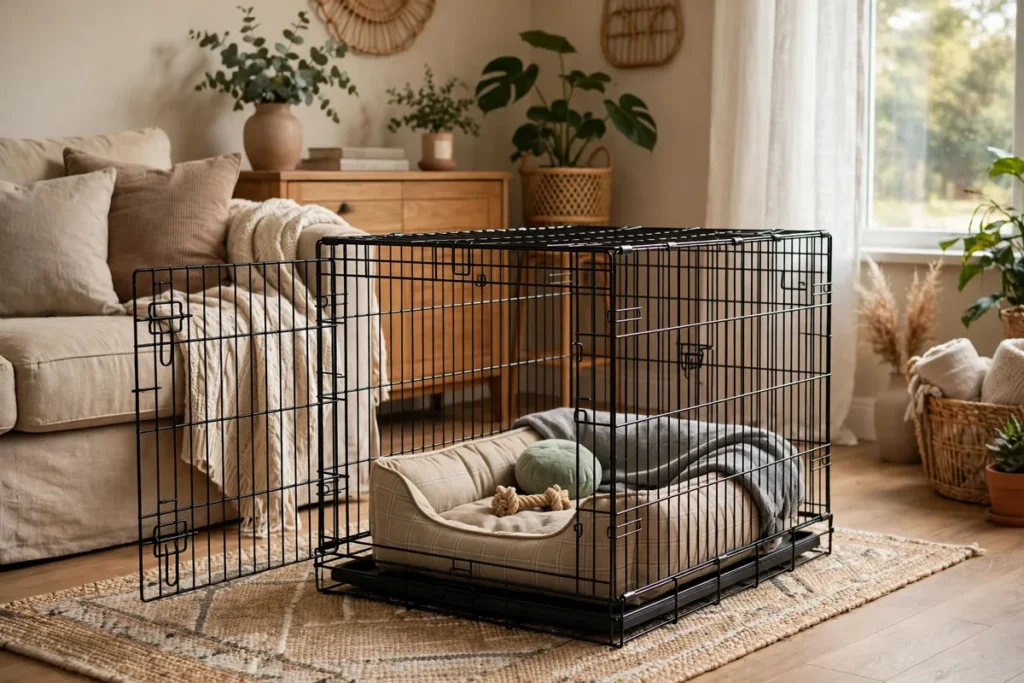
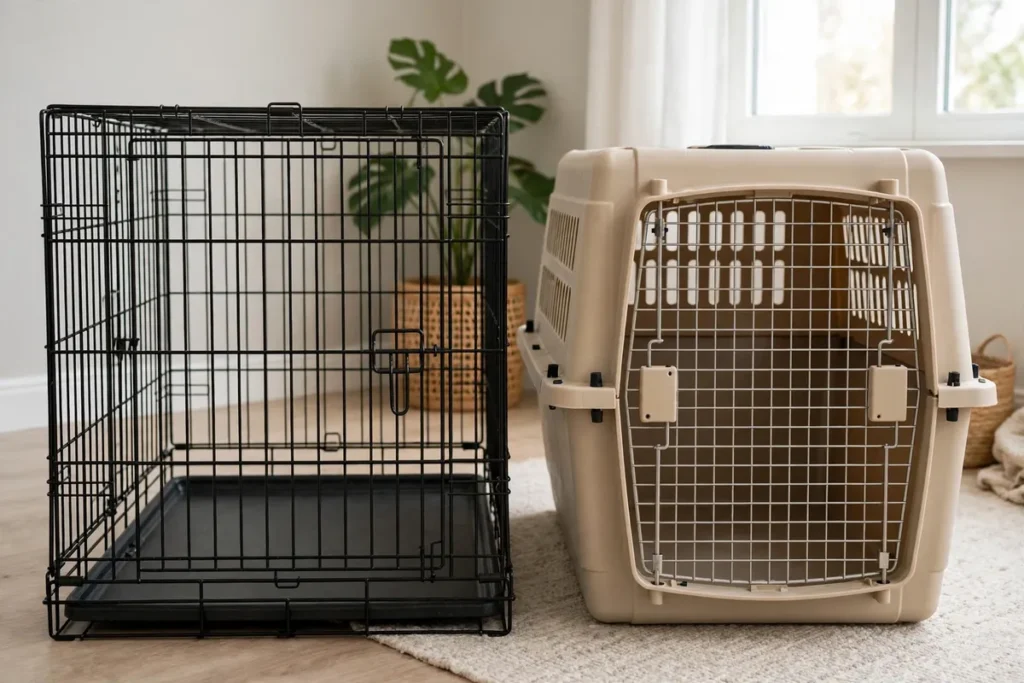
A wire dog crate is a box of coated steel wire, with bars on every side, a door at the front (often a second on the side), and a removable plastic tray on the bottom. Most fold flat in seconds, which makes them easy to store or carry to the car.
They come in many sizes, and many include a divider panel — a big deal for puppies, since you can keep the space small while your puppy is little and move the panel as they grow.
The open design is both its biggest strength and its biggest weakness: air flows freely and your dog can see the room, but a dog that wants privacy or gets overstimulated by everything going on may find it too exposed.
What Is a Plastic Dog Crate?
A plastic dog crate, sometimes called a kennel or travel carrier, is a hard molded shell in two halves, with a barred door at the front and ventilation slots along the sides and top. The halves bolt together, and many models have a handle on top.
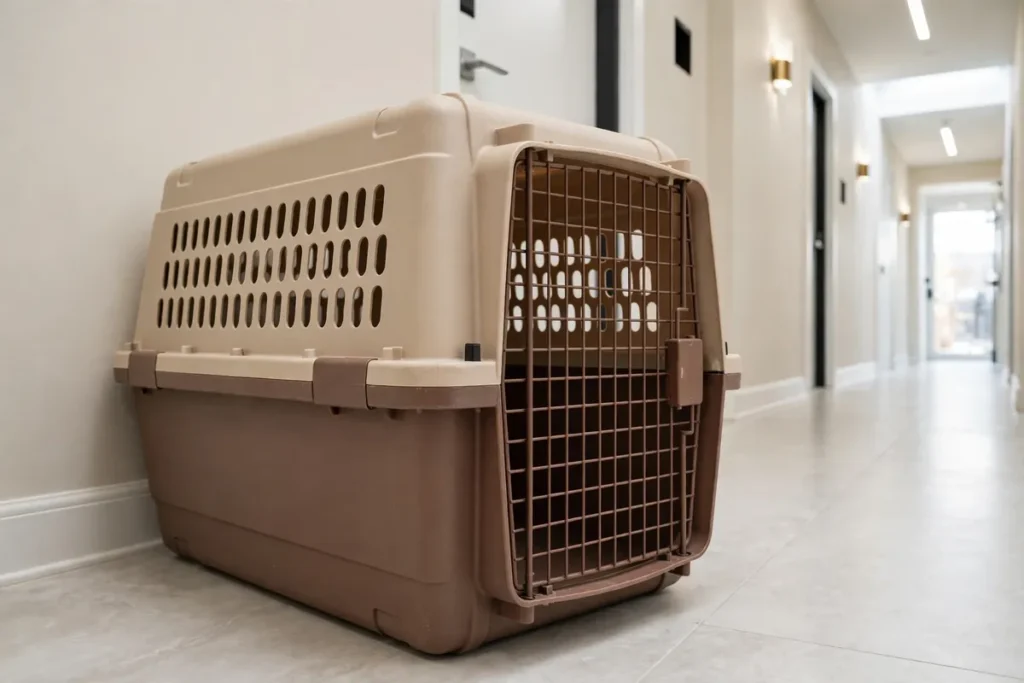
Plastic crates feel more like a den. The solid walls block out light and distractions, which helps anxious dogs settle and puppies sleep, and they contain messes better: an accident stays in the tray instead of leaking onto your floor.
The trade-off is airflow and visibility: a plastic crate is warmer in summer and darker inside, and it does not fold, so it takes up the same space in storage as in use.
Ventilation and Visibility
In a wire vs plastic dog crate comparison, ventilation is where wire crates clearly win. Air moves through the bars from every direction, keeping the crate cool on warm days. If you live somewhere warm, or your dog runs hot, wire is the more comfortable choice.
Plastic crates rely on vents, and while good ones have plenty, they still hold more heat — a real difference in a warm car or a sunny room.
Visibility cuts the other way. Some dogs love watching the household from their crate, and a wire crate feels less like being shut away. Other dogs get worked up by everything they can see, and a plastic crate’s solid walls help them switch off — if your dog barks at everything that moves, that privacy may help them rest.
Durability and Chew Resistance
Both types are tough, but they fail in different ways. A wire crate’s weak points are the bars and latches: a strong dog can bend thin bars, and a clever dog can learn to work a simple latch. If your dog is a serious chewer or escape artist, look for thicker bars and a secure latch.
A plastic crate’s weak point is the plastic itself, especially around the door frame and vents. A dog that chews the door can wear through it over time, and a powerful dog can crack a thin shell — well-made crates use thick plastic that holds up, but cheap ones feel flimsy.
Neither type is truly escape-proof for a determined dog. If your dog regularly breaks out, the problem is usually anxiety, not the crate — talk to a trainer or your vet. The AKC’s crate training guide explains how to build positive associations so your dog sees the crate as a safe place, not a trap.
Cleaning
Cleaning is a tie that depends on the mess. A plastic crate is easier after an accident because the solid shell contains everything — wipe it out or hose it down outside and it is ready again.
A wire crate is easier to clean day to day: fur and crumbs fall through the bars onto the tray, which slides out for a quick wipe. But after a big accident, the bars, corners, and tray edges all need scrubbing, which takes longer than wiping a smooth shell.
For puppies still house training, the plastic crate’s contained design is a real advantage. For a house-trained adult dog, the wire crate’s quick daily wipe-down is more convenient.
Weight and Portability
Wire crates are lighter for their size, and folding flat is a genuine advantage. You can fold one up, lean it against a wall, slide it under a bed, or load it into the car without it taking up the whole trunk. Taking it to a friend’s house, training class, or on holiday is much easier.
Plastic crates are heavier and do not fold. A large one is bulky to carry and takes up a lot of storage space. Smaller ones have a carry handle, but medium and large sizes are a two-handed job to move.
Travel: Car and Plane
For car travel, plastic crates have the edge. The solid shell gives your dog more protection if you brake hard or have a bump, and stops them being thrown around as much.
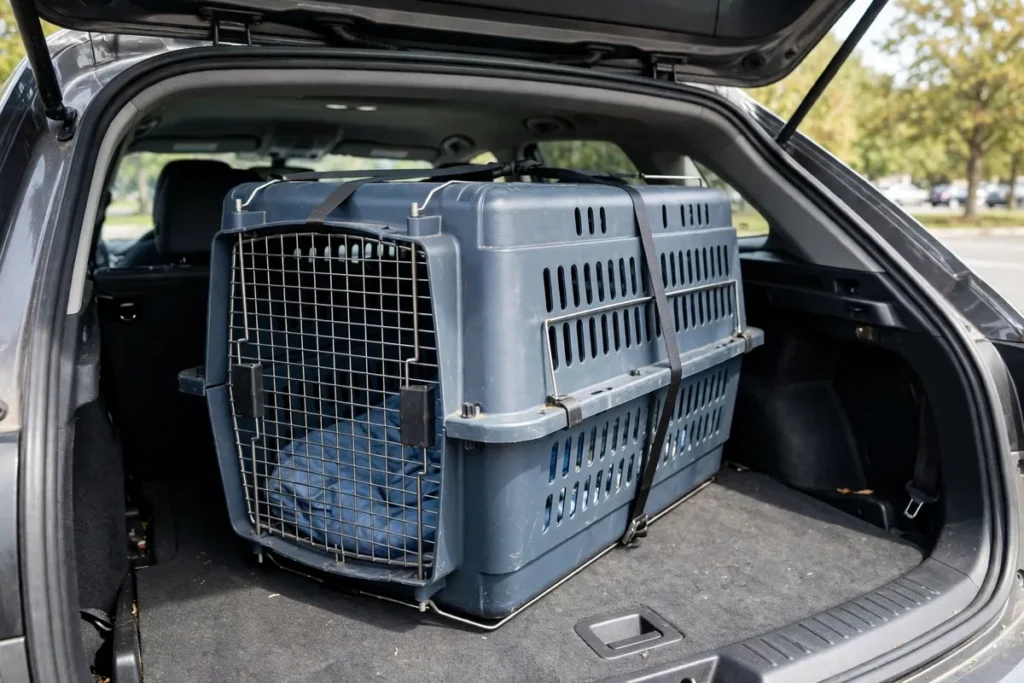
For air travel, plastic is the only option — airlines accept hard-sided plastic crates that meet their rules and do not accept wire crates in the cargo hold. Check your airline’s exact size and ventilation rules before you travel.
For everyday trips to the vet or training class, either type works, and the wire crate’s lighter weight and folding design make it easier to load and unload.
Comfort and the Den Feeling
Dogs are den animals, and a crate works best when it feels like a safe, cozy den. A plastic crate does this naturally — the solid walls, darker interior, and smaller opening make it feel enclosed and private, which is why many anxious dogs and puppies settle faster in one.
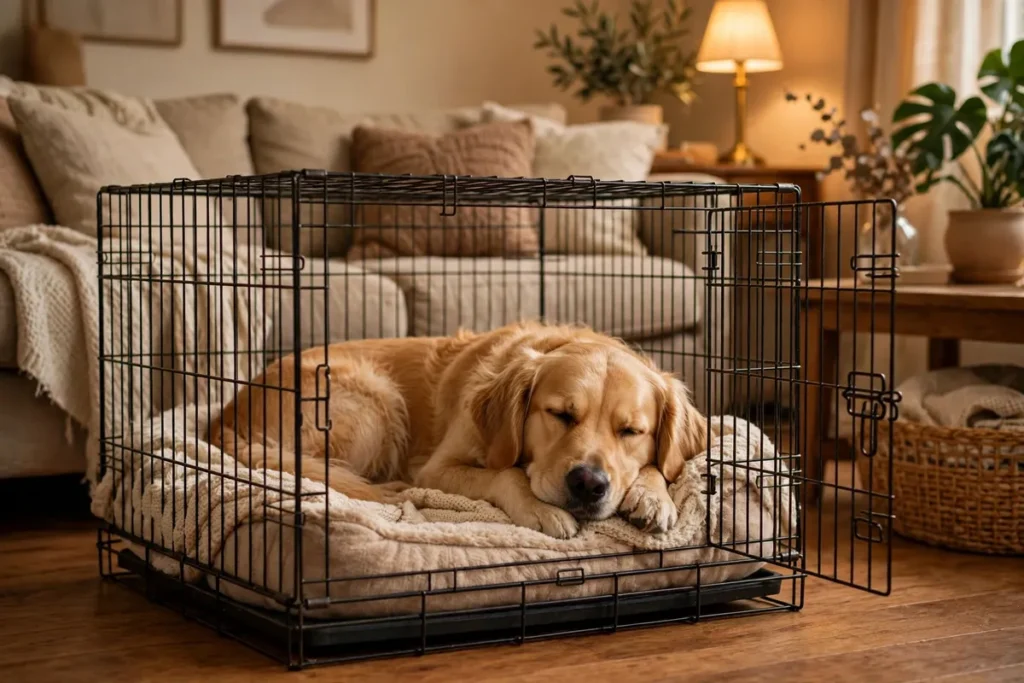
A wire crate can feel too open for some dogs, but a crate cover — or even a blanket draped over the top and sides — turns it into a cozy den while keeping airflow from the front. Leave the front uncovered so your dog can see out.
Whichever type you choose, add a comfortable bed or mat and a safe chew toy. A dog that is comfortable in their crate will happily go in on their own.
Wire vs Plastic Dog Crate: Which Is Better for Your Dog?
Choose a wire crate if: your dog will mostly use the crate at home, you want the best airflow, you need to fold it away, you are crate training a puppy and want a divider panel, or your dog likes to see what is going on around them. Our guide to the best dog crate for house training can help you pick the right size.

Choose a plastic crate if: you travel by car or plane, your dog is anxious and needs privacy, you want the easiest clean-up after accidents, or your dog settles better in a dark, enclosed space.
For puppies: a wire crate with a divider panel is usually the smarter buy. The divider keeps the space small for house training while your puppy is little, and you only buy one crate as they grow. Pair it with our guide on how to crate train a puppy and a consistent routine.
For anxious dogs: a plastic crate, or a wire crate with a cover, is usually better — the enclosed feeling helps many nervous dogs relax. The AKC’s advice on crate training warns never to use a crate as punishment and never to crate a dog that panics in one — if your dog is truly distressed, talk to your vet or a trainer.
How to Pick the Right Size
Getting the size right in a wire vs plastic dog crate matters more than the material. A crate should be big enough for your dog to stand up, turn around, and lie down stretched out, but not so big that your dog can use one corner as a bathroom — the rule the AKC recommends, for both wire and plastic crates.
Measure your dog from nose to base of tail, add a few inches, and compare that to the crate’s interior length. If you are buying for a puppy, buy a crate that fits the adult dog and use a divider panel to keep the space small while they grow. Also check the door: one that opens wide is easier for a large dog.
Frequently Asked Questions
Is a wire or plastic crate better for a puppy?
A wire crate with a divider panel is usually better — the divider keeps the space small for house training and moves as your puppy grows, so you only buy one crate. A plastic crate also works, especially if your puppy sleeps better in a dark, den-like space.
Can I use a wire crate in the car?
Yes, and many people do. A plastic crate offers more protection in a crash, so if car safety is your main concern, plastic is safer. Either way, secure the crate so it cannot slide around.
Do airlines accept wire crates?
No. Airlines require hard-sided plastic crates for dogs in the cargo hold, and the crate must meet the airline’s size and ventilation rules.
Which crate is easier to clean?
A plastic crate is easier after an accident because the solid shell contains the mess. A wire crate is easier for daily cleaning because fur and crumbs fall through to the removable tray. For a puppy still house training, plastic is usually the easier option.
The Bottom Line
Wire vs plastic dog crate has no single winner. Wire wins on airflow, visibility, weight, and folding away. Plastic wins on privacy, travel, and containing messes. Most dogs are happy in either type once trained to love it, so pick the one that fits your life: wire for everyday use at home, plastic for travel and for dogs that need a cozy den. Get the size right, add a bed, and train slowly with rewards.