How to Potty Train a Puppy: A Step-by-Step Guide
Bringing a new puppy home is one of the happiest days of a dog owner’s life — and then the puppy pees on the rug. Then on the kitchen floor. Then on your shoe. If you are standing in a puddle right now wondering what you signed up for, take a breath: every puppy owner has been here, and every puppy can learn. Knowing how to potty train a puppy is mostly about routine, patience, and timing — not any special trick.
Most puppies can be reliably house trained in four to six weeks with a consistent routine, though small breeds often take longer. That is normal — a puppy’s bladder is tiny and its control is still developing, so accidents are part of the process, not a sign of failure. This guide covers everything, from what to buy before day one to what to do at 3 a.m. If you have just brought your puppy home, read our first-week guide, How to Take Care of a New Puppy, too.
What You Need Before You Start
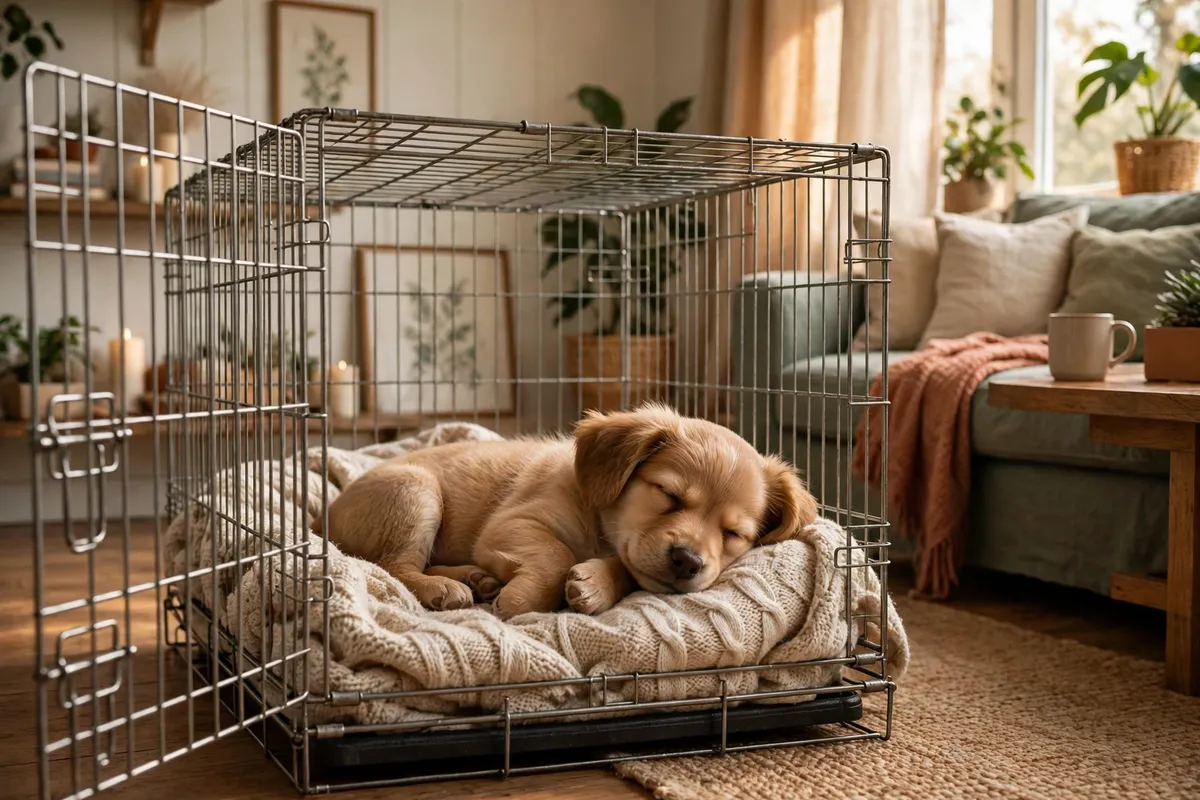
You do not need much, but having the right supplies ready before day one helps. Start with a crate just big enough for your puppy to stand up, turn around, and lie down in. If it is too large, your puppy will sleep in one corner and use the other as a bathroom — many crates come with a divider panel for this.
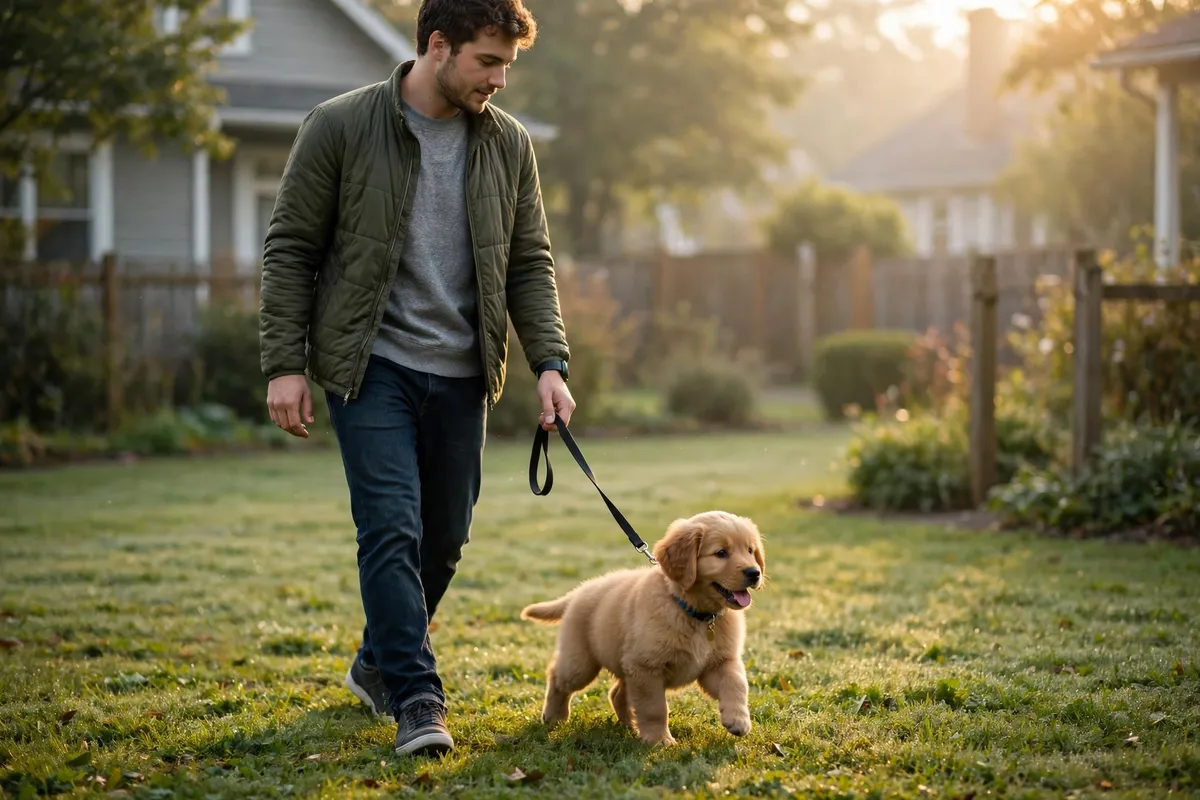
You will also need a leash, even with a fenced yard — walking your puppy to the same spot teaches it where the bathroom is. Soft treats are essential too, since you will reward your puppy many times a day, so keep a treat pouch by the back door.
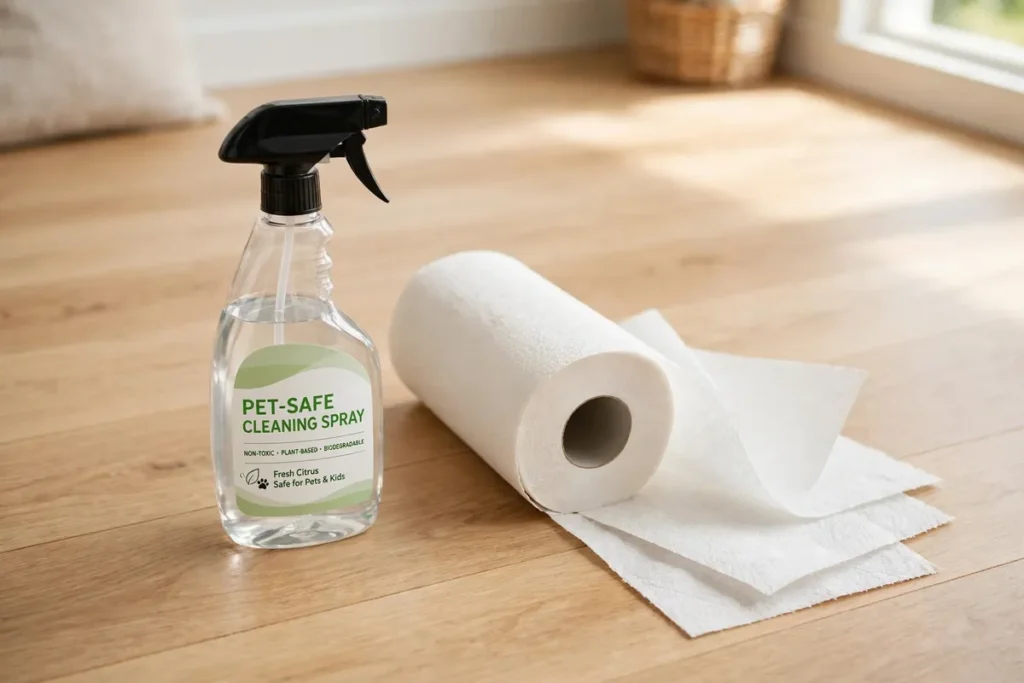
For accidents, buy an enzymatic cleaner made for pet urine. Regular cleaners may remove the smell for you, but a dog’s nose can still detect it — and that scent tells your puppy “this is a toilet spot.” An enzymatic cleaner breaks down the urine itself, the only way to truly remove the marker. Finally, pick one potty spot near the door.
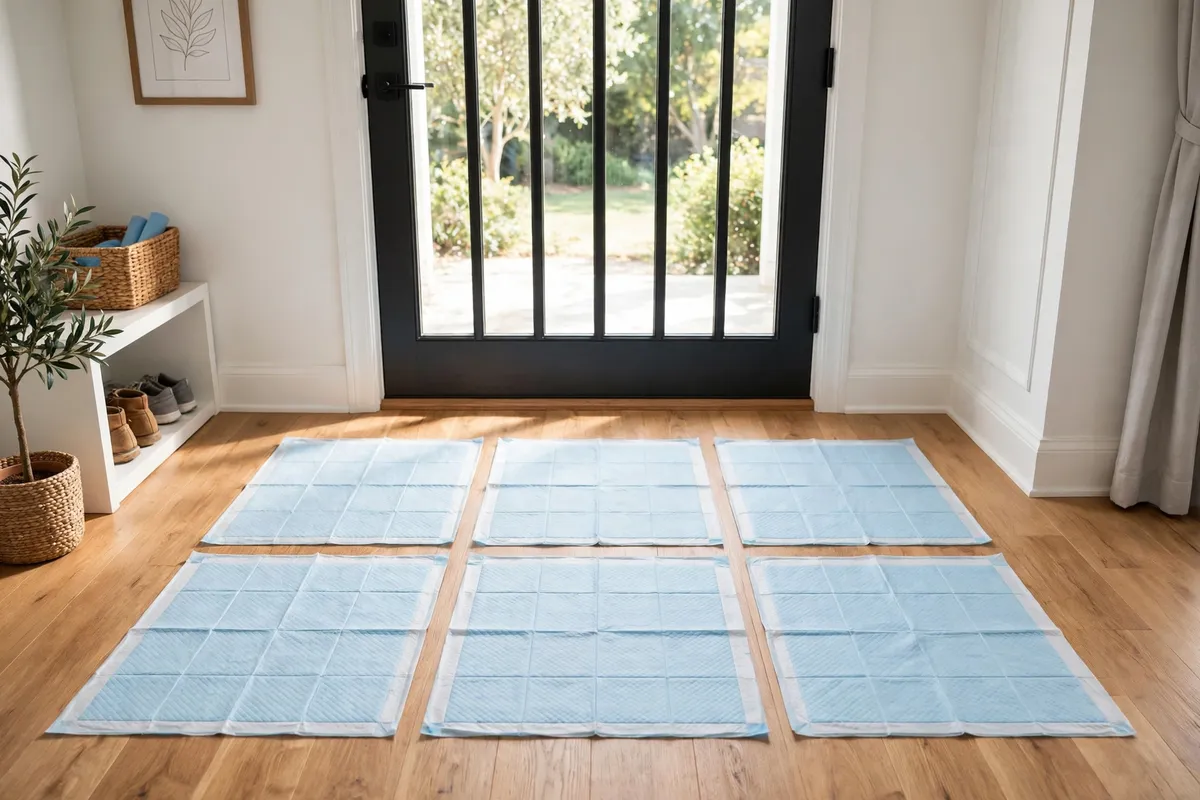
If you live in an apartment or work long hours, puppy training pads can help as a backup — our roundup of the Best Puppy Training Pads covers the options that hold up. Pads are a stepping stone, though — the long-term goal is still outside.
How to Potty Train a Puppy: The Daily Routine
Potty training is not a lesson you teach once — it is a routine you repeat all day, every day, until it becomes your puppy’s habit. Take your puppy out often, reward it every time it goes in the right place, and supervise it closely the rest of the time. Most puppies need a break every one to two hours, plus right after waking, eating, drinking, playing, and napping.
Here is the routine that works for most families. Follow it closely, especially for the first two weeks, and your puppy will start to understand the pattern fast.
Morning: The First Trip Out
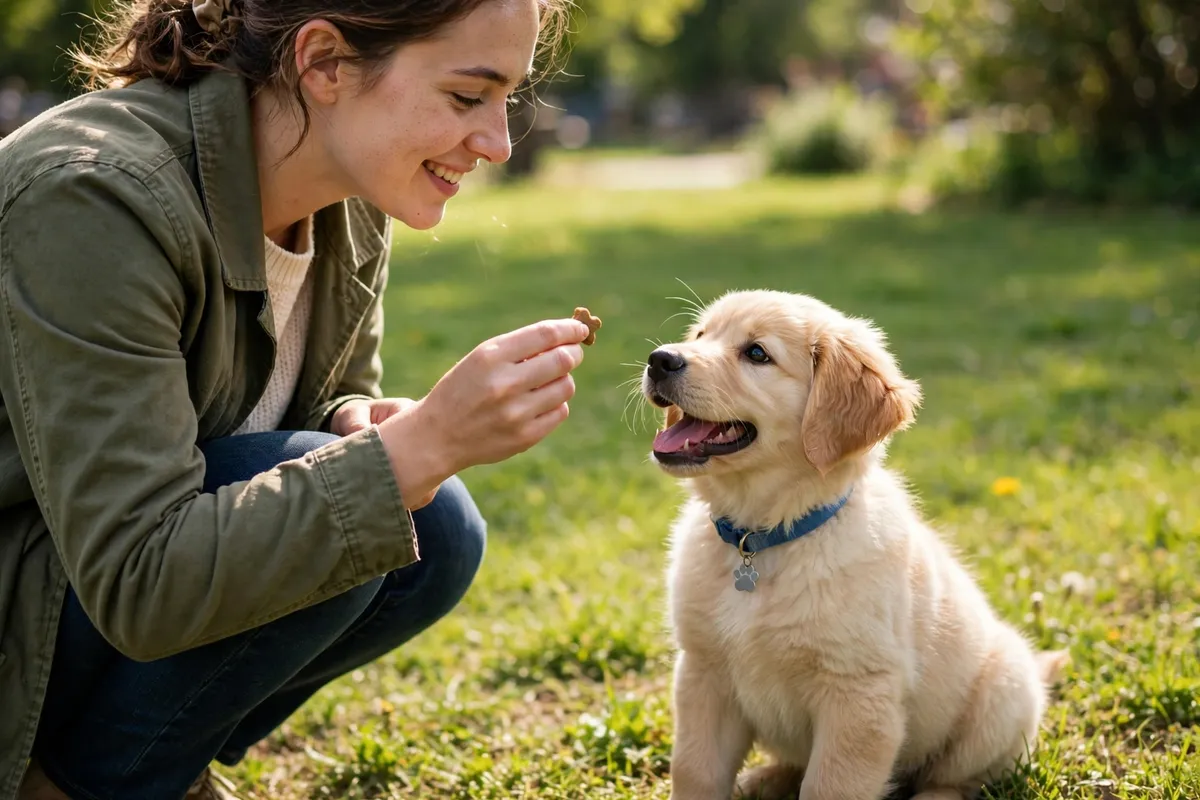
Your puppy has held its bladder all night, so the first trip out should happen the moment it wakes up — before coffee, before your phone, before anything else. Carry or lead your puppy straight to the potty spot, stand still, and wait. Do not walk around or start playing; the message is “this trip is for business.” When your puppy goes, praise it warmly and give it a treat right there, outside, within a few seconds. That timing matters: a treat given back inside teaches your puppy that going inside earns rewards — the opposite of what you want.
After the morning break, feed breakfast, then take your puppy out again within ten to fifteen minutes — puppies almost always need to go soon after eating. Build this pair, meal then out, into every part of the day.
After Meals, Play, and Naps
Every meal, nap, and play session ends with a potty trip, because eating, waking, and excitement all stimulate a puppy’s bladder and bowels — these are when accidents are most likely. Take your puppy out at those moments every time, and you will catch most needs before they become puddles.
Between those trips, watch the clock. An eight-week-old puppy generally needs to go out every hour or so; a twelve-week-old can often manage two hours; by four to six months, most puppies can hold it for three to four hours. A rough guide is one hour per month of age, up to about eight hours — but small breeds and excited puppies will need to go sooner. When in doubt, go out more often.
Bedtime: The Last Trip Out
The last trip of the day should be as boring as the first. Take your puppy to the potty spot, wait quietly, reward, and then bring it straight to its sleeping area. Keep the lights low and your voice calm — you are teaching your puppy that nighttime is for sleeping, not for play. If your puppy does not go, wait five minutes and try once more, then settle it in the crate anyway.
Pick up the water bowl about two hours before bedtime, but never restrict water during the day. For the first week or two, most puppies need at least one trip out during the night — covered in the night training section below.
Crate Training Basics
A crate is the single most useful tool in potty training, but only if your puppy sees it as a bedroom, not a prison. Dogs naturally avoid soiling where they sleep, so a correctly sized crate encourages your puppy to hold it until you let it out. That instinct is what makes crate training work — and why the crate must never be used as punishment.
Introduce the crate slowly. Put it where the family spends time, leave the door open, and put a bed and a chew toy inside. Feed meals in the crate for the first few days and toss treats inside so your puppy wanders in and out freely. Once it walks in happily on its own, close the door for a few minutes at a time while you stay nearby, then build up gradually. Never leave a young puppy crated longer than it can hold its bladder. If you need a bigger safe area during the day, a pet gate can block off one puppy-proof room instead.
When you take your puppy out of the crate, go straight outside to the potty spot. Do not stop to play or answer the door first — the crate-to-door dash is the most accident-prone moment of the day, because a puppy that has been holding it will let go the second it feels free.
Reading Your Puppy’s Signals
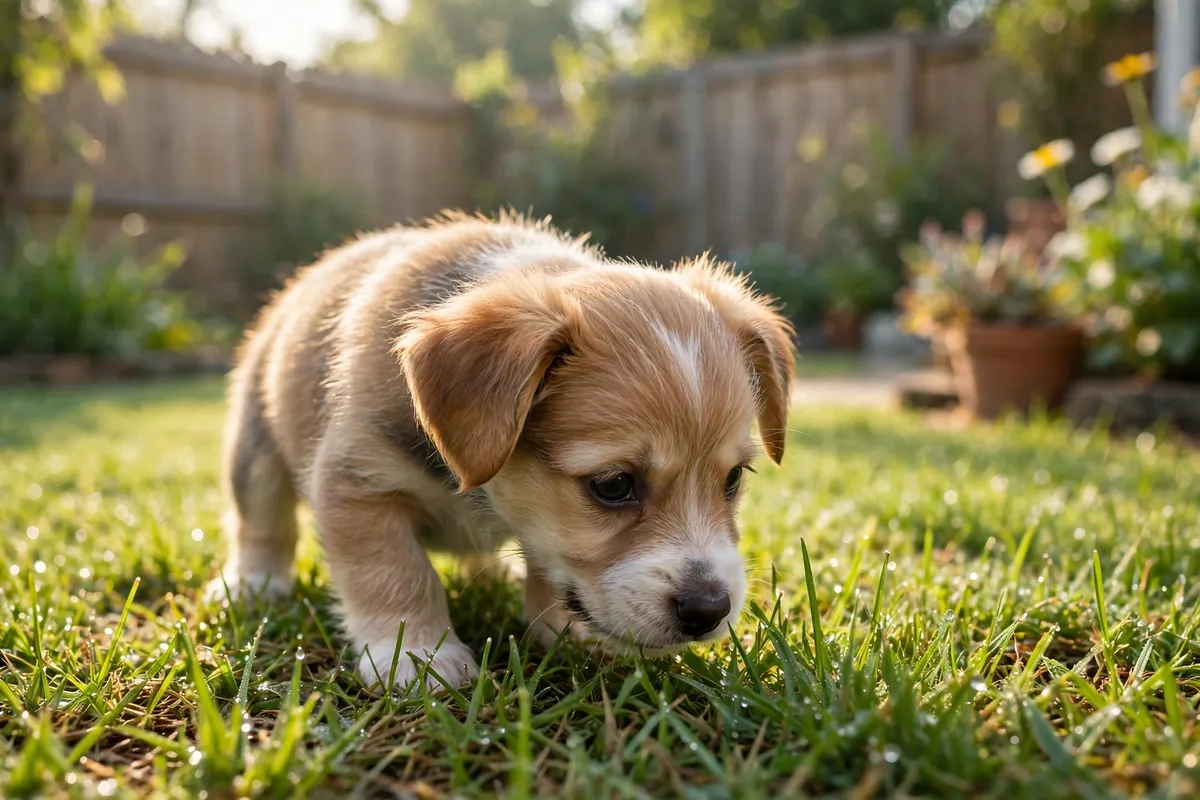
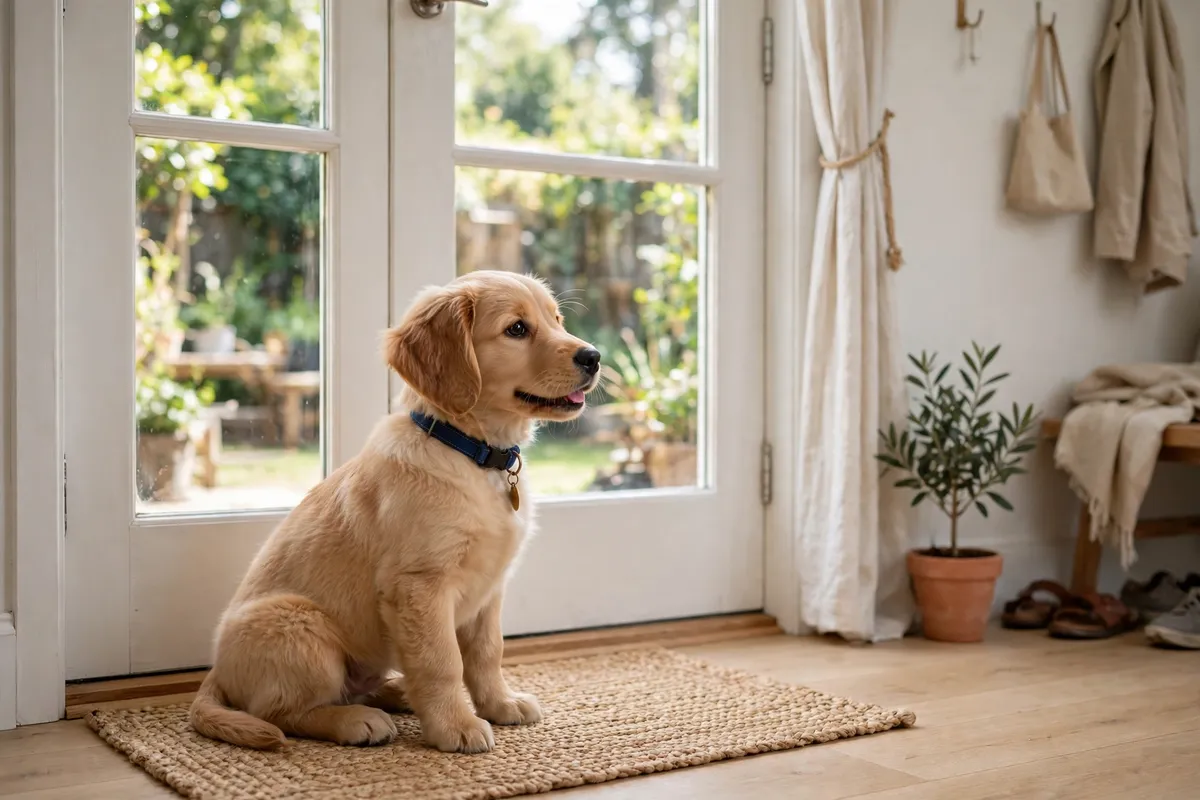
Your puppy is telling you when it needs to go — you just have to learn the language. The most common signs are circling, sniffing the floor intensely, squatting, suddenly stopping play and wandering off, whining at the door, and pacing near an exit. Some puppies go quiet and sneak to a corner; others get restless and paw at you. Every puppy has its own tell, and you will learn yours within the first week.
Act the moment you see a signal. If your puppy starts circling and sniffing, scoop it up calmly and carry it outside — do not chase it or shout, which can startle it into going right there. Once outside, put it down at the potty spot and wait quietly. If it goes, reward immediately. If not within five minutes, bring it back inside, watch closely for ten minutes, then try again.
It also helps to teach a potty cue word. Say a short phrase like “go potty” calmly while your puppy is going, and after a week or two you can use it to prompt your puppy — useful on rainy days and at bedtime.
Accidents: What to Do and What NOT to Do
Accidents will happen. Even the best-trained puppy will have a bad day. How you handle them matters more than the accidents themselves, because your reaction shapes whether your puppy learns faster or becomes afraid to go in front of you at all.
When you catch your puppy in the act, interrupt it gently — a calm “uh-oh” is enough — pick it up, and carry it straight outside. If it finishes outside, praise and reward it, then clean up with your enzymatic cleaner and move on. No scolding, no dragging your puppy to the mess, and no rubbing its nose in it — those old methods only teach your puppy to hide from you when it needs to go.
If you find an accident after the fact, do not punish your puppy — it cannot connect your anger now with something it did ten minutes ago. Clean it up quietly and ask what went wrong: did you miss a signal or wait too long between trips? Every accident is information about your schedule, not evidence that your puppy is stubborn.
Never punish a puppy for going in its crate or on a training pad — if it goes in the crate, the time was too long or the crate too big; if it goes on the pad, that is progress, so praise it and move the pad toward the door.
Night Training
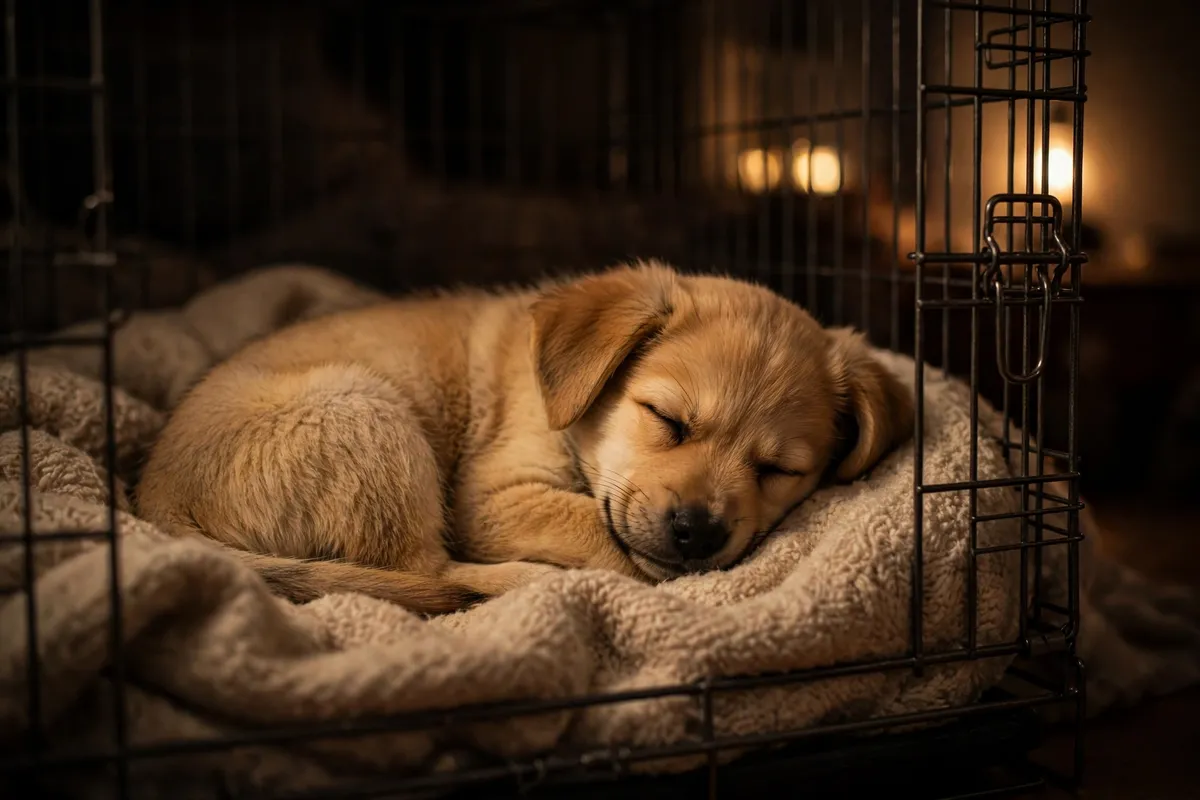
Nighttime is the hardest part, because you are asleep and your puppy cannot wait. For the first week or two, set an alarm for around 2 or 3 a.m. and take your puppy out. Keep the trip silent and boring: no lights, no talking. Carry your puppy to the spot, wait, reward quietly if it goes, and put it straight back to bed. Most puppies stop needing the night trip by twelve to sixteen weeks; drop it by setting the alarm fifteen minutes later each night.
If your puppy cries in the crate at night, do not ignore it automatically — a puppy that needs the bathroom usually cries more urgently than one that just wants company. Take it out; if it goes, you were right to respond. If not within a few minutes, put it back without a fuss. Over time you will learn the difference.
Keep the crate in your bedroom for the first few weeks so you can hear your puppy stir, and put a worn T-shirt of yours inside — your scent is comforting. Avoid a large meal late in the evening. If accidents keep happening overnight, set the alarm earlier; a puppy that soils its crate was left too long, and the fix is a schedule change, not discipline.
Troubleshooting Common Problems
“My puppy goes outside, then comes in and pees again.” The trip was probably too short or too exciting — your puppy went once, got distracted, and still had more to do. Next time, stay outside five to ten minutes after the first go so it can finish.
“My puppy only goes on the carpet, never on grass.” Puppies develop a surface preference from whatever they have gone on most. Bring a small piece of the preferred surface — a training pad or old towel — to the potty spot for a few days, then make it smaller until your puppy goes on grass alone.
“My puppy was doing great, then suddenly started having accidents again.” Regression is normal, especially around four to six months, during teething, or after a change in routine. Go back to basics: more frequent trips, closer supervision, rewards for every success. It usually clears up within a week or two.
“My puppy pees when it gets excited or when guests arrive.” That is usually excitement urination, not a training failure — common in puppies under a year old, especially small breeds. It is involuntary, so punishment makes it worse. Keep greetings calm, ask visitors to ignore your puppy for the first minute, and take it out right before guests arrive. Most puppies outgrow it.
“My puppy drinks a lot and has to go constantly.” Puppies do drink a lot, and that is healthy — never restrict water during the day. But if your puppy drinks far more than normal, asks to go out every twenty minutes, or has accidents despite a strict schedule, mention it to your vet. Excessive thirst can occasionally signal a health issue, and it is worth ruling that out first.
Frequently Asked Questions
How long does it take to potty train a puppy?
Most puppies are reliably house trained in four to six weeks of consistent routine, but “reliable” does not mean perfect — expect occasional accidents for several months. Small breeds often take longer; eight to twelve weeks is still normal. The biggest factor is consistency: families who follow the routine every day see faster results.
At what age should I start potty training my puppy?
Start the day your puppy comes home, usually around eight weeks old. An eight-week-old puppy will not be fully trained for a while, but every trip outside from day one builds the habit. Keep expectations realistic: at that age a puppy physically cannot hold its bladder for long, so frequent trips and patience are the whole strategy.
Should I use puppy training pads or go straight to outdoor training?
Outdoor training is the goal for most families — one rule: outside is the bathroom. Training pads are a useful backup if you live in a high-rise, work long hours, or have a very small puppy in bad weather. The risk is that some puppies learn soft surfaces indoors are acceptable, which slows the move to outdoor-only. If you use pads, treat them as a stepping stone: keep them near the door, then move them outside, then remove them once your puppy reliably goes in the yard. For help choosing pads, see our Best Puppy Training Pads roundup.
What if my puppy refuses to go outside in the rain or cold?
Many puppies hate rain, and some small breeds refuse to go out in cold weather. Do not force it — make the trip short and rewarding. Carry your puppy to a covered spot near the door, use your potty cue word, and give an extra-good treat when it goes. If your puppy absolutely will not go, use a training pad indoors for that one trip rather than letting it hold its bladder for hours. Once the habit is strong, most of this fussiness fades.
Bottom Line
Potty training a puppy comes down to three things: a consistent routine, rewards for getting it right, and patience when it goes wrong. Take your puppy out often — after waking, eating, playing, and napping — reward every success outside within seconds, and supervise closely the rest of the time. Use the crate as a safe den, never as punishment, and never scold your puppy for an accident. Most puppies learn the routine in four to six weeks.
Once your puppy is reliably going outside, the next skill is walking on a leash — our guide on How to Train a Puppy to Walk on a Leash picks up right where this one leaves off. Keep the routine steady for a few more weeks even after your puppy seems trained.
Disclaimer: This article is for general guidance only and is not a substitute for professional veterinary or animal behavior advice. If your puppy has frequent accidents despite a consistent routine, strains to urinate, or shows signs of illness, consult your veterinarian. Prices change — check the current price before buying.