Best Guinea Pig Cage for Beginners (2026): 5 Safe Picks
The cage you choose on day one shapes your guinea pig’s health for years. The best guinea pig cage for beginners is not the cheapest box on the pet store shelf, and it is not the tallest one either. Guinea pigs live on the ground, so they need flat floor space, not climbing levels. A good starter cage gives them room to run and popcorn, with a solid floor that is gentle on their feet.
Below are our five favourite beginner-friendly cages for 2026.
Table of Contents
Prices change — check the current price before buying.
How Much Space Does a Guinea Pig Need?
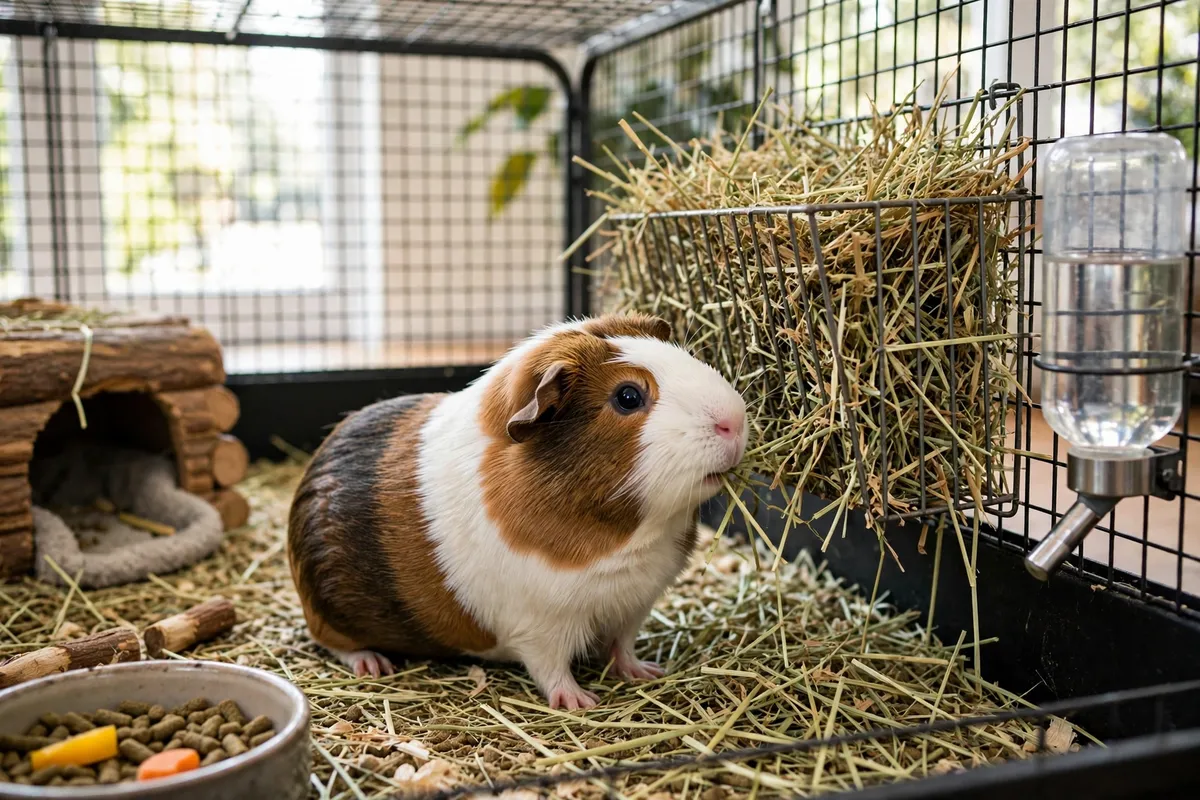
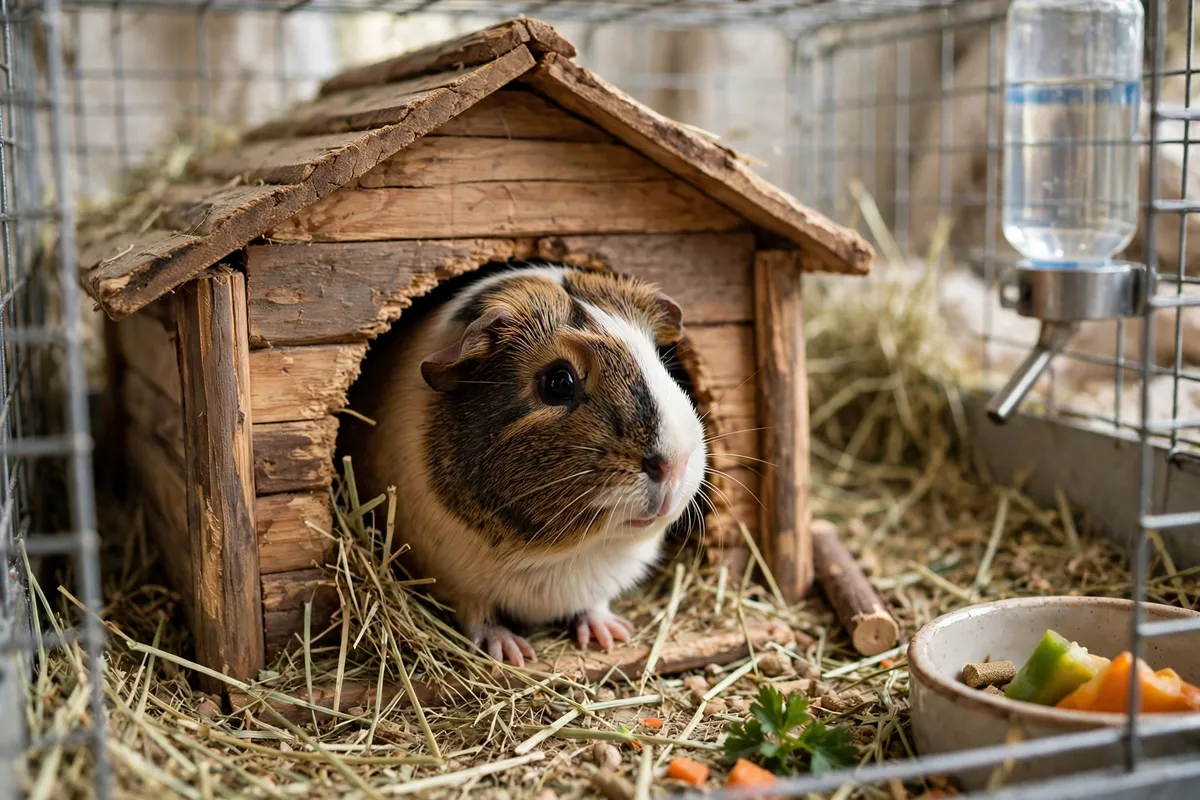
Most beginners go wrong on size: pet store starter cages are often far too small. Humane World for Animals recommends at least 7.5 square feet for one guinea pig and at least 10.5 square feet for a pair — and since guinea pigs are social, most owners end up with two, so shop for 10.5 square feet or more. Your pig needs room for a hideout, a hay rack, a food bowl, and a water bottle, plus open floor to run laps.
Floor space matters more than height, since guinea pigs do not climb. The floor must be solid — wire floors can injure their feet — and bars should sit about 1 inch apart, tighter if you are bringing home a youngster. Finally, pick a cage you can clean easily: a removable base or a wide top opening makes daily spot-cleaning far less of a chore.
1. MidWest Guinea Habitat Plus — Best Overall
For anyone shopping for the best guinea pig cage for beginners, the MidWest Guinea Habitat Plus is the cage most rescue groups and experienced owners point beginners toward. It measures 47 inches long by 24 inches wide by 14 inches high, giving about 8 square feet of living space, with 1-inch bar spacing and a washable, leak-proof PVC canvas bottom.
The Plus version adds a removable mesh top, useful if you have cats or dogs, and a hinged divider panel with a lock-in-place ramp. Two units can be connected to roughly double the space. A pet gate can also keep cats and dogs out of the guinea pig’s room — see our guide to the best pet gate for dogs.
The drawback: 8 square feet sits just under the 10.5 square foot recommendation for a pair, so budget for a second unit if you keep two boars or add a third pig.
2. Ferplast Cavie 80 — Best Starter Kit
If you want everything in one box, the Ferplast Cavie 80 is the most beginner-friendly option here. Ferplast is a well-respected European pet brand, and the Cavie 80 arrives as a complete kit: the cage plus a hideout, a food bowl, a water bottle, and a hay feeder.
With this cage, your guinea pig can move in on day one with everything it needs. The enclosed design also keeps more bedding and hay inside the cage and off your floor.
The trade-off is size. The Cavie 80 suits one guinea pig well, but a pair will outgrow it, so think of it as a starter home rather than a forever home for two pigs.
3. SONGMICS 20-Panel C&C-Style Playpen — Best Budget
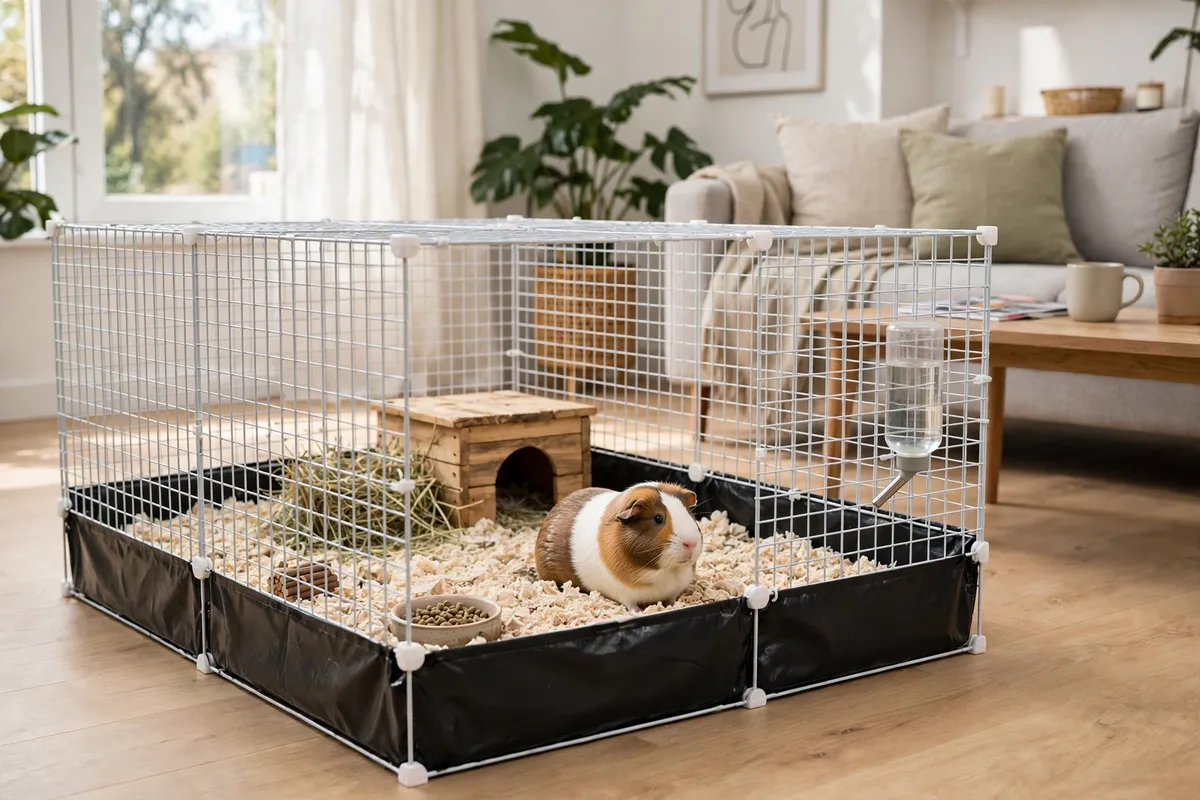
C&C cages — cubes and coroplast — are the gold standard in the guinea pig community, and the SONGMICS 20-panel playpen is the cheapest way to build one. You get wire grid panels that connect with plastic connectors, so you can shape the enclosure to fit your room and expand it later.
Start with about 8 square feet, and reconfigure the panels into a bigger pen when you add a second pig. The panels also work as a safe floor-time pen outside the main cage.
The catch is that this is a panel set, not a finished cage. You will need your own waterproof base or liner underneath, and the open-top design suits homes without cats or dogs that could jump in. Still, nothing else gives you this much floor space per dollar.
4. Amazon Basics Top Access Habitat — Best Jumbo Starter
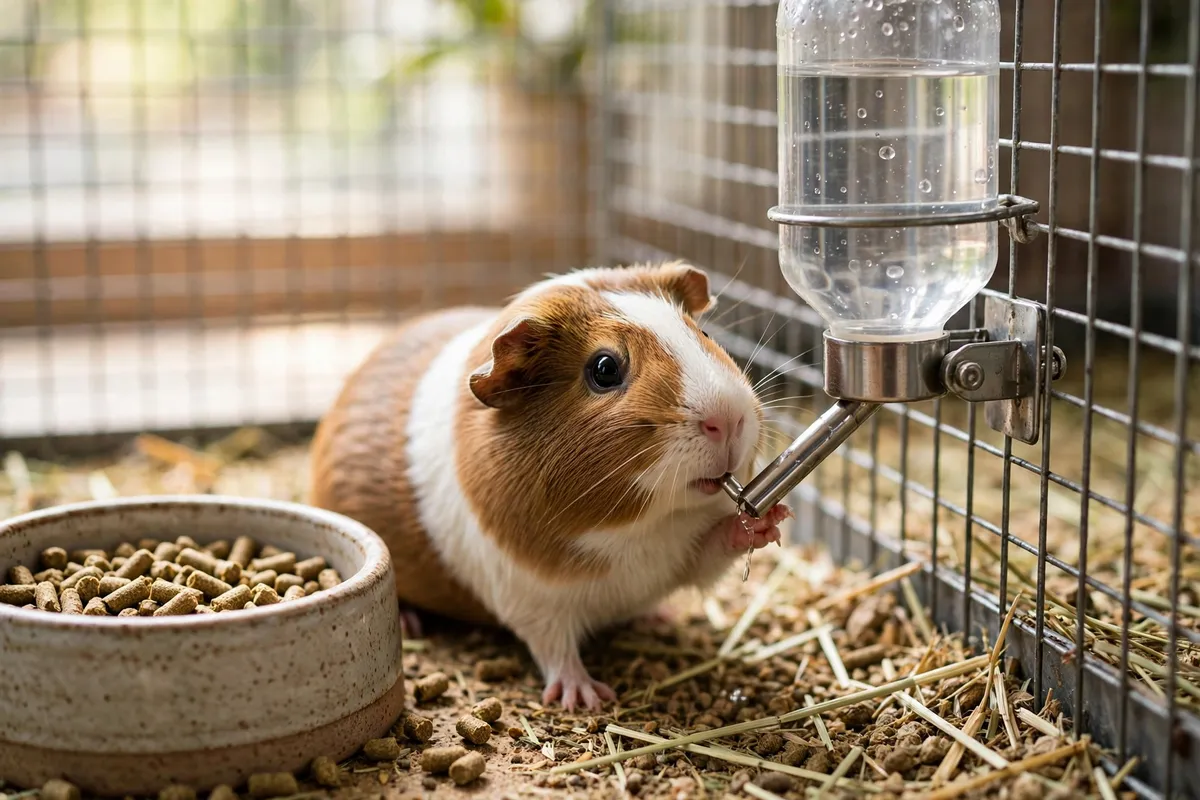
The Amazon Basics Top Access Habitat is the jumbo option for beginners who want a ready-made cage with room to spare. It comes in a large size with an elevated balcony area, an iron wire frame, and a top-access design that makes it easy to lift your guinea pig out for handling.
The wide top opening makes daily cleaning, refilling hay, and picking up a nervous new pig much easier than a small front door.
Like most wire-top cages, it can let bedding and hay escape onto the floor, so place it on a washable mat or tray. Measure your space first too — the jumbo size is generous and needs a proper table or stand.
5. GuineaLoft Acrylic 4×2 C&C-Style Cage — Best Clear-Panel C&C
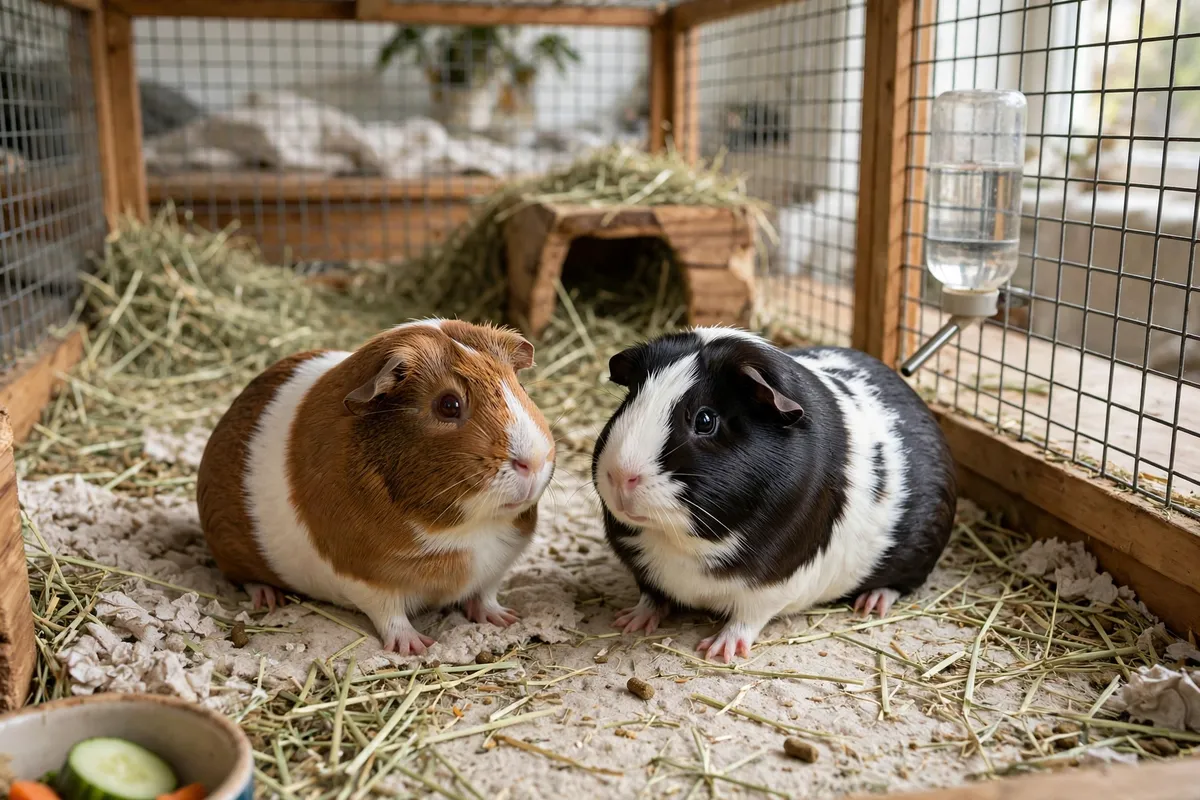
If you like the C&C idea but want something that looks better in your home, the GuineaLoft Acrylic 4×2 cage is the pick. It uses the same modular grid idea as a DIY C&C build, but with clear acrylic panels that let you watch your guinea pigs from any angle — and let them see out, which many owners say makes their pigs less skittish.
The 4-by-2 layout suits a pair, extends later, and wipes clean easily. The open design gives excellent airflow.
Price and availability vary more than for big-brand wire habitats, and it is open-top, so it suits homes without cats or dogs. For a C&C cage that looks like furniture rather than a DIY project, it is the nicest option here.
Guinea Pig Cage Buying Guide for Beginners
Start with size: measure your space, then buy the biggest cage that fits. Avoid cages marketed for hamsters or mice — guinea pigs need flat floors, not tubes and wheels, and a wheel is unsafe for a guinea pig’s back. The size-first rule also applies to birds — see our guide to the best bird cage for beginners.
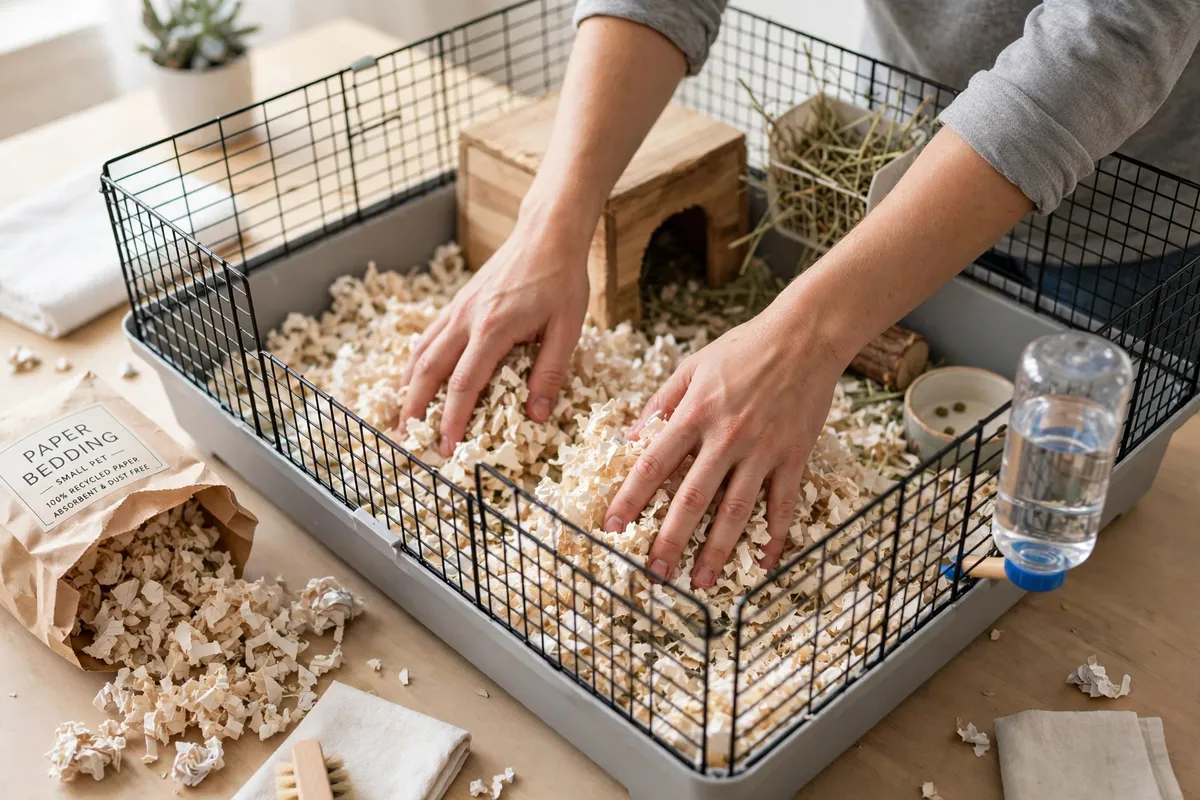
Choose a solid floor, bars spaced about an inch apart, and a design you can clean in under ten minutes. Put the cage in a quiet corner away from direct sunlight and drafts, at a height where you can comfortably reach in. You will also need a hideout, unlimited hay, a water bottle, a food bowl, and safe bedding. For more small-pet housing ideas, see our guides to the best hamster cage for beginners and the best rabbit hutch for beginners.
FAQ
How big should a guinea pig cage be for two guinea pigs?
Aim for at least 10.5 square feet for a pair, following the guidance from Humane World for Animals. Bigger is always better — two boars in particular do best with extra room. For general small-pet care guidance, see the ASPCA’s pet care guides, and for playtime outside the cage, see our picks for the best rabbit toys for bunnies.
Can guinea pigs live in a hamster cage?
No. Hamster cages are too small, and their wire floors, tubes, and wheels are unsafe for guinea pigs. Guinea pigs need a wide, flat enclosure with a solid floor.
Do guinea pigs need a cage with a lid?
It depends on your household. In a home without cats or dogs, an open-top cage works well and gives the best airflow. If you have cats, dogs, or small children, choose a cage with a secure mesh or wire top.
How often should I clean a guinea pig cage?
Spot-clean soiled bedding and uneaten fresh food daily, and do a full clean at least once a week.
Bottom Line
For most beginners, the MidWest Guinea Habitat Plus is the safest first buy: the right size, easy to clean, and expandable if your herd grows. If you want everything in one box, the Ferplast Cavie 80 is the simplest start, and if budget matters most, a SONGMICS C&C panel set gives you the most space for the least money. Whichever you choose, buy for the pair you will probably end up with, not just the one you bring home today.
Disclaimer: This article is for general guidance only. If your guinea pig shows signs of illness, injury, or unusual behaviour, contact a veterinarian experienced with small pets.