How to Clean a Cat Litter Box Properly: A Step-by-Step Guide
A clean litter box is one of the simplest things you can do for your cat’s health — and for your home. Cats are famously fastidious animals, and a dirty box is one of the most common reasons a cat starts avoiding the litter box altogether and going elsewhere in the house. The good news is that learning how to clean a cat litter box properly takes only a few minutes a day once you have a routine, and a little extra effort once a week keeps smells away and your cat happy. This guide walks you through daily scooping, the weekly deep clean, safe cleaning products, and the mistakes that turn a simple chore into a smelly problem.
In This Article
Why a Clean Litter Box Matters So Much
Cats bury their waste for a reason. In the wild, covering up scent protects them from predators, and that instinct survives in even the most pampered house cat. When a litter box is full of old waste, your cat’s instinct tells them the spot is no longer safe or clean, so they look for somewhere else — your bed, the laundry pile, or behind the sofa.
A dirty box is also a health issue. Old urine and feces are a breeding ground for bacteria, and a cat that steps in waste and then grooms itself can pick up parasites or bacteria. Ammonia from stale urine irritates a cat’s sensitive nose and lungs, and for kittens, elderly cats, or cats with breathing problems, that matters even more. A clean box is not about being fussy — it is basic cat care, right up there with fresh water and good food.
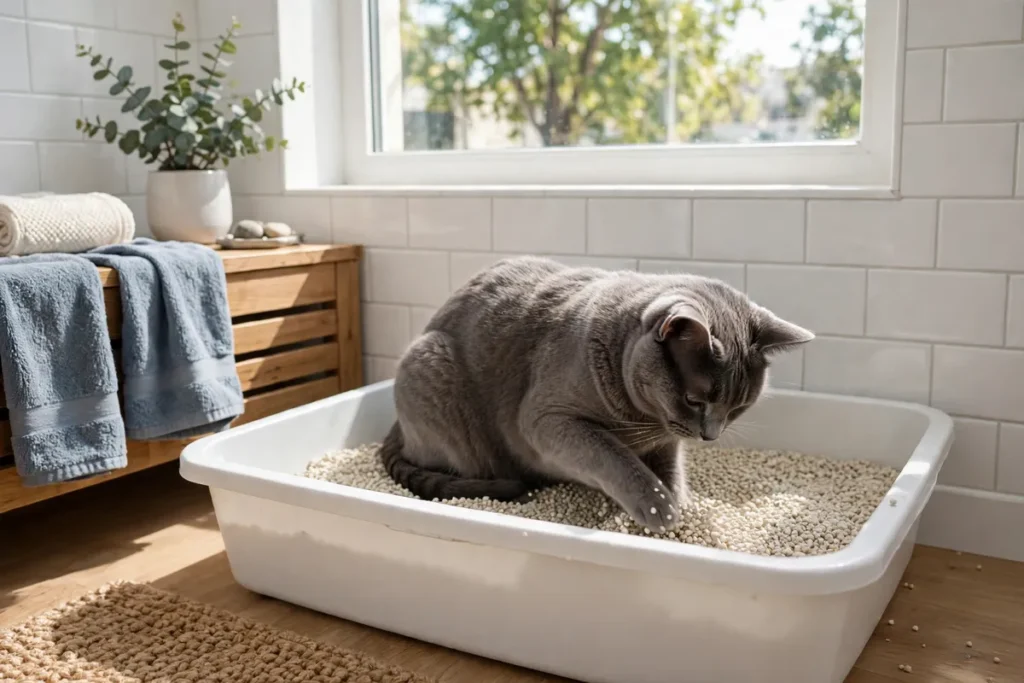
There is a human benefit too. A well-maintained litter box barely smells at all. Most of the “cat smell” people complain about comes from boxes that are scooped rarely and washed never. If your house smells like a litter box, the answer is almost never a stronger air freshener — it is a better cleaning routine.
How Often Should You Clean a Cat Litter Box?
The honest answer is: more often than most people think. Here is a schedule that works for most households.
Scoop at least once a day, ideally twice. Every time your cat uses the box, waste sits there until you remove it. Scooping once in the morning and once in the evening keeps the box inviting and cuts odor dramatically. If you work long hours, a once-daily scoop is the minimum — never go more than a day without scooping.
Top up the litter after scooping. Aim to keep litter about 2 to 3 inches deep (roughly 5 to 8 cm). Too shallow and urine soaks straight through to the bottom of the tray; too deep and your cat tracks it all over the floor.
Do a full litter change once a week. Tip out all the old litter, wash the box, dry it, and refill with fresh litter. With clumping litter in a single-cat home, some owners stretch this to every two weeks, but weekly is the safer habit, especially if you can smell anything at all.
Wash the box every time you change the litter. A quick rinse is not enough. Wash it with warm water and mild soap, scrub the corners, and dry it before refilling. Urine residue builds up invisibly on plastic and is the main source of lingering smell.
Replace the box itself every year or so. Plastic scratches over time, and those tiny scratches trap bacteria and odor that no amount of scrubbing removes. If your box smells even right after washing, it is time for a new one.
What You Need Before You Start
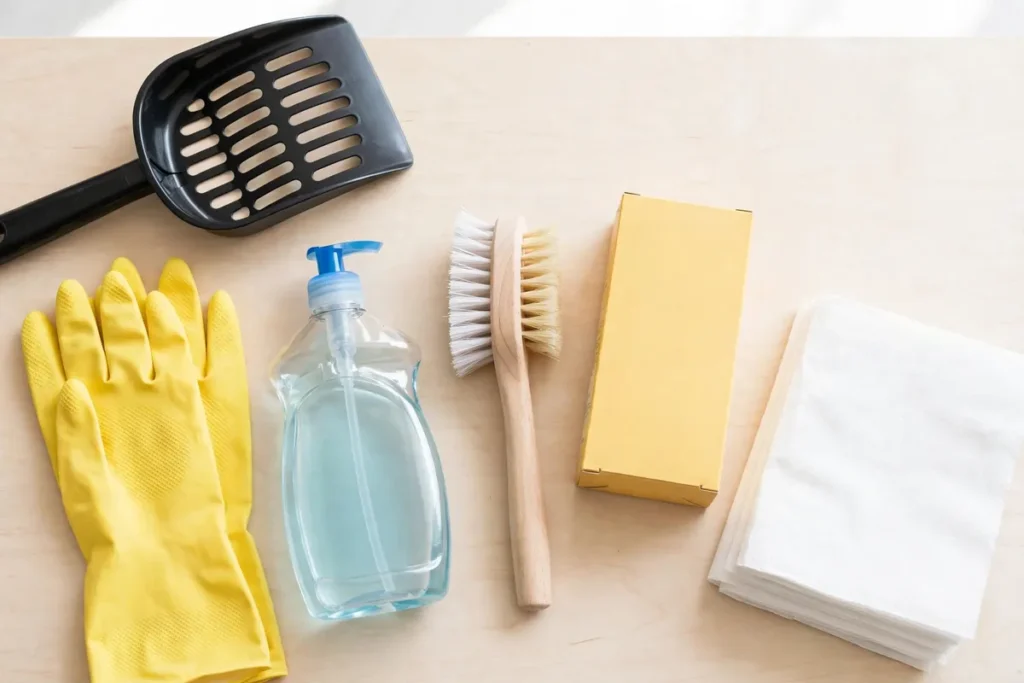
Gather your supplies so the job is quick and painless:
- A sturdy litter scoop with slots small enough to catch clumps but let clean litter fall through
- A trash bag or a dedicated litter waste bin with a lid
- Disposable gloves (optional, but sensible, especially if you are pregnant — see the note below)
- Mild, unscented dish soap or a pet-safe enzymatic cleaner
- A scrub brush or old sponge kept just for the litter box
- Paper towels or an old towel for drying
- Fresh litter
Keep these supplies near the litter box, not in another room. If everything is within reach, you are far more likely to scoop every day.
A note on pregnancy: Cat feces can carry toxoplasmosis, a parasite that is dangerous during pregnancy. If you are pregnant, ask someone else to handle the litter box if possible. If you must do it yourself, wear disposable gloves and wash your hands thoroughly afterward, and scoop daily — the parasite only becomes infectious after the feces have sat for a day or more.
How to Clean a Cat Litter Box Properly: Daily Scooping
Daily scooping is the single most important habit. Here is how to do it well:
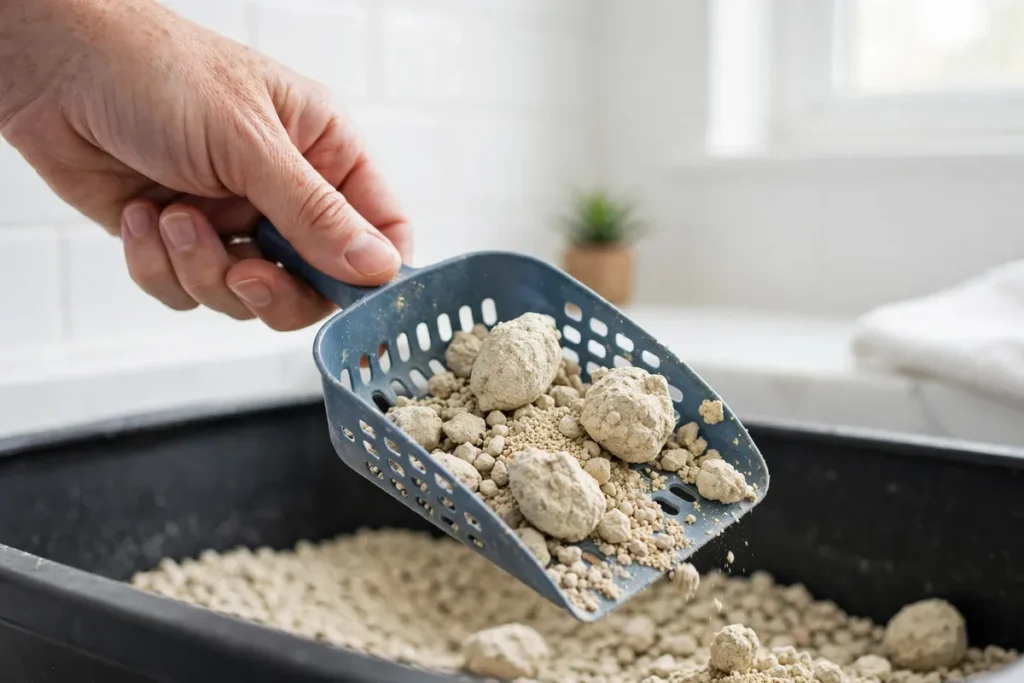
Step 1: Scoop out all clumps and solids. Push the scoop through the litter and lift out every clump of urine and every solid. Shake the scoop gently so clean litter falls back through the slots.
Step 2: Check the corners and edges. Cats often go in the same corner every time. Run the scoop along the edges of the tray where clumps hide.
Step 3: Bag the waste and take it out. Tie the bag and put it in an outside bin. Do not leave a bag of used litter sitting in the kitchen bin — the smell will find you.
Step 4: Top up the litter. Add fresh litter to bring the depth back to 2 to 3 inches. Stir it lightly so it is level.
Step 5: Wash your hands. Even if you wore gloves, wash your hands with soap and warm water when you are done.
The whole job takes about two minutes. Done twice a day, it is the difference between a box your cat loves and a box your cat avoids.
The Weekly Deep Clean: Step by Step
Once a week, set aside ten minutes for a proper wash. Here is the full routine:
Step 1: Empty the box completely. Tip all the old litter into a trash bag. If clumps are stuck to the bottom, use the scoop to scrape them off first.
Step 2: Rinse with warm water. Give the tray a rinse to remove loose dust and residue. Never pour litter down the toilet or a drain — even litter labeled “flushable” can clog household plumbing, and cat waste should not enter the water system.
Step 3: Wash with mild soap. Add a few drops of unscented dish soap and warm water, then scrub every surface with your brush — the bottom, the sides, the corners, and under the rim. Pay attention to scratches and seams where residue collects.
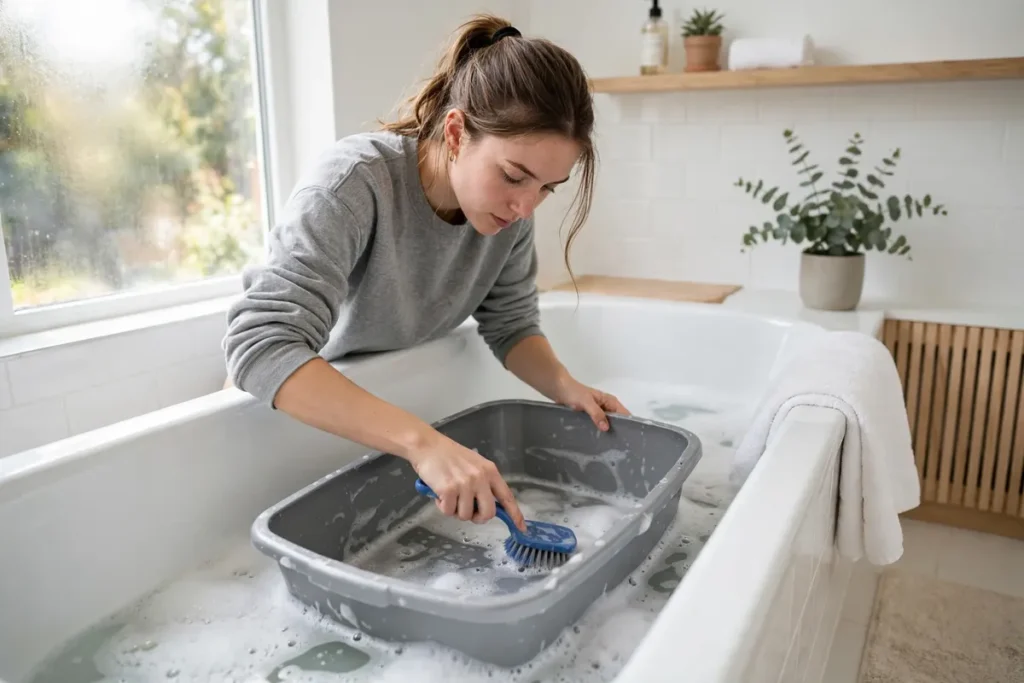
Step 4: Rinse thoroughly. Soap residue can put cats off just as much as dirt, so rinse until the water runs clear and there is no slippery feel left.
Step 5: Disinfect occasionally. Once a month, or after any illness or diarrhea, disinfect the empty box. A diluted bleach solution (one part bleach to thirty-two parts water) works well, but rinse it away completely and let the box air out until there is no bleach smell at all. Alternatively, use a pet-safe enzymatic cleaner, which breaks down odor-causing molecules rather than just covering them.
Step 6: Dry completely. This step is easy to skip and important not to. Wet litter clumps instantly and sticks to the tray. Dry the box with a towel, then let it air-dry for a few minutes.
Step 7: Refill with fresh litter. Pour in 2 to 3 inches of fresh litter, level it, and put the box back in its usual spot. Cats are creatures of habit — always return the box to the same place.
Safe Cleaning Products — and What to Avoid
Cats are far more sensitive to chemicals and scents than we are, and they walk barefoot through their litter box and then lick their paws. That means what you clean with matters a lot.
Safe to use:
- Unscented dish soap (mild, rinses clean)
- Warm water and a good scrub — often all you need
- Diluted white vinegar for stubborn mineral stains (rinse well)
- Baking soda sprinkled on the empty tray before refilling, for extra odor control
- Pet-safe enzymatic cleaners designed for litter boxes
Avoid these:
- Bleach used incorrectly. Undiluted bleach, or bleach left in the box without thorough rinsing, is dangerous. If you use it, dilute it well, rinse completely, and air the box out.
- Ammonia-based cleaners. Cat urine already contains ammonia. Cleaning with ammonia makes the box smell like a bigger, more concentrated urine spot, which can actually encourage your cat to mark or avoid the box.
- Strongly scented cleaners and disinfectants. Pine, citrus, and phenol-based cleaners (including many household disinfectants) are irritating or toxic to cats. If a cleaner smells strong to you, it smells overwhelming to your cat.
- Scented litter and air fresheners. These mask odor for humans but often put cats off the box. Unscented litter plus regular cleaning beats scented products every time.
When in doubt, the rule is simple: if you would not want to walk barefoot in it and lick your feet afterward, do not put it in your cat’s litter box.
Odor Control That Actually Works
If the box smells even when you scoop daily, something in the routine needs adjusting. These are the fixes that work:
Scoop more often. This solves most odor problems on its own. Twice a day beats any product.
Change the litter more often. Old litter loses its ability to absorb. A full change every week is the baseline.
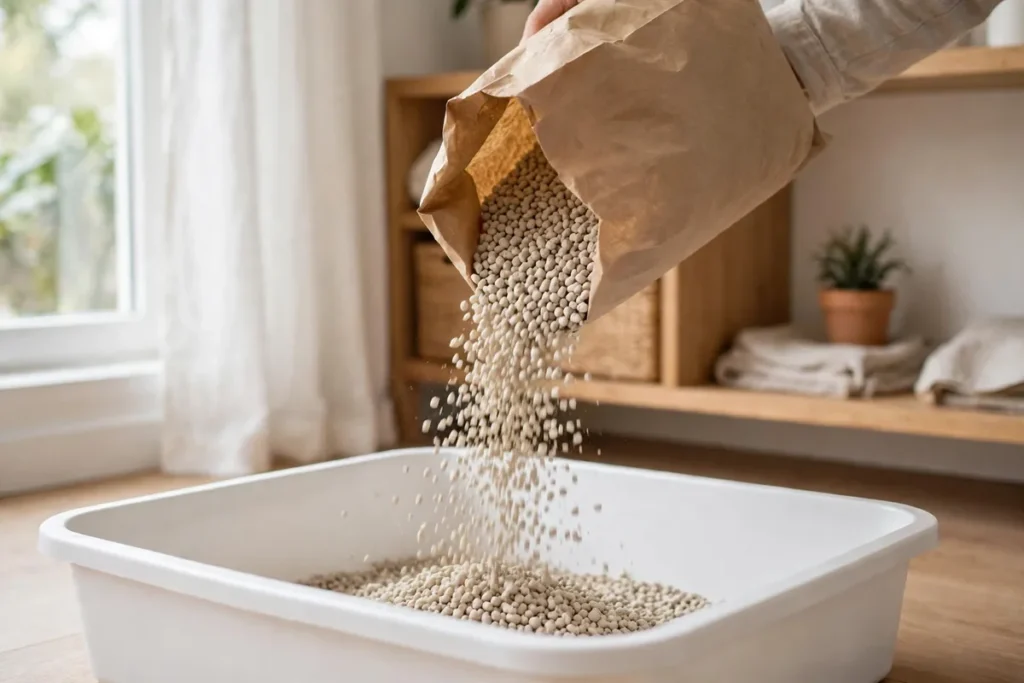
Use a good clumping litter. Clumping litter traps urine in solid clumps you can remove, so the rest of the litter stays fresh. If you are choosing a litter, see our guide to the best cat litter for odor control — the right litter makes the whole routine easier.
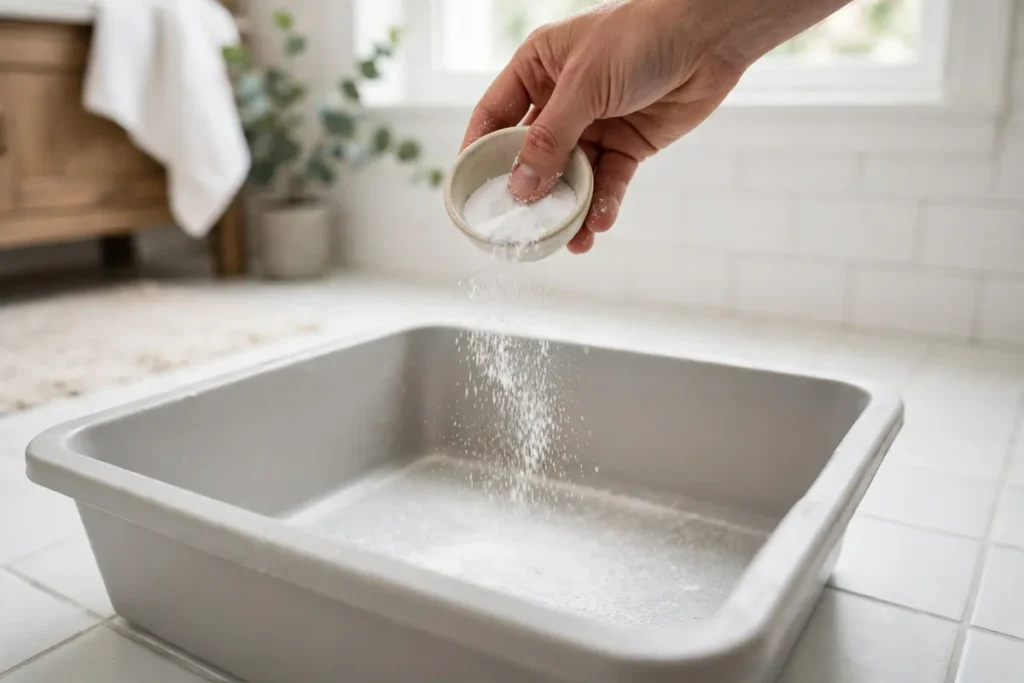
Sprinkle baking soda. A thin layer of baking soda on the bottom of the empty box before you add litter absorbs odors naturally and is safe for cats.
Check the box itself. Scratched, old plastic holds odor. If the box smells even after washing, replace it.
Improve ventilation. Keep the box in a well-ventilated spot, not a sealed cupboard. A covered box traps smells inside, which is worse for your cat even if it seems better for you.
Do not rely on air fresheners. Sprays and plug-ins near the litter box can irritate your cat’s nose and lungs and may make them avoid the area entirely.
Multi-Cat Households: The Golden Rule
If you have more than one cat, everything above matters even more. The standard advice from vets and behaviorists is simple: one litter box per cat, plus one extra. Two cats need three boxes; three cats need four.
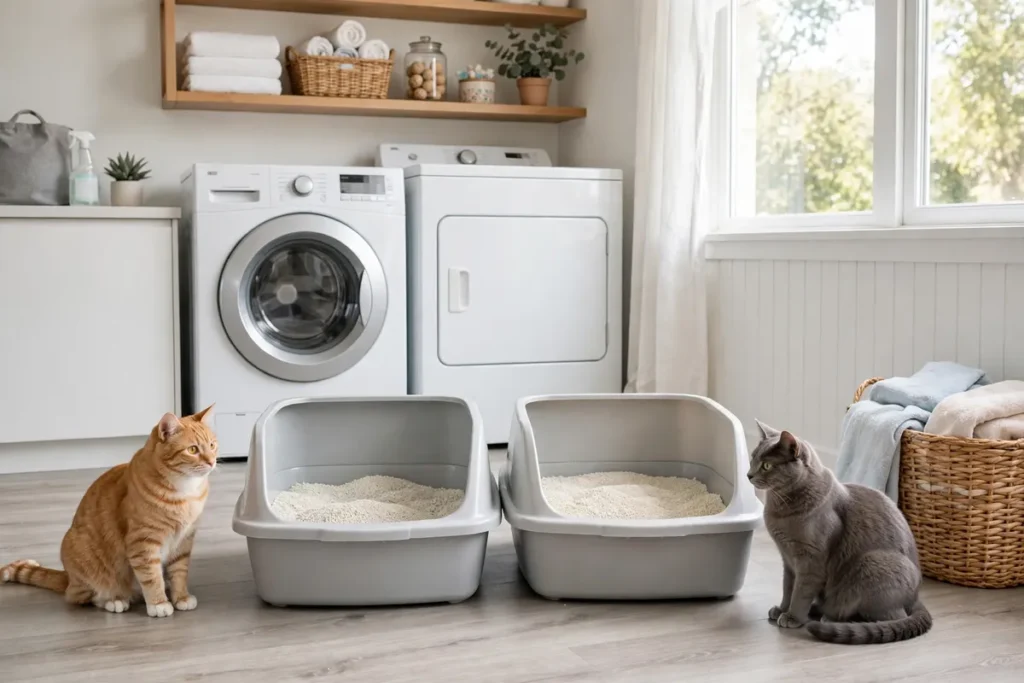
Cats are territorial about toileting, and sharing a single box means it gets dirty twice as fast and one cat may guard it and block the other. Spread the boxes around the house rather than lining them up in one room — a cat that is being bullied needs an alternative in a different location.
With multiple cats, scoop every box at least once a day and consider a full litter change twice a week for the busiest box. It is more work, but it is far less work than dealing with a cat that has started toileting on the carpet.
Choosing the Right Litter Box Setup
The box itself affects how easy cleaning is:
- Open trays are the easiest to scoop and wash, and most cats prefer them. The downside is more litter tracked onto the floor.
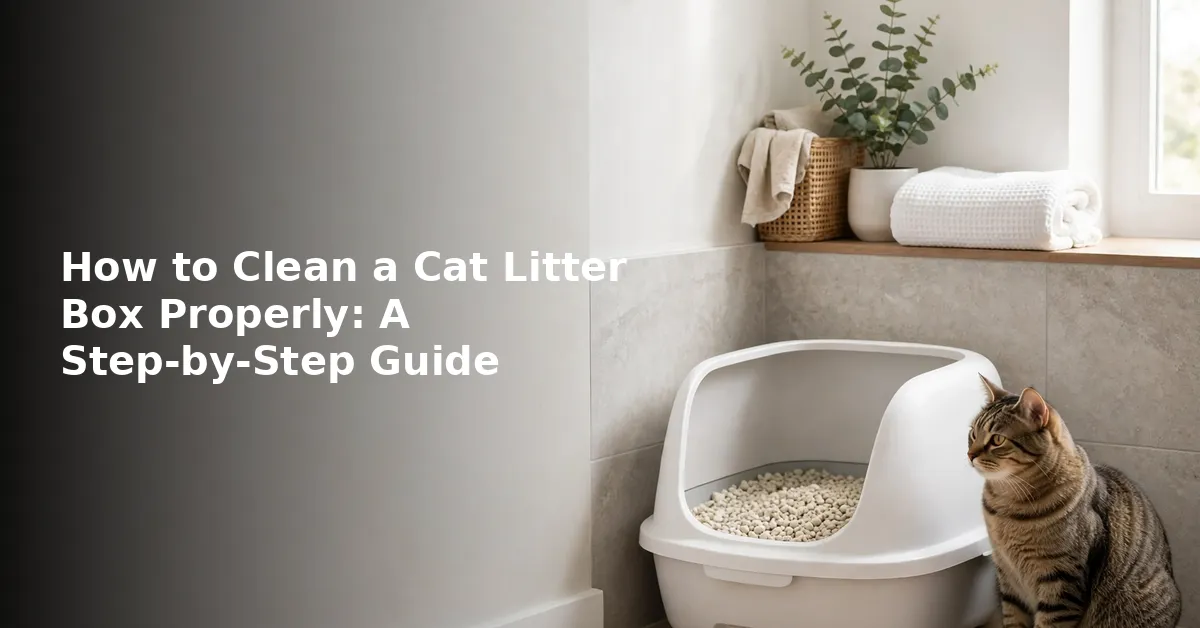
- Covered boxes contain litter scatter and give shy cats privacy, but they trap odors and are harder to clean thoroughly. If you use one, remove the lid for the weekly wash and consider leaving it off entirely if your cat seems hesitant.
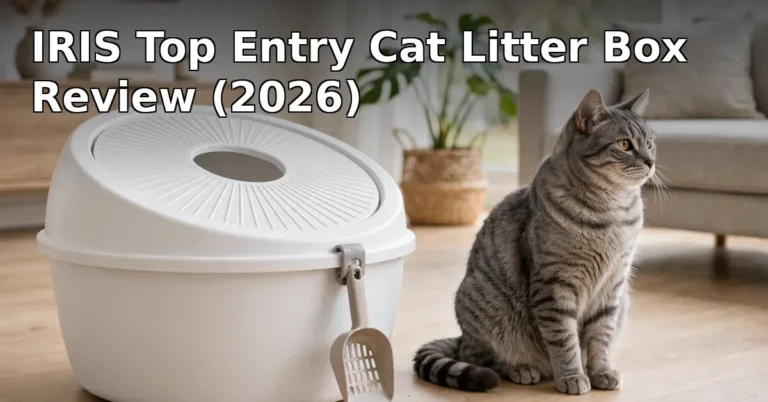
- Top-entry boxes keep litter inside and suit cats that kick, but they are awkward for kittens, elderly cats, and cats with arthritis. Our review of the IRIS top entry cat litter box looks at one popular model in detail.
- Self-cleaning boxes rake waste automatically after each use. They reduce daily scooping but still need a weekly wash and regular emptying of the waste drawer, and some cats are frightened by the noise or movement. Our review of the PetSafe ScoopFree self-cleaning litter box covers the pros and cons.
Whatever style you choose, size matters: the box should be at least one and a half times the length of your cat, so they can turn around and dig comfortably.
Common Mistakes to Avoid
Scooping too rarely. This is the number one mistake, and the cause of most litter box problems. Once a week is not enough. Once a day is the minimum.
Using scented litter or strong cleaners. What smells “fresh” to you smells chemical and overwhelming to a cat. Unscented is almost always better.
Washing with ammonia-based products. As above, ammonia smells like urine to a cat and makes the problem worse.
Moving the box around. Cats navigate by habit. If you move the box, your cat may go back to the old spot out of habit — on your floor.
Hiding the box in a hard-to-reach place. A box in a dark basement corner or behind a noisy washing machine is a box your cat does not want to visit. Keep it somewhere quiet, accessible, and easy for you to reach for cleaning.
Punishing your cat for accidents. If your cat goes outside the box, punishment does not teach them anything — it teaches them to hide it better. Clean the spot with an enzymatic cleaner and ask why the box was not appealing: was it dirty, too small, in a bad spot, or is your cat unwell?
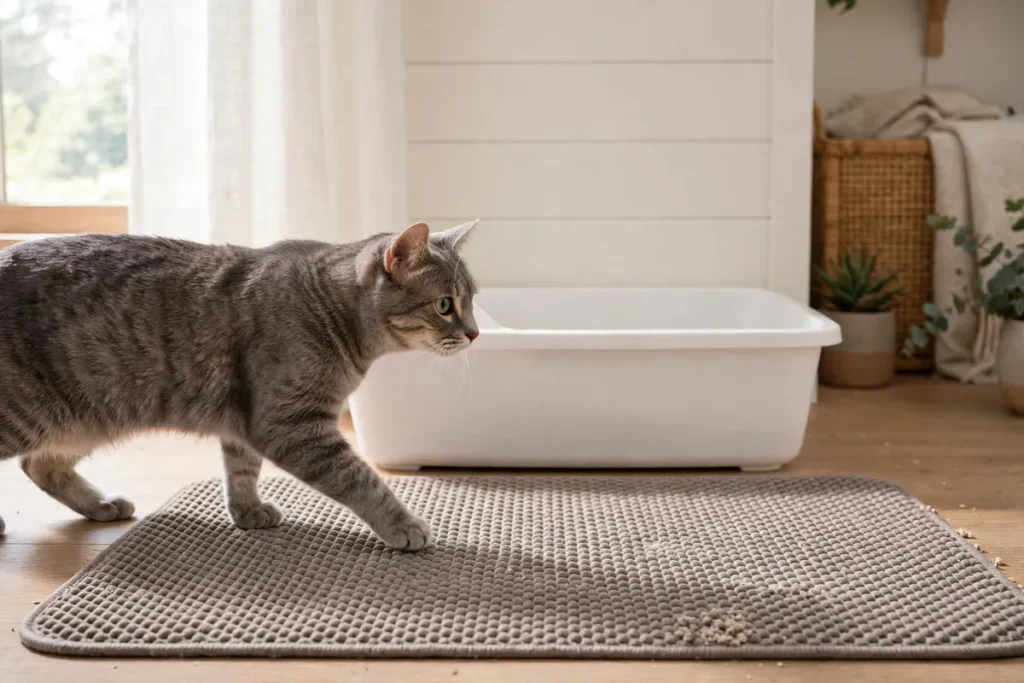
Forgetting the mat. A litter mat outside the box catches tracked litter and keeps your floor cleaner. Shake it out or vacuum it during the weekly clean.
When a Dirty Box Is Not the Problem
Sometimes a cat avoids the box even when it is spotless. If you have ruled out cleaning, consider these causes:
- The litter changed. Cats are picky. A new brand, texture, or scent can be enough to make a cat refuse the box. Switch back to what they liked.
- The box is too small or too dirty to reach. Kittens, elderly cats, and arthritic cats need a low-sided box they can step into easily.
- Stress or change. A new pet, a new baby, building work, or a house move can trigger litter box avoidance. Keep the routine steady and give your cat a quiet, safe toileting spot.
- A medical problem. Urinary tract infections, kidney disease, and constipation can all cause a cat to associate the box with pain. If a cat that was reliably using the box suddenly stops, or strains, cries, or goes very frequently, see your vet promptly — especially male cats, where a blocked bladder is an emergency.
Cleaning is the foundation, but it is not a cure for illness. Know when to call the vet.
Frequently Asked Questions
How often should I scoop the litter box?
At least once a day, ideally twice — morning and evening. Scooping daily is the single most important part of knowing how to clean a cat litter box properly, and it prevents most odor and avoidance problems before they start.
Can I use bleach to clean a cat litter box?
Yes, but only diluted (about one part bleach to thirty-two parts water), and only on an empty box that you rinse thoroughly afterward and let air out completely. Never use undiluted bleach, and never mix bleach with other cleaners. Mild dish soap is safer for routine weekly washing.
Why does my cat’s litter box still smell after cleaning?
The most common reasons are scooping too rarely, litter that needs a full change, or a scratched old plastic box that has absorbed odor. Try a full change with a fresh wash, sprinkle baking soda under the litter, and replace the box if it still smells right after washing.
How many litter boxes do I need for two cats?
Three — one per cat, plus one extra. Spread them around the house in different rooms rather than side by side, and scoop each one daily.
The Bottom Line
Learning how to clean a cat litter box properly comes down to a simple routine: scoop once or twice a day, change all the litter and wash the box once a week, use mild unscented soap, and replace a scratched box when washing no longer removes the smell. Add one box per cat plus one extra, keep the litter unscented, and never punish your cat for an accident — fix the box instead. A clean litter box is a small daily effort that pays off in a happier cat, a fresher home, and far fewer problems on the carpet.
Disclaimer: This article is for general information only and is not a substitute for professional veterinary advice. If your cat stops using the litter box suddenly, strains to urinate, or shows signs of illness, consult your veterinarian promptly.