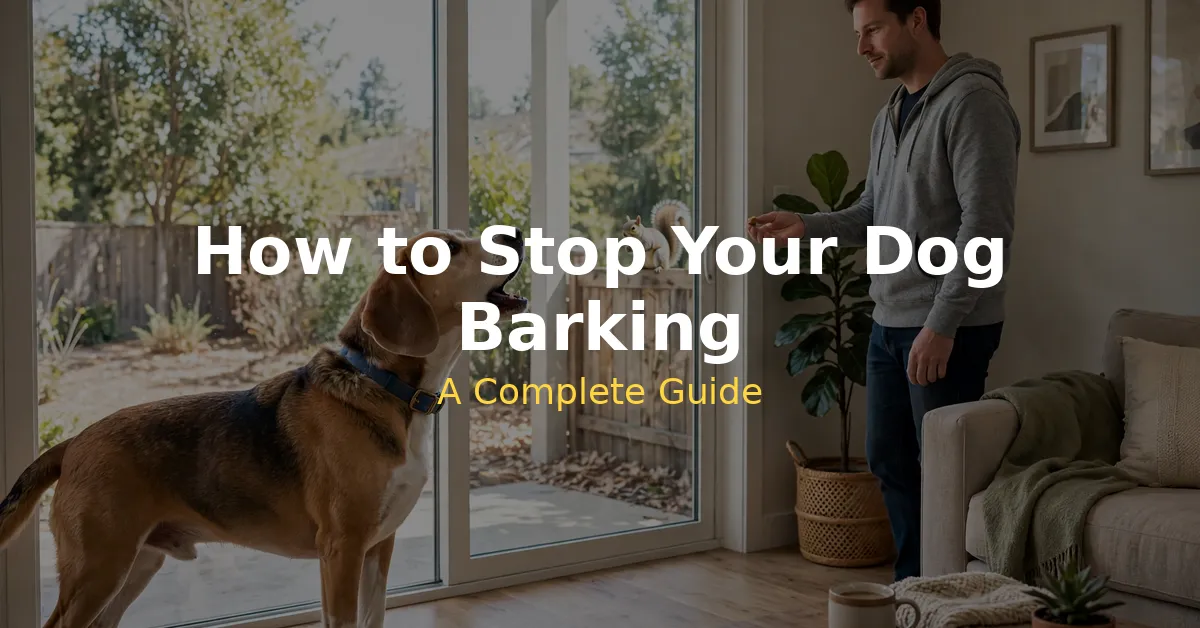
How to Stop Your Dog Barking: A Complete Guide
Barking is normal. It is how dogs communicate, and a dog that never barks would be as strange as a dog that never wags its tail. The problem is not barking itself — it is barking that goes on too long, too often, or at the wrong times: at 2 a.m., at every passerby, at the mail carrier, at nothing you can see.
If that sounds like your house, you are not alone. Excessive barking is one of the most common reasons owners seek help from trainers, and it is also one of the most fixable — once you understand why your dog is barking. This guide explains how to stop your dog barking by finding the trigger, choosing the right training method, and building a calmer routine that lasts.
In This Article
Why Dogs Bark: The Six Main Reasons
You cannot fix barking until you know what is causing it. Dogs bark for different reasons, and the training that works for one cause can make another worse. Spend a few days watching when your dog barks, what sets it off, and what happens right after. The pattern will usually point to one of these causes.
1. Alert Barking
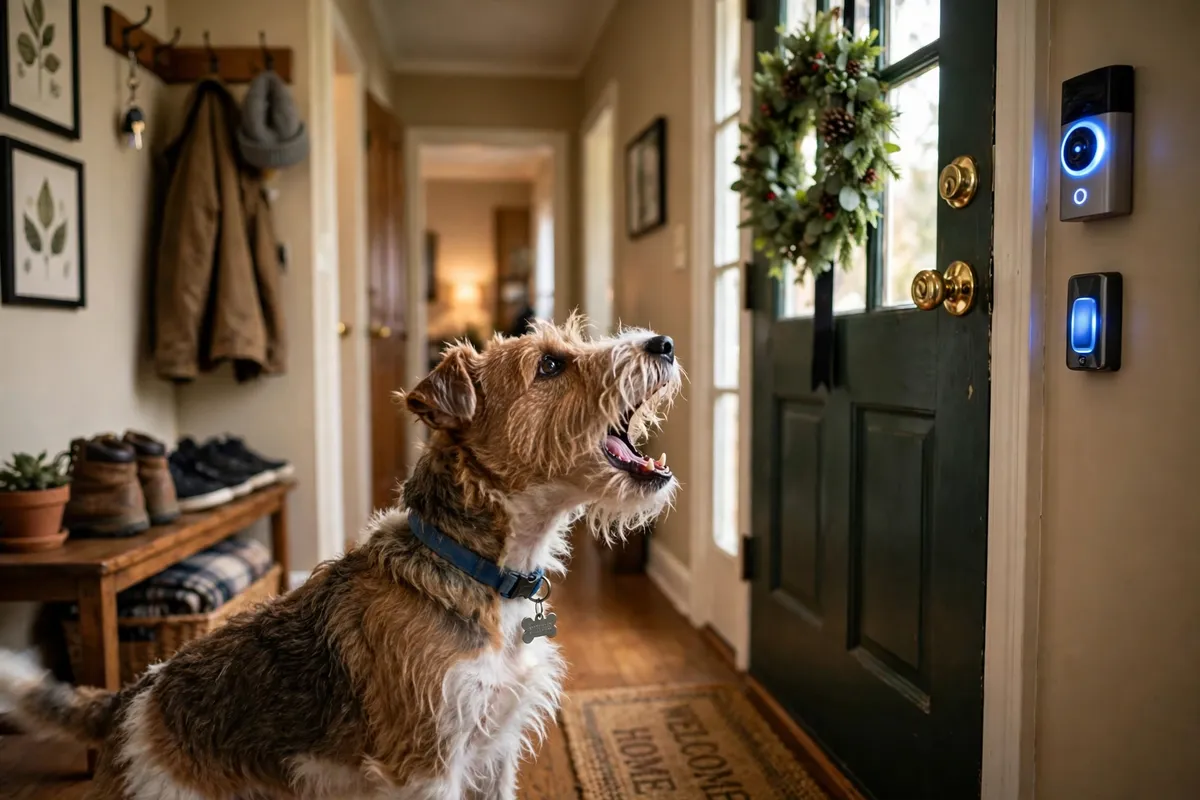
This is the “someone is at the door” bark. Your dog hears a knock, sees a stranger through the window, or notices someone walking past the house, and barks to warn you. Alert barkers usually stop once you acknowledge the “threat” or once the person moves on. This is the most common type of barking, and it is also the most natural — your dog is doing a job it was bred to do.
2. Boredom and Loneliness
A dog left alone in the yard or house for hours with nothing to do will often bark out of sheer frustration. This barking tends to be repetitive and monotonous, and it often goes on for long stretches. Dogs are social animals, and a bored dog is a noisy dog. If your dog mostly barks when alone, boredom is the first thing to suspect.
3. Attention-Seeking
Some dogs learn that barking gets results. They bark, you look at them, talk to them, or give them what they want — and the lesson sticks. Attention barking is often short, sharp, and directed at you, and it stops the moment you give in. The tricky part is that even scolding counts as attention, so shouting “quiet!” can accidentally reward the behavior.
4. Fear and Anxiety
A fearful dog barks at things that scare it: strangers, other dogs, loud noises, or unfamiliar situations. The barking is often high-pitched and paired with tucked ears, a lowered tail, or backing away. Separation anxiety is a special case — some dogs bark, howl, or cry the entire time their owner is away, often combined with destructive behavior or house soiling.
5. Excitement
Some dogs bark when they are happy: when you pick up the leash, when a favorite person arrives, or when play starts. Excitement barking is usually short-lived and stops once the exciting thing happens. It is the least serious type, but it can still be a problem if it happens every time the doorbell rings.
6. Territorial Barking
This overlaps with alert barking but is stronger. A territorial dog barks at anyone approaching its home, yard, or even its favorite spot in the park, and the barking continues until the person or dog leaves. Territorial barking is more common in certain breeds and in dogs that spend a lot of time watching the street from a window.
Step 1: Identify the Trigger
Before you train anything, spend three to five days keeping a simple barking log. Each time your dog has a barking episode, note:
- What time did it happen?
- What triggered it? (doorbell, passerby, another dog, you leaving, nothing obvious)
- How long did it last?
- What did you do? (ignored it, shouted, gave a treat, opened the door)
After a few days, a pattern will emerge. You might find that 90% of the barking happens at the front window between 4 p.m. and 6 p.m., when people walk past on their way home. Or that it only happens when you leave the house. That pattern tells you exactly what to work on — and it stops you from wasting weeks on the wrong training.
If the barking happens mainly when you are away, ask a neighbor or set up a phone camera to record what happens while you are out. Separation anxiety looks very different from boredom, and the fix is different too.
Step 2: Manage the Environment First
Training works much better when you stop rehearsing the problem. Every time your dog barks at the window and the person walks away, your dog thinks the barking worked. Management means reducing those rehearsals while training takes effect.
- Block the view. If your dog barks at passersby through the window, close the curtains, use frosted window film, or move your dog’s bed away from the front window. Out of sight really does mean out of mind for many dogs.
- Reduce the noise. If the doorbell is the trigger, switch it to a quieter chime, or put a sign on the door asking visitors to knock softly or text instead.
- Give your dog a job. A bored dog needs enrichment: puzzle feeders, stuffed Kongs, snuffle mats, and chew toys all keep a dog’s brain busy. A tired dog is a quiet dog.
- Increase exercise. Many barking problems improve dramatically with one more walk a day. A dog that has had a good walk and a play session has less energy left for barking at the fence.
Management is not cheating — it is the foundation that makes training possible.

Step 3: Teach the “Quiet” Command
The “quiet” command is the single most useful tool for barking. Here is how to teach it, step by step.
- Wait for a bark. When your dog starts barking at something, let it bark two or three times, then hold a high-value treat near its nose.
- Say “quiet” once, in a calm, firm voice. Do not shout — shouting sounds like barking to a dog.
- Wait for silence. The moment your dog stops barking to sniff the treat, praise it (“Yes! Good quiet!”) and give the treat.
- Repeat. Practice in short sessions of five minutes, several times a day. After a few days, your dog will start to connect the word “quiet” with stopping.
- Build the pause. Gradually increase the length of silence you ask for before the treat — two seconds, then five, then ten. Reward calm, quiet behavior every time.
- Add a cue for speaking, too. Teaching “speak” first can actually help, because once your dog understands both “speak” and “quiet,” the contrast becomes clear.
The key is timing: reward the silence, not the bark. If you give the treat while your dog is still barking, you have just paid it to bark louder.

Step 4: Desensitization — Make the Trigger Boring
Desensitization means exposing your dog to its trigger at a low enough level that it notices but does not bark, then rewarding calm behavior. Over days and weeks, you gradually increase the intensity. This is the most effective method for alert, territorial, and fear-based barking — but it takes patience.
Here is how it works for a dog that barks at people passing the house:
- Start far away. Have a friend walk past at a distance where your dog notices but does not bark. Reward your dog for looking calmly.
- Repeat many times. Short sessions, lots of treats, always ending before your dog gets stressed.
- Move closer gradually. Over several sessions, have the person walk a little closer each time. If your dog starts barking, you moved too fast — go back to the last distance that worked.
- Change the context. Once your dog is calm at one distance, try different people, different times of day, and different directions.
The same approach works for dogs that bark at other dogs, at the doorbell, or at visitors. The rule is always the same: keep the trigger far enough away or quiet enough that your dog can stay calm, reward the calm, and only make it harder when the current level is easy.
This is slow work. Expect weeks, not days. But desensitization changes how your dog feels about the trigger, which is far more lasting than simply suppressing the bark.

Step 5: Reward Calm Behavior Every Day
Most owners only notice their dog when it is barking. Flip that around: catch your dog being quiet and reward it. When your dog lies calmly while someone walks past, when it hears the doorbell and looks at you instead of charging the door, when it settles quietly in the evening — mark that moment with a quiet “good” and a treat.
This is sometimes called “capturing calmness,” and it is powerful because it teaches your dog that quiet behavior pays. Keep a small jar of treats near the places where barking usually happens, so you are ready to reward the right moment.

What NOT to Do
Some common responses to barking make things worse, even though they feel natural in the moment.
- Do not shout. Shouting sounds like you are barking along with your dog. It raises the energy in the room and often makes the barking louder and longer.
- Do not punish after the fact. If you come home to a neighbor’s complaint and scold your dog, your dog has no idea what the scolding is about. Punishment only works if it happens within seconds of the behavior.
- Do not use bark collars as a first step. Shock collars and citronella collars can suppress barking temporarily, but they do not address the cause, and they can increase fear and anxiety — especially in dogs that bark because they are scared. In some places, including parts of the UK and Australia, certain electronic collars are restricted or banned. If you are considering one, talk to a qualified trainer or your vet first.
- Do not give in to attention barking. If your dog barks for a treat, a walk, or your attention, and you give in, you have just taught it that barking works. Wait for a pause, even a short one, then give what it wants.
- Do not debark or use surgery. Surgical debarking is an extreme, irreversible procedure that most vets and welfare organizations oppose. It should never be considered for a training problem.
Breed Differences: Some Dogs Are Just More Vocal
Breed matters. Some breeds were developed to bark — it was literally their job. Herding breeds like Border Collies and Australian Shepherds bark to control livestock. Terriers were bred to alert and to be tenacious. Guard breeds like German Shepherds and Rottweilers bark to warn. Hounds, including Beagles, are famously vocal.
That does not mean you cannot reduce barking in these breeds, but it does mean you should set realistic expectations. A Beagle will probably never be silent, and a breed that was made to alert will always notice things. The goal is not zero barking — it is barking that stops when you ask and does not go on for hours.
If you are still deciding on a breed, our guide on dog vs cat: which pet is right for you touches on how different animals fit different lifestyles, and our new puppy checklist covers the early weeks when good habits are easiest to build.

When to See a Vet or Behaviorist
Most barking problems improve with management and training, but some need professional help. See your vet or a certified animal behaviorist if:
- The barking started suddenly in an older dog. Pain, hearing loss, or cognitive decline can all cause new barking, and these need a medical check first.
- Your dog shows signs of separation anxiety — barking and howling the whole time you are away, plus destructive behavior, drooling, or house soiling. Separation anxiety is a real anxiety disorder, and it usually needs a structured behavior plan, sometimes with medication.
- Your dog is aggressive as well as noisy. Barking combined with lunging, growling, or snapping needs a professional assessment. Do not try to fix aggression with tips from an article.
- You have tried consistent training for four to six weeks with no improvement. A trainer can spot what you are missing, often in a single session.
Look for a trainer who uses positive reinforcement methods and is certified by a recognized body, such as the Certification Council for Professional Dog Trainers (CCPDT) in the US or the Association of Pet Dog Trainers in the UK. Avoid anyone who promises instant results or relies on punishment-based methods.
A Realistic Training Plan: Week by Week
Here is a simple plan you can follow. Adjust it to your dog’s trigger, but keep the structure: management first, then training, then gradually harder situations.
Week 1: Keep the barking log. Block the window view, add enrichment, and increase exercise. Start teaching “quiet” in short, calm sessions.
Week 2: Practice “quiet” daily. Begin desensitization at a distance where your dog can succeed. Reward calm behavior every time you catch it.
Week 3: Make the trigger a little harder — a closer passerby, a louder doorbell. Keep sessions short and end on a success.
Week 4: Practice in real-life situations. Have a friend ring the doorbell for real. Reward your dog for staying quiet. Expect setbacks — they are normal.
Week 5 and beyond: Keep rewarding calm behavior and maintain the routine. Most owners see real improvement in four to six weeks, and the change keeps building as the new habit becomes automatic.
If your puppy is still learning the basics, our guide on how to train a puppy to walk on a leash covers another essential skill that pairs well with barking training — a dog that walks well and listens on the leash is easier to manage everywhere else too.
FAQ
How long does it take to stop a dog barking?
Most owners see noticeable improvement in four to six weeks of consistent training, but it depends on the cause. Alert barking at the doorbell can improve quickly. Fear-based barking and separation anxiety take longer — sometimes several months — because you are changing how your dog feels, not just what it does. Consistency matters more than speed.
Should I use a bark collar?
Bark collars, especially shock collars, are not recommended as a first step. They suppress the barking without addressing the cause, and they can increase fear and anxiety in dogs that bark because they are scared. Some are restricted or banned in parts of the UK and Australia. Try management, the “quiet” command, and desensitization first, and talk to a vet or certified behaviorist before considering any collar-based device.
Why does my dog bark at nothing?
Your dog is almost certainly barking at something — you just cannot hear or see it. Dogs hear sounds at frequencies and distances far beyond human hearing, and they can smell things we cannot detect. If your dog stares at a fixed point and barks, it may be reacting to a sound outside, an animal in the yard, or even a reflection. If the barking is new and your dog seems confused or distressed, a vet check is worth it, especially in older dogs.
Is it cruel to stop a dog from barking?
No — as long as you use humane methods. Barking is communication, so the goal is never to eliminate it completely. The goal is to teach your dog when barking is appropriate and when to stop. Positive training, enrichment, and management are all kind approaches. Punishment, shouting, and devices that cause pain or fear are not.

The Bottom Line
Learning how to stop your dog barking starts with understanding why it barks. Identify the trigger, manage the environment so your dog stops rehearsing the problem, teach a clear “quiet” command, and use desensitization to change how your dog feels about the trigger. Reward calm behavior every single day, and be patient — real change takes weeks, not hours.
You do not need a silent dog. You need a dog that barks when something is worth barking about, and stops when you ask. With consistent, kind training, that is a goal most owners can reach.
Disclaimer: This article is for informational purposes only and is not a substitute for professional veterinary or behavioral advice. If your dog shows signs of anxiety, aggression, or a sudden change in behavior, consult your veterinarian or a certified animal behaviorist. Training methods and regulations around bark collars vary by country and region — always check local rules.