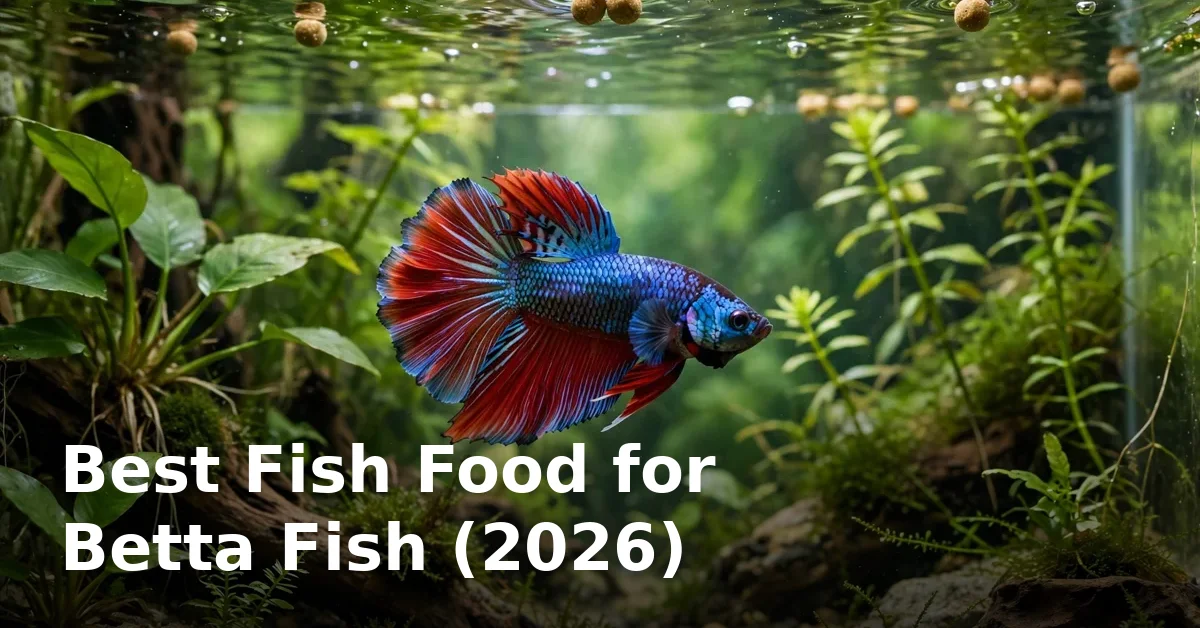
Best Fish Food for Betta Fish (2026): 5 Picks Your Betta Will Love
Choosing the best fish food for betta fish matters more than most owners expect, because a betta’s small stomach and surface feeding mean the wrong food is often spat out or left to cloud the water.
Bettas are picky eaters with very specific needs. In the wild they eat insects and larvae at the water’s surface, so a good betta food is high in protein, sized for a small mouth, and floats or sinks slowly enough for your fish to catch it. Cheap generic tropical flakes are mostly filler — they cloud the water, and your betta will often spit them out. If you also keep a bird, choosing the best bird cage for beginners is just as important as choosing the right food.
We compared the betta foods owners and aquarists keep recommending and picked five: an easy everyday pellet, an insect-based natural food, a variety pack, a color-boosting formula, and a budget staple. Small pets need the right home too — see our best guinea pig cage for beginners.
Table of Contents
Prices change — check the current price before buying.
1. Hikari Betta Bio-Gold — Best Overall
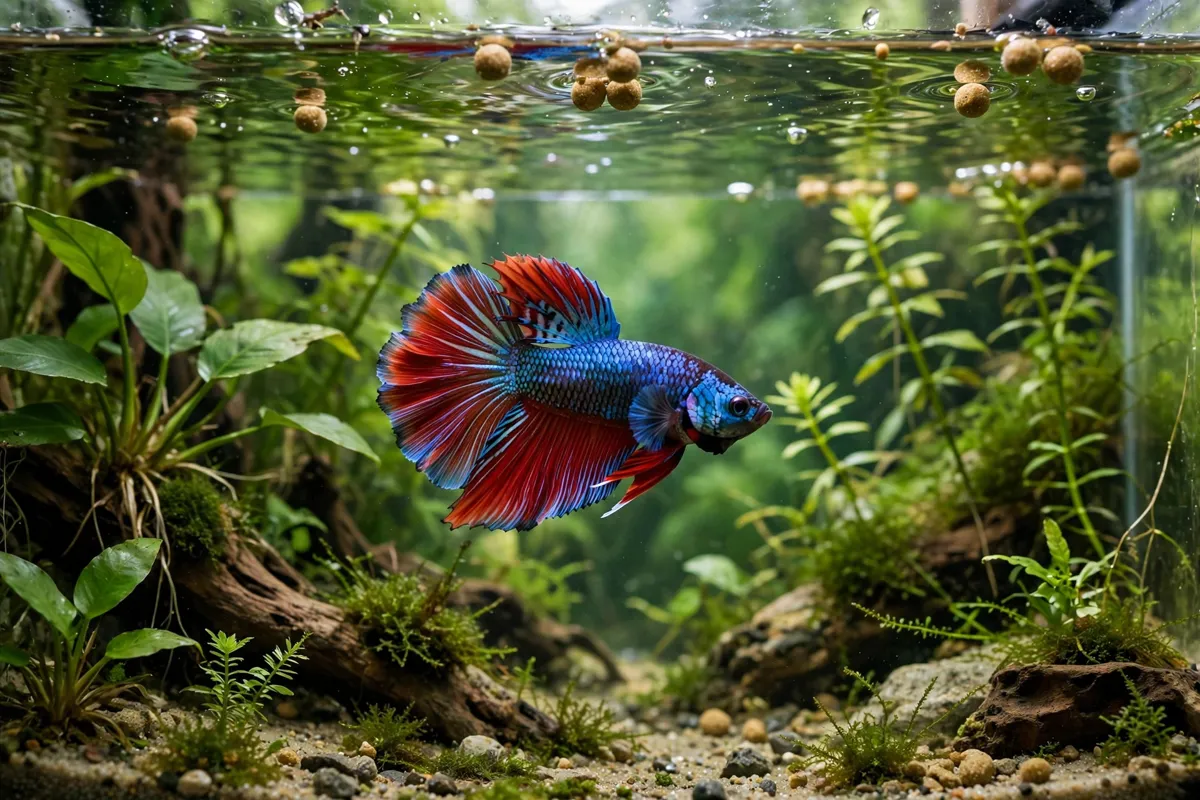
Hikari Betta Bio-Gold is the easiest daily staple to recommend, especially for beginners. The floating pellets are about 1.1–1.4 mm across, which is small enough for a betta’s mouth but big enough to count one by one — and counting pellets is the simplest way to avoid overfeeding, the most common beginner mistake. The formula is made for bettas specifically, with fish meal protein, color-enhancing ingredients, and stabilized vitamin C to support immune health.
Because the pellets float, your betta eats at the surface where it naturally feeds, and leftovers are easy to spot and remove.
What is good: Perfect pellet size for counting portions, made for bettas, color enhancement, widely available, easy for beginners.
What to watch out for: Some bettas refuse pellets at first, especially fish raised on flakes or live food — you may need to soak a pellet or try a few times. It is a dry staple only, so it works best alongside an occasional treat.
2. Fluval Bug Bites Betta Formula — Best Natural Food
Fluval Bug Bites is the closest thing to a betta’s natural diet in a jar. Its first ingredient is black soldier fly larvae, and the formula lists around 40% larvae content with about 45% minimum crude protein, plus salmon for omega fatty acids. The slow-sinking micro granules are tiny — roughly 0.25 to 1 mm — so your betta can feed at the surface or pick up pieces as they drift down.
What is good: Insect-based protein like a betta’s wild diet, very high protein, tiny granules suit small mouths, strong feeding response from most bettas.
What to watch out for: The granules sink, so slow or older bettas may miss some — feed a few pieces at a time and remove leftovers. It costs more per ounce than basic pellets.
3. Tetra BettaMin Select-A-Food — Best Variety Pack
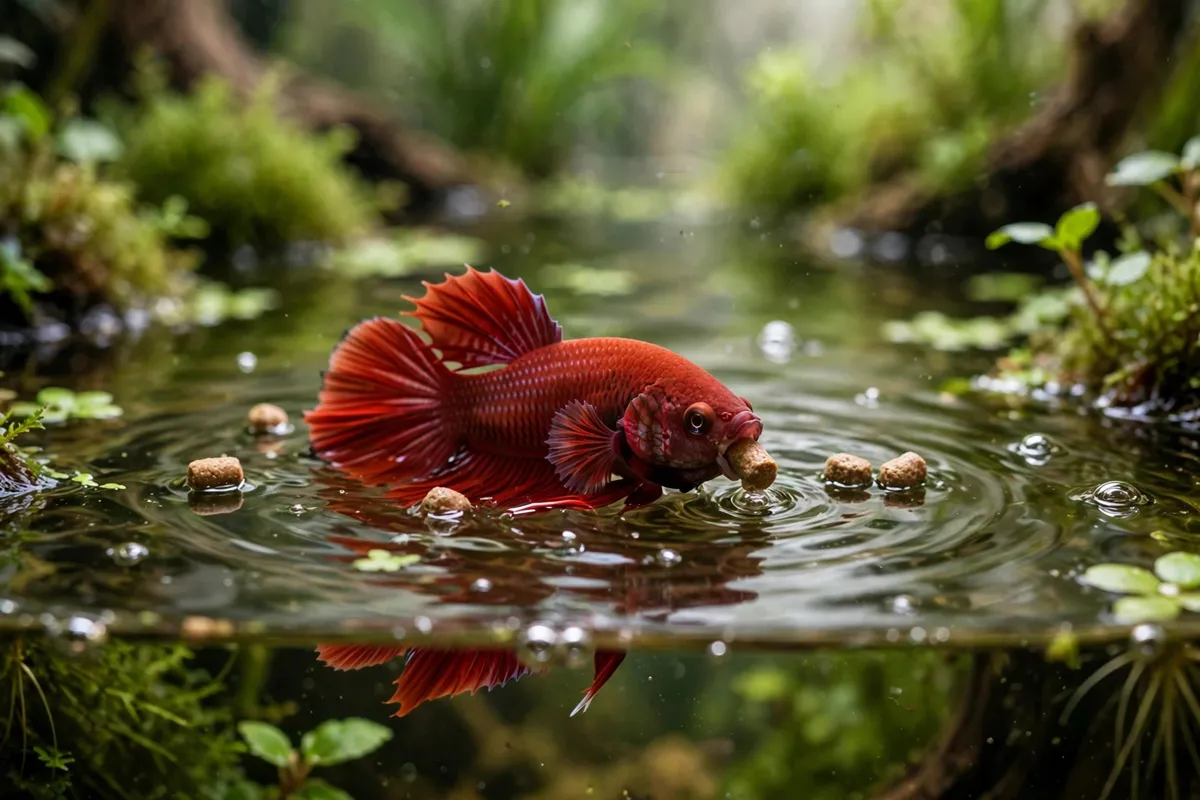
If your betta gets bored of one food, the Tetra BettaMin Select-A-Food variety pack keeps things interesting. One pack includes three foods: BettaMin flakes, freeze-dried bloodworms (actually a midge larvae treat), and floating mini pellets. You can rotate them through the week so your betta gets different textures and tastes.
The flakes are a complete daily food, while the freeze-dried bloodworms work as a treat a couple of times a week. Having all three in one box is handy for new owners who are still learning what their betta likes.
What is good: Three foods in one pack, good way to find what your betta prefers, flakes and pellets are easy to portion.
What to watch out for: Flakes can cloud the water if you overfeed, so feed tiny amounts. Freeze-dried treats should stay occasional — they are not a complete diet on their own.
4. New Life Spectrum Betta Formula — Best for Color
New Life Spectrum is a favorite among serious fish keepers, and its Betta Formula is made to bring out color without hormones. The 1 mm semi-floating pellets are small enough for bettas of all sizes, and the formula is built around whole fish and krill rather than cheap fillers. The color support comes from natural ingredients like spirulina and krill, not artificial dyes.
What is good: Hormone-free color support from natural ingredients, high-quality fish and krill base, tiny 1 mm pellets, trusted brand among aquarists.
What to watch out for: It is one of the more expensive betta foods, and the small container runs out faster in a multi-tank setup. Picky bettas may need a few days to accept a new pellet.
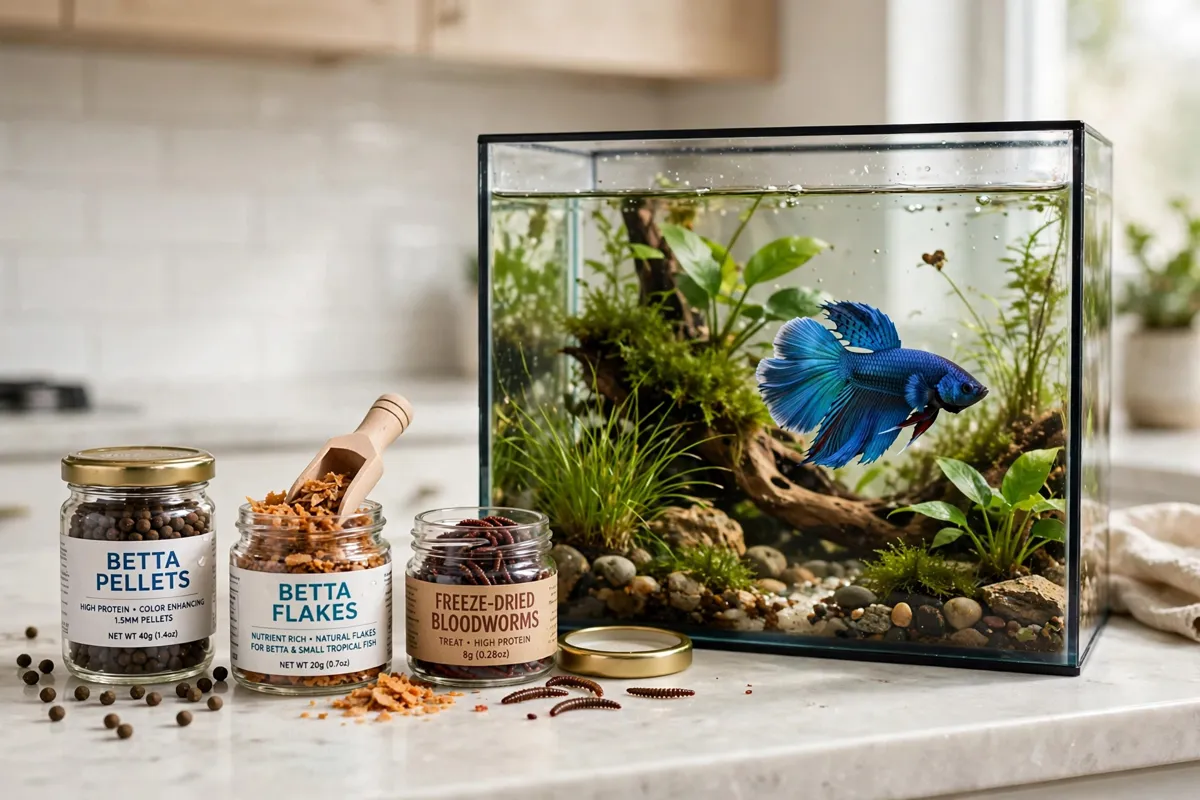
5. TetraBetta PLUS Floating Mini Pellets — Best Budget Pick
The TetraBetta PLUS Floating Mini Pellets are the budget staple that still does the job properly. They are a complete daily diet made for bettas, with natural color enhancers to support bright fins, and the small floating pellets are easy for bettas to find and eat at the surface.
For a first tank or several bettas, it keeps costs down without switching to a generic flake your betta will not finish.
What is good: Very affordable, complete daily nutrition, natural color enhancers, floating pellets are easy to feed and easy to clean up.
What to watch out for: The ingredient list is more basic than the premium picks, so it is best as an everyday staple rather than the only food — rotate in a higher-protein option or a treat now and then.
What to look for in betta fish food
- High protein. Bettas are insect eaters, so look for 35–45% protein from fish meal, shrimp, krill, or insect larvae — not wheat and soy fillers.
- Right size. Pellets around 1 mm and micro granules suit a betta’s small mouth. Oversized pellets get spat out and rot in the tank.
- Floats or sinks slowly. Bettas feed at the surface, so floating pellets or slow-sinking granules work best.
- Betta-specific formula. Generic tropical flakes are made for many species and are usually too low in protein for a betta.
- Color support. Natural enhancers like spirulina and krill help fins stay bright — avoid artificial dyes.
- Variety. No single food is perfect. A staple pellet plus an occasional freeze-dried or frozen treat keeps the diet balanced and interesting.
FAQ
How much should I feed my betta each day?
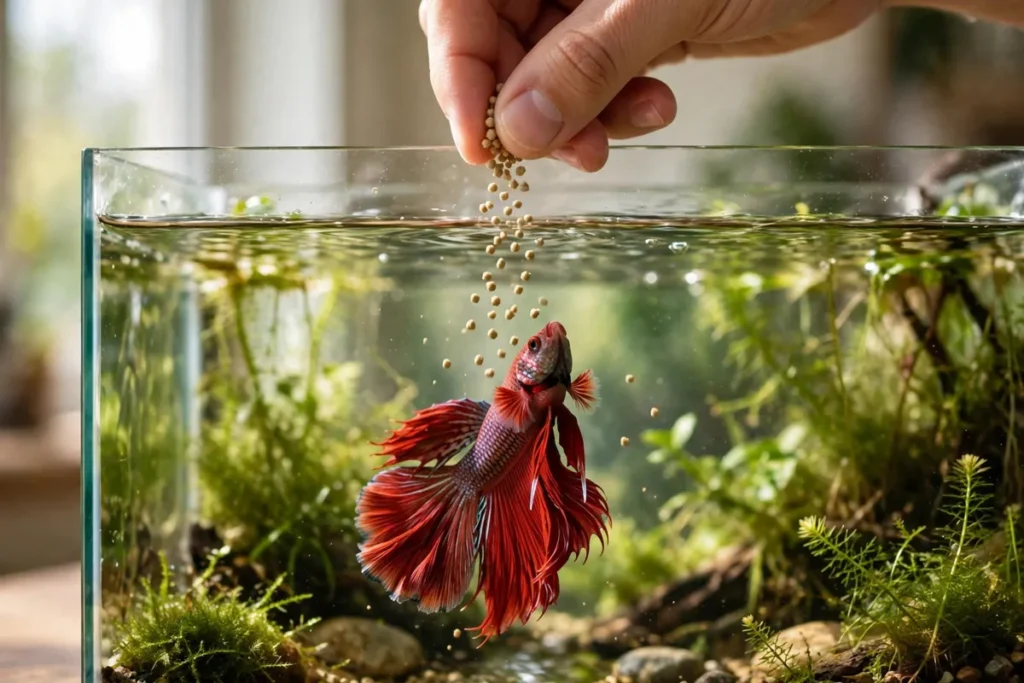
Feed 2–4 small pellets of the best fish food for betta fish twice a day — about as much as your betta can eat in two minutes. A betta’s stomach is roughly the size of its eye, so overfeeding is easy. A healthy adult betta handles one fast day a week fine.
Can bettas eat regular tropical fish flakes?
They can eat them, but it is not a good daily diet. Most tropical flakes are too low in protein and too high in filler for a betta, and they cloud the water. A betta-specific pellet or granule is a much better staple. For betta care basics, see PetMD’s fish care guides.
Why is my betta spitting out its food?
The food may be too big, too hard, or unfamiliar. Try smaller pellets, soak one in tank water to soften it, or switch brands. New bettas often refuse food for a day or two while settling in — that is normal.
Do bettas need treats like bloodworms?
Treats are a nice extra, not a must. Freeze-dried bloodworms or daphnia once or twice a week add variety and protein, but they should never replace the daily staple food.
The bottom line
For most betta owners, Hikari Betta Bio-Gold is the best everyday pick — easy to portion and gentle on beginners. For the most natural diet, go with Fluval Bug Bites. The Tetra BettaMin Select-A-Food pack helps you find what your betta likes, New Life Spectrum is the pick for the richest color, and TetraBetta PLUS covers the budget end. Whichever you choose, feed small amounts, remove leftovers, and always check the current price before buying. If you are still deciding which pet fits your home, our Dog vs Cat: Which Pet Is Right for You? guide will help you choose.
Disclaimer: This article is for general information only and does not replace professional veterinary advice. If your betta stops eating, looks bloated, or shows signs of illness, consult an aquatic veterinarian or an experienced aquarist.