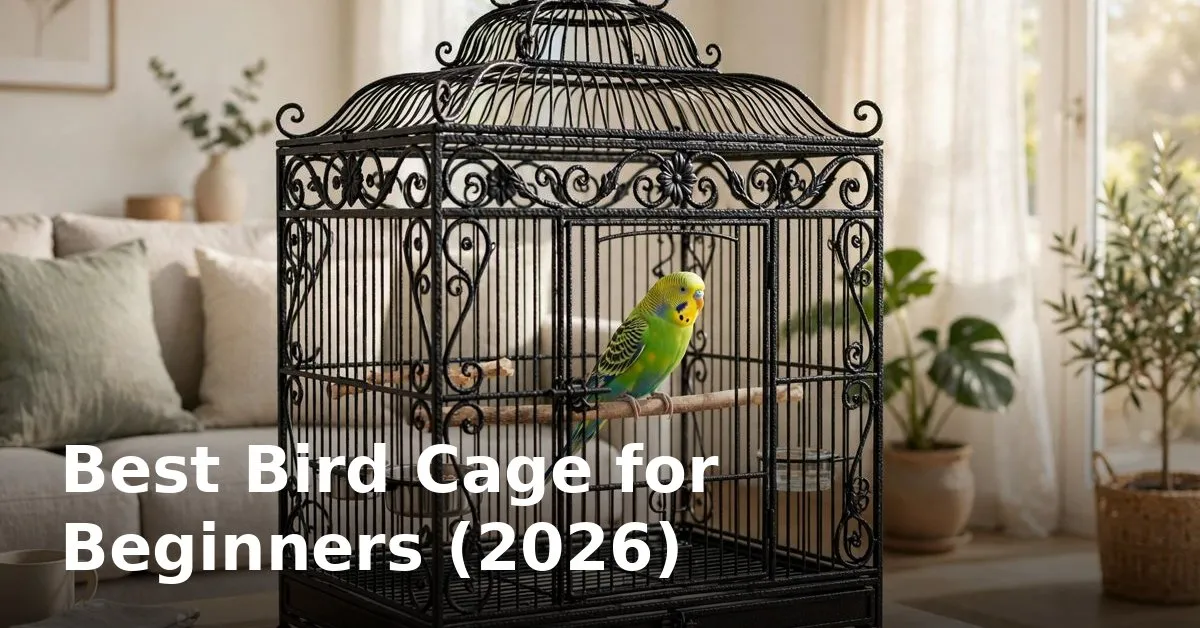
Best Bird Cage for Beginners (2026): 5 Safe Picks
Choosing the best bird cage for beginners is the first step to a happy, safe bird, because the cage is where your bird will sleep, eat, and spend most of its day.
Your bird’s cage is its home — the place it sleeps, eats, plays, and spends most of its day. A cage that is too small, has the wrong bar spacing, or is coated in cheap paint can make a bird stressed, injured, or even sick. A good starter cage gives your bird room to stretch, climb, and flap, with safe bars and easy cleaning. If you also keep fish, our guide to the best fish food for betta fish.
We looked at the bird cages beginners keep buying and recommending on Amazon, and picked five that are safe, well built, and easy to live with. If you are still deciding which pet to bring home, our Dog vs Cat: Which Pet Is Right for You? guide compares dogs and cats side by side.
Table of Contents
Prices change — check the current price before buying.
1. Yaheetech 64-Inch Open Top Bird Cage — Best Overall Value
For many new owners, this is the best bird cage for beginners: the most-reviewed bird cage on Amazon, with over 6,000 reviews, and it is easy to see why beginners love it. At 64 inches tall with an open-top play area, it gives small to medium birds room to climb and perch outside the cage as well as inside. It comes on rolling casters, has a slide-out tray for easy cleaning, and includes perches and feeding cups.
What is good: Great value for the size, open top doubles as a play area, easy to move, popular with first-time owners.
What to watch out for: The paint can wear over time, so check it regularly for chips. Assembly can take a while — follow the instructions and tighten every bolt.
2. Prevue Pet Products Wrought Iron Flight Cage — Best Trusted Brand
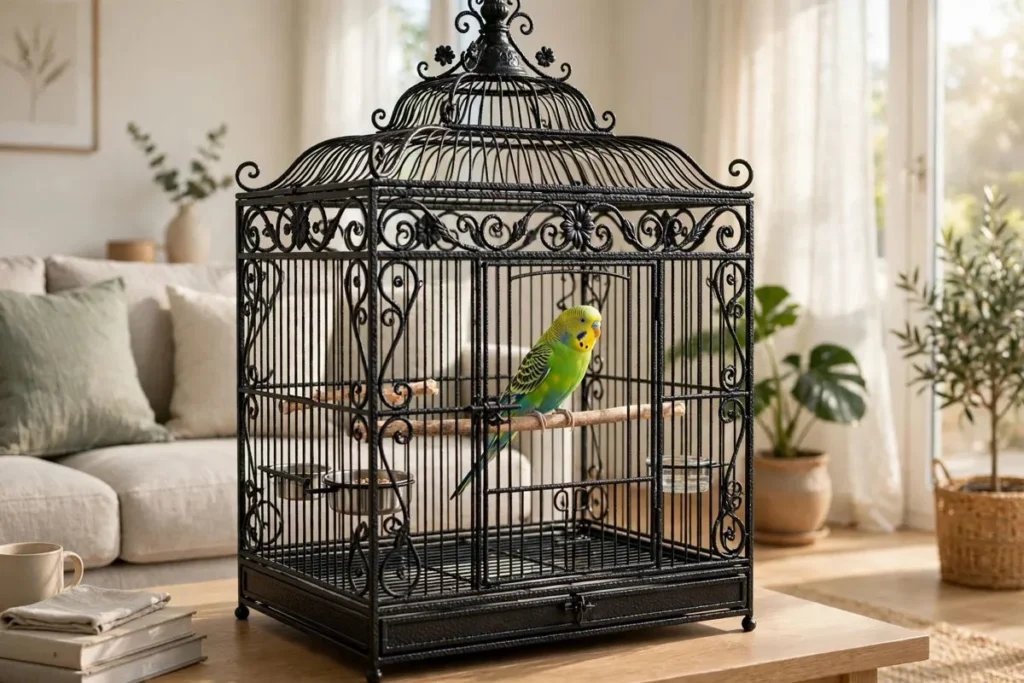
Prevue Hendryx is the most trusted name in bird cages, and its wrought iron flight cage is the quality pick in this list. The strong wrought iron frame is coated with a non-toxic, lead-free, zinc-free, bird-safe paint, and the wide flight-cage shape gives birds horizontal room to hop and flutter — which matters more than height for most small and medium birds. It has two large front doors plus smaller side doors, a stand with a storage shelf, and a slide-out tray.
What is good: Excellent build quality, genuinely bird-safe coating, wide shape for flight, trusted brand with good parts support.
What to watch out for: It costs more than the budget picks, and it is heavy — set it up where it will stay. Bar spacing suits small to medium birds, not very large parrots.
3. Yaheetech 52-Inch Rolling Bird Cage — Best Budget Flight Cage
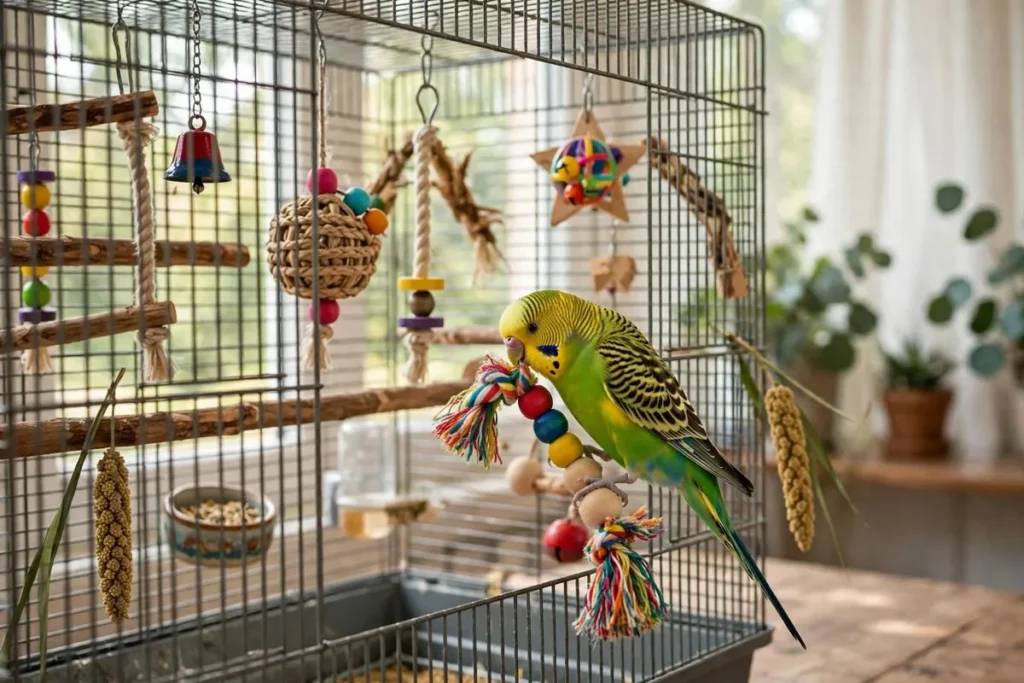
If you want a proper flight cage on a tight budget, the Yaheetech 52-inch rolling cage is the one to look at. It is a wide cage on rolling casters, so your bird gets real horizontal space and you can move the cage between rooms or outdoors. Secure latches on the front doors help stop escapes, and the slide-out tray makes cleaning simple.
What is good: Real flight space at a budget price, rolls easily, secure door latches, works indoors or outdoors.
What to watch out for: Assembly can be fiddly — some owners report holes that do not line up perfectly. The paint is thinner than on premium cages, so inspect it for chips.
4. Mcage Extra Large Castle PlayTop Parrot Cage — Best for Medium to Large Birds
The Mcage Castle PlayTop is a spacious wrought iron cage for medium to large parrots. It has an open play top with a toy hook, so your bird gets a perch and play area on the roof, and the roomy interior gives larger birds space to move. It stands on rolling casters and includes perches and feeding cups.
What is good: Very spacious for larger birds, play top with toy hook, sturdy wrought iron build, rolls for easy moving.
What to watch out for: It is a big, heavy cage — measure your space and doorways first. Bar spacing is wider, so it is not suitable for very small birds like finches or budgies.
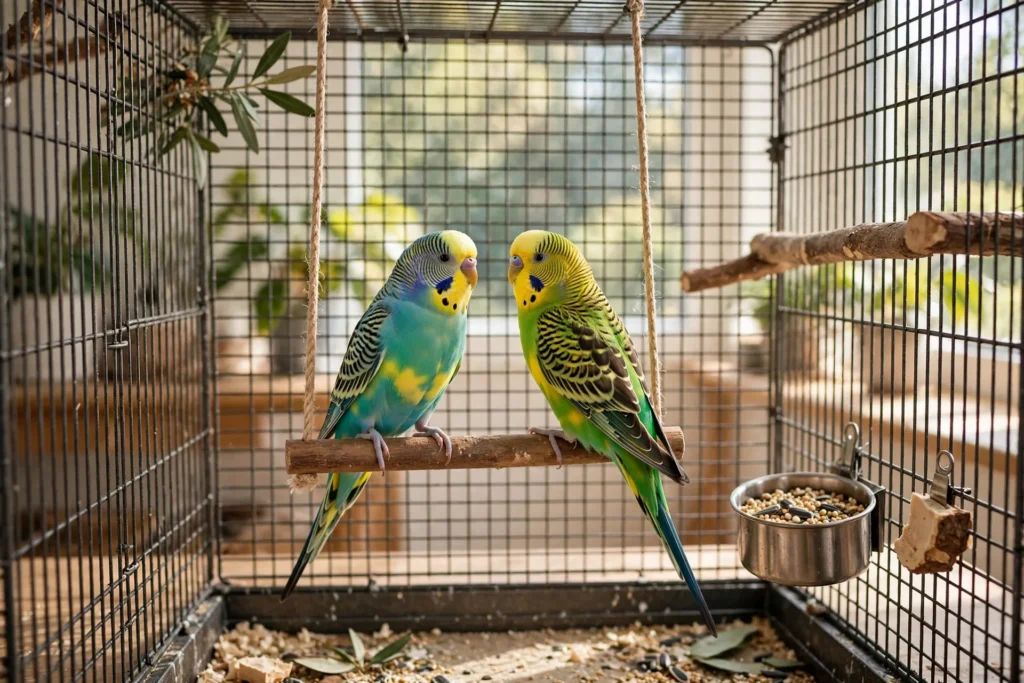
5. Mcage Canary Cockatiel Roof Top Bird Cage — Best for Small Birds
For budgies, canaries, cockatiels, and other small birds, the Mcage Roof Top cage is a simple, beginner-friendly choice. It is roomy for its size, with a roof-top design that suits small birds, and owners report it is easy to assemble — some say they put it together without even needing the manual. It comes with the perches and cups you need to get started.
What is good: Easy assembly, good size for small birds, everything included, affordable.
What to watch out for: It is only for small birds — do not house a medium or large parrot in it. The bars and latches are lighter duty than on wrought iron cages, so check them regularly.
What to look for in a bird cage
- Size — bigger is better. Your bird should be able to stretch its wings fully and hop between perches. For small birds, width matters more than height, because birds fly sideways.
- Bar spacing. This is a safety issue: bars too wide can trap a bird’s head, and bars too close block the view and feel cramped. As a guide, budgies and finches need narrow spacing (around 1/2 inch), cockatiels and conures around 5/8 to 3/4 inch, and large parrots up to 1 inch or more.
- Material and coating. Powder-coated wrought iron is the safest common choice. Avoid cheap zinc-coated or galvanized wire, and avoid paint that chips — chipped paint can be toxic if your bird chews it.
- Shape. Rectangular or square cages are best. Round cages look nice but give birds no corners to retreat to, and they are stressful.
- Doors and latches. Large front doors make cleaning and handling easier, and secure latches stop clever birds from escaping.
- Cleaning. A slide-out tray and a removable grate make daily cleaning far easier — and a cage that is easy to clean is a cage that stays clean.
- Placement. Put the cage against a wall in a bright, draught-free room where your family spends time — never in a kitchen, where fumes from non-stick pans are toxic to birds.
FAQ
What size cage does a budgie need?
Bigger than most pet-store cages. A single budgie needs at least 18 inches wide, but 30 inches or more is much better — budgies fly sideways, so width matters most.
Is a round cage bad for birds?
Yes, for most birds. Round cages offer no corner to hide in, which stresses birds, and the curved bars can trap toes. Choose a rectangular or square cage.
How often should I clean a bird cage?
Change the tray paper daily, wash food and water bowls daily, and do a full clean — bars, perches, tray, and toys — at least once a week. For general bird care guidance, the ASPCA’s pet care guides are a useful reference.
Can I keep two birds in one cage?
It depends on the species and the cage size. Budgies and finches often do well in pairs in a large cage; many parrots prefer their own space. Always research your species first, and give each bird enough room.

The bottom line
For most beginners, the Yaheetech 64-Inch Open Top is the best starting point — big, affordable, and loved by thousands of owners. If you want the best build quality and a coating you can trust, the Prevue Wrought Iron Flight Cage is worth the extra cost. Small-bird owners should look at the Mcage Roof Top, and anyone with a medium or large parrot should consider the Mcage Castle PlayTop. Whichever cage you choose, size it for your bird, check the bar spacing, and always check the current price before buying. If a small pet feels like a better fit than a bird, see our best guinea pig cage for beginners.
Disclaimer: This article is for general information only and does not replace professional veterinary advice. If your bird shows signs of stress, injury, or illness, consult an avian veterinarian.