
Dog Harness vs Collar: Which Is Safer for Your Dog?
Every dog owner faces the same choice before the first walk: dog harness vs collar — which one is safer for your dog? Both attach to a leash, both come in every size and color, and both have fans who swear by them. But they work in very different ways, and the wrong pick can mean a sore neck, a slipped leash, or a dog that pulls even harder.
A collar sits around your dog’s neck and clips to the leash at the throat. A harness spreads the leash’s pull across your dog’s chest and shoulders instead. The right choice depends on your dog’s size, breed, health, and how hard it pulls — and for some dogs, the answer is genuinely important.
Prices change, so check the current price before buying.
Dog Harness vs Collar at a Glance
| Feature | Harness | Collar |
|---|---|---|
| Where the pressure goes | Chest and shoulders | Neck and throat |
| Best for | Pullers, small breeds, puppies | Calm walkers, ID tags, quick trips |
| Neck safety | Very safe, no pressure on the throat | Can strain the neck, trachea, and eyes |
| Escape risk | Low, if fitted well | Higher, especially for small or slim dogs |
| Control | Good, especially front-clip styles | Less control over a strong puller |
| Training help | Front-clip harnesses reduce pulling | Limited, a collar cannot steer a puller |
| Comfort | Even pressure, easy on the back | Can rub and choke during a pull |
| Fitting | Takes a few minutes to adjust | Clip on in seconds |
| ID tags | Can hold tags, but collars are standard | The usual place for ID and license tags |
| Cost | Usually more than a collar | Cheap and simple |
| Best for flat-faced breeds | Yes, avoids the airway entirely | No, risky for pugs, bulldogs, and Frenchies |
| Best for dogs with neck injuries | Yes, vets recommend it | No, avoid until the vet clears it |
What Is a Dog Harness?
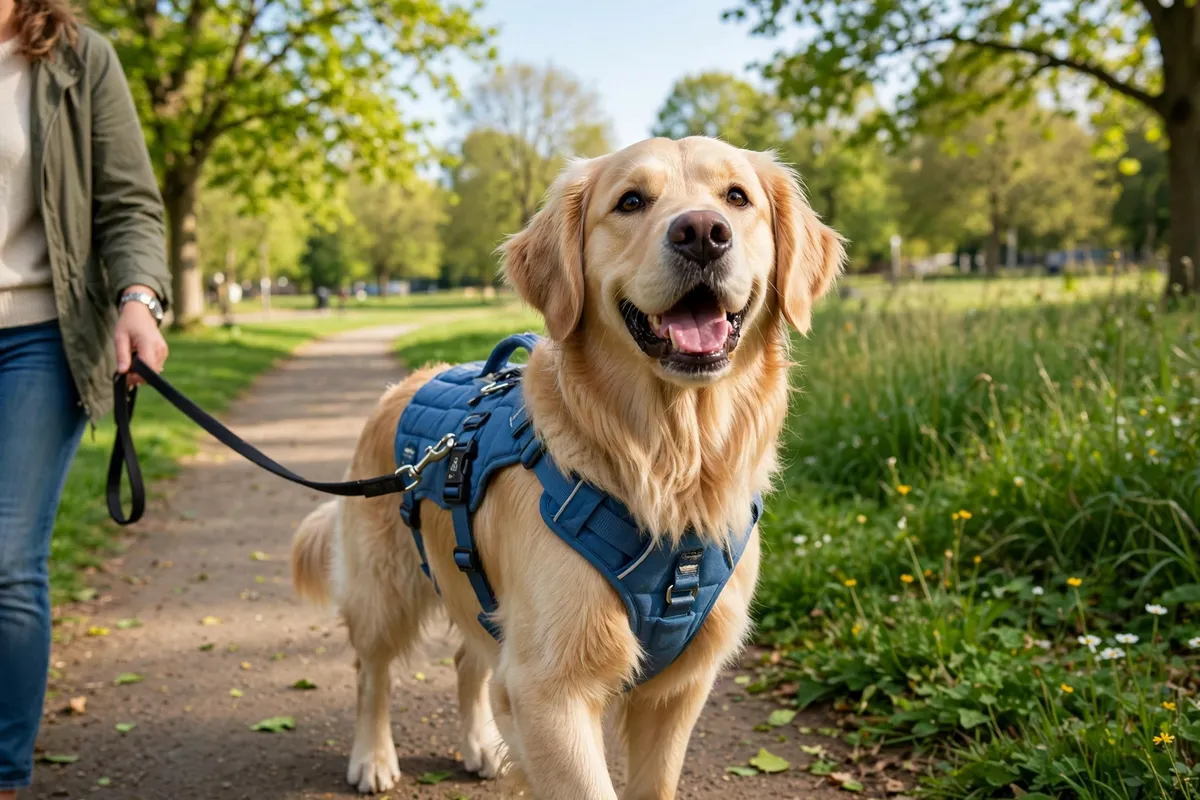
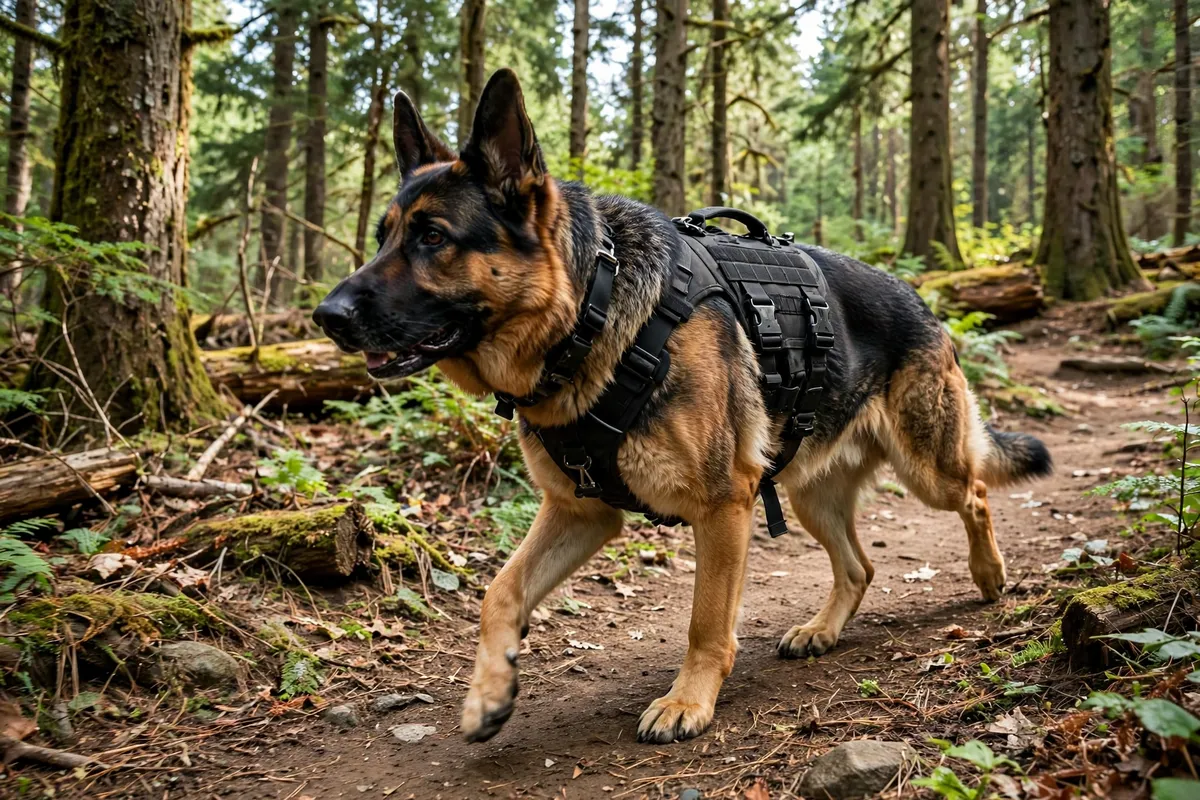
A dog harness is a set of straps around your dog’s chest and shoulders, with the leash clipping to a ring on the back or the front of the chest. The most common styles are the back-clip, where the leash attaches between the shoulder blades, and the front-clip, where it attaches at the center of the chest.
The whole point of a harness is that it spreads the force of a pull across a large, strong part of the body instead of concentrating it on the narrow neck. When your dog lunges at a squirrel, the harness catches the chest; a collar catches the throat.
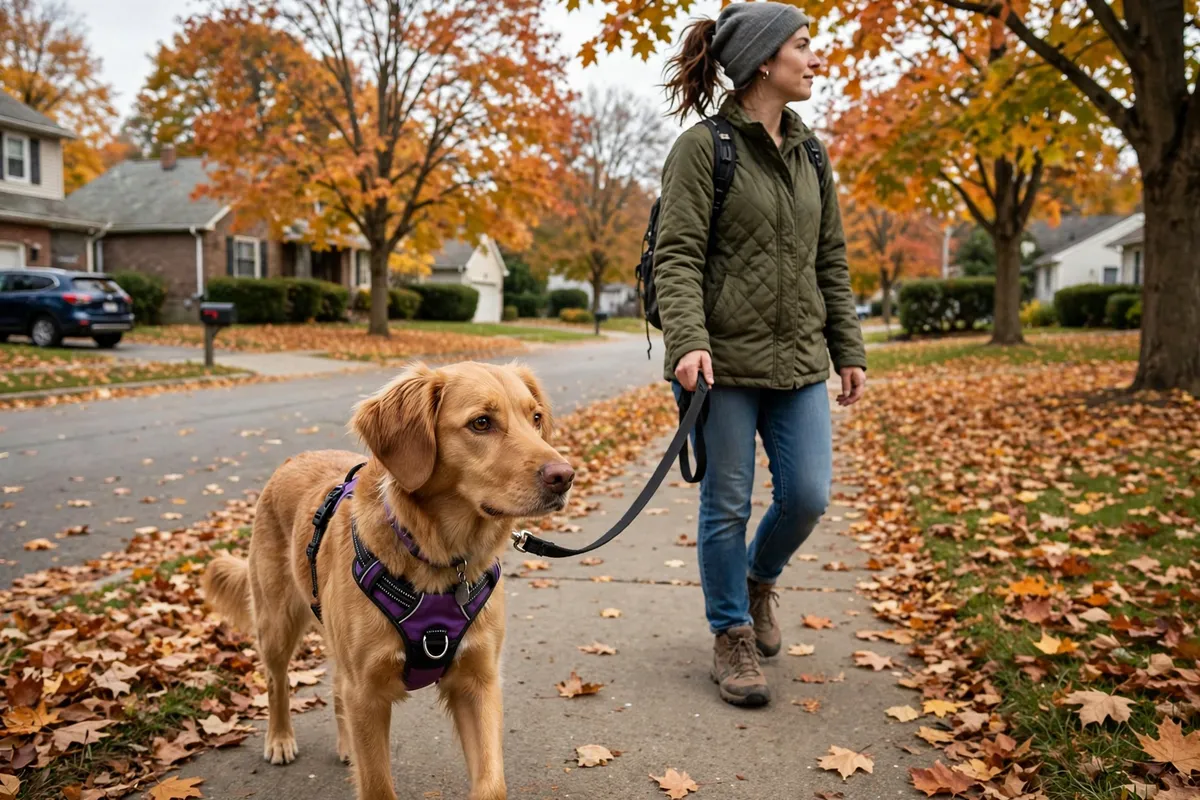
A well-fitted harness sits snugly — two fingers under the straps — without rubbing the armpits or sliding sideways.
What Is a Dog Collar?
A dog collar is a band that goes around your dog’s neck, with a buckle or a clip and a ring for the leash and tags. Flat collars are the everyday standard, and martingale collars tighten slightly when the dog pulls, so a slim-headed dog cannot slip out.
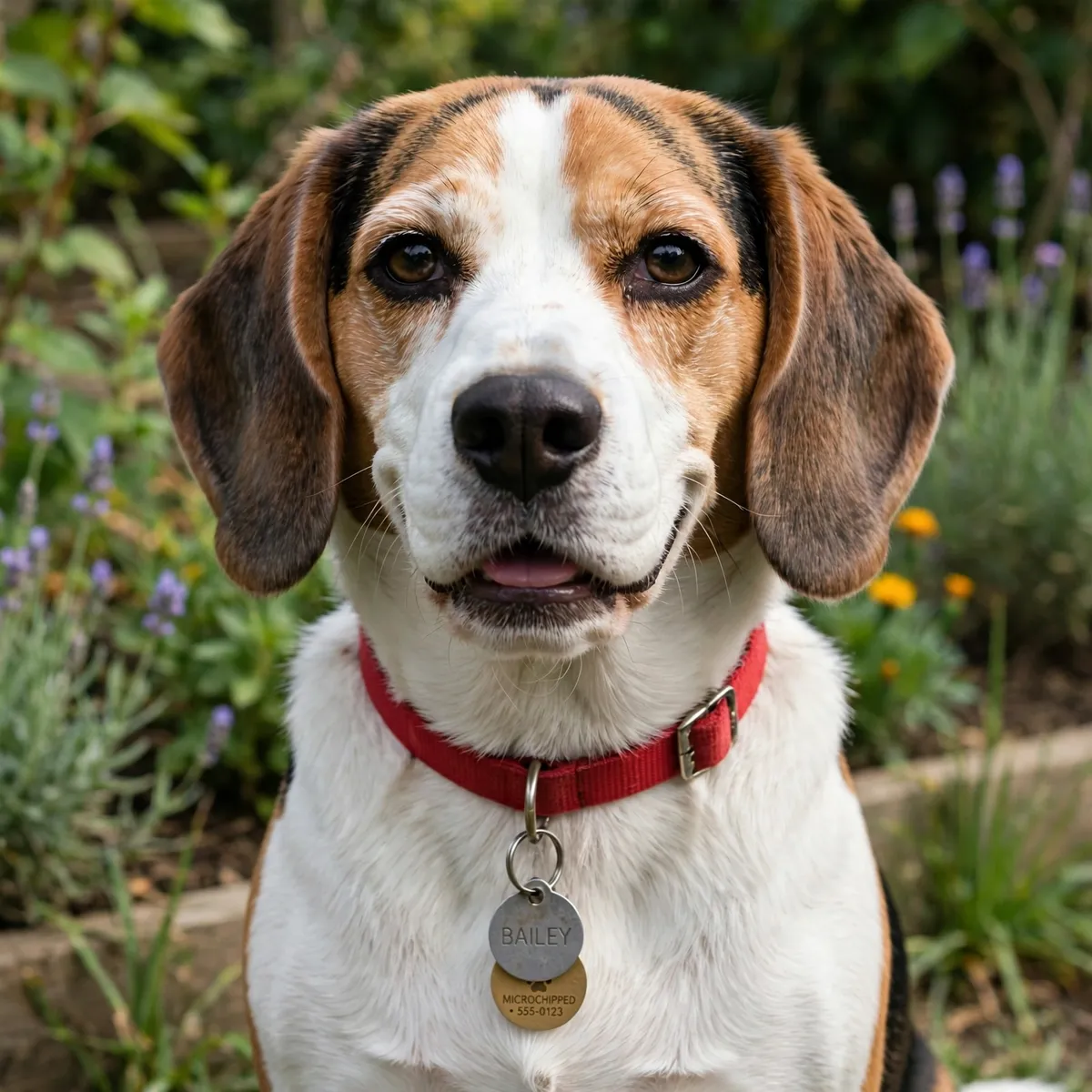
A collar is simple, cheap, and fast. You clip it on in seconds, it carries the ID tag and license every dog should wear, and it works fine for a dog that walks calmly at your side without pulling.
The problem is physics: the neck is a narrow column packed with the windpipe, the food pipe, blood vessels, and nerves, and a collar puts all the pulling force right there.
Neck Safety: The Biggest Difference
Neck safety is where the dog harness vs collar debate is decided, because the two options treat the neck completely differently.
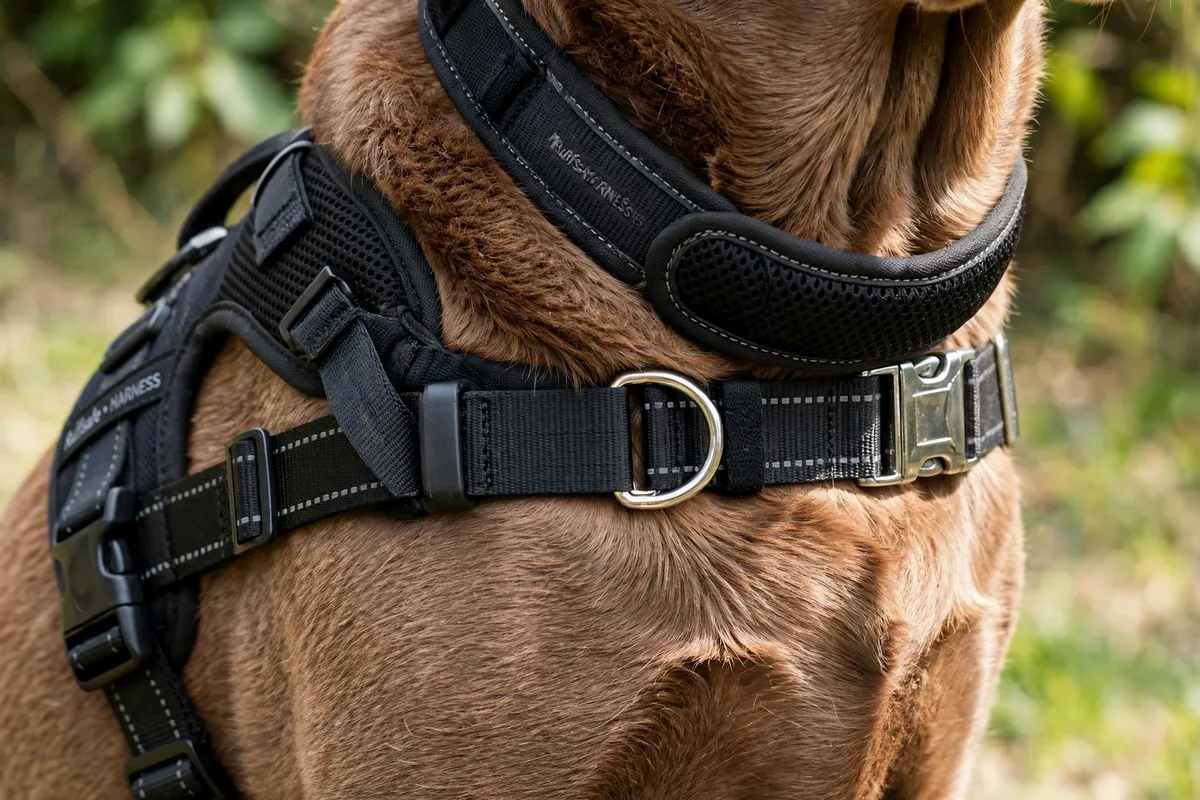
A collar puts pressure directly on the throat. When a dog pulls, it presses on the windpipe and can raise pressure inside the eye. Vets see the results: dogs with chronic coughing, a collapsed trachea, or eye problems made worse by collar pressure. Small breeds are at the highest risk — a Yorkshire Terrier or a Pomeranian has a delicate windpipe that a single hard lunge can damage.
Flat-faced breeds are at even higher risk: a pug, a French bulldog, or an English bulldog already struggles to breathe through a short, narrow airway, and collar pressure makes it worse. For these breeds, most vets say a harness is the safe choice, not a preference.
A harness avoids the neck entirely: the pressure lands on the chest and shoulders, which are built to take it, and the airway stays clear no matter how hard the dog pulls. The American Kennel Club’s guide to dog harnesses and dog collars explains the trade-offs, including which dogs should never walk on a collar alone.
Control and Pulling: Which One Helps More?
If your dog pulls, a harness — the right kind — helps more than a collar, but not every harness does the job.
A front-clip harness is the one that actually reduces pulling. When the dog lunges forward, the leash attached at the chest turns the dog gently sideways, so pulling stops working.
A back-clip harness, by contrast, can make pulling worse — it gives the dog a comfortable surface to lean into, like a sled dog’s harness, and a strong dog will pull harder than ever. If your dog already pulls, a back-clip harness alone will not fix it.
A collar gives you the least control of all. You cannot steer a pulling dog by its neck without hurting it, and the more it pulls, the more the collar tightens and the more the dog coughs and strains.
Neither tool replaces training — a loose-leash walk comes from practice, treats, and patience. But a front-clip harness makes that training much easier, and a collar makes it harder.
Escape Risk: Which One Keeps Your Dog Attached?
A dog that slips its gear on a busy road is in danger, and here the two options differ by dog shape more than by type.
A collar is easy to slip out of if your dog has a slim head and a thick neck — the classic problem with Greyhounds and Whippets. A martingale collar fixes this by tightening just enough to stay on without choking.
A harness is harder to escape from, because it wraps the whole chest — but a badly fitted one is easy to wriggle out of, especially on a small dog. The fit matters more than the type: measure your dog’s chest, follow the size chart, and check the fit every few weeks, because puppies grow and adult dogs gain and lose weight.
For a known escape artist, the safest setup is both: a harness for the leash and a collar with ID tags. If one fails, the other is still there.
Comfort and Everyday Use
For everyday comfort, a harness usually wins — with one exception.
A well-fitted harness spreads pressure so evenly that most dogs forget they are wearing it, and padded vests suit dogs with sensitive skin or a thin coat.
A collar is simpler to live with: it goes on in seconds, stays on all day, and holds the ID tag every dog should wear. A harness usually comes off indoors, leaving your dog with no ID at home — another reason to keep the collar on too.
The exception is hot weather: a heavy padded harness can overheat a dog, and one that rubs the armpits will chafe on a long hike. Check for redness after the first few walks and switch to a lighter style if you see it.
Cost: What You Pay Over Time
A collar is cheaper, often by a lot. A good flat collar costs a few dollars, and it lasts for years. A harness costs more, and a growing puppy will outgrow two or three of them in its first year.
The real cost to watch is the wrong one: a cheap harness that fits badly ends up in a drawer, and a cheap collar that breaks on a walk can cost far more than any harness.
Which Is Safer for Your Dog?
Choose a harness if: your dog pulls, your dog is small or flat-faced, your dog has a neck or throat problem, your dog is a puppy still learning to walk, or your dog is a known escape artist. A front-clip harness is the best pick for a puller; a back-clip harness suits a calm dog that just needs a safe, comfortable walk.
Choose a collar if: your dog walks calmly at your side, you need somewhere to hang the ID tag, or you want the simplest option for a quick trip to the garden. Even then, keep the collar loose enough for two fingers to fit underneath, and never tie your dog out by its collar — a tied dog that panics can strangle itself.
Choose both if: you want the safest everyday setup — a collar with ID tags, worn all the time, plus a harness for the leash on walks. That is what most vets and trainers recommend.
If you are still building your dog’s walking kit, our roundup of the best dog harness for comfort and safety covers strong, well-fitted options for big breeds, our roundup of the best dog puzzle toys has ways to burn off the energy that makes dogs pull, and our roundup of the best dog toys for aggressive chewers covers toys tough enough for strong jaws.
How to Fit a Harness and a Collar Properly
A good tool fitted badly is a bad tool, so take five minutes to get the fit right. For a collar, you should be able to slide two fingers flat between the collar and the neck — snug enough to stay on, loose enough not to press. Check the fit every month, because weight changes and a growing puppy can outgrow a collar in weeks.

For a harness, measure around the widest part of your dog’s chest, just behind the front legs, and use the maker’s size chart — do not guess by weight alone. Tighten the straps until two fingers fit underneath, and check that it does not slide, twist, or rub the armpits. Let your dog wear it around the house for a day first, with treats, so it learns the harness means good things.
The RSPCA’s guide to walking your dog safely covers fitting, road safety, and walks for dogs of every size — worth reading before you change your dog’s walking gear.
Frequently Asked Questions
Is a harness better than a collar for a puppy?
Yes, for most puppies — a puppy’s neck and windpipe are still developing, and a harness protects them while the puppy learns to walk. Use a lightweight, well-fitted harness, with a front clip if the puppy pulls.
Can a harness hurt my dog?
A badly fitted harness can rub the armpits, chafe the skin, or restrict the shoulders — especially a no-pull harness with a strap across the chest. Fit it properly, check for redness after walks, and switch styles if you see rubbing. A well-fitted harness is safer than a collar for almost every dog.
Should my dog wear a collar at home?
Yes, if it is a breakaway or a loose flat collar with ID tags, so your dog can be identified if it ever gets out. Take a heavy or tight collar off indoors if your dog is unsupervised around furniture it could catch on, and never leave a dog tied up by its collar.
The Bottom Line
Dog harness vs collar comes down to where the pressure goes. A harness spreads it across the chest and keeps the neck safe — the better pick for pullers, small dogs, flat-faced breeds, puppies, and any dog with a neck problem. A collar is simpler and cheaper, and it is the right place for ID tags, but it puts all the force on the throat. For most dogs, the safest answer is both: a collar with tags, worn all the time, and a harness for the leash on walks. Fit both properly and check them every month.